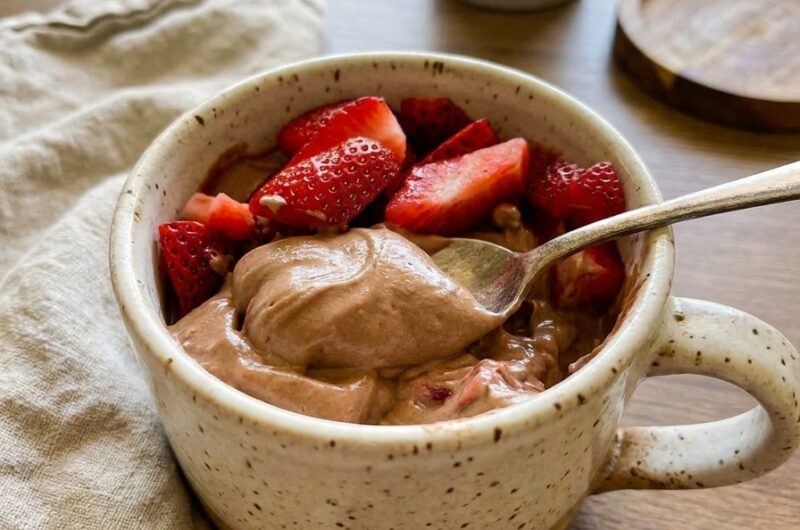
Chocolate protein yogurt is a simple way to enjoy something sweet while adding more protein to your day. Made with Greek yogurt, chocolate whey protein powder, cocoa powder, and peanut butter powder, this quick snack has a creamy texture and rich chocolate flavor. It takes only a few minutes to prepare and does not require any cooking.
This chocolate yogurt recipe is useful when you want a filling breakfast, afternoon snack, or easy high-protein dessert. The combination of creamy yogurt and chocolate makes it feel more like a treat than a typical healthy snack. With 29 grams of protein per serving, it can also help you add more protein to your daily meals.
What Makes This Chocolate Protein Yogurt So Good
A Quick High-Protein Snack
There are times when you want something sweet but do not want to spend a lot of time in the kitchen. This recipe solves that problem with a very short ingredient list and almost no preparation. Simply combine the ingredients in a bowl, stir until smooth, and your chocolate protein yogurt is ready to eat.
The recipe contains 29 grams of protein per serving according to the supplied nutrition information. Greek yogurt and chocolate whey protein powder provide most of that protein, while peanut butter powder adds another small boost along with its nutty flavor.
It Tastes Like Chocolate Dessert
Plain Greek yogurt can be quite tangy on its own, but cocoa and chocolate protein powder change the flavor completely. Together, they give the yogurt a deeper chocolate taste that makes the bowl feel closer to pudding or a creamy chocolate dessert.
Peanut butter powder adds another layer of flavor without changing the recipe into something complicated. The combination of chocolate and peanut butter is familiar and works especially well when finished with fruit, dark chocolate chips, or a little peanut butter.
Only Four Ingredients
You only need four ingredients for the base recipe. There is no cooking, baking, or special equipment involved. A small mixing bowl and a spoon are enough to prepare this chocolate protein yogurt.
The short ingredient list also makes the recipe convenient for busy mornings. Once you have the ingredients available, you can prepare a serving whenever you need a quick protein-rich snack.
Ingredients You Need
Plain Full-Fat Greek Yogurt
Plain full-fat Greek yogurt creates the creamy base for this recipe. Its thick texture works well with the dry ingredients and gives the finished yogurt a rich consistency.
Using plain yogurt also allows the chocolate and peanut butter flavors to stand out. Because the yogurt is not flavored, the cocoa powder and protein powder provide the main taste of the finished snack.
Chocolate Whey Protein Powder
Chocolate whey protein powder gives the yogurt its chocolate flavor while increasing the protein content. The recipe uses half a scoop, which blends into the yogurt without requiring a large amount of protein powder.
Protein powders can vary in texture, so mixing thoroughly is important. Make sure there are no visible dry pockets of powder left in the bowl before serving.
Unsweetened Cocoa Powder
Unsweetened cocoa powder brings a stronger chocolate taste to the yogurt. It also gives the mixture its darker color and helps make the flavor taste more like a chocolate dessert.
Since cocoa powder is unsweetened, it does not add the same sweetness as a sweetened chocolate mix. The chocolate protein powder provides sweetness and flavor, while the cocoa gives the recipe more depth.
Peanut Butter Powder
Peanut butter powder adds a mild peanut flavor that pairs naturally with chocolate. It also helps add protein while keeping the ingredient list short.
The powder blends directly into the yogurt with the other dry ingredients. If you enjoy the chocolate and peanut butter combination, this ingredient is an important part of the flavor of the finished bowl.
How to Make Chocolate Protein Yogurt
Combine the Ingredients
Start by adding the plain full-fat Greek yogurt to a small mixing bowl. Add the chocolate whey protein powder, unsweetened cocoa powder, and peanut butter powder.
You can stir the dry ingredients together before mixing them into the yogurt if you want to reduce the chance of lumps. This makes it easier for the powders to spread evenly through the thick yogurt.
Mix Until Smooth
Stir the mixture thoroughly until the yogurt becomes smooth and creamy. Continue mixing until you can no longer see dry protein powder, cocoa powder, or peanut butter powder.
Take a moment to scrape the sides and bottom of the bowl as you stir. This helps make sure every ingredient is incorporated and gives the finished yogurt a more even chocolate flavor.
Add Your Favorite Toppings
Once the yogurt is smooth, it can be eaten immediately. For extra texture and flavor, add toppings such as sliced strawberries, banana slices, dark chocolate chips, or a drizzle of peanut butter.
Fresh fruit works particularly well because it adds natural sweetness and a fresh contrast to the rich chocolate yogurt. You can also enjoy the bowl without toppings when you want the quickest possible snack.
How to Get the Best Texture
Mix the Powders First
One useful way to get a smooth result is to combine the chocolate protein powder, cocoa powder, and peanut butter powder before adding them to the yogurt. Breaking up the powders first can make the final mixture easier to stir.
This is especially helpful with cocoa powder, which can sometimes form small dry pockets when mixed directly into a thick base. A few extra seconds of preparation can make the texture much smoother.
Let the Yogurt Sit Briefly
The original method suggests using yogurt that is not extremely cold. Letting it sit out for about 5-10 minutes before mixing can make the powders easier to incorporate.
There is no need to leave the yogurt out for a long period. A short rest is enough if you want to make the mixture easier to stir and achieve a creamy consistency.
Adjust the Consistency
If the finished yogurt is thicker than you prefer, the original recipe suggests adding 1-2 tablespoons of almond or regular milk. Add a small amount at a time and stir well before deciding whether more is needed.
For a thicker, pudding-like texture, keep the mixture as prepared. For a softer yogurt bowl, a little milk can make it easier to spoon and mix with toppings.
Chill It for a Dessert-Like Texture
The yogurt can be eaten straight after mixing, but chilling it for around 15 minutes can make it feel more like a cold chocolate dessert. The short chilling time also gives the flavors a little more time to come together.
This is a useful option when you are preparing the recipe as a dessert rather than eating it as a quick snack. Prepare the yogurt, cover it, place it in the refrigerator, and add your toppings just before serving.
Topping Ideas for Chocolate Yogurt
Fresh Strawberries
Sliced strawberries add a fresh, slightly sweet flavor that works well with chocolate. They also give the bowl a different texture from the creamy yogurt.
Add the strawberries just before eating so they remain fresh. You can use a few slices for a simple topping or add more when you want a fruit-filled snack.
Banana Slices
Bananas are another easy topping for chocolate protein yogurt. Their soft texture works well with the creamy base, and their natural sweetness complements the cocoa flavor.
Slice the banana and arrange it over the yogurt. This is a particularly good option for breakfast when you want something more substantial than plain yogurt.
Dark Chocolate Chips
For a stronger chocolate flavor, add a small amount of dark chocolate chips. The chips provide a little crunch that contrasts with the smooth yogurt.
They can also make the bowl feel more like a dessert without requiring any additional preparation. Add them immediately before serving for the best texture.
Peanut Butter
A drizzle of peanut butter gives the bowl an even stronger chocolate-peanut butter flavor. It works especially well with the peanut butter powder already included in the recipe.
If the peanut butter is difficult to drizzle, gently warming it can make it thinner. Allow it to cool slightly before adding it to the yogurt.
When to Eat Chocolate Protein Yogurt
Breakfast
This recipe can work as a quick breakfast when you want something that takes only a few minutes to prepare. Add fruit or another preferred topping to make the bowl more filling.
It can be prepared in advance as well, which makes it useful on mornings when there is little time to cook. Keep it refrigerated and add fresh toppings when you are ready to eat.
After a Workout
A high-protein yogurt snack can be a convenient choice after exercise. The supplied nutrition information lists 29 grams of protein per serving, making this a simple way to include a substantial amount of protein in a snack.
You do not need to make a shake or prepare a complicated meal. The yogurt can be mixed in a few minutes and eaten immediately.
As a Dessert
Chocolate cravings do not always require a large dessert. This yogurt gives you a creamy chocolate option with a short ingredient list and 1 gram of sugar according to the provided nutrition information.
Serve it chilled with strawberries, banana, dark chocolate chips, or peanut butter. The toppings let you change the texture and flavor without changing the four-ingredient base.
Meal Prep for Busy Days
Prepare Multiple Servings
The recipe can be made in a larger batch when you want several servings ready in advance. Prepare the yogurt mixture and divide it into individual containers.
Individual portions are convenient because you can take one from the refrigerator whenever you need a quick breakfast or snack. Keep the containers covered and refrigerated.
Store It Properly
Place prepared chocolate protein yogurt in an airtight container and store it in the refrigerator. The original recipe states that it keeps for up to 5 days in the fridge.
If you are adding fresh fruit, consider adding the fruit shortly before serving rather than storing it in the yogurt for several days. This helps keep the topping fresher and prevents extra liquid from changing the yogurt’s texture.
Make It Part of Your Weekly Routine
Because the base requires only four ingredients, this recipe is easy to include in a weekly meal-prep routine. You can prepare several portions at once and keep them ready for breakfast, snacks, or dessert.
It is also easy to serve in different ways throughout the week. One day you might add strawberries, while another serving can be topped with banana, chocolate chips, or peanut butter.
Notes for Making Chocolate Protein Yogurt
Keep the Base Simple
The four ingredients provide the complete base for this recipe. There is no need to add extra ingredients if you like the flavor and thickness as prepared.
Toppings are optional and can be changed according to what you have available. This makes the recipe flexible without changing the original ingredient list.
Avoid Dry Pockets
Protein powder and cocoa powder can sometimes cling together when added to thick yogurt. Stir carefully and scrape the bottom and sides of the bowl while mixing.
The finished mixture should look evenly blended, with no visible patches of dry powder. This gives every spoonful the same chocolate and peanut butter flavor.
Chill for a Thicker Dessert
A short 15-minute chill can make the yogurt feel colder and more dessert-like. This is particularly useful if you are preparing it ahead of time.
Keep the container covered while it is in the refrigerator. Add fruit or crunchy toppings immediately before serving.
Make It Fresh for the Best Toppings
The yogurt itself can be prepared ahead and stored for up to 5 days in the refrigerator. Fresh toppings are best added close to serving time.
This is especially useful for strawberries and bananas, which can soften as they sit. Keeping them separate until serving helps maintain their texture.
High Protein Chocolate Peanut Butter Greek Yogurt
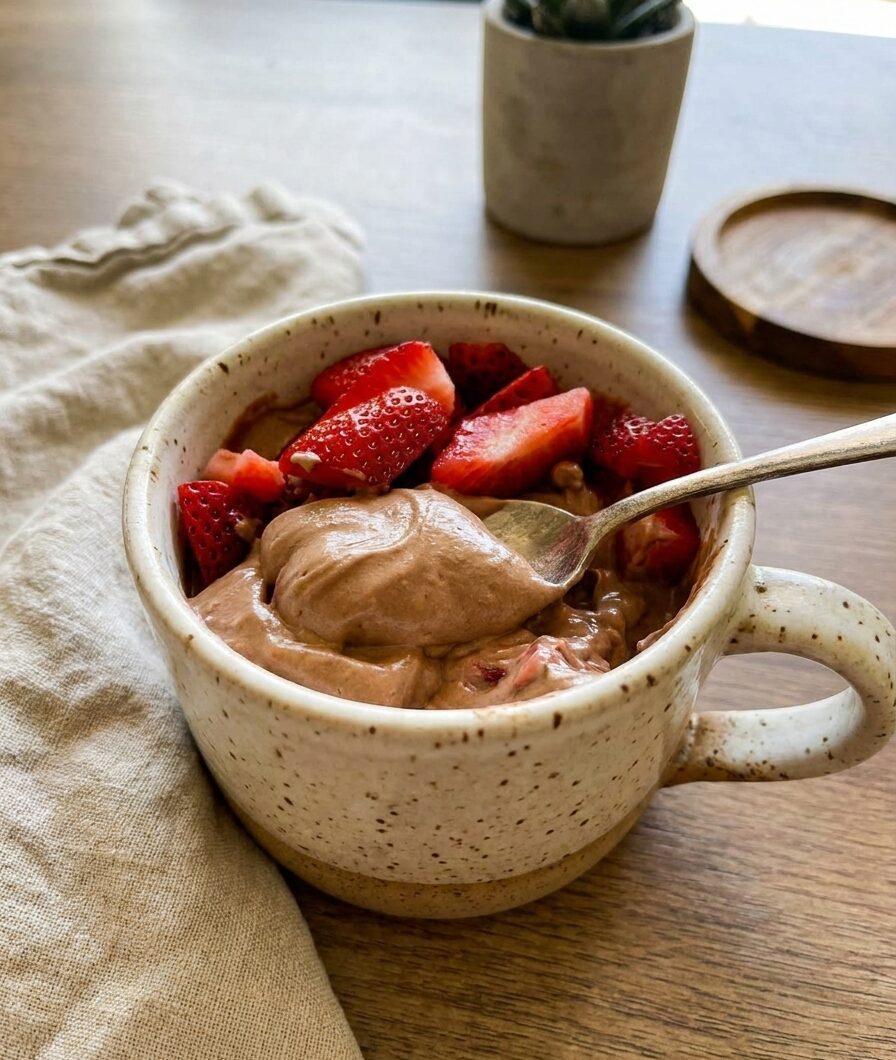
This easy chocolate protein yogurt is a creamy, chocolate-flavored snack made with Greek yogurt, chocolate whey protein powder, unsweetened cocoa powder, and peanut butter powder.
1
servings5
minutes0
minutes260
kcal5
minutesIngredients
3/4 cup plain full-fat Greek yogurt
1/2 scoop chocolate whey protein powder
1 tbsp unsweetened cocoa powder
1 tbsp peanut butter powder
Instructions
- To a small mixing bowl add the yogurt, protein powder, cocoa powder, and powdered peanut butter. Mix the yogurt mixture until it is smooth and creamy, and you can no longer see any of the powders.
- Enjoy your chocolate-flavored yogurt with sliced strawberries, or even a drizzle of peanut butter and dark chocolate chips!
Nutrition Facts
- Calories: 260kcal
- Fat: 11g
- Carbohydrates: 14g
- Fiber: 3g
- Sugar: 1g
- Protein: 29g
- Iron: 1mg