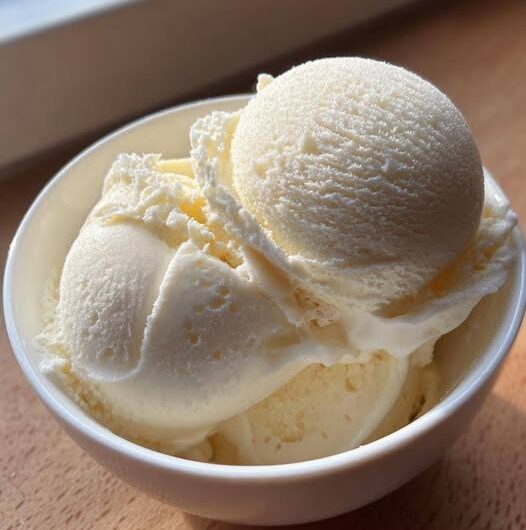
This vanilla ice cream recipe is built as a versatile base — designed to work with a Thermomix and an ice cream machine, or with a Thermomix alone if you don’t own a churner. At its core, it’s a classic egg yolk custard base: sugar, cream, milk, egg yolks, and vanilla extract cooked together, then either churned in an ice cream maker or frozen and blended smooth in a Thermomix.
Because this is meant as a foundation recipe, it’s designed to be customized with fruits or other toppings during the churning process, while being simple enough on its own to serve as a base for endless flavor combinations. The recipe also includes dairy-free, egg-free, and lower-fat variations, making it adaptable to different dietary needs without changing the core method.
Understanding the Custard Base
Since this recipe centers on a cooked custard, it helps to understand what each ingredient contributes:
Sugar — caster sugar is recommended, though coconut sugar, raw sugar, or xylitol can be substituted for low-carb variations. Lighter-colored sugars produce the best color in the finished ice cream.
Pure or pouring cream (without gelatin) provides the richness and fat content that gives the ice cream its creamy texture.
Milk works alongside the cream to balance the richness and help create a smooth, pourable custard base before freezing.
Egg yolks are what give this ice cream its classic custard-style texture and richness, setting it apart from eggless or plant-based alternatives.
Vanilla extract provides the signature flavor that defines this as a classic vanilla ice cream.
Kitchen Workflow: The Order That Actually Saves Time
This recipe splits into two distinct workflows depending on your equipment — with or without an ice cream machine. Both start the same way:
Step 1 — Prepare the sugar (if using granulated sugar). If using granulated sugar, mill it in the Thermomix bowl for 30 seconds on speed 9 with MC on. Scrape down the bowl once finished.
Step 2 — Cook the custard base. Add the remaining ingredients — cream, milk, egg yolks, and vanilla extract — to the bowl with the milled sugar. Cook for 9 minutes at 90°C on speed 3 with MC on.
From here, the workflow splits based on your equipment:
If using an ice cream machine:
- Pour the custard base into a container, cover the surface directly with cling wrap, and refrigerate for several hours until fully chilled.
- Churn the chilled mixture in your ice cream maker according to the manufacturer’s instructions.
If using the Thermomix only (no ice cream machine):
- Pour the custard base into standard ice cube trays and freeze until solid.
- Once frozen, blend the ice cubes in the Thermomix for 1 minute on speed 9 with MC on, or until smooth, using a spatula to help combine.
- Note: on a hot day, the mixture may melt quickly during blending. If needed, stop blending early and return the mixture to the freezer before continuing.
Covering the custard base directly with cling wrap before chilling (for the ice cream machine method) is a small but important detail — pressing the wrap directly onto the surface of the custard prevents a skin from forming as it cools.
Component Organization: Setting Up Your Station
Depending on which method you’re using, your setup will look slightly different:
For the ice cream machine method:
- The Thermomix — for milling the sugar and cooking the custard base
- A container with cling wrap — for chilling the custard directly after cooking
- Your ice cream machine — ready once the custard has fully chilled
For the Thermomix-only method:
- The Thermomix — for milling the sugar and cooking the custard base
- Standard ice cube trays — for freezing the custard into solid cubes
- A spatula — to help combine the mixture while blending the frozen cubes
Regardless of method, having your storage container or ice cube trays ready before the custard finishes cooking means you can transfer it immediately while it’s still warm, without unnecessary delay.
Step-by-Step Assembly Strategy
Because this is a base recipe designed for flavor additions, the “assembly” here really refers to how and when to incorporate mix-ins:
- Complete the custard base and chilling or freezing process as described above.
- If adding fruit or other toppings, incorporate them during the churning process (for the ice cream machine method) rather than mixing them into the raw custard base before chilling.
- Be mindful that adding too much fruit can increase the water content of the mixture and affect the creaminess of the final product — moderation is key when customizing this base.
- For the Thermomix-only method, any mix-ins should be considered carefully, since the blending step to smooth out the frozen cubes is sensitive to extra liquid or bulk from add-ins.
Dietary Variations
This base recipe includes several built-in variations for different dietary needs:
Dairy-Free/Paleo Variation: Replace the cream and milk with 800g of Ayam light coconut milk.
Egg-Free Variation: Omit the eggs entirely and follow only the Thermomix method (no ice cream machine) — the egg-free custard doesn’t churn the same way in a traditional ice cream maker.
Lower-Fat Variation: Use low-fat cream in place of the standard pure or pouring cream.
Practical Notes for Best Results
- Mill granulated sugar first if using it, since finer sugar dissolves more easily into the custard base during cooking.
- Cover the custard’s surface directly with cling wrap before chilling (for the ice cream machine method) to prevent a skin from forming.
- Chill the custard for several hours, not just a short rest, before churning — a fully chilled base churns more effectively.
- If using the Thermomix-only method on a hot day, keep an eye on the mixture while blending, and return it to the freezer if it starts melting too quickly.
- Add any fruit or toppings during churning, not before, and use them in moderation to avoid excess water content affecting the final creaminess.
- Choose your sugar substitute carefully if going for a low-carb version — lighter-colored sugars produce the best final color in the ice cream.
Part 2: Straightforward Recipe Card
Classic Vanilla Ice-Cream
Description: A versatile vanilla ice cream base designed for a Thermomix and ice cream machine, providing the perfect foundation for countless flavor combinations. Ideal for those who enjoy making their own low-sugar or dairy-free ice cream.
Ingredients:
- 120–150g sugar (caster sugar recommended; coconut sugar, raw sugar, or xylitol can be substituted for low-carb variations — lighter-colored sugars produce the best color)
- 600g pure or pouring cream (without gelatin)
- 230g milk
- 6 large egg yolks
- 2 tsp vanilla extract
Instructions:
Thermomix Method (Custard Base):
- If using granulated sugar, mill it in the Thermomix bowl for 30 seconds/speed 9/MC on. Scrape down the bowl.
- Add the remaining ingredients to the bowl. Cook for 9 minutes/90°C/speed 3/MC on.
Ice Cream Machine Method: 3. Pour the custard base into a container, cover the surface directly with cling wrap, and refrigerate for several hours until chilled. 4. Churn the chilled mixture in your ice cream maker according to the manufacturer’s instructions.
Thermomix Method (No Ice Cream Machine): 5. Pour the custard base into standard ice cube trays and freeze until solid. 6. Once frozen, blend the ice cubes in the Thermomix for 1 minute/speed 9/MC on, or until smooth, using a spatula to help combine. If it’s a hot day, the mixture may melt quickly — stop blending early and return the mixture to the freezer if needed.
Notes:
- Dairy-Free/Paleo Variation: Replace the cream and milk with 800g of Ayam light coconut milk.
- Egg-Free Variation: Omit the eggs and follow only the Thermomix method (no ice cream machine).
- Lower-Fat Variation: Use low-fat cream.
- Feel free to add fruits or other toppings during the churning process, but be mindful that adding too much fruit can increase the water content and affect the creaminess of the final product.
Medical Disclaimer: The information provided in this document is for general informational and educational purposes only and is not intended as, and should not be substituted for, professional medical or nutritional advice, diagnosis, or treatment. This recipe contains raw egg yolks in the custard base preparation; individuals who are pregnant, immunocompromised, elderly, or otherwise at higher risk from raw or undercooked eggs should take appropriate food safety precautions or consult a qualified healthcare provider before preparing or consuming this recipe. Individuals with food allergies, dietary restrictions, or medical conditions—including but not limited to egg allergies or dairy allergies—should consult a qualified healthcare provider or registered dietitian before making changes to their diet. Reliance on any information provided in this document is solely at your own risk.



All the best