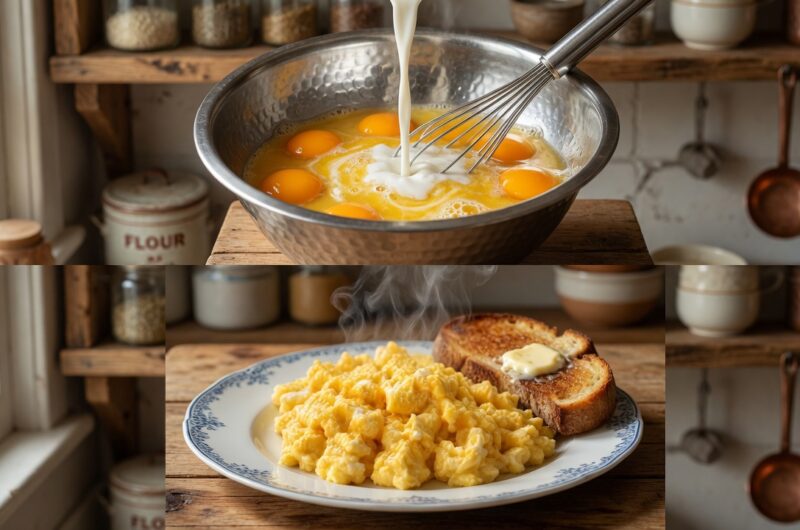
Soft scrambled eggs are a simple breakfast, but getting them creamy, tender, and glossy takes a little care. This soft scrambled eggs recipe uses low heat, butter, water, and gentle stirring to create delicate curds. Unlike firm scrambled eggs, these stay soft and slightly underdone when they leave the pan. Served over toasted wheat or sourdough bread with chives and flaky sea salt, they make a quick breakfast that feels special without complicated cooking.
Texture
The secret to creamy scrambled eggs is not a long ingredient list. It is mainly about temperature, timing, and movement in the pan. High heat can cook eggs too quickly, making them dry, firm, or rubbery. Low heat gives the proteins more time to set gradually. Gentle stirring also creates small, tender folds instead of large, firm pieces. With this method, you can make restaurant-style scrambled eggs in about seven minutes from start to finish.
Simple Ingredients
For this easy scrambled eggs recipe, begin with three large eggs. Add one tablespoon of water, a pinch of salt, and one tablespoon of butter. Freshly ground black pepper is optional, while chopped fresh chives and flaky sea salt finish the dish. Toasted wheat or sourdough bread makes a simple base for serving. Every ingredient has a clear purpose, and keeping the list simple lets the eggs remain the main part of the breakfast.
Fresh Eggs
Fresh eggs are the starting point for good scrambled eggs. Use eggs that are clean, fresh, and stored properly before cooking. Crack them into a bowl rather than directly into the skillet so you can whisk them thoroughly and remove any unwanted shell pieces. A bowl also gives you enough space to combine the eggs, water, and salt evenly. Taking an extra minute at this stage helps create a smooth mixture before it reaches the pan.
Adding Water
The water in this recipe is a useful addition because it helps keep the finished eggs light and tender. Whisk the three eggs with one tablespoon of water and a small pinch of salt until the mixture is completely smooth. There should be no visible streaks of separate white and yolk. Thorough whisking distributes the ingredients evenly and gives you a consistent mixture to cook. Water also avoids adding the richer flavor that milk or cream can bring to scrambled eggs.
Melting Butter
Once the eggs are whisked, place a nonstick skillet over low heat. Add one tablespoon of butter and let it melt gently. The butter should melt without browning or becoming dark. Low heat is important from the beginning because the pan continues to cook the eggs as soon as they are added. A nonstick skillet also makes it easier to move the soft curds around without sticking, which is especially helpful when you want delicate, creamy scrambled eggs.
Cooking Method
Pour the egg mixture into the melted butter and allow it to sit briefly. Then begin stirring slowly with a spatula. Do not scrape rapidly or move the eggs constantly from the first second. Gentle, steady movements allow the eggs to form soft curds while preventing them from becoming overly broken. As the mixture warms, you will notice it becoming thicker around the edges and bottom of the pan. This is the point where slow folding becomes especially important.
Gentle Stirring
Continue cooking the eggs over low heat, stirring and folding them gently as they begin to set. Move the spatula through the mixture in slow motions, bringing cooked portions together and allowing uncooked egg to reach the warm surface. The goal is not to make large dry chunks. Instead, you want small, delicate folds that remain moist and creamy. Patience matters here because increasing the heat may seem faster, but it can quickly take the eggs past the ideal texture.
Cooking Timing
Knowing when to stop cooking is one of the most important parts of making soft scrambled eggs. Remove the skillet from the heat while the eggs still look slightly underdone and glossy. They will continue cooking from the residual heat in the pan and on the plate. If you wait until the eggs look completely firm in the skillet, they may become dry by the time you serve them. Early removal is a simple way to protect their creamy texture.
Serving Ideas
The finished eggs should look soft rather than dry. They should hold together in delicate folds while still appearing moist and glossy. There should not be a pool of raw liquid, but the curds should remain tender. This balance can take a little practice because every skillet and stovetop behaves differently. Watch the eggs rather than relying only on a timer. The five-minute cooking time is a guide, while the appearance and texture of the eggs tell you when they are ready.
Fresh Chives
Serving the eggs immediately is important because scrambled eggs continue to set after cooking. Spoon the soft curds over toasted wheat or sourdough bread while they are still warm. The crisp toast provides a pleasant contrast to the creamy eggs. Finish with chopped fresh chives, flaky sea salt, and freshly ground black pepper if desired. The toppings should complement the eggs rather than cover their flavor. A small amount is enough to make the plate look fresh and complete.
Low Heat
Chives are a simple finishing ingredient for soft scrambled eggs. Their mild onion flavor adds freshness without overpowering the creamy eggs. Chop them finely so a small amount can be distributed across the surface. Flaky sea salt provides a different texture from the salt used in the egg mixture, giving small bursts of seasoning as you eat. Freshly ground black pepper is optional, but it adds a mild warmth that works well with butter and eggs.
Technique
Low heat is the most important cooking tip in this recipe. Eggs contain proteins that tighten as they cook, and excessive heat can make that process happen too quickly. When the pan is too hot, the outside of the curds can become firm before the inside has a chance to remain creamy. Keeping the skillet over low heat gives you more control. It also makes it easier to stop cooking at the right moment instead of trying to rescue overcooked eggs.
Butter
Stirring slowly is another key technique. Fast stirring can break the egg mixture into very small pieces and make the texture less creamy. Slow folding creates soft, delicate curds that remain moist. Use a flexible spatula and move it calmly through the pan. You do not need to scrape every part of the skillet continuously. Instead, guide the eggs as they set and bring the cooked portions together. The process should feel controlled rather than rushed.
Water
Butter adds flavor and helps create a smooth cooking surface in the nonstick skillet. Let it melt gently before adding the eggs, but do not allow it to brown. Browned butter has a stronger toasted flavor and is not the focus of this recipe. Using the stated tablespoon keeps the eggs rich without making them greasy. If the skillet is properly nonstick and the heat remains low, the butter should provide enough lubrication for easy stirring and folding.
Skillet
Water may seem unusual if you normally make scrambled eggs with milk, but it has a practical role here. One tablespoon of water adds moisture without making the mixture heavy. It keeps the ingredient list simple and allows the natural egg and butter flavors to stand out. The water should be whisked thoroughly into the eggs before cooking. There is no need to add more than the specified amount because changing the liquid ratio can affect how the eggs set.
Seasoning
A nonstick skillet is especially useful for this recipe because soft eggs can cling to the surface when cooked gently. The smooth coating allows the spatula to move through the eggs without excessive pressure. That matters because the goal is to create delicate curds rather than scrape a firm layer from the pan. Use a skillet that gives the eggs enough room to move freely. A pan that is too small can make stirring awkward and may encourage uneven cooking.
Breakfast
The size of the eggs can affect cooking slightly, so use three large eggs as specified. Crack all three into the same bowl and whisk them together before adding the water and salt. Uniform mixing ensures that the whites and yolks are distributed throughout the mixture. If the eggs are not fully combined, you may end up with uneven patches of white and yellow in the skillet. A smooth mixture gives the finished scrambled eggs a more consistent appearance.
Toast
Salt can be added before cooking, while flaky sea salt is used as a finishing touch. A small pinch in the egg mixture provides seasoning throughout the curds. After cooking, the flaky salt adds a little texture and a final layer of flavor. Be careful not to over-season because the eggs are naturally delicate. The optional black pepper can be added at the end so its aroma remains noticeable. Chives can also be scattered over the eggs immediately before serving.
Batches
This recipe is ideal for a quick breakfast because the total preparation and cooking time is only seven minutes. Two minutes are allocated for preparation and five minutes for cooking. The short cooking time means it is best to have the bread toasted and the toppings ready before the eggs finish. Scrambled eggs wait poorly, especially when you are aiming for a soft texture. Preparing the serving plate first allows you to transfer the eggs from skillet to toast without delay.
Mistakes
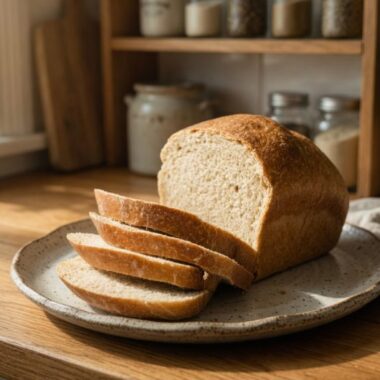
Toasted sourdough bread makes an excellent base because its crisp edges and chewy center contrast with soft eggs. Toasted wheat bread is another simple option. Place the warm toast on a plate before the eggs leave the pan. Spoon the eggs directly over the bread, then add chives, flaky sea salt, and optional black pepper. This creates a complete breakfast without requiring a separate sauce. The toast also makes the soft eggs easier to serve and eat.
Dryness
If you are cooking scrambled eggs for more than one person, it is usually better to make the recipe in batches rather than overcrowding the skillet. A crowded pan can lower the temperature and make the eggs cook unevenly. For the stated recipe, one serving of three large eggs is straightforward in a standard nonstick skillet. If increasing the quantity, give the eggs enough room to move and watch their texture closely. The cooking time may also change with a larger batch.
Sticking
A common mistake is turning the heat up because the eggs appear to be cooking slowly. Resist that temptation. Soft scrambled eggs need gentle heat, and the slower cooking process is what gives you better control. Another mistake is waiting for the eggs to become completely firm before removing the skillet from the stove. They should still be slightly underdone and glossy when they leave the heat. Residual cooking will finish the eggs without taking away their softness.
Notes
Another problem is overmixing the eggs in the pan. Constant aggressive stirring can create tiny curds and remove the soft texture you want. Instead, stir and fold slowly as the eggs set. Scrape the bottom gently and bring the cooked portions together. If you see larger soft areas, allow them to set slightly before folding. The goal is to guide the eggs, not fight them. A calm cooking method makes it easier to produce creamy scrambled eggs consistently.
Serving
If your eggs turn out dry, the most likely issue is overcooking. Remove them from the heat earlier next time and remember that they continue cooking after the skillet is removed from the burner. If they become too firm while still in the pan, they have probably been exposed to too much heat. Keeping the temperature low and watching the glossy stage closely can prevent this. Small adjustments in timing can make a noticeable difference in the final texture.
Creamy Soft Scrambled Eggs
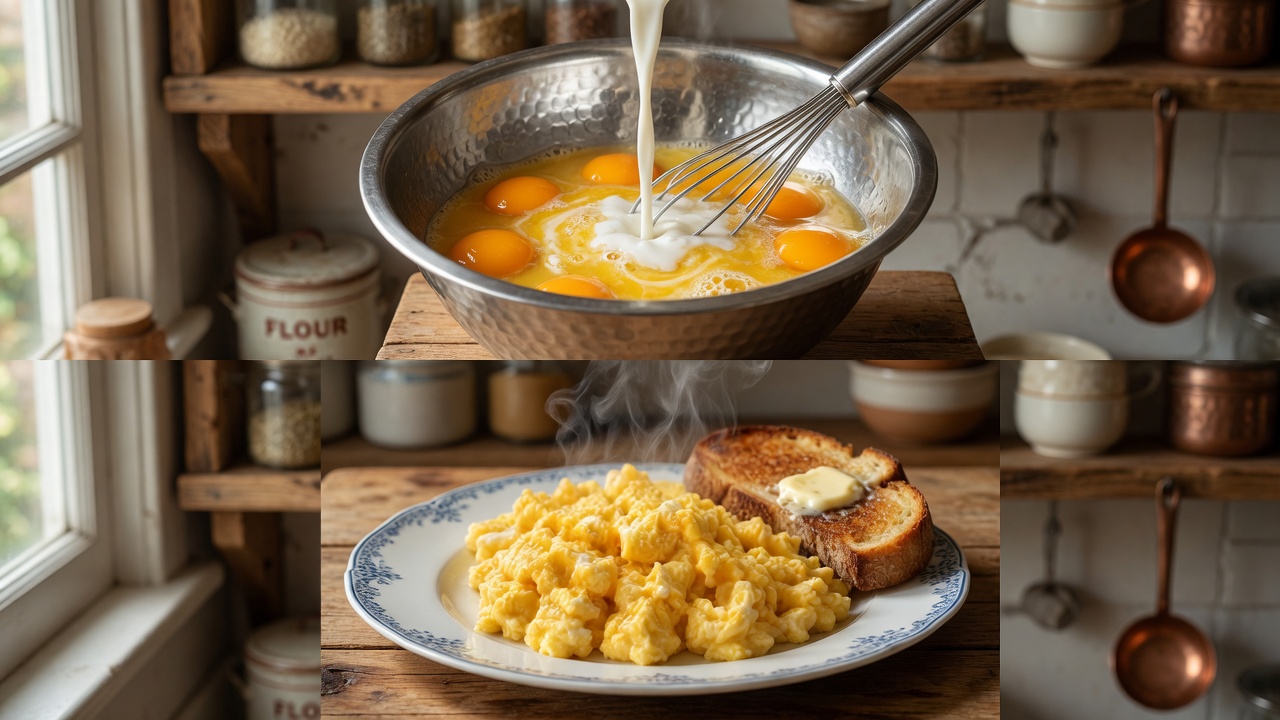
Creamy soft scrambled eggs cooked gently over low heat with butter and water, then served on toasted wheat or sourdough bread with fresh chives and flaky sea salt.
1
servings2
minutes5
minutes7
minutesIngredients
3 large eggs
1 tablespoon butter
1 tablespoon water
Pinch of salt
Freshly ground black pepper (optional)
Chopped fresh chives
Flaky sea salt
Toasted wheat or sourdough bread, for serving
Instructions
- Crack the eggs into a bowl. Add the water and a small pinch of salt, then whisk thoroughly until completely smooth and combined.
- Place a nonstick skillet over low heat and add the butter. Let it melt gently without allowing it to brown.
- Pour the egg mixture into the skillet and let it sit briefly. Begin stirring slowly with a spatula.
- Continue cooking over low heat, gently stirring and folding the eggs as soft curds begin to form.
- Remove the skillet from the heat while the eggs are still slightly underdone, soft, and glossy.
- Spoon the eggs over toasted wheat or sourdough bread. Finish with chopped chives, flaky sea salt, and optional freshly ground black pepper. Serve immediately.
Notes
- Finish with flaky sea salt for extra texture and seasoning.
- Serve immediately for the best creamy texture.