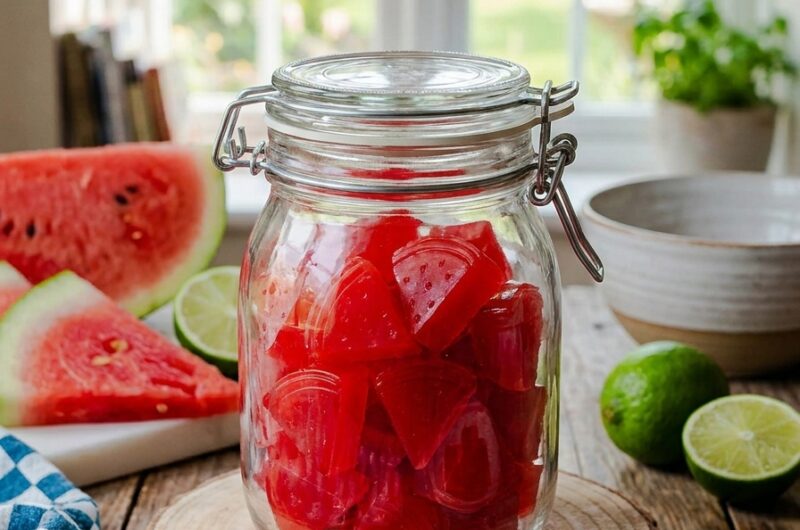
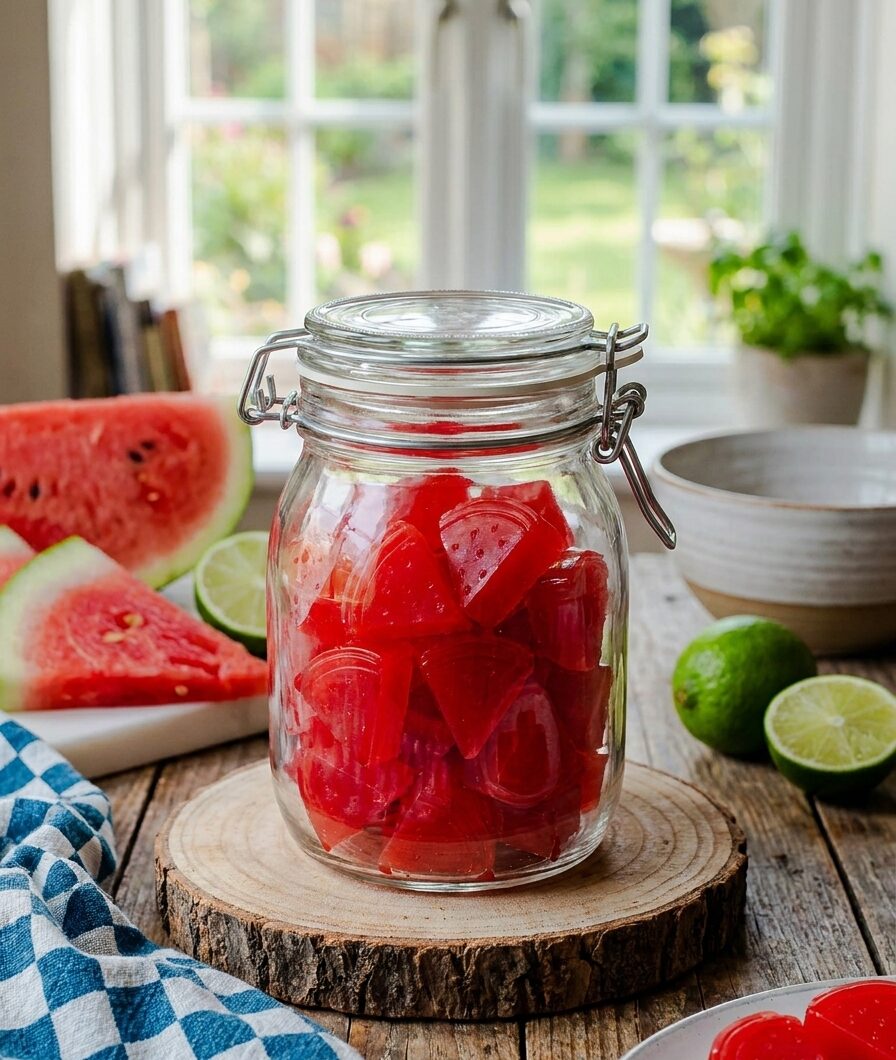
These homemade sour watermelon gummies are a colorful, chewy snack made with fresh watermelon, lime juice, unflavored gelatin, collagen peptides, and optional honey. Instead of relying on artificial colors, corn syrup, or complicated candy-making methods, the recipe uses fresh watermelon juice as the main flavor and color base. The finished gummies have a soft but pleasantly springy texture, with fresh lime juice adding the tart flavor that works especially well with naturally sweet watermelon.
Making homemade watermelon gummies is easier than it may first appear. Fresh watermelon is blended into juice and strained before being divided into two portions. One portion stays cold and is used for blooming the gelatin and collagen, while the other portion is gently heated with lime juice and optional honey. Combining the two mixtures correctly produces a smooth liquid that firms into chewy bite-size gummies after a few hours in the refrigerator.
Why You Love This Recipe
These fresh fruit gummies offer a simple way to turn ripe watermelon into a fun homemade snack. Their bright fruit flavor comes directly from watermelon rather than an artificially flavored candy mixture. Lime juice gives the gummies their tangy edge, while honey can be added according to the natural sweetness of the watermelon. This flexibility is useful because one watermelon may taste considerably sweeter than another.
The recipe is also convenient because most of the preparation takes place in just a few basic stages. Once the fruit has been blended and strained, the remaining work involves blooming, gently heating, whisking, pouring, and chilling. There is no baking involved, and silicone candy molds are optional because the mixture can also be chilled in a lined pan and cut into small squares once firm.
What Makes These Watermelon Gummies Different?
Traditional commercial gummies are usually made primarily for sweetness and chewy texture. These homemade collagen gummies take a different approach by combining fresh fruit juice with both gelatin and collagen peptides. Gelatin creates the structure needed for the gummy texture, while collagen peptides add protein and contribute to the soft, springy consistency of the finished candy.
The combination makes these gummies different from ordinary homemade fruit gelatin as well. Six tablespoons of unflavored gelatin create a firm set, while four tablespoons of collagen peptides are incorporated alongside it. The mixture is designed to produce about 75 small gummies, making them convenient for portioning and storing in the refrigerator.
Why Fresh Watermelon Works Well
Four cups of watermelon chunks provide the fruit base for this recipe. Watermelon has a high natural water content, so blending it produces plenty of juice without requiring additional water. After blending, the juice is strained to remove pulp and foam, leaving approximately two to two and a half cups of smooth watermelon liquid.
The natural sweetness of watermelon can vary depending on ripeness and season. This is why honey remains optional rather than mandatory. A very sweet watermelon may provide enough sweetness on its own, while a less ripe fruit may benefit from a small amount of honey. Tasting the watermelon before starting can help you decide whether additional sweetness will be useful.
Why Straining the Watermelon Juice Matters
After blending, pass the watermelon through a fine-mesh sieve. This step removes excess pulp and foam that could otherwise affect the appearance and texture of the gummies. A smoother liquid produces cleaner-looking gummies with a more even consistency once they are chilled.
Do not rush the straining process by forcing large pieces of pulp through the sieve. Allow the juice to drain and gently press where necessary. The goal is to obtain approximately two to two and a half cups of smooth juice. Once strained, divide it into two roughly equal portions because each portion performs a different function during preparation.
Understanding the Hot and Cold Juice Method
One of the most important techniques in this homemade gummy recipe is dividing the watermelon juice into cold and hot portions. The cold portion provides the correct environment for blooming the gelatin, while the second portion is heated so that the bloomed mixture can later dissolve smoothly.
Adding all of the gelatin directly to hot liquid can encourage lumps and make it harder to achieve a uniform texture. Blooming it first allows the gelatin particles to absorb moisture before they encounter heat. This simple technique is commonly used when working with gelatin and is particularly important here because the recipe uses a substantial six-tablespoon quantity.
Why Gelatin Must Be Bloomed
Blooming simply means allowing dry gelatin to absorb cold liquid before dissolving it with heat. For this recipe, six tablespoons of unflavored gelatin and four tablespoons of collagen peptides are whisked into the cold half of the watermelon juice and allowed to stand for approximately three to five minutes.
During this resting period, the mixture will become thick and somewhat spongy. That appearance is expected and indicates that the gelatin has absorbed the liquid. Once properly bloomed, it can be introduced to the warm watermelon mixture and whisked until smooth. Skipping the blooming stage can make it much harder to dissolve the gelatin evenly.
How Gelatin Creates the Gummy Texture
Unflavored gelatin is the main setting ingredient in these homemade watermelon gummies. As the prepared mixture cools in the refrigerator, gelatin forms the structure that transforms the watermelon juice from a liquid into firm, flexible pieces that can be removed from molds and handled individually.
The quantity should remain exactly as listed in the original recipe. Reducing it could produce gummies that are too soft to hold their shape, while unnecessarily increasing it could make them considerably firmer. The recipe uses six tablespoons of gelatin for the amount of watermelon juice obtained from four cups of watermelon chunks.
What Collagen Peptides Add to the Recipe
Four tablespoons of collagen peptides are mixed with the gelatin during the blooming stage. According to the supplied recipe, collagen peptides increase the protein content while also contributing to the soft and springy chew of the finished gummies.
Collagen peptides and gelatin are not serving identical functions here. Gelatin is essential for setting the liquid into gummies, while collagen peptides are an additional ingredient. The supplied recipe notes that collagen can be omitted if unavailable, although doing so produces a somewhat firmer result. If collagen is omitted, the amount of gelatin should remain unchanged.
Fresh Lime Juice Adds the Sour Flavor
One-third cup of fresh lime juice provides the bright, tart contrast that turns these into sour watermelon gummies rather than simply sweet fruit gummies. Watermelon has a delicate sweetness, and lime provides enough acidity to make its flavor feel brighter and more refreshing.
Freshly squeezed lime juice is preferred in the supplied recipe because bottled versions can sometimes have a more bitter character. The lime juice is added to the portion of watermelon juice that will be heated. For a variation, lemon juice can replace lime juice in the same quantity when a slightly different citrus flavor is preferred.
Honey Is an Optional Sweetener
The recipe includes one to three tablespoons of honey as an optional ingredient. Because watermelon varies naturally in sweetness, using a flexible amount makes more sense than requiring the same quantity for every batch. Start with a smaller amount if additional sweetness is needed and adjust according to the flavor of your fruit.
Honey is added to the portion of watermelon juice being heated with the lime juice. Gentle heat helps it dissolve evenly throughout the mixture. If you prefer the natural sweetness of the watermelon without additional honey, it can simply be omitted because it is not required for the gummies to set.
How to Heat the Watermelon Juice Correctly
Place the portion of watermelon juice intended for heating into a small saucepan with the lime juice and optional honey. Warm the mixture over medium-low heat until it begins steaming. It should become hot enough to dissolve the bloomed gelatin but should not reach a rolling boil.
Temperature control is important because the supplied recipe specifically warns against boiling the gelatin mixture. Gentle heat is sufficient. Once the juice is steaming, add the bloomed gelatin and collagen mixture and whisk patiently until everything has dissolved and the liquid looks smooth and silky. This generally takes about one to two minutes.
How to Prevent Lumpy Homemade Gummies
Smooth gummies begin with properly bloomed gelatin. Sprinkle and whisk the gelatin and collagen evenly into the cold watermelon juice rather than dumping everything into one concentrated area. Give the mixture its full three to five minutes to absorb the liquid before proceeding.
When the bloomed mixture is added to the heated watermelon juice, whisk continuously but patiently. Keep the saucepan warm without allowing it to boil. Continue whisking until no obvious gelatin pieces remain and the mixture looks uniform. Taking care during these two stages helps produce gummies with an even texture instead of rubbery or undissolved spots.
Using Silicone Gummy Molds
Mini watermelon silicone molds can give these gummies a fun candy-like appearance. Place the molds on a flat tray before filling them so they can easily be transferred to the refrigerator without bending or spilling.
Once the gummy liquid is completely smooth, pour it into the molds while it is still warm. Work reasonably quickly because gelatin begins firming as its temperature falls. After filling, transfer the tray carefully to the refrigerator and leave it undisturbed for approximately two to three hours, or until the gummies are completely set.
How to Make Gummies Without a Mold
Special gummy molds are convenient but not necessary. If you do not have silicone molds, pour the prepared mixture into a lined pan and refrigerate it exactly as you would the molded version.
After the mixture has completely set, lift it from the pan and slice it into approximately three-quarter-inch squares. This method produces simple bite-size pieces without requiring any specialty candy-making equipment. The flavor and basic texture remain the same, making the pan method a practical alternative for anyone trying the recipe for the first time.
How Long Do Homemade Gummies Need to Chill?
Allow the gummies to refrigerate for approximately two to three hours. The recipe card lists a two-hour chill time, while the detailed instructions recommend allowing up to three hours for a complete set. The exact time can vary according to the size and depth of the molds.
Avoid disturbing the molds during refrigeration. Once completely firm, gently pop the gummies from flexible silicone molds. If they still feel excessively soft or difficult to remove cleanly, give them additional refrigerator time rather than forcing them out and damaging their shape.
How to Create a Sour Patch-Style Finish
For an extra sour candy-style finish, the supplied recipe suggests lightly coating the fully set gummies with a mixture of superfine cane sugar and citric acid immediately before serving. This creates a sweet-and-tart exterior that resembles the flavor experience of sour gummy candy.
The coating should be added shortly before serving rather than during storage. Gummies contain moisture, and a sugar-based exterior can become wet or sticky if left on refrigerated gummies for too long. For a more natural tart finish, finely grated fresh lime zest can be used instead.
How to Make the Watermelon Color Brighter
Fresh watermelon creates a naturally attractive color, but the exact shade depends on the fruit. Some watermelons produce a strong red juice, while others create a paler pink mixture. The supplied recipe offers an optional way to intensify the color without using artificial food coloring.
Add one to two tablespoons of strained beet juice for a stronger red appearance. According to the original guidance, this amount intensifies the color while allowing the watermelon flavor to remain dominant. This is an optional presentation variation rather than part of the standard five-ingredient recipe.
Other Fruit Variations
The same basic approach can be used with strawberries, raspberries, or mango according to the approved variations in the supplied recipe. The selected fruit should be blended and strained in the same way as watermelon to produce a smooth juice or puree base suitable for the gummy mixture.
Different fruits naturally contain different amounts of water, sweetness, and acidity, so the exact flavor and texture can vary. These variations should therefore be treated as alternatives to the original recipe rather than incorporated into the standard watermelon version. The recipe card below preserves watermelon exactly as supplied.
Maple Syrup Variation
Honey can be replaced with maple syrup when desired. The supplied recipe recommends beginning with one tablespoon of maple syrup and adjusting the amount according to taste.
As with honey, the sweetener is not the ingredient responsible for setting the gummies. Its purpose is primarily to adjust sweetness. This means you can judge the amount according to how ripe and naturally sweet the watermelon is. Keeping additional sweetness moderate also allows the fresh watermelon and lime flavors to remain noticeable.
Can You Make These Gummies Without Gelatin?
The supplied recipe lists agar powder as a possible plant-based alternative to gelatin, but it also clearly notes that agar behaves differently. Unlike gelatin, agar needs to be simmered to activate and creates a different finished texture.
The source provides approximately two to three teaspoons of agar powder as a starting point rather than a fully tested equivalent. For that reason, the standard recipe should continue to use six tablespoons of unflavored gelatin. A plant-based agar version would require separate testing to establish dependable quantities, cooking times, and texture.
How to Store Homemade Watermelon Gummies
Place the finished gummies in an airtight container and refrigerate them for up to seven days. Since they are made primarily from fresh fruit juice, refrigeration is important for maintaining their freshness and texture.
Condensation can develop inside a chilled container and make homemade gummies sticky. The supplied recipe recommends placing a paper towel in the storage container to help absorb excess moisture. These gummies are not considered freezer-friendly, so preparing an amount that can be enjoyed within approximately one week is preferable.
Notes for the Best Homemade Watermelon Gummies
Use ripe, flavorful watermelon because it forms the main flavor base of the entire recipe. Strain the blended fruit carefully for a smoother gummy, divide the juice before working with the gelatin, and allow the gelatin its full blooming time. Heat the second portion of juice only until steaming rather than bringing it to a boil.
Once the bloomed mixture has been added, whisk until completely dissolved and pour it into the molds before it begins cooling significantly. Refrigerate the gummies until thoroughly set, and add any sugar-and-citric-acid coating only immediately before serving. These details help create smooth, evenly set gummies with a pleasant balance of watermelon sweetness and lime tartness.
Are Watermelon Collagen Gummies a Healthy Snack?
These homemade gummies contain fresh watermelon juice and collagen peptides, and the supplied nutrition estimate lists approximately six calories and one gram of protein per bite-size gummy. However, describing any individual food as healthy depends on serving size, overall diet, ingredients, and individual nutritional requirements.
It is more precise to describe these as homemade fruit gummies made without the corn syrup or artificial coloring commonly associated with some commercial candy recipes. They still contain naturally occurring fruit sugar and may contain added honey. The approximate nutritional values should therefore be considered estimates rather than exact dietary measurements.
Why This Sour Watermelon Gummies Recipe Works
This recipe naturally fits useful search terms such as homemade watermelon gummies, sour watermelon gummies, collagen gummies recipe, homemade fruit gummies, watermelon gummy recipe, gelatin gummies, fresh fruit gummies, easy homemade gummies, watermelon candy, and collagen gummy snacks. Using these phrases naturally throughout the article helps describe the recipe clearly without forcing the same keyword into every paragraph.
The method works because each ingredient has a specific role. Watermelon supplies fresh fruit flavor and color, lime creates tartness, gelatin forms the gummy structure, collagen adds protein and contributes to the texture, and optional honey adjusts sweetness. Careful blooming, gentle heating, thorough dissolving, and adequate refrigeration then turn those simple ingredients into firm, chewy homemade gummies.
Easy Homemade Sour Watermelon Gummies with Collagen
Chewy homemade watermelon gummies made with fresh watermelon, lime juice, gelatin, collagen peptides, and optional honey.
75
servings15
minutes2
hours6
kcal2
hours15
minutesIngredients
4 cups watermelon chunks
6 tablespoons unflavored gelatin
4 tablespoons collagen peptides
⅓ cup fresh lime juice
1–3 tablespoons honey, optional
Instructions
- Blend the watermelon until completely smooth.
- Strain through a fine sieve to remove pulp and foam.
- Measure approximately 2–2½ cups of juice.
- Divide the juice into two roughly equal portions.
- Whisk gelatin and collagen into the cold portion.
- Let stand for 3–5 minutes until thick and spongy.
- Add the remaining juice and lime juice to a small saucepan.
- Add honey if using.
- Heat over medium-low until steaming, but do not boil.
- Add the bloomed gelatin and collagen mixture.
- Whisk for 1–2 minutes until completely dissolved and smooth.
- Pour into silicone gummy molds or a lined pan.
- Refrigerate for 2–3 hours until completely firm.
- Remove from the molds or cut into bite-size squares.
- Keep refrigerated until ready to serve.
Nutrition Facts
75 servings per container
- Amount Per ServingCalories6
- % Daily Value *
- Total Fat
.01g
0%
- Total Carbohydrate
1g
1%
- Protein 1g 2%
* The % Daily Value tells you how much a nutrient in a serving of food contributes to a daily diet. 2,000 calories a day is used for general nutrition advice.