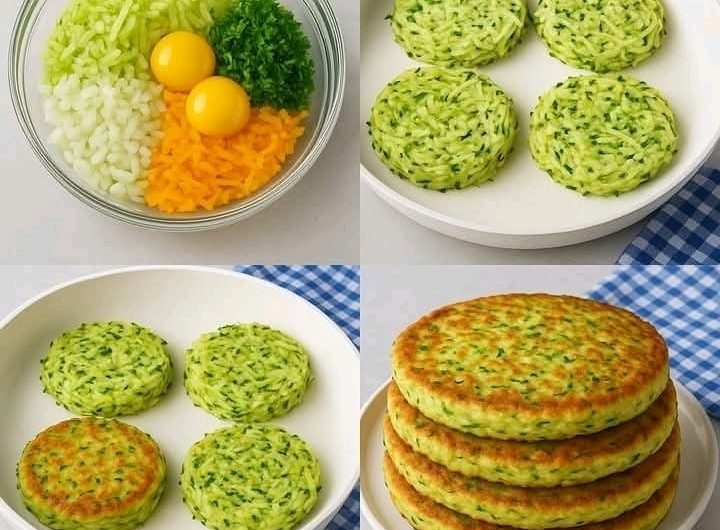
These vegetable pancakes take the familiar pancake format and rebuild it into a savory, low-calorie meal by replacing sugar and refined flour with cabbage, spinach, carrots, eggs, and oat flour. Rather than a sweet breakfast food, this recipe leans into fiber-rich vegetables and protein-packed eggs, resulting in a pancake that’s soft on the inside, lightly crisp on the outside, and substantial enough to work as a breakfast, lunch, or light dinner.
What makes this recipe practical is its one-bowl simplicity and flexibility. The batter comes together with basic mixing rather than any specialized technique, and the finished pancakes hold up well for meal prep, lunchboxes, or reheating throughout the week. The combination of finely chopped and grated vegetables blends into a cohesive batter rather than sitting as separate, disconnected pieces, which is part of what makes this dish approachable even for those who don’t typically enjoy eating vegetables on their own.
Below is a full breakdown of the workflow, ingredient roles, and technique for getting pancakes that hold together and cook evenly, along with the approved variations and common mistakes to watch for.
Kitchen Workflow: How the Process Is Organized
This recipe breaks into four stages: prepping the vegetables, building the batter, folding in the vegetables, and cooking on the stovetop.
Stage 1 — Prepare the Vegetables. All vegetables are washed thoroughly to remove dirt or residue. The cabbage and spinach are finely chopped, the onion is diced into small pieces, and the carrot is grated. Cutting the vegetables into smaller, more uniform pieces at this stage is important — smaller pieces cook more evenly and help the finished pancakes hold together properly, rather than falling apart around larger, uncooked chunks.
Stage 2 — Make the Batter. In a large mixing bowl, eggs are whisked until slightly frothy. Milk, oat flour, salt, and black pepper are then added and mixed until the batter is smooth and free of lumps, resembling a thick pancake batter. Building this base batter before adding any vegetables ensures the oat flour has a chance to hydrate evenly in the liquid before solid ingredients are introduced.
Stage 3 — Add the Vegetables. The prepared cabbage, spinach, onion, and grated carrot are folded into the batter and mixed gently until all the vegetables are evenly coated. The mixture should remain thick but still scoopable at this stage. Folding gently, rather than stirring vigorously, is what keeps the pancakes light and tender once cooked.
Stage 4 — Cook on the Stovetop. A nonstick skillet is heated over medium-low heat and lightly greased with olive oil. Portions of the batter are spooned onto the hot skillet and flattened slightly with the back of a spoon. Each pancake cooks for about 2–3 minutes per side, until golden brown and firm enough to flip, with crisp edges and a tender center.
Component Breakdown
It’s useful to think of this recipe in terms of four functional components.
1. The Vegetable Base — Cabbage, Carrots, Spinach, and Onion Cabbage is affordable and fiber-rich, cooking down with a mild sweetness and pleasant texture once finely chopped. Carrots add natural sweetness, vibrant color, and a slight crunch that contrasts with the soft pancake texture. Spinach contributes freshness and nutrients without overpowering the other flavors, and cooks quickly when chopped finely. Onion rounds out the vegetable base with savory depth and subtle sweetness once cooked.
2. The Structural Base — Oat Flour and Eggs Oat flour serves as a healthier alternative to refined white flour, absorbing moisture differently to create a batter thick enough to hold the vegetables together. Eggs bind the ingredients while adding protein, moisture, and structure, helping the pancakes stay light yet sturdy enough to flip without falling apart.
3. The Consistency Adjuster — Milk Milk loosens the batter and creates a smoother consistency, allowing the oat flour to hydrate properly and keeping the finished pancakes tender rather than dense. Regular dairy milk, almond milk, oat milk, or soy milk can all be used depending on preference.
4. The Seasoning — Salt and Black Pepper Salt and black pepper season the batter directly, balancing the natural flavors of the vegetables without needing additional seasoning blends.
Approved Variations and Swaps
Based strictly on the details provided, the following variations can be made within this recipe:
- Milk can be swapped between regular dairy milk, almond milk, oat milk, or soy milk, depending on preference — all options work well.
- Spicy version – add chili flakes or chopped green chilies for extra heat.
- Herb-loaded version – mix in fresh parsley, cilantro, dill, or basil.
- Cheese version – add a small amount of shredded cheese for richer flavor.
- Gluten-free option – use certified gluten-free oat flour.
- Extra protein version – add cottage cheese or extra egg whites to increase the protein content.
Step-by-Step Assembly Strategy
To make a batch of pancakes that hold together and cook evenly, follow this sequence:
- Wash all vegetables thoroughly first, ensuring any dirt or residue is fully removed.
- Finely chop the cabbage and spinach, dice the onion into small pieces, and grate the carrot. Smaller, more uniform pieces are what allow the pancakes to cook evenly and hold together once flipped.
- Whisk the eggs in a large mixing bowl until slightly frothy before adding any other ingredients.
- Add the milk, oat flour, salt, and black pepper to the eggs, mixing until the batter is smooth and lump-free, with a consistency resembling thick pancake batter.
- Fold in the prepared cabbage, spinach, onion, and grated carrot, mixing gently until everything is evenly coated. The batter should stay thick but remain scoopable.
- Heat a nonstick skillet over medium-low heat and lightly grease the surface with olive oil to prevent sticking and encourage golden edges.
- Spoon portions of the mixture onto the hot skillet, flattening each one slightly with the back of a spoon.
- Cook for about 2–3 minutes per side, until golden brown and firm enough to flip, with the edges turning slightly crisp while the center stays tender.
- Serve the pancakes immediately while warm for the best flavor and texture.
Common Mistakes to Avoid
Batter too thin – if the batter turns out watery, the pancakes may fall apart during cooking; add a little more oat flour to thicken it if this happens.
Heat too high – cooking over high heat can burn the outside of the pancakes before the vegetables inside have a chance to soften.
Overmixing – mixing the batter too vigorously, especially after the vegetables are added, can make the pancakes dense rather than light and tender.
Pancakes too large – smaller pancakes are easier to flip and cook more evenly than larger ones.
Serving Ideas
These pancakes pair well with a variety of toppings and sides:
- Greek yogurt – adds creaminess and extra protein.
- Sour cream – a light dollop complements the savory vegetables well.
- Avocado – fresh slices provide healthy fats and a creamy texture.
- Fresh herbs – parsley, cilantro, dill, or basil add freshness and aroma.
- Hot sauce or chili flakes – for those who enjoy a bit of heat.
- Side salad – pairs well for a complete light lunch or dinner.
Meal Prep and Storage Instructions
Refrigerating: Store leftover pancakes in an airtight container in the refrigerator for up to 4 days.
Freezing: Allow the pancakes to cool completely before freezing. Place parchment paper between layers to prevent sticking, and freeze for up to 2 months.
Reheating: Reheat in a skillet, toaster oven, air fryer, or microwave until warmed through.
Part 2: Recipe Card
Healthy Vegetable Pancakes (Low-Calorie & Nutritious)
Description: Light, savory pancakes packed with cabbage, spinach, carrots, eggs, and oat flour for a wholesome, low-calorie meal. Soft on the inside, lightly crisp on the outside.
Duration:
- Prep Time: 15 minutes
- Cook Time: 15 minutes
- Total Time: 30 minutes
- Servings: 4
Ingredients:
- 200g finely chopped cabbage
- 3 eggs
- 1/2 onion, finely chopped
- 1/2 carrot, grated
- 1/4 cup chopped spinach leaves
- 1/4 cup oat flour
- 1/4 cup milk
- 1 tsp salt
- 1/2 tsp ground black pepper
- Olive oil, for cooking
Instructions:
- Wash and prepare all vegetables. Finely chop the cabbage, spinach, and onion, then grate the carrot.
- In a large mixing bowl, whisk the eggs until slightly fluffy.
- Add the milk, oat flour, salt, and black pepper. Mix until smooth.
- Fold in the cabbage, onion, carrot, and spinach until evenly combined.
- Heat a nonstick skillet over medium-low heat and lightly brush with olive oil.
- Spoon portions of batter onto the skillet and flatten slightly into pancake shapes.
- Cook for 2–3 minutes per side until golden brown and cooked through.
- Remove from the skillet and serve warm.
Notes:
- Add parsley, cilantro, or chili flakes for extra flavor.
- Serve with yogurt, sour cream, avocado, or hot sauce.
- Store leftovers in the refrigerator for up to 4 days.
- Reheat in a skillet or air fryer for the best texture.
- Great for meal prep and healthy lunchboxes.
Medical and Nutritional Disclaimer
The information provided in this recipe and guide is intended for general informational and educational purposes only and does not constitute medical, dietary, or nutritional advice. This recipe is not intended to diagnose, treat, cure, or prevent any disease or health condition. Individuals with food allergies, dietary restrictions, or specific medical conditions should consult with a qualified healthcare provider or registered dietitian before making dietary changes or preparing this recipe. The author and publisher assume no responsibility for any adverse effects resulting from the use or application of the information contained herein.