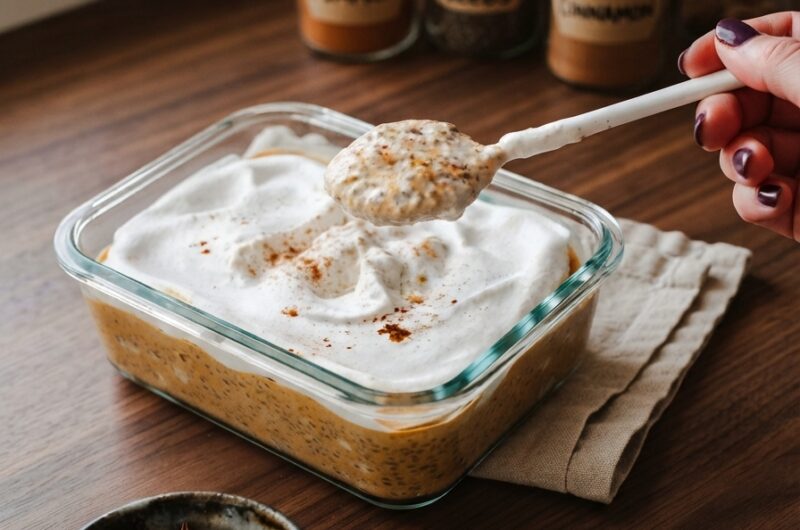
This overnight pumpkin chia protein pudding is an easy breakfast that combines pumpkin puree, chia seeds, vanilla protein powder, and warm spices. Everything is mixed in one jar, so there is no cooking or complicated preparation. After several hours in the refrigerator, the chia seeds soften and create a thick pudding-like texture.
Why You’ll Like This Pumpkin Chia Pudding
Quick to Prepare
This recipe takes only about 10 minutes of active preparation. You simply add the ingredients to a jar, stir everything together, and place it in the refrigerator. There is no need to turn on the oven or stove.
The pudding does need several hours to thicken, so preparing it the night before is the easiest option. When morning comes, your breakfast is already waiting in the refrigerator.
A Good Source of Protein and Fiber
The combination of vanilla protein powder and chia seeds gives this recipe a substantial amount of protein and fiber. The provided nutrition information lists 24.8 grams of protein and 17.2 grams of fiber for one serving without toppings.
That combination can make the pudding more satisfying than many quick breakfast choices. It is a convenient option when you want to include more protein and fiber in your daily meals without spending much time cooking.
Pumpkin Gives It a Warm Flavor
Pumpkin puree gives this pudding its familiar pumpkin flavor and creamy texture. Cinnamon and pumpkin pie spice add warmth without requiring a long list of seasonings.
The result has the flavors often associated with pumpkin desserts, but the preparation is much simpler. You can enjoy it cold straight from the refrigerator whenever you want a pumpkin-flavored breakfast or snack.
Ingredients You Need
Vanilla Protein Powder
Vanilla protein powder provides protein and adds a light vanilla flavor to the pudding. The recipe uses one scoop, which is listed as 30 grams.
Protein powders can differ in how easily they mix with liquid. If you notice small lumps when you first stir the pudding, simply give it another good stir later while it is chilling.
Pumpkin Puree
Pumpkin puree is the ingredient that gives this recipe its pumpkin flavor and soft texture. The recipe calls for 1/3 cup, or 75 grams.
Use plain pumpkin puree rather than pumpkin pie filling. Pumpkin pie filling usually contains additional ingredients and sweeteners, while plain puree keeps the recipe consistent with the original ingredient list.
Chia Seeds
Chia seeds are what turn the liquid mixture into a thick pudding. The recipe uses 2½ tablespoons, or 30 grams.
As the chia seeds sit in the cashew milk, they absorb liquid and become soft. This natural thickening process is why the pudding needs several hours in the refrigerator before serving.
Cashew Milk
Cashew milk provides the liquid needed to combine the ingredients and hydrate the chia seeds. The recipe uses 1 cup, or 240 grams, of cashew milk.
The original recipe also allows milk of choice, so you can use another type of milk if preferred. The amount remains the same as listed in the recipe.
Vanilla Extract
A teaspoon of vanilla extract adds more vanilla flavor to the pudding. It works especially well with the vanilla protein powder and helps balance the pumpkin and spices.
Even though the amount is small, it contributes to the overall flavor of the finished pudding. Stir it thoroughly into the mixture so it is evenly distributed.
Cinnamon and Pumpkin Pie Spice
Cinnamon and pumpkin pie spice give the pudding its warm, spiced character. The recipe uses 1/2 teaspoon of cinnamon and 1/4 teaspoon of pumpkin pie spice.
These spices work with the pumpkin and vanilla without making the pudding overly strong. A small pinch of salt is also included to help balance the flavors.
How to Make Pumpkin Chia Protein Pudding
Combine the Ingredients
Start by adding the vanilla protein powder, pumpkin puree, chia seeds, cashew milk, vanilla extract, cinnamon, pumpkin pie spice, and salt to a jar.
Make sure the jar is large enough to give you room to stir everything properly. A jar with a lid is useful because you can mix, cover, and refrigerate the pudding in the same container.
Stir Until Well Mixed
Stir the ingredients thoroughly until the pumpkin and protein powder are blended into the milk. Pay attention to the bottom and sides of the jar while mixing.
Chia seeds and protein powder can sometimes form small clumps. A careful stir at this stage helps distribute everything evenly and gives you a smoother pudding later.
Refrigerate the Pudding
Cover the jar and place it in the refrigerator for several hours or preferably overnight. During this time, the chia seeds absorb the liquid and the mixture becomes thick.
The original recipe recommends stirring the pudding once or twice during the chilling period. This helps work out any unusual chunks of chia seeds or protein powder.
Serve With Toppings
When you are ready to eat, remove the jar from the refrigerator and stir the pudding if needed. You can eat it as it is or add your favorite toppings.
The suggested toppings include almond milk Reddi whip, small diced apples, chopped pecans, cinnamon, and flake salt. These additions give the soft pudding some extra texture and flavor.
How to Get a Smooth Texture
Stir the Mixture More Than Once
A single stir may not always be enough when working with chia seeds and protein powder. Stirring the mixture again after it has been in the refrigerator for a while can help separate any small clumps.
This is especially helpful during the first few hours of chilling. The chia seeds begin absorbing liquid during this time, so another stir can help spread them throughout the jar.
Give the Protein Powder Time
Some protein powders may not blend perfectly as soon as they are mixed with the other ingredients. The original recipe points out that certain powders can look less smooth at first.
There is no need to worry if you notice this early on. Stir the pudding again after it has chilled for a while. The texture can improve as the mixture rests in the refrigerator.
Let the Chia Seeds Thicken
The pudding should not be expected to have its final consistency immediately after mixing. Chia seeds need time to absorb the liquid and create the thick texture.
For this reason, overnight preparation works particularly well. By the next morning, the pudding should have had enough time to become thick and spoonable.
Optional Toppings
Diced Apples
Small pieces of apple add fresh flavor and a little crunch to the creamy pumpkin pudding. The recipe calls for 1/4 cup, or 30 grams, of apples diced into small pieces.
Add the apples shortly before serving. This keeps them fresher and gives you a pleasant contrast between the soft pudding and crisp fruit.
Chopped Pecans
Pecans provide a crunchy texture and a mild nutty flavor. The recipe uses 1 tablespoon, or 5 grams, of finely chopped pecans as an optional topping.
Sprinkle them over the pudding immediately before eating. Keeping them out of the pudding until serving helps them retain their crunch.
Almond Milk Reddi Whip
Almond milk Reddi whip gives the pudding a light, creamy topping. It can make the breakfast feel more like a dessert while still keeping the preparation simple.
The original recipe lists 6 tablespoons, or 15 grams, as an optional topping. Add it after the pudding has finished chilling.
Cinnamon and Flake Salt
A small sprinkle of cinnamon can add more of the warm spice flavor already present in the pudding. A pinch of flake salt can provide a slight contrast to the pumpkin and vanilla.
These toppings are completely optional. The nutrition information in the recipe card is calculated without toppings.
When to Serve Pumpkin Chia Pudding
Breakfast
This recipe is especially convenient for breakfast because it can be prepared the night before. You can take the jar from the refrigerator in the morning and eat it without cooking.
Add apples and pecans when you want more texture, or keep it plain when you need something quick. The protein and fiber make it a practical choice for a filling morning meal.
Midday Snack
Pumpkin chia protein pudding can also work as an afternoon snack. The recipe is easy to portion into a jar, making it simple to keep a serving ready in the refrigerator.
It can be a useful alternative to reaching for a packaged sweet snack. The pumpkin, vanilla, and warm spices give it a naturally dessert-like character.
Light Dessert
If you enjoy pumpkin desserts, this pudding can satisfy that flavor without baking. The creamy texture, pumpkin puree, cinnamon, and pumpkin pie spice make it suitable for a simple dessert.
Serve it chilled with the optional whipped topping, apples, or pecans. You can also keep it plain if you prefer a less elaborate serving.
Meal Prep With Pumpkin Chia Pudding
Prepare It the Night Before
The easiest way to use this recipe for meal prep is to make it before bed. Add everything to a jar, stir well, cover it, and place it in the refrigerator.
By morning, the chia seeds will have had several hours to absorb the liquid. This saves time because breakfast does not need to be prepared from scratch when you wake up.
Use Individual Jars
Since the recipe makes one serving, preparing it directly in an individual jar is convenient. The same container can be used for mixing, chilling, storing, and serving.
If you are making several portions, prepare each serving in its own jar. This makes it easier to grab one serving when needed and keeps portions organized.
Add Toppings Later
For the best texture, add toppings shortly before eating. Apples and pecans are better when they remain fresh and crunchy instead of sitting in the pudding overnight.
You can also decide on toppings based on what you want that day. The pudding works well with the full selection of suggested toppings or with no toppings at all.
Storage and Serving
Keep the Pudding Refrigerated
After mixing, the pudding should remain refrigerated while it thickens. Keep the jar covered to protect the pudding and prevent it from absorbing odors from other foods in the refrigerator.
Give it a quick stir before serving if the texture has settled. The pudding can then be topped and eaten cold.
Notes for Making This Recipe
Use Plain Pumpkin Puree
Plain pumpkin puree is the correct choice for this recipe. Avoid replacing it with pumpkin pie filling because the two products are prepared differently and may contain different amounts of sugar and spices.
Using plain puree also allows you to control the flavor through the cinnamon and pumpkin pie spice already included in the recipe.
Stir During Chilling
Do not be concerned if the pudding looks uneven immediately after the first stir. Give it time in the refrigerator and stir it again once or twice during the chilling process.
This helps distribute the chia seeds and protein powder and can produce a more consistent texture throughout the jar.
Adjust the Toppings
The toppings are optional, so you can serve the pudding according to your preference. Apples provide freshness, pecans add crunch, and whipped topping makes the pudding feel more like a dessert.
Because the base recipe remains the same, changing the toppings gives you different serving options without changing the main preparation.
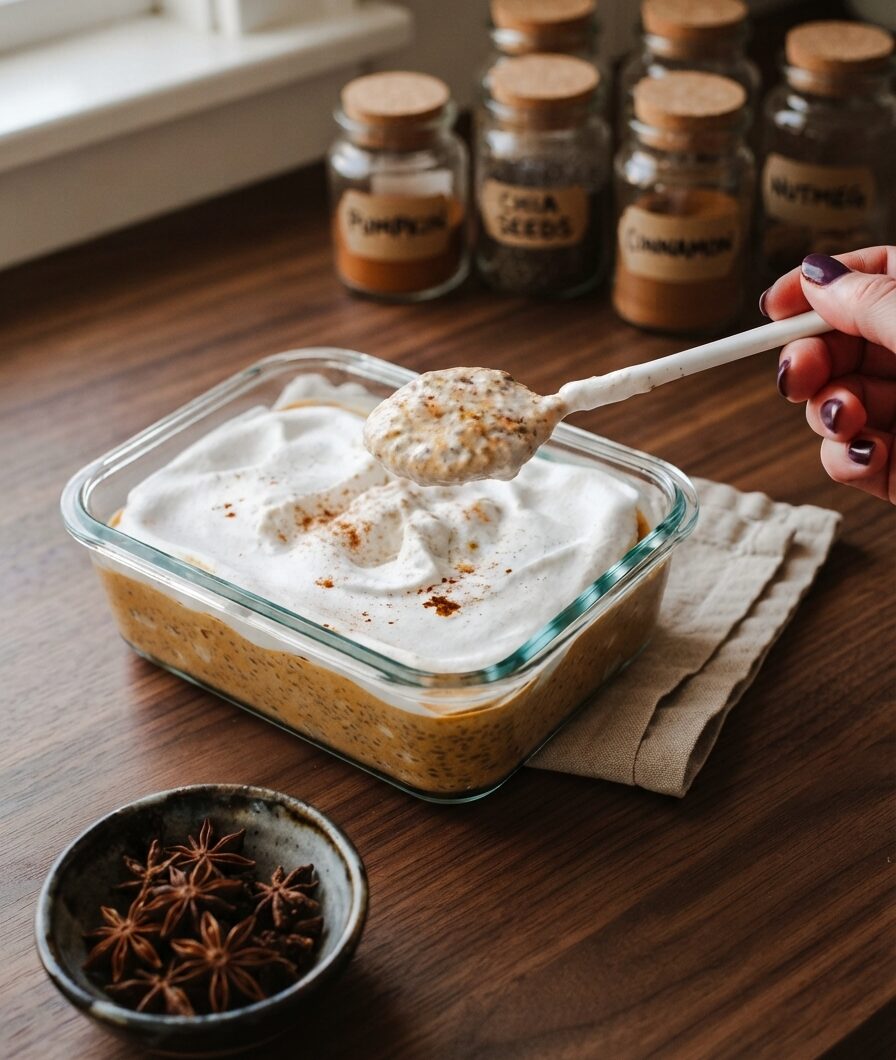
Pumpkin Pie Chia Seed Pudding – High Protein!
This easy overnight pumpkin chia protein pudding is made with vanilla protein powder, pumpkin puree, chia seeds, cashew milk, vanilla extract, and warm spices. It takes only 10 minutes to prepare and thickens in the refrigerator for several hours or overnight. Add apples, pecans, whipped topping, cinnamon, or flake salt before serving if desired.
1
servings10
minutes306
kcal10
minutesIngredients
- For the pudding:
1 scoop vanilla protein powder, 30g
1/3 cup pumpkin puree, 75g
2½ tbsp chia seeds, 30g
1 cup cashew milk, 240g, or milk of choice
1 tsp vanilla extract, 5g
1/2 tsp cinnamon
1/4 tsp pumpkin pie spice
Pinch of salt
- Optional toppings:
6 Tbsp almond milk whip, 15g
1/4 cup apples, 30g, diced small
1 Tbsp pecans, 5g, chopped small
Sprinkle of cinnamon
Pinch of flake salt
Instructions
- Add the vanilla protein powder, pumpkin puree, chia seeds, cashew milk, vanilla extract, cinnamon, pumpkin pie spice, and salt to a jar.
- Stir everything together very well until the pumpkin, protein powder, and spices are evenly mixed and there are no obvious dry clumps.
- Cover the jar and refrigerate for several hours or preferably overnight. Stir the mixture once or twice while it chills to help separate any clumps of chia seeds or protein powder.
- Once the pudding has thickened, remove it from the refrigerator and stir briefly before serving.
- Add the optional toppings, including almond milk Reddi whip, diced apples, chopped pecans, cinnamon, and flake salt, according to your preference.
- Serve chilled. The nutrition information below is for one jar without the optional toppings.
Nutrition Facts
- Calories: 306kcal
- Fat: 12g
- Carbohydrates: 26g
- Fiber: 17.2g
- Protein: 24.8g
- Iron: 1mg