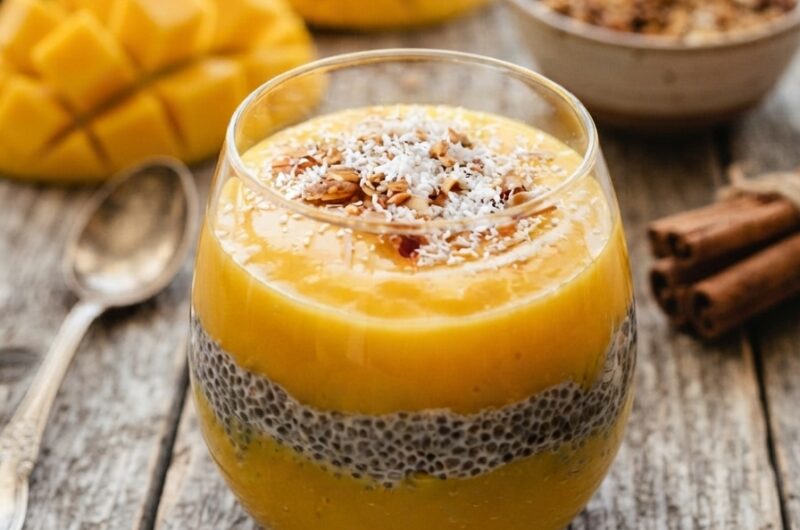
Mango chia pudding parfaits are a simple make-ahead breakfast or healthy dessert that brings together creamy chia pudding and sweet mango puree. The bright fruit gives each jar a fresh tropical taste, while chia seeds create the thick pudding texture. This recipe needs only a few basic ingredients and very little hands-on preparation.
The best part is that these mango parfaits can be prepared ahead of time and kept chilled until you are ready to eat them. They work well for busy mornings because the chia pudding sets in the refrigerator while you sleep. In the morning, layer it with mango puree, add your favorite toppings, and enjoy.
What Makes Mango Chia Pudding So Good?
Chia seeds are small, but they absorb liquid and become soft and gel-like after resting. This natural thickening process gives chia pudding its familiar creamy texture without needing a stove or any complicated cooking method. The result is a cool and satisfying breakfast that can be prepared in advance.
Mango adds natural sweetness, color, and a fruity flavor to the pudding. When blended into a smooth puree, it spreads easily between the chia layers. You get a combination of creamy pudding and sweet mango in almost every spoonful, making the parfait feel more like a dessert than a basic breakfast.
A Healthy Make-Ahead Breakfast
One of the biggest advantages of this mango chia pudding recipe is that it can be made ahead. The chia mixture needs at least three hours in the refrigerator, although leaving it overnight is even more convenient. This means you can prepare the pudding before bed and assemble your parfaits the next morning.
Meal prep is also easy with this recipe because the finished pudding can be portioned into individual jars. Having ready-to-eat breakfast portions in the refrigerator can save time during busy mornings. Simply take a jar from the fridge, add your toppings, and enjoy it cold.
The Main Ingredients You Need
The chia pudding starts with unsweetened dairy-free milk, chia seeds, vanilla extract, and optional maple syrup. The milk provides the liquid needed for the chia seeds to swell, while vanilla adds a gentle flavor. Maple syrup can be used when you want a little more sweetness.
The fruit layer is made with frozen mango that has been defrosted. Fresh mango or canned diced mango can also be used according to the original recipe. Once blended, the mango becomes a smooth puree that is easy to spoon between the pudding layers.
For serving, granola and unsweetened shredded coconut add texture and extra flavor. The soft chia pudding and smooth mango are balanced by the crunch of granola and the light texture of coconut.
How Chia Seeds Turn Into Pudding
Chia seeds naturally absorb liquid as they sit. When mixed with milk and left in the refrigerator, they swell and create a thick mixture with a pudding-like consistency. This is why the recipe does not require cooking or a traditional pudding base.
Whisking the mixture more than once is important because chia seeds can settle or clump together during the first few minutes. The recipe recommends whisking again after a couple of minutes and repeating this process for about 10 minutes. This helps distribute the seeds throughout the milk.
Preparing the Chia Pudding
Begin by adding the unsweetened dairy-free milk to a medium bowl. Whisk in the chia seeds, vanilla extract, and optional maple syrup. Make sure the seeds are spread evenly through the liquid instead of sitting together in one area.
After the first mixing, allow the mixture to sit briefly and then whisk it again. Continue repeating this during the first 10 minutes. Once the mixture is well combined, cover the bowl or transfer it to an airtight container and place it in the refrigerator.
The chia pudding needs at least three hours to become thick, but overnight refrigeration is a convenient option. When it is ready, it should have a thick pudding-like consistency rather than looking like thin milk with seeds.
Making the Mango Puree
While the mango can be used in pieces, blending it creates a smoother parfait. Add the defrosted mango chunks to a blender and process until smooth. You can also place the mango into a large mason jar and use an immersion blender to make the puree.
If using frozen mango, allow it to defrost before blending. This makes the fruit easier to process and gives you a smoother puree. Fresh mango can also be used when it is ripe and soft enough to blend easily.
Canned diced mango is another option listed in the recipe. If using canned mango, choose plain diced mango rather than a product with additional flavorings that could change the taste of the parfait.
How to Build the Parfait Layers
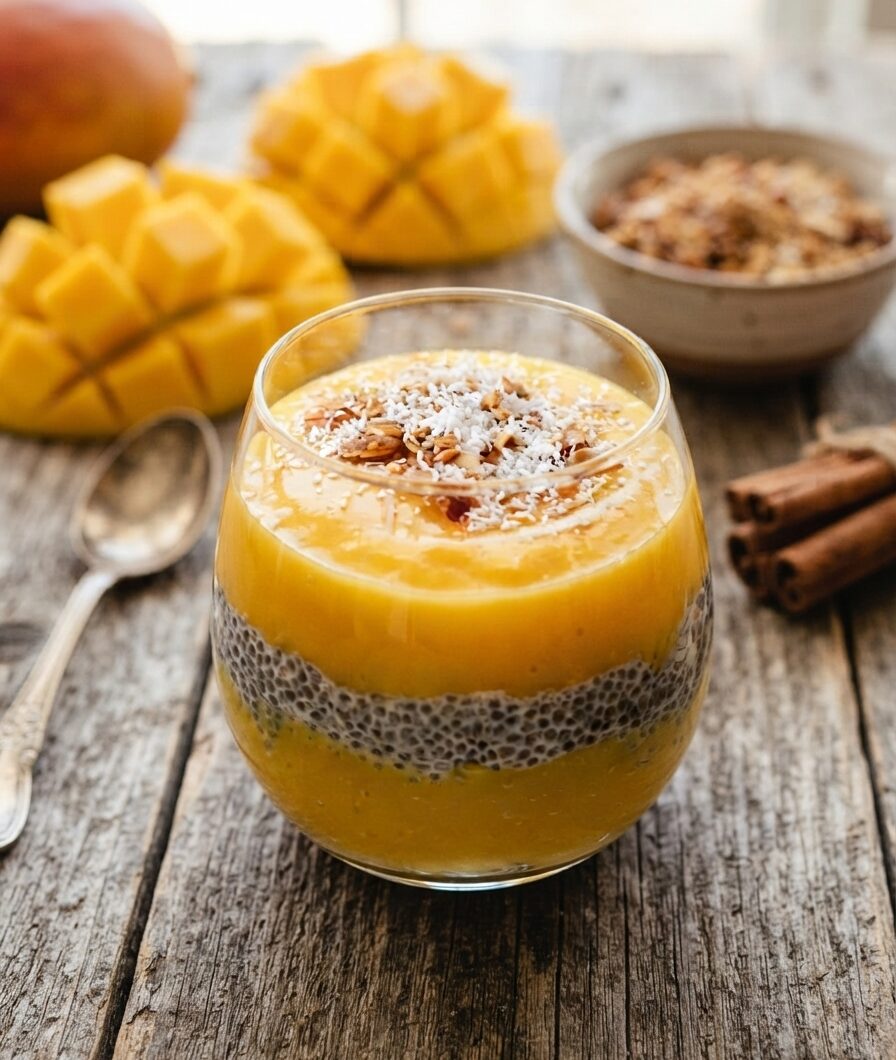
Once the chia pudding has thickened and the mango puree is ready, you can start assembling the jars. Add a layer of chia pudding to the bottom, followed by mango puree. Continue alternating the two mixtures until the jar is filled.
The layers do more than make the parfait look attractive. They also make it easy to get a little chia pudding and mango in each bite. You can make the layers thick or thin depending on the size and shape of your serving jars.
Finish the parfait with granola and unsweetened shredded coconut. Fresh fruit can also be added if you have some available. The toppings provide a pleasant contrast to the smooth pudding and mango puree.
Choosing the Right Milk
The original recipe uses unsweetened dairy-free milk. Since the milk is one of the main ingredients in the chia pudding, its flavor can affect the finished parfait. An unsweetened variety keeps the recipe from becoming overly sweet and allows the mango flavor to stand out.
You can choose the dairy-free milk you normally enjoy, provided it works well with the flavor of mango. If your milk already contains added sugar, keep in mind that it may make the finished pudding sweeter than intended.
Adjusting the Sweetness
The recipe includes 1/2 tablespoon of maple syrup as an optional ingredient. This means you can decide whether you want to add it based on the sweetness of your mango and your personal preference.
Very ripe mango can provide plenty of sweetness on its own. If your mango is less sweet, the maple syrup can add a little extra flavor to the chia pudding. Since the fruit is already naturally sweet, you do not need to add a large amount.
Adding More Protein
The basic recipe provides protein from the chia seeds and other ingredients, but there is an easy way to increase the protein content. The original recipe suggests adding a scoop of vanilla protein powder to the chia pudding mixture.
Another option is to serve the parfait with layers of Greek yogurt. This adds a creamy texture while increasing the protein content of the meal. If you choose either option, add it as an extra serving idea rather than changing the original ingredient quantities listed in the recipe card.
Coconut Mango Chia Parfait
For a stronger coconut flavor, the recipe can be adapted into a coconut mango version. The suggested variation is to use full-fat coconut milk and finish the parfait with toasted coconut. The creamy coconut flavor pairs naturally with sweet mango.
This variation is especially useful when you want a more tropical-style breakfast. The toasted coconut also adds a little crunch and a deeper flavor compared with unsweetened shredded coconut.
Mango Lassi Style Parfait
You can also give the parfait a mango lassi-inspired direction by adding a swirl of yogurt and a pinch of cardamom. Mango and yogurt are a familiar combination, and cardamom adds a warm, lightly spiced flavor.
This version can be served as a chilled breakfast or dessert. Keep the cardamom amount small because its flavor can become strong quickly.
Berry Mango Parfait
Mango can also be combined with berries for a colorful fruit parfait. Fresh raspberries or blueberries can be layered with the chia pudding and mango puree. Their slight tartness provides a nice contrast to the sweetness of the mango.
This variation is useful when you have fresh berries available. You can add them between the layers or use them on top with the granola and coconut.
Blended Chia Pudding Texture
If you prefer a smoother texture, the set chia pudding can be blended after it has thickened. Blending changes the texture from a pudding with visible chia seeds into a smoother, mousse-like mixture.
This is a simple way to change the feel of the recipe without changing the basic ingredients. You can then layer the smooth pudding with mango puree just as you would with the regular chia pudding.
Serving Suggestions
These mango chia pudding parfaits are best served chilled. Once the layers are assembled, add your toppings shortly before eating so the granola stays crunchy. Fresh mango or other fruit can also be placed on top for extra color and flavor.
The jars are convenient for breakfast meal prep because they can be prepared individually. They can also be served as a light dessert when you want something cold, creamy, and fruit-based.
Notes for the Best Texture
The most important part of making chia pudding is giving the seeds enough time to absorb the milk. Do not rush the chilling stage. At least three hours is needed according to the recipe, while overnight chilling makes breakfast preparation especially easy.
Whisking several times during the first 10 minutes also helps prevent clumps. If the seeds are not evenly distributed, some parts of the pudding may become thicker than others.
FAQs
Can You Use Fresh Mango?
Yes. The recipe specifically allows fresh mango as an alternative to frozen mango. Choose ripe mangoes that are soft enough to blend into a smooth puree.
Fresh mango can be especially useful during mango season when ripe fruit is readily available. Remove the skin and pit before blending, then process the flesh until smooth.
Can You Use Canned Mango?
Yes, canned diced mango is also listed as an option. It can be convenient when fresh mango is unavailable. Make sure the mango is well suited to blending and does not contain additional ingredients that you do not want in the parfait.
Using canned mango can also save preparation time because the fruit is already peeled and diced. Simply prepare it as needed and blend it into a smooth puree.
Can You Make the Parfaits Ahead?
Yes, this recipe is well suited to advance preparation. The chia pudding itself needs several hours in the refrigerator, so making it ahead fits naturally into a meal-prep routine.
For the best texture, add crunchy toppings such as granola close to serving time. This prevents them from absorbing moisture from the pudding and becoming soft.
A Simple Breakfast for Busy Days
These mango chia pudding parfaits are useful when you want breakfast ready before the day begins. The chia pudding requires no cooking, and the mango puree can be prepared quickly with a blender.
The finished jars are easy to portion and take from the refrigerator when needed. With creamy chia pudding, sweet mango, and crunchy toppings, they offer a good mix of textures without requiring a complicated recipe.
Mango Chia Pudding Parfait (Healthy & High Fiber!)
Refreshing mango chia pudding parfaits made with dairy-free milk, chia seeds, vanilla, maple syrup, and sweet mango puree. These layered parfaits are easy to prepare ahead and make a simple breakfast, snack, or chilled dessert.
3
servings10
minutes3
hours229
kcal3
hours10
minutesIngredients
2 cups unsweetened dairy-free milk
1/2 cup chia seed
1/2 tbsp maple syrup, optional
1/2 tsp vanilla extract
2 cups frozen mango, defrosted (fresh mangoes or canned diced mango works too!)
For serving: granola + unsweetened shredded coconut
Instructions
- Pour the unsweetened dairy-free milk into a medium bowl. Whisk in the chia seeds, vanilla extract, and optional maple syrup. After a couple of minutes, whisk the mixture again and continue repeating this for about 10 minutes to help prevent the chia seeds from clumping.
- Cover the bowl with a lid or transfer the mixture to an airtight container. Place it in the refrigerator for at least 180 minutes or leave it chilled overnight until the chia pudding becomes thick.
- Add the defrosted mango chunks to a blender and blend until smooth. Alternatively, place the mango in a large mason jar and use an immersion blender to make a smooth puree.
- Once the chia pudding has thickened, spoon it into serving jars, alternating layers of chia pudding and mango puree. Continue layering until the jars are filled.
- Finish each parfait with granola and unsweetened shredded coconut. Fresh fruit can also be added when serving. For a higher-protein option, add a scoop of vanilla protein powder to the chia pudding mixture or serve the parfait with layers of Greek yogurt.
Nutrition Facts
- Fat: 11g
- Sodium: 222mg
- Potassium: 301mg
- Fiber: 12g
- Sugar: 15g
- Protein: 6g