The presentation of fresh vegetables at holiday gatherings provides an exceptional opportunity to balance rich, traditional Thanksgiving dishes with a crisp, nutrient-dense option. Standard grocery store vegetable trays often rely on uninspired layouts that fail to engage guests—especially younger children who may display selectivity when introduced to raw produce.
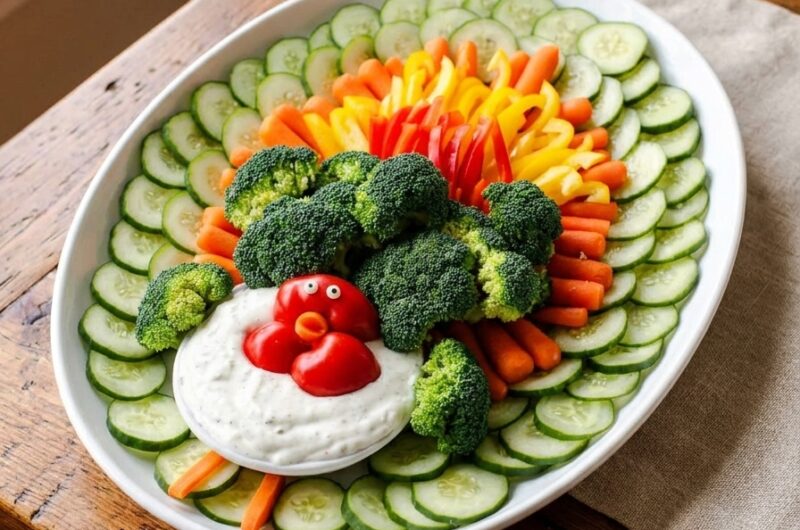
This professional guide provides a comprehensive breakdown for transforming everyday vegetables and a smooth savory dip into a stunning, festive Turkey-Shaped Veggie Platter. By combining careful structural slicing with an organized, radiating color scheme, this platter serves as an eye-catching centerpiece. It also fosters a fun, low-pressure kitchen activity where children can help assemble the ingredients, increasing their ownership and excitement over trying new foods.
Section 1: The Essential Ingredients and Structural Blueprint
Achieving a clean, symmetrical turkey pattern requires specific vegetable shapes and crisp textures. This architectural blueprint details the exact function and portioning of each component:
- 1 Cup Veggie Dip of Choice: The structural and culinary anchor of the dish. A smooth, creamy dip (such as homemade kefir ranch, thick hummus, or a yogurt-based dill sauce) filled into a small, perfectly round bowl acts as the lower center body of the turkey.
- 1 Whole Red Bell Pepper: Sliced into two separate components. The rounded bottom end of the pepper is cleanly sliced off to serve as the structural “face” shell. The remaining walls are cut into long, thin strips to form a vibrant layer of red “feathers.”
- 1 Whole Yellow Bell Pepper: Sliced into long, uniform matchsticks to introduce a bright, warm golden layer of feathers that contrasts beautifully with the deeper vegetables.
- 1 Crisp Broccoli Crown: Broken down entirely into small, tight florets. These dense, bumpy textures add visual depth and mimic fluffy plumage across the upper perimeter of the platter.
- 1 to 2 Fresh Cucumbers: Sliced into uniform, thin rounds. These green wheels act as a clean, stable boundary layer fanning outward from the central dip bowl.
- 1 Cup Baby Carrots (or Thick Whole Carrots): Used for both snacking sections and fine detailing. A few select pieces are used to carve out elongated turkey legs and a triangular, notched mouth piece; the remaining carrots fill out a dense row of orange feathers.
- 2 Pieces Candy Eyes: Small, kid-friendly decorative accents attached to the upper section of the red bell pepper face shell using a tiny smudge of vegetable dip as an edible adhesive.
Section 2: Step-by-Step Structural Assembly Instructions
Constructing a stable, symmetrical turkey veggie tray depends entirely on proper layering. Follow these sequential execution phases to build your platter:
Phase 1: Precision Vegetable Processing
Thoroughly wash all fresh produce under cold running water and pat them completely dry using a clean kitchen towel. Any residual water will cause the vegetables to slide on the platter and dilute your dipping sauce. Take the red bell pepper and slice the bottom 1 to 2 inches off to create a smooth, hollow dome shell—this will serve as your turkey face. Slice the remaining red pepper walls and the yellow bell pepper into uniform, thin vertical strips. Slice your cucumbers into clean rounds, break the broccoli crown into bite-sized florets, and select a few sturdy carrots for detailing.
Phase 2: Detailed Feature Carving
Take a thick carrot piece and slice a small, sharp triangle to represent the turkey’s beak, making a clean notch in the wide end for a playful look. Select two matching baby carrots (or cut two thick carrot sticks) to act as the primary turkey legs. If desired, cut small, shallow vertical notches into the ends of these pieces to create distinct, multi-toed turkey feet.
Phase 3: Anchoring and First-Tier Layering
Select a large, completely flat circular platter or a wide wooden charcuterie board. Fill a small, round bowl with your chosen dip and place it firmly in the lower-middle section of the board to represent the turkey’s lower body. Arrange a neat, tight semi-circle of overlapping cucumber slices directly around the upper edge of the dip bowl to establish your first layer of feathers.
Phase 4: Radiating Feather Architecture
Build outward from the cucumber layer to create a lush, fanned-out feather effect. Lay down a dense row of baby carrots directly above the cucumbers. Next, arrange alternating, radiating rows of your red and yellow bell pepper strips, keeping the lines tight and pointing outward toward the edges of the board. Finish the outer boundary of the platter by packing your fluffy broccoli florets tightly along the top and sides, creating a textured green frame.
Phase 5: Face Assembly and Finishing Touches
Take your reserved red bell pepper dome shell and turn it face-up, placing it directly over the top edge of the dip bowl to hide the rim. Apply a small dot of your veggie dip to the back of the two candy eyes and press them firmly onto the upper half of the red pepper shell. Attach the carved carrot beak right below the eyes using another small dab of dip. Finally, slide your carrot legs out from underneath the bottom edge of the dip bowl, letting them rest flat on the platter surface. Serve immediately, or wrap securely.
Section 3: Professional Kitchen Secrets for Success
- The Flat-Surface Protocol: When assembling this themed platter, always use a completely flat tray or wooden board rather than a lipped bowl or concave dish. A curved base causes the vertical pepper strips and round carrots to roll inward, collapsing your beautifully organized feather layers.
- The Edible Adhesive Rule: Avoid using plastic toothpicks or wooden picks to secure the eyes, beak, or legs. They can present a safety hazard for small children reaching for snacks. Using a thick, creamy dip functions as a perfectly safe, edible glue that keeps the facial features secure.
- The Moisture Mitigation Strategy: Cucumbers and bell peppers naturally release moisture after they are sliced. To prevent your platter from turning soggy or watery if prepped ahead, line your storage containers with dry paper towels and let the sliced pieces rest for 10 minutes before arranging them on your final serving board.
- The Make-Ahead Holiday Workflow: To save time on Thanksgiving Day, wash and slice all of your vegetables 24 to 48 hours in advance, keeping them organized by type in airtight containers in the refrigerator. On the morning of your event, simply set out your platter and arrange the pre-cut pieces in minutes for a fresh presentation.
Section 4: Creative Vegetable and Dip Variations
The Vibrant Autumn Harvest Swaps
To introduce even more color and depth to your turkey plumage, consider incorporating seasonal specialty produce. Swapping traditional green broccoli for raw purple cauliflower creates an eye-catching display. You can also replace standard baby carrots with sliced heirloom rainbow carrots (yielding deep purple, yellow, and white tones) or substitute thin zucchini rounds for the cucumbers.
Elevating the Centerpiece Dipping Station
The central dip bowl can be tailored to suit any flavor profile or dietary preference. Here are some excellent dipping options to serve alongside your platter:
- Classic Kefir Ranch: Built on a tangy, creamy base of cultured kefir and fresh herbs. This classic flavor profile provides a rich and herby taste that pairs perfectly with carrots, broccoli, and bell peppers.
- Roasted Red Pepper Pesto: Made with a rich base of olive oil, blended nuts, and roasted sweet peppers. It delivers an earthy, deeply savory punch that pairs wonderfully with crisp cucumbers and cauliflower.
- Traditional Hummus: Crafted from a smooth, traditional blend of blended chickpeas and tahini paste. It offers a satisfying, nutty, and garlicky touch that pairs beautifully with sweet bell peppers and crunchy pita chips.
- Yogurt Dill Sauce: Created using a bright base of thick Greek yogurt and fresh minced dill. This light sauce delivers a crisp, incredibly refreshing finish that contrasts excellently with cucumber rounds and sharp radishes.
Section 5: Long-Term Preservation and Reheating Guide
- Standard Refrigerator Storage: If you have remaining vegetables and dip after your holiday dinner, disassemble the turkey face and separate the components. Transfer the dipping sauce back into a sealed jar. Store the leftover raw vegetables together in a large, airtight container lined with a dry paper towel to maintain a crisp texture. Keep refrigerated for up to 5 days.
- Transforming Leftovers into a Quick Sheet-Pan Roast: If you want to repurpose your leftover raw veggie platter later in the week, toss the remaining broccoli florets, bell pepper strips, and carrots in 1 tablespoon of olive oil, sea salt, black pepper, and garlic powder. Spread them across a baking sheet and roast at 200°C (400°F) for 15 to 20 minutes for a quick, delicious dinner side dish.
Section 6: Frequently Asked Kitchen Questions
Preventing Sliced Cucumbers from Turning Soft
To maintain a perfect, crisp bite, leave the skin on your cucumbers when slicing them into rounds. The outer green skin provides excellent structural support and keeps the inner flesh from breaking down. If you are prepping the tray a day early, wrap the assembled platter tightly in plastic wrap to lock in freshness.
Quick Adjustments for a Group with Diverse Dairy Allergies
If you are hosting guests with dairy sensitivities or vegan lifestyles, simply ensure your central dipping bowl is filled with a plant-based alternative. Classic chickpea hummus, guacamole, or a dairy-free ranch dip made with coconut yogurt or vegan mayonnaise work beautifully without compromising on a rich, satisfying texture.
Getting Picky Eaters Excited about Helping in the Kitchen
The best way to encourage veggie-reluctant children to try new foods is to let them take ownership of the assembly line. Once an adult handles the knife work and slicing, set up small bowls of the colorful peppers, carrots, and broccoli in front of your little helpers. Let them place the rows down onto the platter themselves to create the turkey feathers. When kids take pride in building a fun food creation, they are significantly more enthusiastic about tasting it!
Section 7: Estimated Nutritional Profile
The values listed below are calculated approximations per individual serving based on dividing the completed master recipe platter into 12 identical appetizer portions:
- Calories: 115 kcal
- Carbohydrates: 7 g
- Protein: 2 g
- Fat: 9 g
- Saturated Fat: 1 g
- Polyunsaturated Fat: 5 g
- Monounsaturated Fat: 2 g
- Cholesterol: 5 mg
- Sodium: 206 mg
- Potassium: 274 mg
- Dietary Fiber: 2 g
- Sugars: 3 g
- Vitamin A: 2143 IU
- Vitamin C: 77 mg
- Calcium: 38 mg
- Iron: 1 mg
Please Note: The nutritional information and dietary suggestions provided in this article are based purely on raw ingredient calculations and are intended for general educational and informational purposes only. Every individual’s health conditions, allergies, and dietary needs are completely different. Please consult with a qualified healthcare professional before making significant dietary changes.