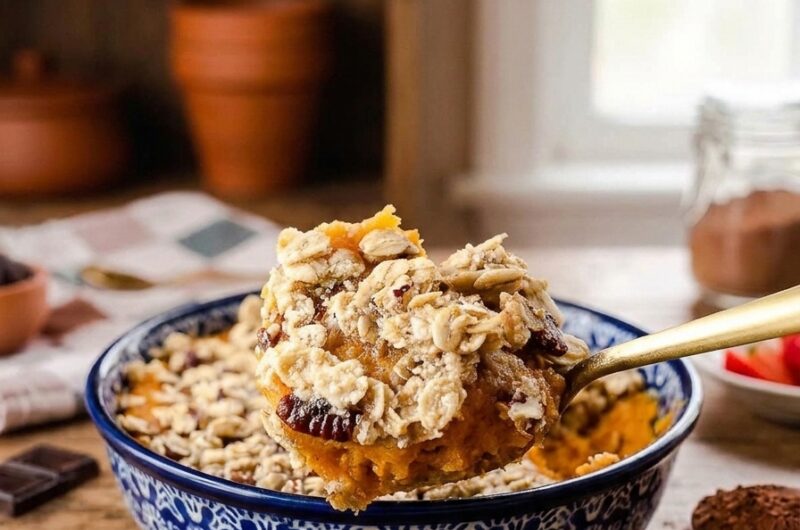
This Dairy-Free Sweet Potato Casserole is a creamy, warmly spiced holiday side dish topped with a crunchy maple pecan streusel. Instead of traditional butter, heavy cream, refined brown sugar, or marshmallows, this version uses full-fat coconut milk, coconut oil, pure maple syrup, and a flax egg. The result is a rich and comforting healthy sweet potato casserole that keeps the naturally sweet flavor of the potatoes at the center of the dish.
The smooth sweet potato filling is flavored with vanilla, cinnamon, nutmeg, maple syrup, and sea salt, while the topping combines chopped pecans with oat flour or almond flour and rolled oats or pumpkin seeds. A second portion of maple syrup and coconut oil binds the topping into crisp, golden clusters. The recipe is completely dairy-free as written and contains no refined sugar, making it a useful alternative for holiday gatherings where guests have different dietary preferences.
Why You’ll Love This Healthy Sweet Potato Casserole
This recipe keeps the familiar comfort of a classic Thanksgiving sweet potato casserole while taking a different approach to sweetness and richness. Sweet potatoes already contain natural sugars, so the recipe enhances their flavor with pure maple syrup instead of covering them with a large quantity of refined sugar. Cinnamon, nutmeg, and vanilla add the warm flavors expected from a holiday casserole, while coconut milk gives the filling its creamy texture.
The maple pecan topping is another highlight. Instead of a soft marshmallow layer, the casserole is finished with a crumbly streusel that becomes golden and crisp during baking. The crunchy nuts and oats create a pleasant contrast with the silky sweet potato filling underneath. It works especially well as a holiday side dish but is simple enough to prepare whenever sweet potatoes are in season.
A Dairy-Free Twist on Classic Sweet Potato Casserole
Traditional sweet potato casserole frequently contains butter, milk or cream, eggs, brown sugar, and sometimes marshmallows. This dairy-free sweet potato casserole recipe replaces the dairy ingredients with canned full-fat coconut milk and melted coconut oil. A flax egg provides binding, while maple syrup supplies the added sweetness.
These ingredients are not simply substitutions for dietary reasons; they also influence the finished texture. Full-fat coconut milk adds richness to the potato puree, while the flax mixture thickens after resting and helps bind the filling. Coconut oil contributes richness to both the potato layer and streusel, allowing the casserole to retain the comforting character associated with the classic dish.
Why Sweet Potatoes Are the Star
The recipe begins with 10 cups of peeled and cubed sweet potatoes, making them the main ingredient by a substantial margin. Their naturally sweet, earthy flavor provides the foundation for everything else in the casserole.
Cooking the potatoes until completely tender is essential. Properly softened sweet potatoes are easier to mash or process into a smooth puree, which helps prevent unwanted lumps. The recipe recommends steaming the cubes for approximately 13–18 minutes, until they break apart easily when tested with a fork.
Why Steaming Works Well
Steaming is the preferred cooking method in the supplied recipe because it softens the sweet potatoes without immersing them directly in water. This helps control the amount of additional moisture entering the potato filling.
Boiled potatoes can absorb water, which may result in a looser puree. With a casserole that already contains coconut milk and maple syrup, controlling moisture is useful for achieving a filling that is creamy without becoming watery. Cut the potatoes into reasonably uniform cubes before steaming so they soften at approximately the same rate.
The Role of the Flax Egg
This recipe uses a simple flax egg made from 1 tablespoon ground flaxseed and 2 tablespoons water. Combine the two ingredients and allow them to stand for about 5–7 minutes. During this time, the ground flax absorbs the water and develops a thicker, gel-like consistency.
The flax mixture is then incorporated into the cooked sweet potatoes along with the coconut milk, maple syrup, coconut oil, vanilla, spices, and salt. It serves as the plant-based binder in the standard recipe and contributes to the stability of the filling as it bakes and cools.
Full-Fat Coconut Milk Creates Creaminess
Three-quarters of a cup of canned full-fat coconut milk provides much of the richness in this vegan sweet potato casserole. Its creamy consistency helps transform the steamed potatoes into a smooth puree without requiring regular dairy milk or cream.
Canned coconut milk commonly separates during storage, with thicker coconut cream rising above a thinner liquid. The supplied recipe therefore recommends mixing the contents of the can thoroughly before measuring the required amount. This ensures that the filling receives a balanced mixture rather than mostly thick cream or mostly watery liquid.
Pure Maple Syrup Adds Unrefined Sweetness
The recipe contains 6 tablespoons of pure maple syrup, divided between the filling and streusel. Three tablespoons go into the sweet potato mixture, while the remaining three tablespoons sweeten the crunchy topping.
Using the maple syrup in two places creates a consistent flavor without relying on refined white or brown sugar. In the filling, it complements the natural sweetness of the potatoes. In the topping, it combines with coconut oil, pecans, and the selected flour and oats or seeds to form a sweet, crisp crumble during baking.
Coconut Oil Adds Richness
Six tablespoons of melted coconut oil are divided between the two components. The sweet potato filling receives two tablespoons, while one-quarter cup is reserved for the streusel topping. This division allows the same dairy-free fat to serve two different purposes.
In the filling, coconut oil contributes richness and helps create a smoother mouthfeel. In the topping, it moistens the dry ingredients and helps form crumbly clusters that become crisp as they bake. Measure the oil after melting so the quantity is accurate and easy to distribute.
Cinnamon, Nutmeg, and Vanilla
The filling is flavored with 2 teaspoons vanilla extract, 1½ teaspoons ground cinnamon, and ½ teaspoon ground nutmeg. These ingredients provide the warm aroma associated with fall and holiday sweet potato recipes.
Cinnamon gives the strongest spice presence, while the smaller quantity of nutmeg provides background warmth. Vanilla rounds out the flavor and works naturally with sweet potatoes, coconut, maple syrup, and pecans. Because these flavors are incorporated directly into the puree, every serving receives the same balanced combination rather than having the spices concentrated only in the topping.
Why Sea Salt Matters
Half a teaspoon of sea salt may appear minor compared with ten cups of sweet potatoes, but it plays an important role in balancing the casserole. Sweet potato, maple syrup, vanilla, and coconut are all naturally sweet or rich ingredients, so a small amount of salt prevents the dish from tasting one-dimensional.
Add the sea salt directly to the sweet potato mixture with the cinnamon and nutmeg. Mixing it thoroughly through the puree ensures that the seasoning is distributed consistently rather than concentrated in isolated areas.
The Maple Pecan Streusel Topping
The topping transforms the smooth sweet potato puree into a more texturally interesting casserole. It contains ½ cup chopped pecans, ¼ cup oat flour or almond flour, ¼ cup rolled oats or pumpkin seeds, 3 tablespoons pure maple syrup, and ¼ cup melted coconut oil.
When mixed together, these ingredients should form a coarse, damp crumble rather than a smooth paste. The streusel is scattered loosely over the filling before baking. As it heats, the nuts, flour, and oats or seeds toast while the maple syrup and coconut oil help create golden clusters.
Oat Flour or Almond Flour
The original recipe gives a choice between ¼ cup oat flour or almond flour for the streusel. Both serve as the dry base that helps absorb the maple syrup and coconut oil and creates the crumbly topping.
If preparing the casserole for someone who needs a strict gluten-free dish and choosing oat flour, use a product appropriate for their dietary requirements. Almond flour provides another option and naturally pairs well with pecans and maple. Since both options appear in the original ingredient list, they are retained exactly rather than selecting one and removing the other.
Rolled Oats or Pumpkin Seeds
The topping also includes a choice between ¼ cup rolled oats or pumpkin seeds. Rolled oats give the streusel a traditional rustic crumble texture, while pumpkin seeds provide a different kind of crunch.
These choices make the topping easier to adapt without changing the original formula. As with oat flour, readers preparing the recipe for strict gluten avoidance should select oats appropriate to their dietary needs. Pumpkin seeds may be preferable when a grain-free variation is desired, provided all of the other selected ingredients also suit that requirement.
How to Make the Sweet Potato Filling
Once the sweet potato cubes are fully tender, transfer them to a large mixing bowl. For a more rustic casserole, mash them thoroughly with a potato masher. For a smoother texture, the supplied recipe recommends processing them in a food processor.
Add the prepared flax egg, ¾ cup full-fat coconut milk, 3 tablespoons maple syrup, 2 tablespoons melted coconut oil, vanilla, cinnamon, nutmeg, and sea salt. Mash or process until the ingredients are evenly distributed and the filling reaches your preferred smoothness. Then spread the mixture evenly into the baking dish.
How to Prepare the Pecan Streusel
Place the chopped pecans, selected flour, and rolled oats or pumpkin seeds in a separate mixing bowl. Add the remaining three tablespoons of maple syrup and quarter cup of melted coconut oil.
Mix with a fork or your fingers until the dry ingredients have absorbed the liquids and a coarse, clumpy topping forms. You are looking for distinct crumbs rather than a completely smooth mixture. Those irregular clusters are what provide the crisp textural contrast after baking.
How to Assemble the Casserole
Preheat the oven to 350°F (175°C). Once the sweet potato filling has been spread evenly into the baking dish, scatter the prepared streusel over the entire surface.
Do not press the topping firmly into the sweet potato layer. The supplied recipe specifically recommends keeping the crumble loose and airy. Pressing it into the wet filling can allow it to absorb additional moisture, reducing the crispness that makes the pecan topping so appealing.
How Long to Bake Sweet Potato Casserole
Bake the assembled casserole at 350°F (175°C) for 35–40 minutes. The topping should become golden brown, while the edges of the sweet potato layer may begin bubbling gently.
Because the sweet potatoes are already fully cooked before the casserole enters the oven, this baking stage is primarily about setting the filling, heating the dish evenly, and developing the streusel topping. Watch the surface toward the end of the baking time so the pecans become toasted without burning.
Let the Casserole Rest Before Serving
After removing the casserole from the oven, allow it to stand for at least 10 minutes before serving. This short cooling period gives the filling time to settle and firm slightly.
Serving immediately while the mixture is bubbling hot can result in softer, less defined portions. The rest period also allows the casserole to reach a more comfortable serving temperature. Since the dish retains heat well, ten minutes of resting should not prevent it from being served warm.
How to Make Sweet Potato Casserole Ahead
This recipe is particularly useful for holiday meal planning because much of the work can be completed in advance. The supplied instructions allow the casserole base to be prepared up to 24 hours ahead. Spread the sweet potato mixture into the baking dish, cover it, and refrigerate.
Keep the dry streusel components separately rather than placing the topping on the moist filling overnight. When you are ready to bake, add the topping and place the chilled casserole into the oven. The source recommends adding approximately five additional minutes to the baking time when starting with a cold dish.
How to Store Leftover Sweet Potato Casserole
Allow leftovers to cool completely before covering the casserole tightly or transferring portions into an airtight container. The supplied recipe states that leftovers can be refrigerated for up to five days.
Proper covering helps prevent the sweet potato layer from drying out and protects the dish from absorbing other refrigerator odors. For meal planning, individual portions can also be separated after cooling so only the amount needed for a particular meal has to be reheated.
The Best Way to Reheat It
For larger portions, preheat the oven to 300°F (150°C) and loosely cover the casserole with foil. Reheat for approximately 15–20 minutes, or until the center is warm. The source recommends removing the foil during the final three minutes to help restore the crunch of the streusel.
Individual portions can be microwaved on medium power for approximately 60–90 seconds. The microwave is quicker, but the topping will become softer. The oven is therefore the better choice when preserving the crunchy pecan streusel is a priority.
Ingredient Variations
The supplied recipe includes several possible substitutions. Orange-fleshed yams may replace sweet potatoes at a 1:1 ratio. If a plant-based version is not required, one whole egg may replace the flax egg. Coconut milk may also be exchanged for unsweetened almond, cashew, oat, or soy milk, although this changes the richness of the filling.
For a nut-free variation, the source suggests replacing the chopped pecans with sunflower and pumpkin seeds. These alternatives are useful when adapting the dish, but the standard recipe card below retains the original ingredient choices exactly as supplied.
Notes for the Best Dairy-Free Sweet Potato Casserole
Steam the sweet potatoes until completely tender and avoid introducing unnecessary water into the filling. Thoroughly mix canned coconut milk before measuring it, and allow the flaxseed-and-water mixture to gel before adding it to the potatoes. These details help create a smooth, stable filling.
For the topping, mix until coarse crumbs form and scatter them loosely over the casserole rather than pressing them down. Bake until golden and give the casserole at least ten minutes to rest before serving. Together, these steps create the intended contrast between creamy sweet potato and crunchy maple pecan streusel.
Is This Sweet Potato Casserole Vegan?
As written, the recipe uses no dairy products or eggs. Coconut milk replaces dairy milk or cream, coconut oil replaces conventional butter, and ground flaxseed mixed with water serves as the binder. Based on the listed ingredients, it can therefore fit a plant-based or vegan recipe collection when the individual packaged ingredients used are also suitable.
It also contains no refined sugar because pure maple syrup provides the added sweetness. However, no refined sugar does not mean sugar-free. The nutritional information supplied with the recipe estimates approximately 14 grams of total sugars per serving.
Is This Sweet Potato Casserole Gluten-Free?
The core filling does not contain wheat flour. The topping offers either oat flour or almond flour and either rolled oats or pumpkin seeds. When using almond flour and pumpkin seeds, the recipe avoids oat-based ingredients altogether.
If using oat flour or rolled oats for someone who must strictly avoid gluten, verify that the products meet their individual dietary requirements. This is especially important for people with celiac disease because ordinary oats may be exposed to gluten-containing grains during processing.
Is This a Healthy Sweet Potato Casserole?
For a recipe website, Healthy Side Dishes is a reasonable category for this casserole, particularly because it centers on sweet potatoes and uses maple syrup rather than refined sugar. It can also fit under Dairy-Free Recipes, Holiday Side Dishes, Thanksgiving Recipes, and Vegan Recipes.
Still, terms such as “healthy” are broad and depend on a person’s nutritional needs. It is more useful to clearly describe the recipe as dairy-free and made without refined sugar and provide the available nutrition information rather than suggesting it is necessarily appropriate for every diet.
Why This Dairy-Free Sweet Potato Casserole Works
Readers searching for dairy-free sweet potato casserole, healthy sweet potato casserole, vegan sweet potato casserole, sweet potato casserole without marshmallows, no refined sugar sweet potato casserole, maple pecan sweet potato casserole, or healthy Thanksgiving side dishes will find many of those characteristics in this recipe.
The combination works because the filling and topping provide contrasting textures. Steamed sweet potatoes create a naturally sweet base, coconut milk and coconut oil add richness, flaxseed provides binding, maple syrup adds sweetness, and cinnamon, nutmeg, and vanilla supply warm holiday flavor. The pecan streusel then adds the crunchy finish that makes the casserole suitable for a festive table.

Dairy Free Sweet Potato Casserole (No Refined Sugar!)
A creamy dairy-free sweet potato casserole made without refined sugar and topped with crunchy maple pecan streusel.
10
servings20
minutes40
minutes321
kcal10
minutes1
hour10
minutesIngredients
- Sweet Potato Filling
10 cups sweet potatoes, peeled and cubed
1 tablespoon ground flaxseed
2 tablespoons water
¾ cup canned full-fat coconut milk
3 tablespoons pure maple syrup
2 tablespoons coconut oil, melted
2 teaspoons vanilla extract
1½ teaspoons ground cinnamon
½ teaspoon ground nutmeg
½ teaspoon sea salt
- Maple Pecan Streusel
½ cup chopped pecans
¼ cup oat flour or almond flour
¼ cup rolled oats or pumpkin seeds
3 tablespoons pure maple syrup
¼ cup coconut oil, melted
Instructions
- Peel and cut the sweet potatoes into small, even cubes.
- Steam for 13–18 minutes, until completely fork-tender.
- Mix ground flaxseed with 2 tablespoons water.
- Rest the flax mixture for 5–7 minutes until thickened.
- Transfer the cooked sweet potatoes to a large bowl or food processor.
- Add the flax egg, coconut milk, 3 tablespoons maple syrup, 2 tablespoons coconut oil, vanilla, cinnamon, nutmeg, and salt.
- Mash or process until smooth and evenly combined.
- Spread the sweet potato mixture evenly into a baking dish.
- Combine pecans, oat or almond flour, and rolled oats or pumpkin seeds in a separate bowl.
- Add 3 tablespoons maple syrup and ¼ cup melted coconut oil.
- Mix until a coarse, crumbly streusel forms.
- Preheat the oven to 350°F (175°C).
- Scatter the streusel loosely over the sweet potato filling.
- Bake for 35–40 minutes, until the topping is golden.
- Remove from the oven and rest for at least 10 minutes before serving.
Nutrition Facts
10 servings per container
- Amount Per ServingCalories321
- % Daily Value *
- Total Fat
17g
22%
- Total Carbohydrate
40g
15%
- Protein 4g 8%
* The % Daily Value tells you how much a nutrient in a serving of food contributes to a daily diet. 2,000 calories a day is used for general nutrition advice.