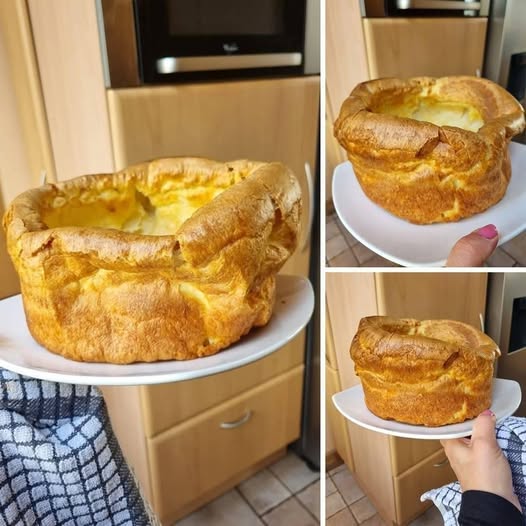
Yorkshire Pudding is a classic English dish, often served alongside roast beef, potatoes, vegetables, and gravy for a Sunday roast. It’s a crispy, soft baked pudding made from eggs, flour, milk, and beef fat, puffing up dramatically in the oven and doing a wonderful job of soaking up gravy. Despite its impressive rise and golden, crisp exterior, it’s built from a short list of everyday ingredients and a straightforward batter.
Mise en Place
- 4 large eggs
- 1 cup + 2 tablespoons all-purpose flour
- 1 cup whole milk
- 1/2 teaspoon salt
- 1/4 cup beef tallow (also called beef dripping in the UK)
A quick note on the tallow: make sure to use cooking-grade beef tallow, not the kind sold for soap-making — they’re not the same product, and only the cooking variety is appropriate here.
Timing Overview
- Prep Time: 10 minutes
- Chill Time: 2+ hours (or overnight)
- Bake Time: 11–13 minutes
- Total Time: Approx. 2.5 to 3 hours
Workflow: How It Comes Together
- Make the batter.
- Chill the batter.
- Heat the oven and the tin with fat.
- Pour the batter into the hot tin.
- Bake until puffed and golden.
- Serve immediately.
Step 1: Make the Batter
In a bowl, mix the flour, salt, and eggs with a whisk until the batter is mostly smooth. Slowly add the milk while whisking, continuing until the batter is smooth with no lumps remaining.
Step 2: Chill the Batter
Cover the bowl with plastic wrap and refrigerate for at least 2 hours, or overnight for the best flavor. This resting period matters more than it might seem — it gives the flour time to fully hydrate, which affects both the rise and the final texture.
Step 3: Heat the Oven and the Tin
Preheat the oven to 450°F (230°C). Use a traditional Yorkshire pudding tin or a muffin tin, and put 1–2 teaspoons of beef tallow into each section. Place the tin in the oven for 6–7 minutes, until the fat is very hot and just starting to smoke slightly.
Step 4: Pour and Bake
Take the batter out of the fridge and give it a quick whisk. Pour the batter into each section of the hot tin, filling to about ½ to ¾ full — you should hear it sizzle as it hits the hot fat, which is a good sign the tin was heated properly. Bake for 11–13 minutes, or until golden brown and crispy.
If making two large puddings in 8-inch cast iron pans instead of individual portions, fill slightly less than halfway and bake a few minutes longer than the standard time.
Step 5: Serve Right Away
Serve immediately while hot and crispy, alongside roast beef, potatoes, vegetables, and plenty of gravy.
Serving Ideas
- Serve with roast beef, pork, lamb, or chicken.
- Pair with roasted potatoes, carrots, or peas.
- Top with onion gravy, mushroom gravy, white gravy, or a classic beef gravy.
- For a modern twist, fill with minced meat, sausages, or vegetables.
Tips & Tricks
- Let the batter rest. Resting helps the batter rise better and taste better once baked — overnight is ideal if time allows.
- Use the right pan. A Yorkshire pudding tin gives the traditional cup shape, while a muffin tin produces taller puddings.
- Use cold or room-temp batter deliberately. Cold batter tends to give a more classic cup shape, while room-temperature batter gives a taller rise — it’s worth trying both to see which you prefer.
- Heat the fat thoroughly. The fat needs to be very hot before the batter goes in — this is what creates that crispy exterior.
- Serve immediately. Yorkshire puddings lose their crispiness quickly, so serving them straight from the oven matters.
- Stick with beef tallow. For the best taste and crispiness, beef tallow outperforms oil or butter in this recipe.
How to Freeze
Let the puddings cool completely, then place them in a ziplock bag or airtight container and freeze for up to 1 month. To reheat, let them thaw first, then warm in the oven until crispy again.
Why the Fat Temperature Matters So Much
The step of preheating the tin with fat already in it is arguably the most important part of this whole recipe, and it’s worth understanding why. When cold batter hits smoking-hot fat, the outside of the batter sets almost instantly, which is what creates the crisp shell and traps steam inside to drive the dramatic puff. If the fat isn’t hot enough when the batter goes in, the batter spreads and soaks into the fat slowly instead of searing on contact, and the result is a flatter, greasier pudding that never develops that signature rise. That sizzle you hear when pouring the batter in is a genuinely useful audio cue — if you don’t hear it, the tin likely needs more time in the oven before it’s ready.
Understanding the Batter’s Resting Period
Letting the batter rest in the fridge isn’t just a matter of convenience or make-ahead planning — it changes the batter itself. During that resting time, the flour fully absorbs the liquid in the mixture, and the gluten that formed while whisking has time to relax. A batter that goes straight into the tin without resting tends to be thinner and less consistent, which can affect both how evenly it puffs and how crisp the final texture turns out. Overnight resting is recommended for exactly this reason — it gives the batter more time to reach that ideal consistency than the minimum 2-hour window does.
Choosing Between Individual and Large Puddings
The recipe works either as individual portions in a muffin tin or as one or two larger puddings in cast iron pans, and the choice mostly comes down to presentation and serving style. Individual puddings are easier to portion and serve at a table, and tend to puff a bit more dramatically given their smaller size relative to the batter’s rise. Larger puddings, filled to just under halfway in the pan, take a few extra minutes in the oven and make more of a centerpiece presentation, often torn or cut into pieces at the table rather than served as single portions.
Pairing Yorkshire Pudding With the Rest of the Meal
Since Yorkshire pudding is traditionally part of a larger roast dinner, timing its bake alongside the rest of the meal is worth planning for. Because it needs a very hot oven and only takes 11–13 minutes, it’s usually best baked toward the end of the cooking process, once the roast and other sides are resting or nearly done, so the puddings can go straight from the oven to the table while still at their crispest.
Traditional Yorkshire Pudding
Description: A traditional British side dish made from a simple batter of eggs, flour, milk, and beef fat, baked until golden and crispy — perfect for a Sunday roast dinner.
Prep Time: 10 minutes Chill Time: 2+ hours (or overnight) Bake Time: 11–13 minutes Total Time: Approx. 2.5 to 3 hours
Ingredients:
- 4 large eggs
- 1 cup + 2 tablespoons all-purpose flour
- 1 cup whole milk
- 1/2 teaspoon salt
- 1/4 cup beef tallow
Instructions:
- Whisk the flour, salt, and eggs together in a bowl until mostly smooth.
- Slowly add the milk, whisking until no lumps remain.
- Cover and refrigerate for 2 hours or overnight.
- Preheat the oven to 450°F (230°C).
- Add 1–2 teaspoons of beef tallow to each section of a Yorkshire pudding or muffin tin, and heat in the oven for 6–7 minutes.
- Pour the batter into the hot tins, filling ½ to ¾ full. Bake for 11–13 minutes, until golden and crispy.
- Serve immediately with roast meat, vegetables, and gravy.
Notes:
- Batter should rest before baking for better flavor and rise.
- Beef tallow gives the best crisp texture and flavor — don’t substitute with oil or butter if avoidable.
- Use cold batter for cup-shaped puddings, or room-temperature batter for a taller rise.
- Always serve hot and fresh out of the oven, since the crispiness fades quickly.
- Freeze cooled puddings in an airtight container for up to 1 month; thaw before reheating in the oven.
Nutrition Information (per pudding):
- Calories: 111
- Carbs: 9g
- Protein: 3g
- Fat: 6g
- Saturated Fat: 3g
- Cholesterol: 56mg
- Sodium: 126mg
- Calcium: 33mg
- Iron: 0.7mg
Medical Disclaimer: This content is provided for general informational and educational purposes only and is not intended as, and should not be substituted for, professional nutritional, dietary, or medical advice. Individuals with egg allergies, gluten sensitivities, dairy sensitivities, or other dietary restrictions or health conditions should consult a qualified healthcare provider or registered dietitian before preparing or consuming this recipe. The creator of this content assumes no liability for any adverse effects resulting from the preparation or consumption of this recipe.