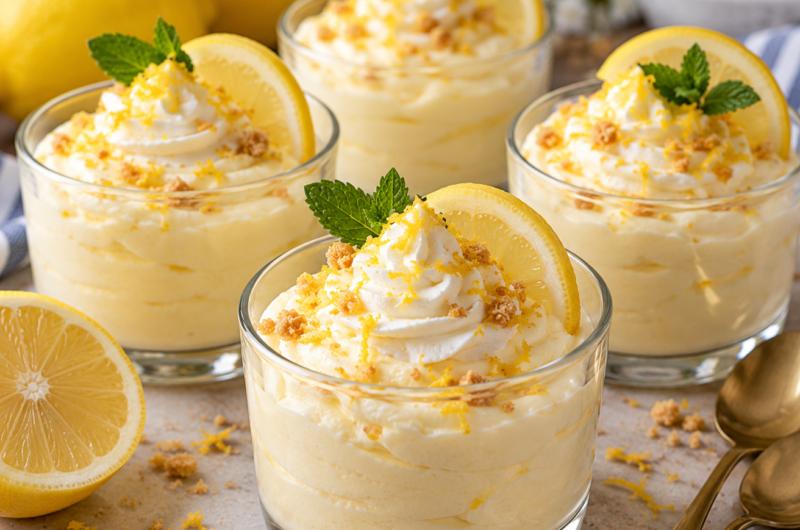
Keto Lemon Cheesecake Mousse is a smooth, creamy, no-bake dessert that combines the rich flavor of cheesecake with the fresh, tangy taste of lemon. Its light and airy texture makes it especially appealing when you want something sweet without the heaviness of a traditional baked cheesecake. Made with cream cheese, heavy cream, fresh lemon, keto sweetener, and vanilla, this simple dessert delivers plenty of flavor while keeping carbohydrates relatively low.
This easy keto lemon dessert is also convenient because there is no oven, crust, water bath, or complicated baking technique involved. The ingredients are mixed and whipped, portioned into serving glasses, and chilled until the mousse develops its creamy texture. That simplicity makes Keto Lemon Cheesecake Mousse suitable for beginners as well as experienced home cooks looking for an attractive make-ahead low-carb dessert.
What Is Keto Lemon Cheesecake Mousse?
Keto Lemon Cheesecake Mousse is essentially a lighter, whipped interpretation of traditional lemon cheesecake. Instead of preparing a crust and baking a dense cheesecake filling, this recipe combines softened cream cheese with lemon juice, lemon zest, powdered keto sweetener, and vanilla extract. Separately whipped heavy cream is then folded into the cheesecake mixture to create the soft, fluffy consistency associated with mousse.
The result combines two familiar dessert textures. Cream cheese supplies the smooth richness and slight tang expected from cheesecake, while whipped heavy cream adds air and volume. Fresh lemon keeps the finished dessert from tasting excessively rich. Once chilled, the mousse becomes slightly firmer while remaining soft enough to eat easily with a spoon, making it an appealing low-carb dessert for many occasions.
Why This Keto Lemon Dessert Works
One of the strongest features of this easy Keto Lemon Cheesecake Mousse is the balance between richness and freshness. Cream cheese and heavy cream create a luxurious base, but fresh lemon juice adds enough acidity to brighten the flavor. Lemon zest strengthens the citrus aroma without adding significant liquid, while vanilla rounds out the sharper notes and gives the mousse a more complete dessert flavor.
Texture is equally important. Rather than simply stirring all the ingredients together, the heavy cream is whipped separately before being gently folded into the cream cheese mixture. This incorporates air into the dessert and produces a lighter consistency. Chilling then gives the mousse enough time to settle and develop a smooth, spoonable texture without requiring gelatin, flour, cornstarch, or baking.
A Simple No-Bake Keto Dessert
No-bake keto desserts are particularly convenient when you want something sweet without spending a long time in the kitchen. This recipe requires approximately 15 minutes of active preparation, although additional chilling time is necessary before serving. There is no need to preheat an oven or wait for a baked cheesecake to cool gradually, which makes preparation considerably more straightforward.
The mousse can also be divided into individual jars or dessert glasses before chilling. This approach makes serving easy because there is no cake to cut and no concern about slices losing their shape. Individual portions can be taken directly from the refrigerator when needed, making this recipe particularly useful for dinner parties, family meals, meal preparation, or a chilled dessert during warmer weather.
Cream Cheese Creates the Cheesecake Base
Cream cheese is the foundation of this Keto Lemon Cheesecake Mousse and provides the characteristic flavor that makes the dessert taste like cheesecake. Its thick consistency also gives the mousse enough structure to hold its shape after the whipped cream is incorporated. For the smoothest result, the cream cheese should be softened before mixing rather than used immediately after being removed from the refrigerator.
Cold cream cheese can remain lumpy even after extended beating, which affects the finished texture. Allowing it to soften makes it much easier to beat until fluffy and smooth. This also helps the powdered keto sweetener, lemon juice, lemon zest, and vanilla distribute evenly throughout the mixture. A smooth cream cheese base is one of the most important steps toward producing a silky mousse.
Heavy Cream Gives the Mousse Its Airy Texture
Heavy cream transforms the cheesecake mixture from a dense filling into a lighter mousse. When whipped, cream traps tiny air bubbles that increase its volume and create a soft texture. The recipe calls for whipping the heavy cream to soft peaks rather than taking it all the way to a very stiff consistency. This makes it easier to fold into the cream cheese mixture without creating a heavy or grainy dessert.
Watch the cream carefully as you whip it. Once soft peaks develop, stop mixing. Overwhipped cream can become stiff and eventually grainy, which makes it harder to incorporate smoothly. Properly whipped cream should look thick and airy while still having a soft, flexible consistency. This texture helps produce the delicate mouthfeel that distinguishes mousse from ordinary cheesecake filling.
Fresh Lemon Juice Adds Bright Citrus Flavor
Fresh lemon juice provides the tangy citrus flavor that balances the richness of the dairy ingredients. Without it, the combination of cream cheese and heavy cream could taste comparatively heavy. Lemon juice introduces acidity and freshness, giving every spoonful a clean finish while complementing the natural tang of the cream cheese.
The supplied recipe does not provide an exact quantity of lemon juice, so it is important not to invent a measurement when reproducing the original ingredients. The flavor should remain balanced rather than excessively sour. The original guidance recommends tasting the lemon balance before chilling because the flavors become slightly softer and more integrated after the mousse has rested in the refrigerator.
Lemon Zest Intensifies the Flavor
Lemon zest is a particularly useful ingredient because it contains aromatic oils that provide concentrated citrus fragrance. It enhances the lemon character without adding the additional moisture that would come from simply pouring more lemon juice into the mousse. For convenience, zest the lemon before cutting and juicing it.
Only the colored outer portion of the peel should generally be removed when zesting. The white layer beneath the yellow exterior can have a more bitter character. Finely grated zest distributes throughout the cream cheese mixture, giving the finished mousse a noticeable fresh-lemon aroma and small flecks of natural color. The original notes also suggest adding extra zest when a stronger lemon flavor is preferred.
Powdered Keto Sweetener Keeps the Texture Smooth
The recipe uses powdered keto sweetener rather than regular sugar. A finely powdered sweetener is particularly suitable for mousse because it can blend into the cream cheese mixture more smoothly. Coarse granules may remain noticeable in a cold, no-bake dessert because there is no prolonged heating process to dissolve them.
Using a keto-compatible sweetener is also essential to the low-carb character of this recipe. The specific type and quantity are not stated in the supplied ingredient list, so those details should be selected according to the original product or formulation being used rather than guessed. Different low-carb sweeteners vary substantially in sweetness, so equal quantities are not necessarily interchangeable.
Vanilla Complements the Lemon and Cheesecake
Vanilla extract plays a supporting role in this Keto Lemon Cheesecake Mousse. Lemon remains the dominant flavor, but vanilla softens the sharp citrus notes and complements the creamy cheesecake base. It helps the dessert taste rounded rather than simply sour and sweet.
Because the recipe contains only a small group of ingredients, each one contributes noticeably to the finished flavor. Vanilla is therefore useful even though it is not intended to be prominent. Once combined with cream cheese, lemon, sweetener, and whipped cream, it adds subtle warmth and makes the overall flavor closer to a complete cheesecake-style dessert.
How to Prepare the Cream Cheese Mixture
Begin with softened cream cheese in a clean mixing bowl. Beat it on medium speed until it becomes smooth and fluffy. Take enough time at this stage to eliminate visible lumps because correcting a lumpy texture becomes more difficult once the other ingredients have been incorporated.
Add the powdered keto sweetener, fresh lemon juice, lemon zest, and vanilla extract to the softened cream cheese. Continue mixing until everything is evenly combined and the base looks smooth. Scraping the sides and bottom of the bowl can help ensure that no unmixed cream cheese remains. This creamy lemon base will later be lightened with the separately whipped heavy cream.
How to Whip the Heavy Cream Correctly
Place the heavy cream in a separate mixing bowl and whip it at medium speed. As air is incorporated, the cream will gradually become thicker and increase in volume. Continue only until soft peaks form. At this stage, a lifted whisk or beater should leave a peak that holds briefly but bends gently rather than standing completely stiff.
Stopping at soft peaks is particularly useful for this recipe because the cream still needs to be folded into another mixture. Cream that is whipped too firmly can be difficult to incorporate without leaving uneven pieces. Cream that has barely thickened, on the other hand, will not give the mousse enough volume. Soft peaks provide a useful middle ground.
Folding the Mousse Without Losing Volume
Once both mixtures are prepared, gently fold the whipped heavy cream into the lemon cream cheese mixture. Folding is different from vigorous stirring. The goal is to combine the ingredients while retaining as much of the air trapped in the whipped cream as possible.
Use a spatula to move through the center of the mixture and lift it gently from the bottom, turning it over itself until the color and texture appear uniform. Avoid prolonged or aggressive mixing after the cream has been added. The supplied recipe specifically warns against overmixing because excessive stirring can deflate the whipped cream and make the finished mousse heavier.
Chilling Is an Important Step
Although the active preparation takes only around 15 minutes, the mousse benefits from refrigeration before serving. Chilling allows the cream cheese and whipped cream mixture to firm slightly while giving the lemon, vanilla, and sweetener time to blend into a more cohesive flavor.
The supplied notes recommend chilling the mousse for at least an hour, while also observing that an overnight rest can produce an especially good texture and flavor. For attractive individual portions, spoon the freshly prepared mousse into small glasses, cups, or jars before refrigeration. Smooth the tops gently, cover if necessary, and keep chilled until serving.
Common Mistakes to Avoid
Several small mistakes can affect an otherwise straightforward Keto Lemon Cheesecake Mousse. Using cream cheese that is too cold can leave lumps throughout the mixture, while overwhipping the heavy cream may produce a grainier texture. Vigorous stirring after the whipped cream has been added can remove the air responsible for the mousse’s light consistency.
The lemon component also needs balance. Too much juice may overwhelm the cheesecake flavor and can affect the texture by introducing additional liquid. Finally, serving immediately after mixing misses the benefits of refrigeration. Giving the mousse sufficient chilling time helps the consistency settle and allows the lemon and cheesecake flavors to become more harmonious.
A Make-Ahead Keto Dessert
Keto Lemon Cheesecake Mousse is particularly convenient when dessert needs to be prepared ahead of a meal or gathering. Instead of completing the dessert shortly before serving, you can portion it into individual containers and refrigerate it in advance. This reduces work at serving time and allows guests or family members to receive neatly portioned desserts directly from the refrigerator.
The mousse may actually benefit from this approach because chilling improves its consistency. Preparing it earlier also gives the lemon zest time to perfume the creamy base. For a clean presentation, wait until shortly before serving to add any optional finishing touches rather than disturbing the surface repeatedly during refrigeration.
Serving Keto Lemon Cheesecake Mousse
Serve this mousse cold for the best texture. Small glass cups or jars show off its smooth, pale lemon appearance and make portioning straightforward. Since the mousse is rich despite its airy consistency, individual servings do not need to be especially large to provide a satisfying dessert.
The original material suggests that the mousse can be layered with keto crumbs or additional whipped cream when a more decorative presentation is desired. These are optional serving ideas rather than ingredients in the core recipe. If precise carbohydrate intake matters, remember that additional toppings can alter the nutritional values of the finished serving.
Is This Lemon Cheesecake Mousse Keto-Friendly?
The supplied recipe is designed as a keto dessert because it uses cream cheese, heavy cream, lemon, vanilla, and powdered keto sweetener rather than conventional sugar. It also contains no flour, traditional cheesecake crust, or other major source of refined carbohydrates. The supplied nutritional information estimates four grams of total carbohydrate per serving.
Whether a particular batch fits an individual’s ketogenic diet ultimately depends on portion size and the exact products used. Cream cheese, heavy cream, vanilla, and low-carb sweeteners can vary between brands. Reading product nutrition labels is therefore useful for anyone tracking carbohydrates closely rather than assuming that every version of an ingredient has identical values.
Can Keto Lemon Cheesecake Mousse Help With Weight Management?
This mousse can provide a lower-sugar alternative to many conventional cheesecake desserts, but describing it as a weight-loss food would be misleading. Weight management depends on overall calorie intake, diet quality, physical activity, and individual needs rather than one particular dessert. The supplied nutrition information estimates approximately 280 calories and 26 grams of fat per serving, so portion size still matters.
Its richness may make a modest portion satisfying, which can be useful for someone who wants a planned dessert within an appropriate eating pattern. However, keto-friendly and low-carb do not automatically mean low-calorie. It is better presented as a low-carb dessert than as a product that independently causes or guarantees weight loss.
Storing the Mousse
Store leftover Keto Lemon Cheesecake Mousse in covered jars or airtight containers in the refrigerator. According to the supplied recipe, it can be refrigerated for up to four days. Keeping it covered helps prevent the mousse from drying on the surface and protects its delicate flavor from other foods stored nearby.
The mousse should remain refrigerated until close to serving because its texture relies heavily on chilled cream and cream cheese. If preparing several portions in advance, individual covered jars are especially convenient. They reduce repeated handling of the mousse and make it easy to remove only the number of servings needed at a particular time.
Freezing and Thawing
The supplied storage guidance also allows the mousse to be frozen in sealed containers for up to one month. This can be useful when preparing desserts well in advance, although dairy-based desserts may sometimes experience slight textural changes after freezing and thawing.
For the recommended method, transfer the frozen mousse to the refrigerator and allow it to thaw overnight rather than trying to thaw it quickly at room temperature. Keeping the dessert cold throughout the process helps maintain its structure. Once thawed, serve it chilled for the closest result to freshly prepared mousse.
Perfect for Different Occasions
This easy Keto Lemon Cheesecake Mousse works throughout the year, although its fresh citrus character makes it particularly attractive as a spring or summer dessert. It can be served after a family dinner, prepared in advance for entertaining, or portioned into containers for a planned low-carb dessert during the week.
Its appearance can be kept simple or made more elegant depending on the occasion. The basic recipe needs no elaborate decoration because its appeal comes from its creamy texture and bright lemon flavor. Serving it in clear glasses or small dessert jars is enough to create an attractive presentation without adding unnecessary ingredients.
Why This Recipe Is Beginner-Friendly
Traditional cheesecake can involve crust preparation, careful baking, cooling, and concerns about cracking or setting correctly. This no-bake keto mousse removes most of those challenges. The main techniques are softening and beating cream cheese, whipping heavy cream to soft peaks, and gently folding the two mixtures together.
These steps are straightforward once the desired textures are understood. The most important points are using softened cream cheese, stopping the cream at soft peaks, folding gently, and allowing enough refrigeration time. Following those simple principles produces a creamy lemon dessert without requiring advanced baking skills or specialized equipment.
Important Notes
Keto Lemon Cheesecake Mousse combines the richness of cheesecake with the freshness of lemon in a light, no-bake dessert. Cream cheese supplies the classic cheesecake flavor, whipped heavy cream creates an airy consistency, and lemon juice and zest balance the richness with clean citrus notes. Powdered keto sweetener keeps the dessert sweet without relying on conventional granulated sugar.
Its simple preparation, make-ahead convenience, and individual serving options make it suitable for everyday desserts as well as entertaining. Most importantly, the recipe does not need complicated techniques to produce an appealing result. Beat the cheesecake base until smooth, whip the cream correctly, fold gently, portion, and chill thoroughly before serving.

Keto Lemon Cheesecake Mousse
A creamy, fluffy, no-bake Keto Lemon Cheesecake Mousse with fresh citrus flavor and a smooth cheesecake texture.
4
servings15
minutes1
hour280
kcal1
hour15
minutesIngredients
Cream cheese
Heavy cream
Lemon juice
Lemon zest
Powdered keto sweetener
Vanilla extract
Instructions
- Beat the Cream Cheese
Beat softened cream cheese until completely smooth and fluffy. - Add the Flavorings
Mix in powdered keto sweetener, lemon juice, lemon zest, and vanilla until smooth. - Whip the Cream
In a separate bowl, whip the heavy cream just until soft peaks form. - Fold
Gently fold the whipped cream into the lemon cream cheese mixture until light and evenly combined. - Portion
Spoon the mousse into four serving glasses or jars and smooth the tops. - Chill
Refrigerate for at least 1 hour, or until chilled and set. Serve cold.
Nutrition Facts
4 servings per container
- Amount Per ServingCalories280
- % Daily Value *
- Total Fat
26g
34%
- Total Carbohydrate
4g
2%
- Protein 4g 8%
* The % Daily Value tells you how much a nutrient in a serving of food contributes to a daily diet. 2,000 calories a day is used for general nutrition advice.