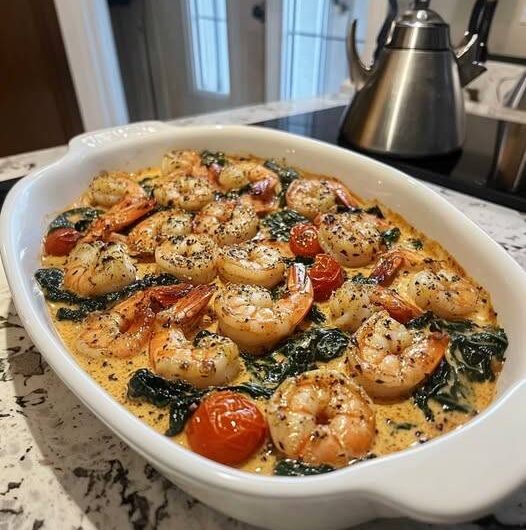
This is a rich, restaurant-style shrimp dish built around a creamy garlic and Parmesan sauce, brightened with sun-dried tomatoes and fresh spinach. The shrimp are seared first and set aside, then the sauce is built in stages in the same pan — garlic and sun-dried tomatoes, then broth and cream, then Parmesan and seasoning — before the spinach goes in and the shrimp return to finish cooking in the sauce.
It’s a stovetop-only recipe with no baking involved, and it comes together in one skillet from start to finish aside from the initial seasoning bowl. The finished dish is versatile enough to serve over pasta, rice, mashed potatoes, or lower-carb options like zucchini noodles or cauliflower rice.
Getting Everything Ready
Because this recipe moves through several sauce-building stages back-to-back, having every ingredient measured and staged before you start cooking makes a real difference — there’s very little downtime once the skillet is hot.
Equipment to have ready:
- A large skillet or sauté pan
- A cutting board
- A sharp knife
- Measuring cups and spoons
- A wooden spoon or spatula
- A small bowl
Ingredients to have measured and ready, for the shrimp:
- 1½ lb (680 g) large raw shrimp, peeled and deveined
- ½ teaspoon salt
- ½ teaspoon black pepper
- ½ teaspoon paprika
- ½ teaspoon garlic powder
- 1 tablespoon olive oil
Ingredients to have measured and ready, for the sauce:
- 2 tablespoons butter
- 4 cloves garlic, finely minced
- ½ cup sun-dried tomatoes, sliced (oil-packed preferred, drained but not rinsed)
- 1 cup heavy cream
- ½ cup chicken broth
- ½ cup freshly grated Parmesan cheese
- 1 teaspoon Italian seasoning
- ½ teaspoon crushed red pepper flakes (optional)
- Salt and black pepper, to taste
- 2 cups fresh spinach leaves
- 1 teaspoon lemon juice (optional, for balance)
Patting the shrimp completely dry with paper towels before seasoning is a small but important step — dry shrimp sear far better and stay juicier than shrimp with surface moisture still on them.
Workflow: How the Process Comes Together
This recipe is built as a single continuous sequence in one pan, with the shrimp cooked twice — briefly seared, then finished in the sauce:
- Season and sear the shrimp first, then remove them from the pan entirely while you build the sauce.
- Build the flavor base in the same skillet: butter, garlic, and sun-dried tomatoes.
- Add the liquid components — broth, then cream — and bring to a simmer.
- Season and thicken the sauce with Italian seasoning, red pepper flakes, and Parmesan.
- Wilt the spinach directly into the sauce.
- Return the shrimp to the pan to finish cooking and absorb the sauce.
- Taste and adjust salt, pepper, and optional lemon juice at the very end.
Because the shrimp are deliberately undercooked slightly during the initial sear, this recipe relies on that second simmering step in the sauce to finish them properly — skipping ahead or rushing that final step risks either undercooked or overcooked shrimp.
Approved Variations & Swaps
Based strictly on what’s built into this recipe, here are the adjustments it already allows for:
- Red pepper flakes are optional, for those who want a bit of heat versus a milder sauce.
- Lemon juice is optional, added at the end specifically to brighten and balance the richness of the sauce if desired.
- Serving base is flexible: the dish is designed to pair with fettuccine or linguine, steamed rice or risotto, mashed potatoes, crusty bread, or lighter options like zucchini noodles or cauliflower rice.
- Sun-dried tomato style: oil-packed is preferred, drained but not rinsed, which keeps a bit of the flavorful oil in the dish.
No other ingredient substitutions are specified in the source recipe, so changes beyond the optional heat, lemon, and serving base would go beyond what’s actually described here.
Step-by-Step Cooking Strategy
Getting the shrimp texture and sauce consistency right depends on a handful of specific technique choices.
Dry the shrimp thoroughly before seasoning. Removing surface moisture with paper towels is what allows the shrimp to sear rather than steam once they hit the hot oil, and it helps them stay juicy rather than releasing excess liquid into the pan too early.
Sear briefly and pull the shrimp before they’re fully cooked. One and a half to two minutes per side, removing them as soon as they turn pink and opaque, is intentional — the shrimp finish cooking later in the sauce, so overcooking them at this stage leads to rubbery shrimp by the time the dish is done.
Cook the garlic just until fragrant, not longer. Thirty to forty-five seconds of constant stirring is enough; garlic burns quickly and turns bitter if left too long in the hot butter.
Scrape the pan when adding the broth. Deglazing by scraping up the browned bits left from searing the shrimp pulls extra flavor into the sauce that would otherwise be left behind in the pan.
Add the Parmesan gradually while stirring constantly. Adding it all at once risks the cheese clumping instead of melting smoothly into the sauce — a steady, gradual addition with continuous stirring keeps the texture even.
Watch the sauce consistency, not just the clock. The target is a sauce that coats the back of a spoon while still remaining fluid — simmering for 3 to 5 minutes is a starting point, but the visual and texture cue matters more than the exact time.
Wilt the spinach in handfuls. Adding it gradually rather than all at once makes it easier to stir evenly into the sauce as each batch wilts down.
Return the shrimp along with their accumulated juices. Those juices carry flavor back into the sauce, and gently stirring to coat — rather than vigorous mixing — helps keep the shrimp intact while they finish cooking through in the final simmer.
Taste before serving and adjust. Salt, pepper, and the optional lemon juice are meant to be dialed in at the very end, once all the other flavors have had a chance to come together.
Creamy Tuscan Shrimp
Description: Seared shrimp finished in a rich, creamy garlic Parmesan sauce with sun-dried tomatoes and fresh spinach. A restaurant-style dish that comes together in one skillet, perfect over pasta, rice, mashed potatoes, or a lighter base like zucchini noodles or cauliflower rice.
Equipment
- Large skillet or sauté pan
- Cutting board
- Sharp knife
- Measuring cups and spoons
- Wooden spoon or spatula
- Small bowl
Ingredients
Shrimp:
- 1½ lb (680 g) large raw shrimp, peeled and deveined
- ½ teaspoon salt
- ½ teaspoon black pepper
- ½ teaspoon paprika
- ½ teaspoon garlic powder
- 1 tablespoon olive oil
Creamy Tuscan sauce:
- 2 tablespoons butter
- 4 cloves garlic, finely minced
- ½ cup sun-dried tomatoes, sliced (oil-packed preferred, drained but not rinsed)
- 1 cup heavy cream
- ½ cup chicken broth
- ½ cup freshly grated Parmesan cheese
- 1 teaspoon Italian seasoning
- ½ teaspoon crushed red pepper flakes (optional)
- Salt and black pepper, to taste
- 2 cups fresh spinach leaves
- 1 teaspoon lemon juice (optional, for balance)
Instructions
- Pat the shrimp dry, place in a bowl, and season with salt, pepper, paprika, and garlic powder. Toss to coat evenly and set aside.
- Heat the olive oil in a large skillet over medium-high heat. Add the shrimp in a single layer and cook 1½–2 minutes per side, until pink and opaque. Remove and set aside on a plate.
- Reduce heat to medium. Add the butter to the same skillet. Once melted, add the garlic and cook 30–45 seconds, stirring constantly, until fragrant. Add the sun-dried tomatoes and stir another 30 seconds.
- Pour in the chicken broth, scraping the bottom of the pan to release browned bits. Add the heavy cream, stir well, and bring to a gentle simmer. Reduce heat to medium-low.
- Stir in the Italian seasoning and red pepper flakes. Gradually add the Parmesan cheese, stirring constantly. Simmer 3–5 minutes until the sauce slightly thickens and coats the back of a spoon.
- Add the spinach in handfuls, stirring gently until wilted, about 1–2 minutes.
- Return the shrimp and any accumulated juices to the pan. Stir gently to coat and simmer 2–3 minutes until fully cooked and warmed through.
- Taste and adjust salt and pepper as needed. Add lemon juice if desired to brighten the dish.
Notes
- Serve with fettuccine, linguine, steamed rice, risotto, mashed potatoes, or crusty bread for soaking up the sauce.
- For a lighter option, serve over zucchini noodles or cauliflower rice.
- Red pepper flakes and lemon juice are both optional and can be adjusted to taste.
Disclaimer: This recipe is provided for general informational purposes only and does not constitute medical or dietary advice. Individuals with food allergies, dietary restrictions, or specific health conditions (including but not limited to shellfish or dairy allergies) should consult a qualified healthcare provider or registered dietitian before preparing or consuming this recipe. This recipe involves raw shrimp and requires cooking to a safe internal temperature; please take appropriate food safety precautions. Neither the author nor the publisher assumes responsibility for any adverse effects resulting from the preparation or consumption of this recipe.