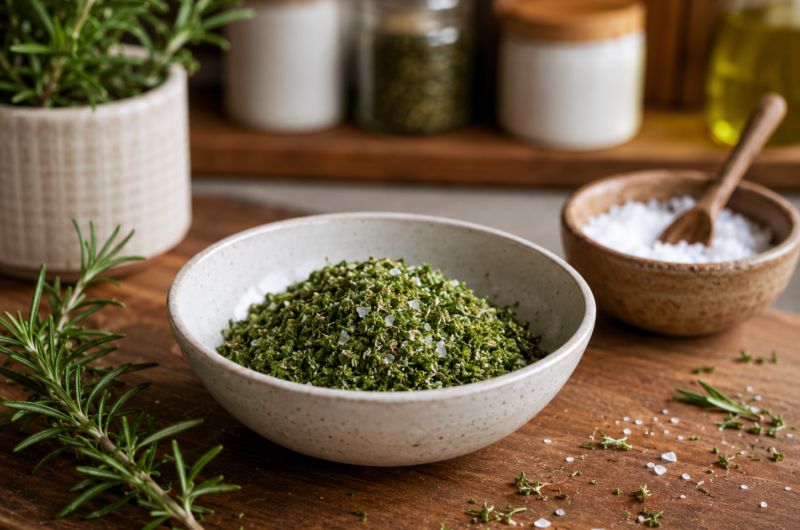
Rosemary salt is a simple homemade seasoning made by drying fresh rosemary and combining it with salt. This easy herb salt gives everyday meals a stronger rosemary flavor without needing a large amount. Unlike fresh rosemary, dried rosemary blends easily with salt and can be sprinkled over food. It is especially useful when you want a quick way to add savory flavor to homemade fries, potatoes, vegetables, meats, breads, and salad dressings.
Why Make Homemade Rosemary Salt?
Making rosemary salt at home is quick because fresh rosemary can be dried in the microwave in just a few short intervals. Once the leaves are completely dry, they can be crushed into a coarse powder and mixed with table salt. Homemade rosemary seasoning also lets you control the balance between the herb and salt. The finished mixture can be kept in an airtight container in the pantry for convenient everyday cooking.
Fresh Rosemary Gives Better Flavor
Fresh rosemary has a stronger and more pleasant aroma than many packaged dried herbs. However, fresh rosemary contains too much moisture to mix directly with salt for this type of seasoning. Drying removes that moisture while keeping the rosemary flavor concentrated. The goal is to dry the leaves without turning them brown. Properly dried rosemary should remain a vibrant green color and crumble easily between your fingers.
How to Dry Rosemary for Salt
The easiest method is to place the rosemary sprigs between sheets of paper towel on a heatproof plate. Microwave the rosemary on high in four 30-second intervals. Check the leaves after each interval because microwave strength can vary. Continue only until the leaves are completely dry and can be crumbled easily. Avoid overheating the rosemary, as excessive heat can cause the leaves to darken and develop a bitter flavor.
Why the Microwave Method Works
The microwave provides a fast way to remove moisture from fresh rosemary without requiring a long drying period. Short heating intervals make it easier to check the herbs as they dry. This is important because rosemary can become bitter if it develops too much color. Keeping the leaves green helps preserve their fresh herbal character. For a small batch of rosemary salt, this method is practical, simple, and requires very little preparation.
How to Grind Dried Rosemary
Once the rosemary is dry, remove the leaves from the stems and crush them using a mortar and pestle. You can also crumble the dried leaves gently between your fingers if you do not have a mortar and pestle. A completely fine powder is not necessary. A mixture of fine rosemary particles and small coarse pieces gives the seasoning a pleasant texture and allows the herb to spread easily over food.
Getting the Right Rosemary-to-Salt Ratio
For this recipe, measure 3 teaspoons of the crushed rosemary powder and combine it with the specified amount of table salt. Measuring the rosemary after grinding helps create a more consistent mixture. The salt carries the rosemary flavor and makes the seasoning easy to distribute. You can prepare the mixture in a small bowl, stir thoroughly, and transfer it to a clean airtight container for storage.
Best Salt for Rosemary Seasoning
Table salt works particularly well because its smaller grains cling to food more easily than larger salt crystals. This can be useful when seasoning homemade French fries, roasted potatoes, vegetables, or other foods where you want the seasoning to stay on the surface. The original recipe uses table salt, but the note also explains that other types of salt can be used. The texture of the finished seasoning will depend on the salt selected.
Rosemary Salt for Homemade French Fries
One of the easiest ways to use homemade rosemary salt is on French fries. Sprinkle a small amount over freshly cooked fries while they are still warm so the seasoning can adhere to the surface. Rosemary and potato make a natural pairing, and the herb gives ordinary fries a more noticeable savory flavor. You can use the same seasoning on baked fries, roasted potato wedges, or other potato dishes.
Rosemary Salt for Meat and Poultry
This homemade herb seasoning can also be used with poultry, steak, and lamb chops. A small amount can add rosemary flavor without requiring fresh herb sprigs during cooking. Because the rosemary is sensitive to burning, the recipe recommends using the finished mixture uncooked. Sprinkle it over cooked proteins shortly before serving rather than exposing the rosemary directly to high heat for a long period.
Rosemary Salt for Vegetables
Roasted or cooked vegetables can benefit from a light sprinkle of rosemary salt. It works particularly well with potatoes and other savory vegetables where rosemary naturally fits. Add the seasoning after cooking to reduce the risk of burning the herb. A small amount is usually enough because both rosemary and salt have noticeable flavors. This makes the mixture useful for adding seasoning at the table as well as during meal preparation.
Rosemary Salt for Focaccia
Rosemary is a classic herb for focaccia, and rosemary salt can provide both seasoning and herb flavor in one simple mixture. Sprinkle it over the surface of focaccia before serving, or use it lightly on the baked bread. Since the recipe advises avoiding prolonged cooking of the rosemary seasoning, adding it after baking is a simple option. The salty rosemary flavor pairs especially well with soft, savory homemade bread.
Rosemary Salt in Salad Dressings
Instead of using plain salt in a savory salad dressing, you can use rosemary salt to introduce an herbal note. Stir a small amount into your dressing and taste before adding more. The rosemary flavor can work well with simple oil-based dressings and hearty salads. Because the mixture contains salt, add it gradually and adjust according to the other ingredients in your dressing.
Rosemary Salt in Savory Muffins
Savory muffins can also be seasoned with rosemary salt instead of plain salt. The rosemary adds an herbal flavor that can complement cheese and other savory ingredients. Measure the seasoning carefully so the final muffins are not overly salty. Since the rosemary is more delicate than the salt, using the finished mixture after baking or in a preparation where it is not exposed to excessive heat can help maintain its flavor.
How to Store Rosemary Salt
After mixing the dried rosemary with salt, place the seasoning in a clean airtight container. Keep it in a dry pantry away from moisture, steam, and direct heat. A tightly closed container helps protect the texture and aroma of the herb salt. Always use a dry spoon when taking seasoning from the container. Moisture can cause salt to clump and can reduce the quality of the homemade seasoning over time.
How to Keep Rosemary Green
The green color of the rosemary is a useful sign that the herb has been dried carefully. Fresh rosemary should be dried until it is crisp but should not become golden or brown. Excessive heat can affect both appearance and flavor. If you are using the microwave, work in short 30-second intervals and inspect the leaves each time. This gives you better control than heating the herbs continuously for several minutes.
Oven Method for Drying Rosemary
If you do not want to use a microwave, the rosemary can also be dried in the oven. Place the fresh rosemary on a tray and dry it at 100°C, or 210°F, for about 20 minutes. Keep a close eye on the herbs during this process. The rosemary should dry without developing a golden color. If the leaves become too dark, they may taste bitter, so gentle drying is important for a good homemade seasoning.
Microwave or Oven: Which Method Is Better?
For a small batch, the microwave is the faster option because the rosemary can be ready within a few minutes. The oven takes longer but can be useful when you prefer conventional drying. Whichever method you choose, the same goal applies: the leaves should be fully dry, crisp, and still green. The microwave method requires more frequent checking, while the oven method requires careful attention during the longer drying time.
How to Use Rosemary Salt
There are many easy ways to use rosemary salt in everyday meals. Sprinkle it over homemade French fries, cooked potatoes, roasted vegetables, steak, poultry, lamb chops, or focaccia. You can also replace regular salt with it in savory muffins and salad dressings. Start with a small amount, taste the food, and add more only when needed. Because the mixture contains salt, it is best to season gradually.
Why Rosemary Salt Should Be Used Carefully
Rosemary has a strong flavor, and salt also becomes noticeable quickly. Using too much of either can overpower the rest of a dish. A light sprinkle is usually enough for foods such as fries, potatoes, meat, and vegetables. The finished seasoning is best treated as a finishing salt rather than something that needs to be added in large quantities during cooking. This also helps protect the rosemary from excessive heat.
Making a Small Batch at Home
This recipe produces a small amount of rosemary salt, which makes it useful when you have fresh rosemary that needs to be used. There is no need to prepare a large jar if you only cook with rosemary occasionally. The small quantity is also easy to dry, grind, and mix. Once prepared, keep the seasoning sealed in the pantry and use it whenever a recipe needs a quick savory herb flavor.
Choosing Rosemary for the Recipe
Use fresh rosemary sprigs that have a clean appearance and firm green leaves. Fresh herbs with a strong aroma are preferable because the flavor becomes concentrated as the moisture is removed. Before drying, check the sprigs and remove any damaged or discolored leaves. Keeping the rosemary clean and dry on the surface helps the drying process work more efficiently and makes the finished rosemary seasoning more pleasant to use.
Common Mistakes to Avoid
One common mistake is trying to mix fresh rosemary directly with salt. The moisture in fresh herbs can make the mixture unsuitable for this quick pantry seasoning. Another mistake is drying the rosemary for too long or at excessive heat. If the leaves turn golden or brown, the flavor can become bitter. It is also better not to grind the herb into an extremely fine powder because a little texture makes the seasoning more useful.
Notes for the Best Results
Use table salt when you want a seasoning that sticks easily to foods such as French fries. Other salt varieties can also be used, but larger crystals may create a different texture. For oven drying, use 100°C or 210°F and watch the rosemary carefully. The rosemary should remain green rather than turning golden. Store the finished rosemary salt in an airtight container in the pantry and use it as a finishing seasoning.
Rosemary Salt as an Everyday Seasoning
A homemade rosemary salt recipe is a useful way to turn fresh rosemary into a convenient pantry seasoning. The process only requires drying the herb, crushing it, measuring the rosemary, and mixing it with salt. Once prepared, it can be used across many savory dishes. Keeping a small container nearby makes it easy to add rosemary flavor to potatoes, fries, vegetables, meats, bread, muffins, and dressings.
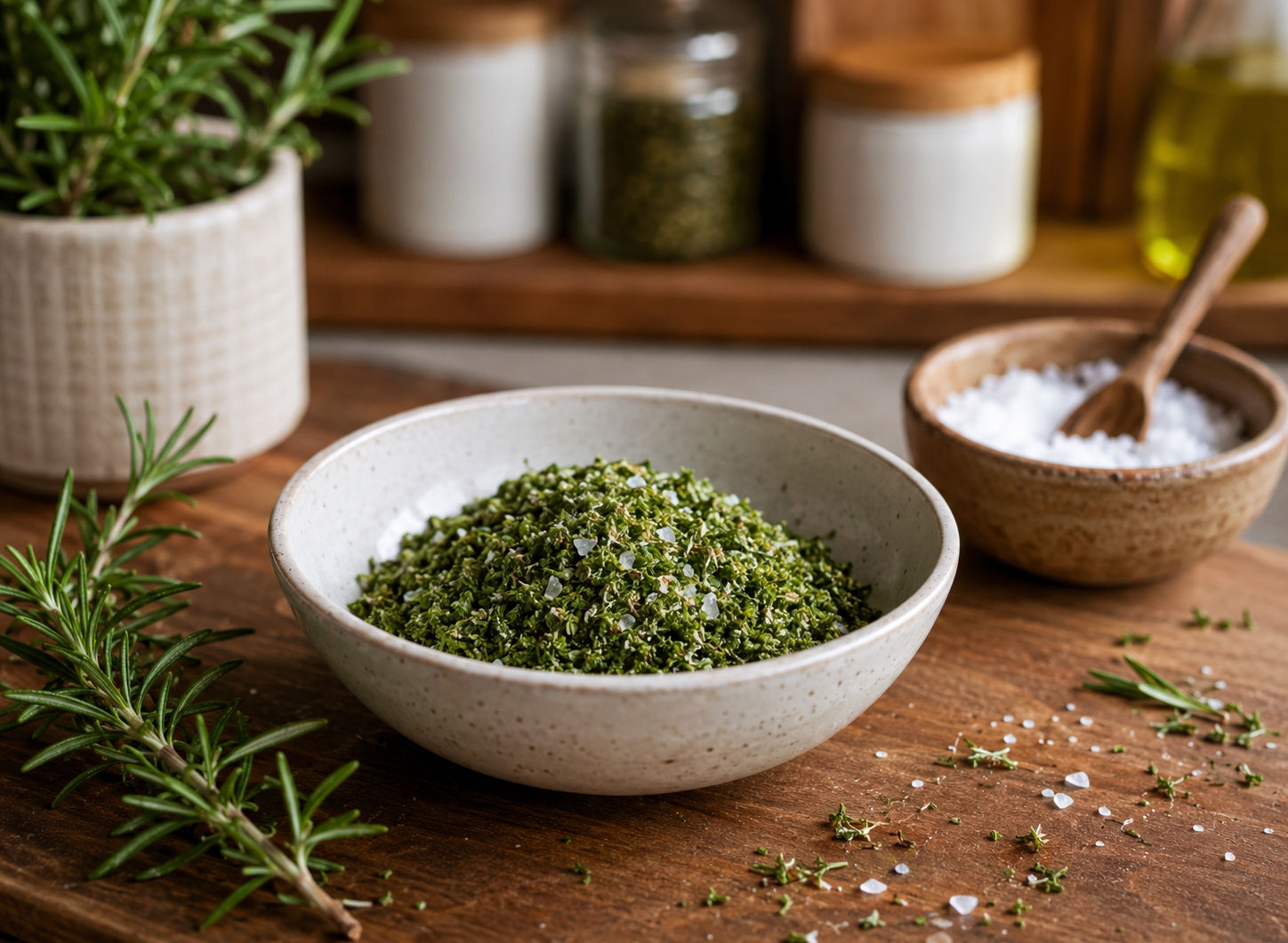
Rosemary Salt
A quick homemade rosemary seasoning made with fresh rosemary and table salt. The rosemary is dried until crisp, crushed into a coarse powder, and mixed with salt.
5
minutes2
minutes7
minutesIngredients
4 x 15 cm/6″ sprigs of rosemary
1/2 tsp table salt
Instructions
- Place one sheet of paper towel on a heatproof plate. Arrange the rosemary sprigs over it and cover them with another single sheet of paper towel.
- Microwave the rosemary on high for four 30-second intervals, checking after each interval. Continue until the leaves are completely dry, crisp, and easy to crumble while remaining green.
- Remove the dried rosemary leaves from the stems and grind them with a mortar and pestle. Keep a mixture of fine powder and small rosemary pieces rather than grinding everything completely smooth.
- Measure 3 teaspoons of the crushed rosemary and place it in a small bowl. Add the table salt and mix until the rosemary is evenly distributed throughout the salt.
- Transfer the finished rosemary salt to a clean airtight container. Store it in the pantry and sprinkle it over cooked foods, fries, potatoes, vegetables, poultry, steak, lamb, focaccia, savory muffins, or salad dressings.
Notes
- Salt type: Table salt is recommended because its fine grains cling well to foods such as French fries. Other salt varieties can also be used.
- Oven option: Dry the rosemary on a tray at 100°C (fan or standard oven) / 210°F for about 20 minutes. Watch closely so the rosemary does not become golden.
- Color: The dried rosemary should remain green. If it becomes golden or brown, it may develop a bitter flavor.
- Grinding: A mixture of fine rosemary powder and small pieces gives the seasoning a useful texture.
- Storage: Keep the rosemary salt in an airtight container in a dry pantry and use a dry spoon when serving.
- Best use: Use the rosemary salt mainly as a finishing seasoning because rosemary can burn when exposed to high heat for too long.