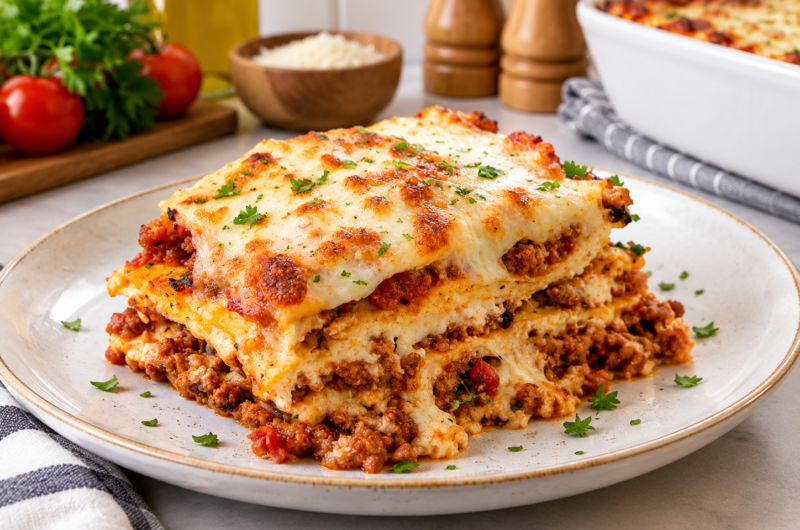
Keto low carb lasagna is a hearty dinner made without traditional pasta sheets. Instead, thin baked cheese layers take the place of regular noodles, creating a rich and satisfying dish. Ground beef, marinara sauce, ricotta, and mozzarella are added between the layers for a classic lasagna-style meal.
Why Make Cheese Noodle Lasagna
If you enjoy lasagna but want to reduce the amount of carbohydrates in your meal, this recipe offers a simple alternative. The cheese noodles are made with cream cheese, mozzarella, eggs, and Italian seasoning. They bake into thin sheets that can be cut and layered just like lasagna noodles.
What Makes This Recipe Keto
This keto lasagna skips wheat-based pasta and uses no-sugar-added marinara sauce in the meat filling. According to the provided nutrition information, one serving contains 9 grams of carbohydrates and 1 gram of fiber. That gives the recipe 8 grams of net carbs per serving.
A Cheesy Dinner for Four
The recipe makes four servings, making it suitable for a family dinner or a meal that can be portioned for later. Each serving contains a generous amount of beef and cheese, so the dish is filling without needing a large amount of pasta. It can be served on its own or with a simple low-carb side.
Making the Cheese Lasagna Noodles
Cream Cheese and Mozzarella Base
The noodles begin with full-fat cream cheese and shredded part-skim low-moisture mozzarella. These cheeses form the main structure of the baked noodle layer. Softened cream cheese is easier to blend, while low-moisture mozzarella helps keep the mixture from becoming overly wet.
Adding the Eggs
Two large eggs are added to the cheese mixture to help bind the ingredients together. Once baked, the eggs help the cheese mixture become firm enough to handle and slice. This combination gives the noodles enough structure without using flour.
Italian Seasoning for Flavor
Italian seasoning is mixed directly into the cheese dough. It gives the noodles a mild herb flavor that works well with the beef and marinara sauce. Since the filling also contains Italian seasoning, the flavor carries through the different layers of the lasagna.
Preparing the Baking Pan
Preheat the oven to 350°F and line a 9 x 13-inch baking pan with parchment paper. The parchment makes it easier to remove the baked cheese sheet later. Make sure the paper covers the surface where the batter will be spread.
Blending the Cheese Dough
Place the cream cheese, mozzarella, eggs, and Italian seasoning into a food processor. Blend everything until the mixture is evenly combined and has a thick liquid consistency. A food processor makes this step quick, but the batter can also be mixed by hand.
Mixing Without a Food Processor
If you do not have a food processor, finely chop the shredded mozzarella first. Whisk the softened cream cheese until smooth, then add the eggs and whisk again. Stir in the mozzarella and Italian seasoning until everything is evenly distributed before spreading the mixture into the pan.
Baking the Cheese Sheet
Pour the cheese mixture into the prepared baking pan and spread it evenly with a spatula. Place the pan in the middle of the oven and bake for about 20 minutes. The cheese sheet should feel firm and the surface should no longer look wet when it is ready.
Cooling Before Cutting
Allow the baked cheese sheet to cool before cutting it into noodle pieces. Cooling gives the sheet time to firm up, which makes it easier to handle. While it cools, prepare the ground beef and marinara filling.
Preparing the Lasagna Filling
Cooking the Ground Beef
Add the minced onion and ground beef to a large skillet over medium heat. Cook until the beef has browned and the onion has softened. If there is excess fat in the skillet, drain it before adding the remaining filling ingredients.
Adding Marinara Sauce
Once the beef is cooked, add the Italian seasoning and no-sugar-added marinara sauce. Stir everything together so the sauce coats the beef evenly. Reduce the heat to low and allow the mixture to simmer for about 3 minutes.
Choosing Marinara Sauce
A no-sugar-added marinara sauce is used to keep the recipe lower in carbohydrates. Different brands can have different amounts of carbohydrates, so check the label when choosing your sauce. The amount of sugar and carbohydrates in the finished dish can change depending on the sauce used.
Assembling the Keto Lasagna
Cutting the Cheese Noodles
Once the cheese sheet is cool enough to handle, slice it into three equal sections. The pieces should fit into an 8 x 4-inch loaf pan. If necessary, trim the edges slightly so each layer sits neatly inside the pan.
Starting the First Layer
Spread a thin layer of the cooked meat sauce across the bottom of the loaf pan. Place the first cheese noodle layer over the sauce. This creates the base for the remaining filling and keeps the cheese noodle from sitting directly against the bottom of the pan.
Adding Ricotta and Mozzarella
Spread one-third of the remaining meat sauce over the first noodle. Add 3 tablespoons of ricotta cheese, then sprinkle one-quarter of the mozzarella over the top. Try to spread the ingredients evenly so the middle of the lasagna has a balanced mixture.
Building the Second Layer
Place the second cheese noodle over the first filling layer. Add another layer of meat sauce, ricotta, and mozzarella. Keep the ingredients spread across the surface rather than piling them in the center, which helps the finished lasagna hold its shape.
Finishing the Third Layer
Place the final cheese noodle over the second layer. Spread the remaining meat sauce across the top and finish with the remaining mozzarella. The mozzarella will melt during baking and create a warm, cheesy topping.
Adding Extra Herbs
If you want a little more herb flavor, a small pinch of dried herb seasoning can be sprinkled over the top cheese layer. Dried oregano works particularly well with the marinara and beef. This extra seasoning is optional and does not change the original ingredient quantities.
Baking the Finished Lasagna
The Second Bake
Place the assembled lasagna in the middle of a 350°F oven. Bake for about 20 minutes, allowing the meat sauce and cheese layers to heat through. The mozzarella on top should be melted and the lasagna should be hot before serving.
Getting a Bubbly Cheese Top
For a browned and bubbling cheese topping, switch the oven to a low broil after the 20-minute bake. Broil for about 2 minutes, watching the lasagna closely. The cheese can brown quickly under the broiler, so remove it as soon as it reaches the color and texture you prefer.
Letting It Cool
Allow the lasagna to cool slightly before slicing. A short rest helps the layers settle and makes the portions easier to serve. Cutting immediately while the dish is extremely hot may cause the filling to spread more easily.
Serving Keto Lasagna
Fresh Herbs for Serving
Fresh basil, oregano, or parsley can be finely chopped and sprinkled over the finished lasagna. These herbs are optional serving additions and can give the dish a fresh appearance. Add them just before serving for the best flavor.
Adding Parmesan
Freshly grated Parmesan can also be added before serving if desired. The lasagna already contains cream cheese, mozzarella, and ricotta, so only a small amount is needed. Parmesan works especially well with the seasoned beef and marinara sauce.
What to Serve With It
This lasagna is filling enough to serve as the main part of a meal. If you want a side, choose something that fits your preferred low-carb meal plan. A simple vegetable dish or fresh salad can add variety without taking attention away from the lasagna.
Helpful Preparation Details
Use Softened Cream Cheese
Softened cream cheese blends more easily with the eggs and mozzarella. If the cream cheese is too firm, the mixture may not become smooth enough. Let it soften before starting the cheese noodle mixture for an easier preparation process.
Chop Mozzarella for Hand Mixing
A food processor is convenient, but hand mixing is possible. When using this method, finely chop the shredded mozzarella first. Smaller pieces combine more easily with the softened cream cheese and eggs, giving you a more even batter.
Use Low-Moisture Mozzarella
The cheese dough specifically calls for part-skim low-moisture mozzarella. This type is useful for the noodle layer because excess moisture can affect how the baked sheet sets. For the filling, you can use your preferred mozzarella while keeping the noodle ingredients unchanged.
Check the Beef Before Layering
The ground beef should be completely browned before you add the marinara sauce. Draining excess fat also helps keep the filling from becoming too oily. Once the sauce is added, a short simmer is enough to combine the ingredients.
Spread the Batter Evenly
When spreading the cheese dough into the baking pan, use a spatula to create an even layer. Uneven thickness can make some parts easier to cut than others. A consistent sheet gives you three more uniform noodle layers.
Do Not Skip the Cooling Step
Cooling the cheese sheet before cutting makes a noticeable difference when assembling the lasagna. If the sheet is too hot, it can be soft and difficult to divide. Give it enough time to become firm before slicing.
Keto Lasagna Texture
Soft Cheese Noodles
The cheese noodles are naturally softer than wheat pasta because they are made primarily from cheese and eggs. Their texture works with the meat sauce and ricotta filling rather than trying to copy dried pasta exactly. Proper cooking and cooling help the layers stay together.
Keeping the Layers Together
Use moderate amounts of filling between the noodle layers and spread each component evenly. Too much filling in one place can make the lasagna difficult to slice. A short cooling period after baking also helps the layers settle.
Storage and Preparation
Making Components Ahead
The cheese noodle sheet and meat filling can be prepared before final assembly. This can make the recipe easier to manage when you want to serve it later. Keep prepared ingredients refrigerated and assemble the lasagna when you are ready to bake it.
Storing Leftovers
Store leftover lasagna covered in the refrigerator. When reheating, warm individual portions until heated through. Gentle reheating can help maintain the texture of the cheese layers and prevent the top from becoming overly dry.
Low Carb Lasagna
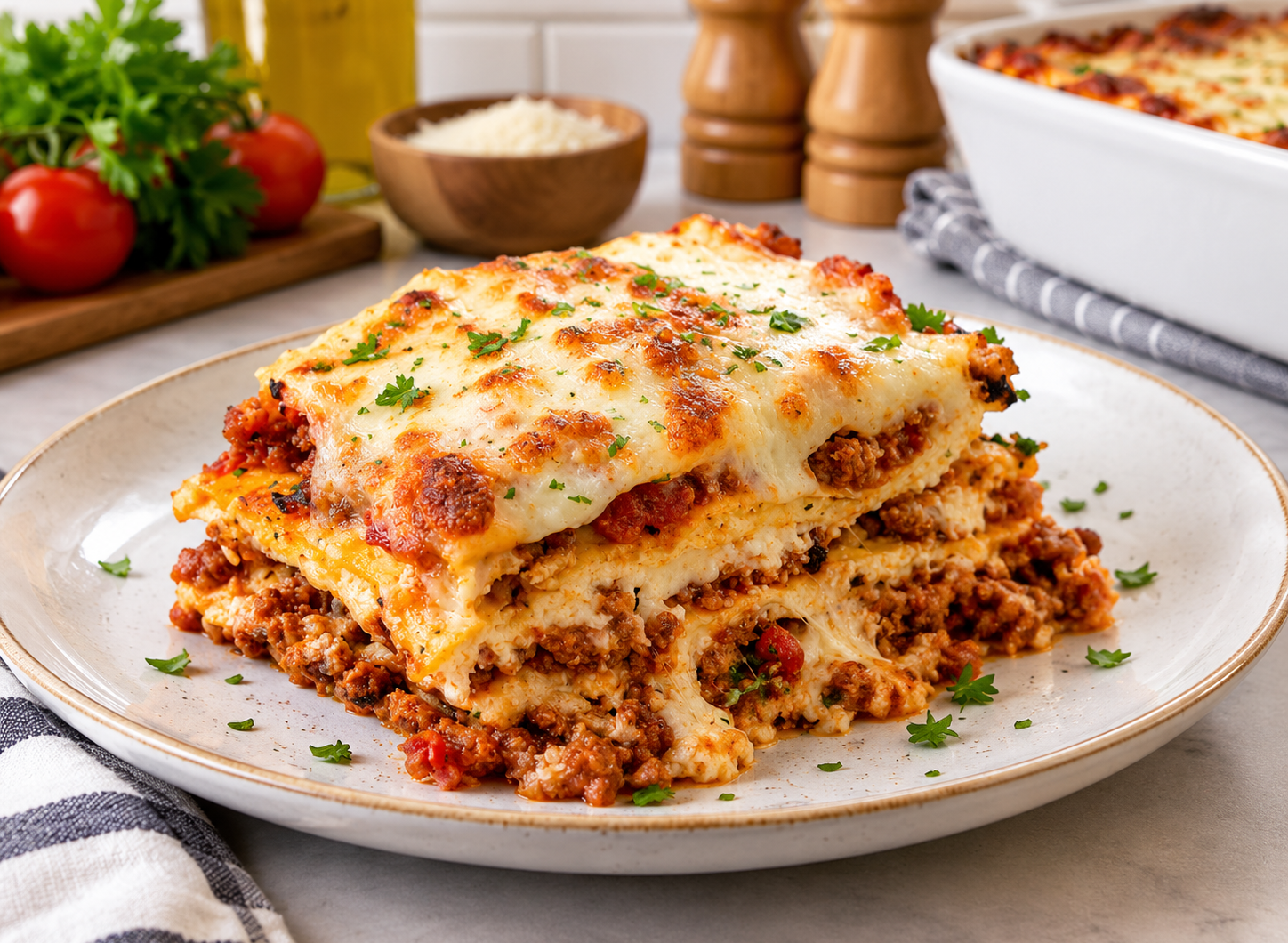
This keto low carb lasagna replaces traditional pasta noodles with baked cheese layers. It is filled with seasoned ground beef, no-sugar-added marinara sauce, ricotta cheese, and mozzarella. The result is a rich, cheesy lasagna with 8 grams of listed net carbs per serving.
4
servings15
minutes50
minutes633
kcal8
g1
hour5
minutesIngredients
- Cheese Dough Lasagna Noodles:
4 oz full fat cream cheese, softened
1 1/2 cups shredded part skim low moisture mozzarella cheese
2 large eggs
1 tsp Italian seasoning
- Lasagna Filling:
1/4 cup onion, minced
1 lb ground beef, I used lean ground beef
1 cup no sugar added marinara sauce
1 tsp Italian seasoning
6 tbsp ricotta cheese
1 cup shredded part skim low moisture mozzarella cheese
Instructions
- Preheat the oven to 350°F and line a 9 x 13-inch baking pan with parchment paper. Blend all cheese dough ingredients in a food processor until smooth and evenly mixed. Spread the mixture into the pan and bake for about 20 minutes, until firm.
- Let the cheese sheet cool. Meanwhile, cook the minced onion and ground beef in a skillet over medium heat until the beef is browned. Drain excess fat, then stir in Italian seasoning and marinara sauce. Simmer on low heat for about 3 minutes.
- Cut the cooled cheese sheet into three sections that fit an 8 x 4-inch loaf pan. Spread a thin layer of meat sauce in the bottom of the pan and place the first cheese noodle over it.
- Spread one-third of the remaining meat sauce over the first noodle. Add 3 tablespoons of ricotta and one-quarter of the mozzarella. Add the second noodle and repeat the meat sauce, ricotta, and mozzarella layers.
- Place the third noodle on top and spread the remaining meat sauce over it. Sprinkle the remaining mozzarella across the top. Bake at 350°F for about 20 minutes. For a browned topping, use low broil for about 2 minutes.
- Let the lasagna cool slightly before slicing. If desired, serve with finely chopped fresh basil, oregano, parsley, or freshly grated Parmesan cheese.
Nutrition Facts
- Calories: 633kcal
- Fat: 43g
- Carbohydrates: 9g
- Fiber: 1g
- Sugar: 3g
- Protein: 49g