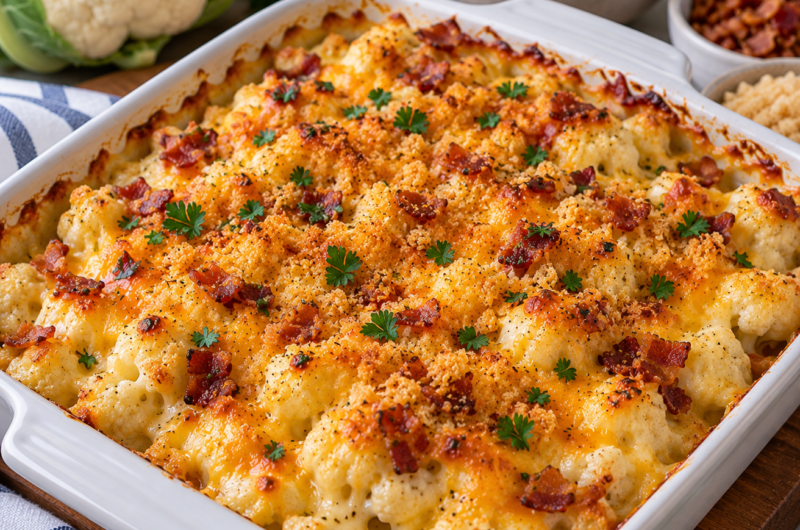
Keto Cauliflower Mac and Cheese is a rich, cheesy, low-carb comfort food that delivers many of the flavors people enjoy in traditional baked macaroni and cheese without using pasta. Instead of macaroni, fresh cauliflower is cut into small bite-sized pieces and cooked with bacon, onion, and garlic. A creamy cheddar cheese sauce coats the cauliflower before the entire dish is finished with extra cheddar and crushed pork rinds for a crisp, golden topping.
What makes this low-carb cauliflower mac and cheese especially satisfying is the combination of textures. The cauliflower is cooked until tender while retaining a slight bite, the cheese sauce is smooth and creamy, and the pork rind topping becomes crisp under the broiler. Bacon adds smoky flavor throughout the casserole, while fresh garlic and onion provide a savory foundation. The finished dish works well as either a hearty keto side dish or a comforting low-carb meal.
Why Keto Cauliflower Mac and Cheese Works
Traditional macaroni and cheese gets much of its character from the contrast between tender pasta, creamy cheese sauce, and a baked topping. This keto cauliflower mac and cheese recipe follows the same basic idea while replacing pasta with fresh cauliflower. The cauliflower is deliberately divided into small, macaroni-sized pieces so the cheese sauce can coat it evenly and every serving contains a balanced combination of vegetables, cheese, bacon, and crunchy topping.
Another important feature is the cooking method. Rather than boiling the cauliflower in water, it is cooked in a skillet with bacon. This helps control excess moisture while allowing the cauliflower to pick up savory bacon flavor. After onion and garlic are added, the mixture continues cooking until the vegetables are ready but the cauliflower remains slightly firm. It finishes cooking later in the oven, helping prevent the soft, watery texture that can sometimes occur in cauliflower casseroles.
Is Cauliflower Keto-Friendly?
Cauliflower has become a popular ingredient in keto and low-carb cooking because it contains considerably fewer carbohydrates than foods such as pasta, rice, or potatoes. According to the source recipe, 100 grams of cauliflower provides approximately 5 grams of total carbohydrates and 2 grams of fiber, leaving about 3 grams of net carbohydrates. This makes cauliflower particularly useful when creating lower-carb versions of familiar comfort foods.
For this recipe, cauliflower does more than simply reduce the carbohydrate content. Its mild flavor allows the cheddar cheese, bacon, garlic, and onion to remain prominent. Its firm structure also provides something substantial for the cheese sauce to cling to. Cutting the florets into smaller pieces makes the finished casserole easier to serve and creates a texture that more closely resembles the bite-sized format associated with macaroni and cheese.
Fresh Cauliflower Is Important for the Best Texture
Fresh cauliflower is recommended for this baked keto mac and cheese because moisture control is essential. Frozen cauliflower tends to release more water during cooking, which can make the finished casserole softer and potentially thin the cheese sauce. The source specifically favors fresh cauliflower for this reason and explains that frozen cauliflower can become mushier after freezing and cooking.
Start with fresh cauliflower and separate it into small pieces rather than leaving large florets intact. Aim for pieces roughly comparable in size to macaroni. Smaller pieces cook more evenly and allow the creamy cheddar sauce to distribute throughout the casserole. They also make the dish feel more cohesive, since each spoonful contains cauliflower, cheese sauce, and the savory ingredients rather than one oversized piece dominating the serving.
Bacon Adds Smoky Flavor
Two thick-cut bacon slices are cooked directly with the cauliflower rather than prepared separately. This is a useful technique because the rendered bacon fat contributes flavor as the cauliflower cooks. Instead of tasting like plain cauliflower covered with cheese afterward, the vegetable develops savory character before the cheese sauce is even added.
The bacon should be diced before it goes into the skillet. It cooks alongside the cauliflower for approximately five minutes, or until it is nearly cooked through. Onion and finely chopped garlic are then added, and everything continues cooking for another ten minutes. By preparing these ingredients together, the base develops several layers of flavor without requiring a complicated cooking process.
Keep the Cauliflower Slightly Firm
One of the easiest mistakes when making cauliflower mac and cheese is cooking the vegetable until completely soft before baking. Since the cauliflower goes into a hot oven after skillet cooking, it should still be slightly al dente when transferred to the baking dish. This gives it enough structure to survive the final baking stage without becoming excessively soft.
A little bite is desirable in this recipe because it helps the cauliflower provide a more substantial texture. The source specifically recommends avoiding overcooking and allowing the oven to finish the cauliflower. This technique is particularly valuable when making a pasta-free mac and cheese because the cauliflower needs enough structure to stand up to the thick cheese sauce and crunchy topping.
Making the Creamy Keto Cheese Sauce
The cheese sauce requires only four components: butter, shredded cheddar cheese, heavy whipping cream, and salt and pepper to taste. Butter, one cup of cheddar, and heavy cream are combined in a small saucepan and heated gently until everything melts together into a smooth sauce. Salt and pepper are then added according to taste.
Keeping the heat low is useful when making a cheese-based sauce. There is no need for aggressive boiling. Gentle heat allows the cheddar to melt into the butter and heavy cream while producing the rich consistency needed to coat the cauliflower. Once smooth, the sauce can be poured directly over the cooked cauliflower mixture in the baking dish and stirred so every piece receives an even coating.
Why Heavy Whipping Cream Works Well
Heavy whipping cream contributes richness and helps turn melted cheddar and butter into a cohesive cheese sauce. Because this recipe does not rely on the traditional flour-based roux commonly found in conventional macaroni and cheese, the combination of cream, butter, and cheddar provides both flavor and body.
The source recipe uses exactly one-quarter cup of heavy whipping cream with one cup of cheddar cheese and two tablespoons of butter for the sauce. Keeping these proportions intact is important because changing the liquid-to-cheese balance can affect the finished consistency. The goal is a sauce substantial enough to cling to the cauliflower rather than collecting as thin liquid at the bottom of the casserole.
Pork Rinds Create a Low-Carb Crunchy Topping
A crunchy baked surface is one of the most enjoyable features of traditional baked mac and cheese. Breadcrumbs normally provide that texture, but they would introduce additional carbohydrates. This recipe instead uses crushed pork rinds combined with the remaining shredded cheddar cheese to create a keto-friendly crunchy topping.
Crushing the pork rinds into smaller crumb-like pieces allows them to spread evenly across the casserole. During baking and broiling, they crisp while the cheddar melts around them. The result is a contrasting top layer that makes the creamy cauliflower underneath more interesting. Since both bacon and pork rinds can already contain considerable salt, season the cheese sauce carefully before adding additional salt.
How to Prepare the Cauliflower Base
Begin by heating a skillet over medium heat while preheating the oven to 425°F. Dice the thick-cut bacon into small pieces and separate the fresh cauliflower into small macaroni-sized florets. Add both ingredients to the skillet and cook for approximately five minutes. At this point, the bacon should be close to fully cooked and the cauliflower should have started cooking without becoming completely tender.
Next, dice half a medium onion and finely chop two garlic cloves. Add both to the skillet and continue cooking for approximately ten minutes. The onion should become translucent while the cauliflower develops tenderness but retains some firmness. Remember that the vegetable will continue cooking in the oven, so removing the skillet from the heat before the cauliflower becomes completely soft helps protect the final texture.
How to Assemble the Casserole
Transfer the cooked cauliflower, bacon, onion, and garlic mixture to an 8×8-inch baking dish. Pour the prepared cheddar cheese sauce evenly over the cauliflower. Use a spoon to gently mix everything together, making sure the creamy sauce reaches the pieces underneath rather than remaining only on the surface.
Once the base is evenly coated, scatter the crushed pork rinds and remaining half cup of shredded cheddar over the top. Distribute both ingredients across the entire surface so each serving gets some of the crunchy, cheesy finish. The casserole is now ready for its short bake, followed by broiling to develop the browned surface characteristic of a good baked mac and cheese.
Baking and Broiling for a Golden Finish
Bake the assembled Keto Cauliflower Mac and Cheese at 425°F for ten minutes. This baking period heats the entire casserole, finishes cooking the cauliflower, melts the topping cheese, and allows the different flavors to come together. The casserole does not require a long baking period because the cauliflower and bacon have already been cooked in the skillet and the cheese sauce is already hot.
After ten minutes, switch the oven to broil and cook for another three to five minutes to crisp the topping. Broilers differ considerably in intensity, so watch the casserole closely during this stage. The source specifically recommends monitoring it while broiling because the topping can move from nicely browned to burned quickly. Remove it when the cheese and pork rind topping reaches your preferred level of crispness.
How to Prevent Watery Cauliflower Mac and Cheese
Moisture management is one of the most important factors in a successful cauliflower cheese casserole. Boiling cauliflower introduces water that can later escape into the sauce. For this reason, the recipe cooks the cauliflower in a skillet instead. This method provides better control over moisture while simultaneously adding flavor from the bacon.
Fresh cauliflower also helps. Frozen cauliflower can contain enough moisture to make the sauce thinner and the vegetable softer. The original recipe identifies both boiling the cauliflower and using frozen cauliflower as potential causes of watery mac and cheese. Starting with fresh cauliflower and skillet-cooking it therefore gives you a much stronger foundation for a creamy rather than runny casserole.
Getting the Seasoning Right
Cauliflower has a relatively mild flavor, which makes seasoning particularly important. Fresh garlic and onion provide the aromatic base, while bacon, cheddar, and pork rinds contribute plenty of savory character. Black pepper adds another layer of flavor to the creamy cheese sauce and can be adjusted according to preference.
Salt requires more caution. Bacon, cheddar cheese, and pork rinds may already contain significant sodium, so taste and season carefully rather than automatically adding a large quantity. The source specifically notes that bacon and pork rinds can contribute considerable salt. This is why the ingredient list simply specifies salt and pepper “to taste” rather than prescribing a fixed amount.
Common Mistakes to Avoid
Overcooking the cauliflower before baking is one of the biggest problems to avoid. The vegetable needs to remain slightly firm after skillet cooking because it receives additional heat in the oven. Another mistake is introducing unnecessary moisture by boiling the cauliflower or using wet frozen florets. Either can make the finished cheese sauce less creamy and the cauliflower softer than intended.
The final broiling stage also deserves attention. Do not walk away from the oven once the broiler is running. Three to five minutes is the suggested range, but actual timing depends on the oven. Watch the surface and remove the casserole once the cheese is browned and the pork rind topping has become crisp.
What to Serve With Keto Cauliflower Mac and Cheese
This low-carb cauliflower mac and cheese can be served as either a substantial side dish or a meal, depending on your appetite and menu. Its combination of cauliflower, bacon, cheddar, cream, and pork rinds makes it considerably richer than plain roasted cauliflower, so it pairs particularly well with straightforward proteins.
The source suggests combinations involving chicken, barbecue pork, burgers, chicken tenders, grilled steak, or grilled chicken. Keeping the accompanying protein relatively simple can be especially effective because the casserole already provides plenty of creamy, smoky, and cheesy flavor.
Storing Leftover Cauliflower Mac and Cheese
Allow leftover casserole to cool before transferring it to an airtight container and placing it in the refrigerator. According to the supplied recipe, Keto Cauliflower Mac and Cheese can be refrigerated for approximately three to five days. This makes it convenient for preparing ahead or saving individual portions for another meal.
Freezing is possible, but it is not the preferred storage method for this particular dish. Cauliflower can release more moisture after freezing and thawing, potentially creating a wetter and softer texture. Refrigerated leftovers therefore provide a better chance of retaining the original consistency. The source notes that leftovers can be reheated successfully using either a microwave or an air fryer.
Why This Is a Useful Keto Comfort Food
A successful keto comfort-food recipe should do more than simply remove a high-carbohydrate ingredient. It needs to replace the missing component with something that works naturally with the rest of the dish. Here, cauliflower provides enough substance and texture to carry the cheddar sauce while complementing bacon, onion, and garlic rather than competing with them.
The crunchy pork rind topping is equally important because it replaces the textural role normally played by breadcrumbs. Together with melted cheddar, it creates a crisp surface over the creamy cauliflower underneath. These elements give the casserole contrast and make it feel like a complete baked dish rather than simply cauliflower covered with cheese.
Important Notes
Keto Cauliflower Mac and Cheese offers a practical way to enjoy creamy, cheesy comfort food while keeping the recipe low in carbohydrates. Fresh cauliflower replaces traditional macaroni, while thick-cut bacon, onion, and fresh garlic build a savory base. A simple sauce of cheddar, butter, and heavy whipping cream provides richness, and crushed pork rinds with additional cheddar create the crisp baked topping.
The key to getting the best result is controlling moisture and texture. Use fresh cauliflower, cut it into small pieces, cook it in the skillet rather than boiling it, and leave it slightly firm before baking. Finish the casserole under the broiler while watching carefully. Following these details produces a creamy center with tender cauliflower and a golden, crunchy top.
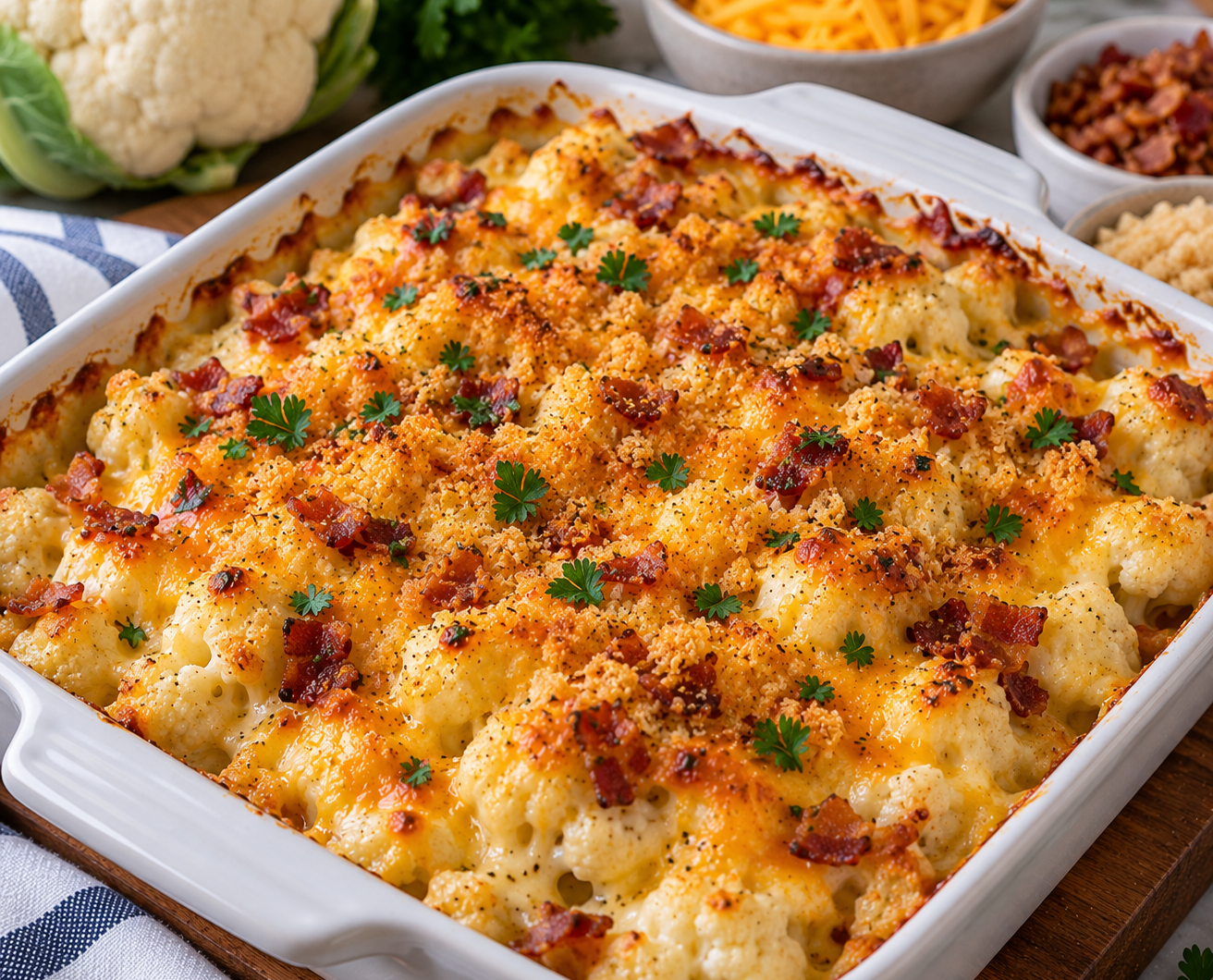
Keto Cauliflower Mac And Cheese
A creamy and comforting low-carb cauliflower mac and cheese made with fresh cauliflower, bacon, cheddar, heavy cream, garlic, and onion. Crushed pork rinds and extra cheddar form a crispy baked topping, creating a satisfying keto alternative to traditional macaroni and cheese.
4
servings5
minutes35
minutes315
kcal40
minutesIngredients
- Cauliflower Base
6–8 cups cauliflower
2 slices thick-cut bacon
½ medium onion, diced
2 cloves garlic, finely chopped
- Cheese Sauce
2 tablespoons butter
1 cup shredded cheddar cheese
¼ cup heavy whipping cream
Salt and pepper, to taste
- Baked Topping
½ cup shredded cheddar cheese
½ ounce pork rinds, crushed
Instructions
- Preheat the Oven
Preheat the oven to 425°F and heat a large skillet over medium heat. - Prepare the Cauliflower and Bacon
Dice the bacon and break the cauliflower into small, macaroni-sized pieces. - Cook the Cauliflower Base
Add the bacon and cauliflower to the skillet. Cook for about 5 minutes, until the bacon is nearly cooked. - Add Onion and Garlic
Add the diced onion and finely chopped garlic. Cook for another 10 minutes, until the onion is translucent and the cauliflower is slightly al dente. - Make the Cheese Sauce
Combine 2 tablespoons butter, 1 cup shredded cheddar, and ¼ cup heavy whipping cream in a small saucepan. Heat on low until melted and smooth. Season with salt and pepper. - Assemble the Casserole
Transfer the cauliflower mixture to an 8×8-inch baking dish. Pour the cheese sauce over it and mix gently until evenly coated. - Add the Topping
Sprinkle the crushed pork rinds and remaining ½ cup cheddar cheese evenly over the casserole. - Bake
Bake at 425°F for 10 minutes. - Broil
Broil for an additional 3–5 minutes, watching carefully, until the topping becomes crisp and golden. Serve hot.