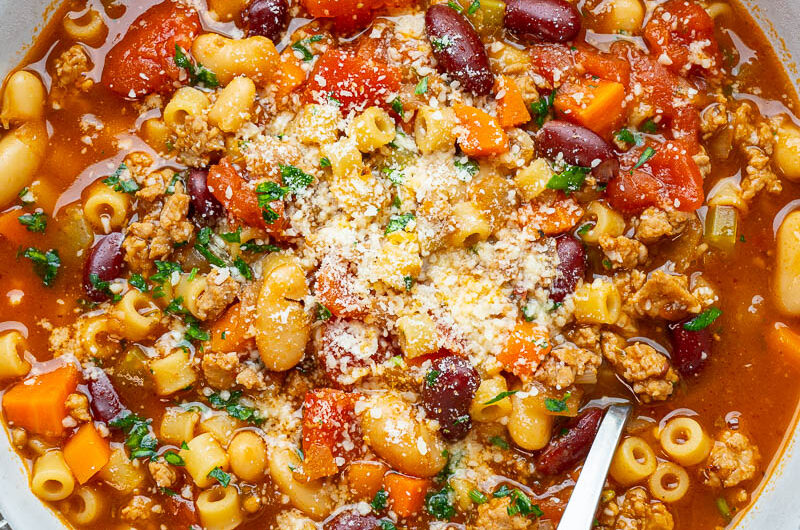
Pasta fagioli, pronounced “pasta fah-jolie,” is a classic Italian soup that sits somewhere between a pasta dish and a soup — traditionally thickened not with cream or flour, but with cooked white beans. In Italian, it’s known as pasta e fagioli, which translates directly to “pasta and beans.” This particular version is entirely vegetarian, built on the depth that white beans and vegetables bring rather than relying on meat, and it comes together in about 45 minutes from start to finish.
What defines this soup’s texture is the technique of mashing a portion of the beans before adding them in. Rather than leaving all the beans whole, mashing about half of them releases their starch into the broth, creating a silky, slightly thickened base that coats the pasta and vegetables rather than sitting as a thin, watery liquid. This is also what distinguishes pasta fagioli from minestrone — both are vegetable-forward Italian soups, but minestrone stays brothy, while the beans in pasta fagioli give it a noticeably thicker consistency.
Below is a full breakdown of the workflow, ingredient roles, and technique for building a well-balanced, properly thickened soup, along with the substitutions that make this recipe flexible based on what’s in your pantry.
Kitchen Workflow: How the Process Is Organized
This recipe breaks into three stages: building the vegetable and aromatic base, developing the broth and thickening it with beans, and finishing with pasta, greens, and a bright lemon lift.
Stage 1 — Build the Vegetable Base. Olive oil is heated in a large pot over medium heat, and the onion, carrot, celery, salt, oregano, black pepper, and red pepper flakes are added together. These cook, stirring occasionally, until the vegetables have just softened, about 7 minutes. Garlic is then added and cooked for about 2 more minutes, stirring often. Cooking the garlic separately and later than the other vegetables prevents it from burning, since garlic cooks much faster than onion, carrot, or celery.
Stage 2 — Develop and Thicken the Broth. The broth and undrained tomatoes are added to the pot, with stirring to release any browned bits from the bottom — this step pulls extra flavor into the broth from whatever has developed on the pot’s surface during the vegetable cooking stage. The heat is increased to bring the mixture to a boil. Half of the beans are mashed with a fork in a separate bowl, then stirred into the soup, while the remaining whole beans go in along with the pasta. This combination of mashed and whole beans is what gives the soup both its thickened body and its heartier bean texture in individual bites.
Stage 3 — Finish with Pasta, Greens, and Lemon. The heat is reduced to medium, and the soup simmers for 10 minutes, stirred occasionally to prevent sticking as the pasta cooks and the starch from the mashed beans continues to thicken the broth. Kale is stirred in and cooked until the pasta is tender, about 5 more minutes. Once removed from heat, lemon zest and juice are added — this final bright note is what lifts the richness of the beans and broth, keeping the soup from tasting flat or overly heavy.
Component Breakdown
It’s useful to think of this recipe in terms of four functional components.
1. The Aromatic Base — Onion, Carrot, Celery, and Garlic This classic vegetable base, sometimes referred to as a soffritto in Italian cooking, builds the foundational savory flavor that the rest of the soup is built upon. Garlic is added later than the other vegetables specifically to avoid burning.
2. The Broth and Body — Chicken Broth, Tomatoes, and White Beans Broth and diced tomatoes form the liquid base of the soup, while white beans — split between mashed and whole — are what thicken the broth into something silkier and heartier than a typical brothy soup. Mashing half the beans is the key technique that separates pasta fagioli from a thinner soup like minestrone.
3. The Starch — Ditalini Pasta Small ditalini pasta cooks directly in the soup, absorbing broth as it softens and contributing to the overall heartiness of the dish. Its small size makes it easy to eat by the spoonful alongside the beans and vegetables.
4. The Fresh Finish — Kale and Lemon Kale adds color, texture, and nutrients toward the end of cooking, wilting into the soup without overcooking. Lemon zest and juice, stirred in at the very end, brighten the entire dish and balance the richness of the beans and broth.
Approved Variations and Swaps
Based strictly on the details provided, the following substitutions can be made within this recipe:
- Broth – use vegetable broth instead of chicken broth to make the recipe fully vegetarian.
- Canned tomatoes – crushed tomatoes or diced fresh tomatoes can be used in place of canned diced tomatoes.
- Pasta – small elbows, shells, or bowties can replace ditalini pasta if that’s not available.
- Kale – spinach can be used instead of kale, or the greens can be left out altogether if preferred.
- Red pepper flakes – these are optional and can be omitted if a milder soup is preferred.
Step-by-Step Assembly Strategy
To make a well-balanced, properly thickened pot of soup, follow this sequence:
- Heat the olive oil in a large pot over medium heat. Add the onion, carrot, celery, 1/2 teaspoon salt, oregano, black pepper, and red pepper flakes.
- Cook, stirring occasionally, until the vegetables have just softened, about 7 minutes.
- Add the garlic and cook for about 2 more minutes, stirring often, so it doesn’t burn.
- Add the broth and undrained tomatoes, stirring to release any browned bits from the bottom of the pot. Increase the heat to medium-high and bring to a boil.
- Mash half of the beans with a fork in a separate bowl, then stir them into the soup. This is the step that gives the broth its signature thickened texture.
- Add the remaining whole beans and the pasta to the pot. Reduce the heat to medium.
- Simmer for 10 minutes, stirring occasionally to prevent sticking as the pasta cooks and the broth thickens.
- Stir in the kale and cook until the pasta is tender, about 5 more minutes, then remove the pot from the heat.
- Zest the lemon, then cut it in half. Squeeze one lemon half into the soup and add 1 teaspoon of the zest, stirring to combine.
- Taste and adjust, adding more lemon juice or salt as desired.
- Top individual servings with grated parmesan before serving.
Frequently Asked Questions
What is pasta fagioli? A cross between pasta and soup, this classic Italian dish is traditionally thickened with cooked white beans rather than cream or flour.
Does pasta fagioli contain meat? Some versions do, but this particular recipe doesn’t — the hearty white beans and pasta are satisfying enough on their own.
Why mash some of the beans? Mashing a portion of the beans thickens the brothy soup, resulting in a silky texture that coats each piece of pasta.
What’s the difference between pasta fagioli and minestrone? Both are Italian soups built around whatever vegetables are on hand, but the beans in pasta fagioli create a thicker soup, while minestrone stays traditionally brothy.
What’s essential for making pasta fagioli? A good cooking pot and plenty of canned beans are the must-haves — nearly everything else can be substituted based on what’s available.
Part 2: Recipe Card
Pasta Fagioli
Description: A hearty, comforting Italian soup thickened with white beans and packed with vegetables, including carrots, tomatoes, and kale. Easily made vegetarian, and finished with a bright touch of lemon and a sprinkle of parmesan.
Duration:
- Prep Time: 20 minutes
- Total Time: 45 minutes
- Yields: 6–8 servings
Ingredients:
- 1/4 cup olive oil
- 1 yellow onion, chopped
- 2 carrots, chopped
- 3 celery stalks, thinly sliced
- 1/2 tsp salt, plus additional to taste
- 1/2 tsp dried oregano
- 1/2 tsp ground black pepper
- 1/4 tsp red pepper flakes (optional)
- 6 garlic cloves, finely chopped
- 6 cups reduced-sodium chicken broth
- 1 15-oz can diced tomatoes
- 2 15-oz cans white beans (cannellini or great Northern), drained and rinsed
- 1 1/2 cups ditalini pasta
- 3 cups chopped fresh kale
- 1 lemon
- Parmesan cheese, for topping
Instructions:
- In a large pot, heat the olive oil over medium heat. Add the onion, carrot, celery, 1/2 teaspoon salt, oregano, black pepper, and red pepper flakes. Cook, stirring occasionally, until the vegetables have just softened, about 7 minutes. Add the garlic; cook, stirring often, about 2 minutes more.
- Add the broth and undrained tomatoes; stir to release any browned bits from the bottom of the pot. Increase the heat to medium-high and bring to a boil. Add half of the beans to a bowl; mash with a fork and stir into the soup. Add the remaining beans and the pasta to the pot; reduce the heat to medium. Simmer, stirring occasionally to prevent sticking, for 10 minutes. Stir in the kale and cook until the pasta is tender, about 5 minutes more. Remove from the heat.
- Zest the lemon, then cut it in half. Squeeze one lemon half into the soup. Add 1 teaspoon of the zest and stir to combine. Taste and add more lemon juice or salt as desired. Top servings with parmesan.
Notes:
- To make fully vegetarian, use vegetable broth instead of chicken broth.
- Crushed tomatoes or diced fresh tomatoes can replace canned diced tomatoes.
- Small elbows, shells, or bowties can be used in place of ditalini pasta.
- Spinach can replace kale, or the greens can be left out entirely.
- Serve with buttery garlic bread to round out the meal.
Medical and Nutritional Disclaimer
The information provided in this recipe and guide is intended for general informational and educational purposes only and does not constitute medical, dietary, or nutritional advice. This recipe is not intended to diagnose, treat, cure, or prevent any disease or health condition. Individuals with food allergies, dietary restrictions, or specific medical conditions should consult with a qualified healthcare provider or registered dietitian before making dietary changes or preparing this recipe. The author and publisher assume no responsibility for any adverse effects resulting from the use or application of the information contained herein.