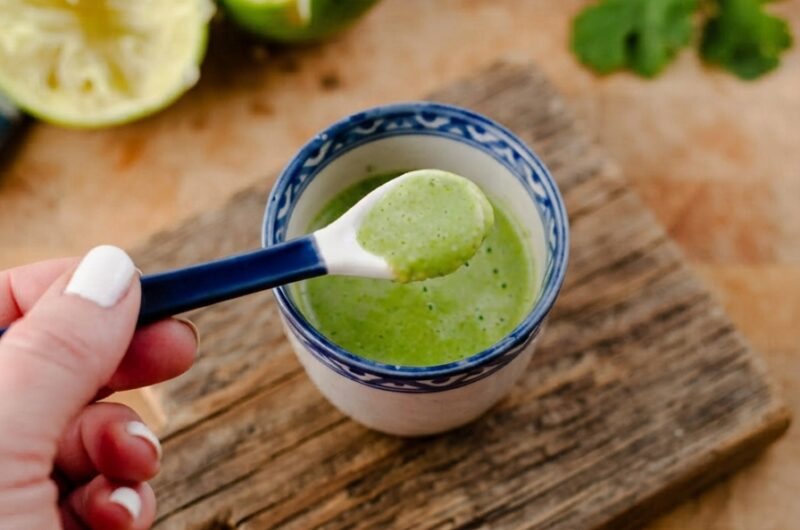
This Ultimate Green Taco Sauce Recipe is a quick, creamy condiment made with fresh jalapeño, Anaheim pepper, Greek yogurt, lime juice, cilantro, green onions, olive oil, and sea salt. Everything goes directly into a blender or food processor, so there is no cooking, roasting, or lengthy preparation involved. In only a few minutes, the ingredients become a smooth green sauce with a fresh citrus flavor, gentle creaminess, and an adjustable level of heat.
If you enjoy homemade taco sauces but want something fresher than a bottled condiment, this creamy green taco sauce is an excellent option. Jalapeño provides heat, Anaheim pepper contributes a milder green-pepper flavor, and fresh cilantro and lime give the sauce its bright character. Greek yogurt makes the mixture creamy without covering the flavor of the vegetables and herbs, while a small amount of olive oil helps everything blend into a smooth consistency.
Why You Love This Recipe
One of the strongest advantages of this easy green taco sauce is its simplicity. There is no saucepan to watch, no peppers to roast, and no sauce that needs to simmer or cool before serving. Once the peppers are prepared, all of the ingredients can be blended together at the same time. With approximately five minutes of preparation and zero cooking time, it is especially convenient for busy taco nights or last-minute meals.
The sauce is also highly versatile because the level of heat can be controlled during preparation. Removing the seeds from the peppers creates a milder result, while retaining some of them produces more heat. This means the same basic recipe can work for people who enjoy a gentle green sauce as well as those who prefer a noticeably spicy taco topping. The creamy yogurt base helps balance the pepper flavor without making the sauce heavy.
What Does Green Taco Sauce Taste Like?
This homemade sauce has a combination of creamy, tangy, herbal, and lightly spicy flavors. Fresh lime juice brings acidity, cilantro supplies its distinctive herbal freshness, and the two green peppers provide both heat and vegetable flavor. Greek yogurt adds tanginess and softens some of the intensity of the peppers, while green onions contribute a mild savory note that rounds out the sauce without dominating it.
The finished flavor is somewhat similar in spirit to a creamy taco truck green sauce or salsa verde, although this particular recipe has its own character because it uses Greek yogurt and raw peppers. It is designed to be smooth enough for drizzling over tacos while remaining thick and creamy enough to work as a dip for tortilla chips or a topping for bowls, vegetables, eggs, chicken, and fish.
A No-Cook Taco Sauce Ready in Minutes
Many homemade sauces require roasting vegetables, simmering ingredients, or waiting for cooked components to cool. This no-cook green taco sauce avoids all of those steps. Once the stems and desired amount of seeds have been removed from the peppers, everything is blended together until smooth. This makes the recipe particularly useful when the main meal is already taking up most of your cooking time.
Because there is no heat involved, the fresh qualities of the cilantro, green onions, lime, and peppers remain prominent. The finished sauce tastes bright rather than cooked or roasted. It can be made while taco fillings are cooking or shortly before the meal is served, making it a practical homemade condiment when you want fresh flavor without adding another complicated recipe to your kitchen routine.
The Role of Jalapeño Pepper
One jalapeño pepper gives the sauce its primary source of heat. Jalapeños also contribute the fresh green-pepper flavor that helps define this recipe. The pepper’s stem should be removed before blending, while the seeds can be removed or partially retained depending on how spicy you want the finished sauce to taste.
For a milder result, remove the seeds before adding the jalapeño to the blender. For a hotter sauce, some seeds can remain. The supplied recipe also mentions serrano peppers as a hotter variation and a small green bell pepper as a no-heat alternative. These are optional substitutions rather than changes to the standard recipe, which uses one jalapeño pepper.
Why Anaheim Pepper Works So Well
The Anaheim pepper works alongside the jalapeño but has a different role. Instead of providing most of the heat, it contributes a milder, slightly sweet green-pepper flavor. This creates a more rounded sauce than relying entirely on jalapeño and helps maintain the fresh green character without making every spoonful overwhelmingly spicy.
The standard recipe calls for one Anaheim pepper, and that ingredient has been preserved exactly in the recipe card. The source also lists poblano pepper as a possible alternative and roasted green bell pepper as an option for moving the flavor in a smokier direction. These substitutions can change the personality of the sauce, so Anaheim pepper remains the best starting point when following the original formula.
Greek Yogurt Creates the Creamy Base
One-quarter cup of plain Greek yogurt gives this creamy taco sauce its smooth body. It contributes a pleasant tang while balancing the stronger flavors of jalapeño, lime, green onions, and cilantro. Because Greek yogurt is naturally thick, a relatively small amount is enough to create creaminess without turning the sauce into a heavy dip.
The yogurt should be added directly to the blender with the remaining ingredients rather than mixed separately. Once processed, it becomes evenly distributed throughout the peppers and herbs. The source identifies sour cream or thick dairy-free yogurt as possible substitutions, but the original recipe specifically uses plain Greek yogurt, so that ingredient remains unchanged in the standard version.
Fresh Lime Juice Adds Brightness
The juice of one lime provides the acidic element in this green taco sauce. Lime works particularly well with jalapeño, cilantro, and green onions because its sharp citrus flavor lifts the fresh ingredients while cutting through the creaminess of the Greek yogurt and olive oil.
The recipe also allows additional lime juice to be used when adjusting the consistency or flavor after blending. Start with the juice of the one lime specified in the ingredient list, blend everything completely, and taste the finished sauce before deciding whether any adjustment is needed. This prevents the sauce from becoming more acidic than you prefer while still allowing its consistency to be customized.
Cilantro Gives the Sauce Fresh Herbal Flavor
Half a cup of fresh cilantro is responsible for much of the sauce’s distinctive herbal character and vibrant green appearance. Since the sauce is not cooked, the cilantro retains its fresh flavor instead of becoming muted by heat. It pairs naturally with jalapeño and lime and helps create the familiar flavor combination associated with many Mexican-inspired taco toppings.
For people who strongly dislike cilantro, the supplied recipe suggests parsley as an alternative. That substitution will naturally change the flavor because parsley does not taste like cilantro, but it provides another fresh herb option. The standard recipe remains based on the original half cup of fresh cilantro, which delivers the intended flavor profile.
Green Onions Add Mild Savory Flavor
Two chopped green onions provide a mild onion flavor that supports the peppers, cilantro, and lime without overpowering them. Because the onions are blended raw, their fresh savory character remains noticeable, but using green onions rather than a larger quantity of regular onion helps keep the sauce balanced.
There is no need to cook the green onions before using them. Chop them enough to fit comfortably into your blender or food processor, then process them with the other ingredients. A powerful blender will break them down into the creamy sauce, leaving their flavor evenly distributed rather than producing noticeable pieces in the finished condiment.
Why Extra Virgin Olive Oil Is Included
Half a tablespoon of extra virgin olive oil helps bring the sauce together and contributes to its smooth mouthfeel. Although the amount is small, oil helps the yogurt, peppers, lime, and herbs blend into a more cohesive mixture. It also adds a subtle richness that complements the freshness of the raw ingredients.
The source allows a neutral oil, such as avocado oil, as an alternative, but the original formula uses extra virgin olive oil. Since the goal of this rewrite is to preserve the supplied ingredients rather than redesign the recipe, the recipe card keeps the exact half-tablespoon quantity of extra virgin olive oil.
Sea Salt Brings the Flavors Together
Half a teaspoon of sea salt completes the standard ingredient list. Salt plays a simple but important role because it makes the lime, peppers, herbs, and yogurt taste more defined. Without sufficient seasoning, even a sauce containing plenty of fresh ingredients can taste flat.
The supplied method recommends tasting the sauce after blending and adjusting the seasoning according to preference. Begin with the half teaspoon included in the original recipe. Once everything has been blended completely, taste a small amount. This approach is particularly useful because individual peppers, limes, and herbs naturally vary in flavor intensity.
How to Prepare the Peppers
Begin by removing the stems from the jalapeño and Anaheim pepper. At this stage, decide how much heat you want. Removing the seeds produces a milder sauce, while leaving some seed material provides additional spice. This adjustment should be made before the peppers enter the blender because it is much easier to increase heat later than to remove it from an already blended sauce.
The peppers do not need to be roasted, sautéed, or boiled. Their raw flavor is an intentional part of the recipe. After preparing them, they can go directly into the blender with the Greek yogurt, lime juice, cilantro, green onions, olive oil, and sea salt. This straightforward preparation is what makes the recipe so fast.
How to Blend Green Taco Sauce
Place the prepared jalapeño, Anaheim pepper, Greek yogurt, lime juice, cilantro, chopped green onions, extra virgin olive oil, and sea salt in a high-powered blender or food processor. Blend until the sauce looks smooth and the visible pieces of peppers and herbs have been thoroughly broken down.
A high-powered appliance is useful because this recipe contains several raw fibrous ingredients. Continue processing until the consistency looks creamy and reasonably uniform rather than stopping while large herb or pepper pieces remain. The exact blending time can vary according to the power and design of the appliance, so use the appearance and texture of the sauce as your guide.
How to Adjust the Consistency
After blending, inspect the sauce before serving it. If it seems thicker than you want, the supplied instructions allow a splash of water or a little additional lime juice to make it more pourable. Add only a small amount at a time because it is easier to thin a sauce gradually than to correct one that has become watery.
Blend briefly after each adjustment, then check the consistency again. For tacos, a pourable or drizzle-friendly texture may be preferable, while a slightly thicker consistency can work particularly well when the sauce is being served as a dip with tortilla chips or spooned onto a taco bowl.
How to Control the Spice Level
The easiest way to control heat is through the jalapeño and its seeds. For a mild, family-friendly version, remove more seed material and avoid increasing the amount of jalapeño. For a hotter result, the source suggests keeping more seeds or adding additional jalapeño according to taste.
Remember that peppers naturally vary in heat, so two jalapeños of the same size can taste quite different. Blending the standard recipe first and tasting it before increasing the heat provides better control. If you are preparing the sauce for several people, a milder base can also be more flexible because additional heat can be added individually at serving time.
What to Serve with Green Taco Sauce
As the name suggests, tacos are one of the best uses for this sauce. Its creamy consistency and bright lime flavor can complement chicken, beef, pork, fish, or vegetable taco fillings. A small drizzle adds moisture and flavor without requiring a heavy topping, while a more generous spoonful can become one of the main flavor elements of the meal.
The sauce is not limited to tacos. The supplied serving ideas include tortilla chips, taco bowls, sheet-pan roasted vegetables, grilled chicken, fish, and fried eggs. It can also be transferred to a squeeze bottle when you want a convenient way to drizzle it neatly over individual servings during taco night.
Green Taco Sauce for Taco Bowls
A taco bowl usually combines several ingredients with different textures, and a flavorful sauce helps connect everything. This creamy green sauce can be spooned or drizzled over rice, vegetables, meat, beans, or other taco-bowl components just before serving.
Because the sauce already contains lime, cilantro, green onion, peppers, and creamy yogurt, it contributes several flavors in a single addition. Its smooth consistency also spreads easily through a bowl. For easier serving, adjust it to your preferred thickness after blending and keep it refrigerated until the rest of the meal is ready.
Use It as a Creamy Green Dip
This recipe can also work as a dip for tortilla chips. If you plan to serve it primarily as a dip, there may be no need to thin it after blending. The natural thickness from the Greek yogurt creates a creamier texture that can cling more easily to chips.
Serve it freshly blended or chilled according to preference. Since the sauce contains raw peppers, herbs, and lime, the flavor remains fresh and vibrant. This makes it a convenient alternative when you want something different from traditional tomato salsa while still keeping the preparation fast and uncomplicated.
How to Store Homemade Green Taco Sauce
Transfer leftover sauce to an airtight container or mason jar and refrigerate it. According to the supplied recipe, it can be stored in the refrigerator for up to five days. Some separation may naturally occur while the sauce sits, particularly because it contains yogurt, vegetables, citrus juice, and oil.
Separation does not necessarily mean the sauce has failed. Give it a quick stir before serving to bring the ingredients back together. Keeping it covered also helps protect its freshness and prevents it from absorbing odors from other foods stored in the refrigerator.
Can You Freeze Green Taco Sauce?
For longer storage, the supplied recipe suggests freezing the sauce in ice cube trays. This method creates small portions that can be removed individually, so you do not have to thaw an entire container when only a small quantity is needed.
Once frozen into portions, the cubes can be used as required. The source does not provide a specific maximum freezer-storage period or detailed thawing instructions, so those details should not be invented. The important source-supported point is that ice cube trays provide a convenient method for portioning this sauce for longer storage.
Notes for the Best Green Taco Sauce
For the smoothest result, use a high-powered blender or food processor and process the ingredients until the peppers, cilantro, and green onions have been completely broken down. Decide on your preferred heat level before blending by controlling how much pepper seed material remains, and then taste the finished sauce before making further adjustments.
If the sauce is too thick, add only a small splash of water or additional lime juice at a time. When storing leftovers, keep them in an airtight container in the refrigerator and stir the sauce before serving if natural separation occurs. These small steps help preserve the smooth consistency and fresh flavor that make this recipe appealing.
Why This Easy Green Taco Sauce Recipe Works
For readers searching for green taco sauce recipe, creamy green taco sauce, homemade taco sauce, jalapeño taco sauce, cilantro lime sauce, Greek yogurt taco sauce, spicy green sauce, easy taco sauce, no-cook taco sauce, or taco truck green sauce, this recipe provides a simple homemade option using recognizable fresh ingredients.
The sauce succeeds because every ingredient has a clear purpose. Jalapeño supplies heat, Anaheim pepper adds milder pepper flavor, Greek yogurt creates creaminess, lime provides acidity, cilantro brings herbal freshness, green onions contribute savory flavor, olive oil improves the texture, and sea salt ties everything together. With no cooking and only about five minutes of preparation, it is an especially practical condiment for tacos and many other meals.
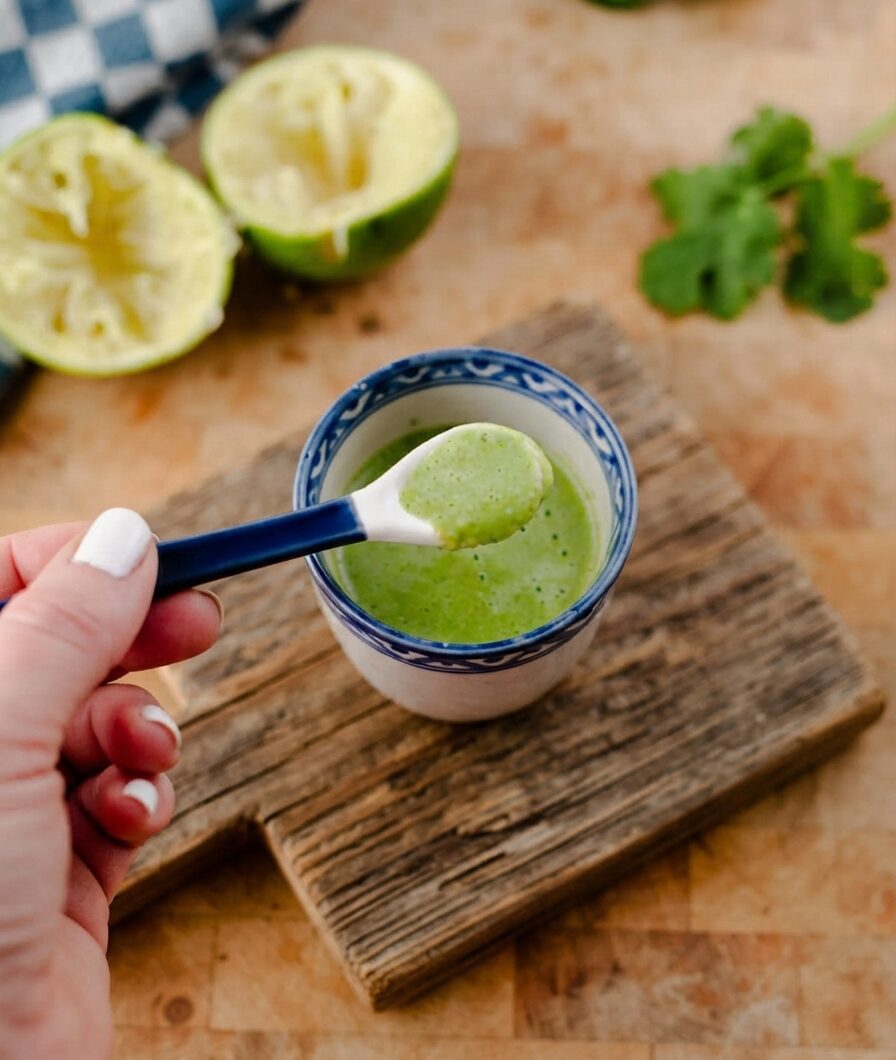
How To Make The Ultimate Green Taco Sauce Recipe
A quick and creamy homemade green taco sauce made with fresh jalapeño, Anaheim pepper, Greek yogurt, lime, cilantro, and green onions.
4
servings5
minutes0
minutes32
kcal5
minutesIngredients
1 jalapeño pepper
1 Anaheim pepper
¼ cup plain Greek yogurt
1 lime, juiced
½ cup fresh cilantro
2 green onions, chopped
½ tablespoon extra virgin olive oil
½ teaspoon sea salt
Instructions
- Remove the stems from the jalapeño and Anaheim pepper.
- Remove the seeds for less heat, or leave some in for a spicier sauce.
- Place both peppers in a high-powered blender or food processor.
- Add Greek yogurt, lime juice, cilantro, green onions, olive oil, and sea salt.
- Blend until completely smooth and creamy.
- Check the consistency after blending.
- If needed, add a small splash of water or additional lime juice to thin the sauce.
- Blend briefly again until the desired consistency is reached.
- Taste and adjust the seasoning or heat according to preference.
- Serve with tacos, tortilla chips, taco bowls, vegetables, chicken, fish, or eggs.
Nutrition Facts
4 servings per container
- Amount Per ServingCalories32
- % Daily Value *
- Total Fat
2g
3%
- Total Carbohydrate
3g
2%
- Protein 1g 2%
* The % Daily Value tells you how much a nutrient in a serving of food contributes to a daily diet. 2,000 calories a day is used for general nutrition advice.