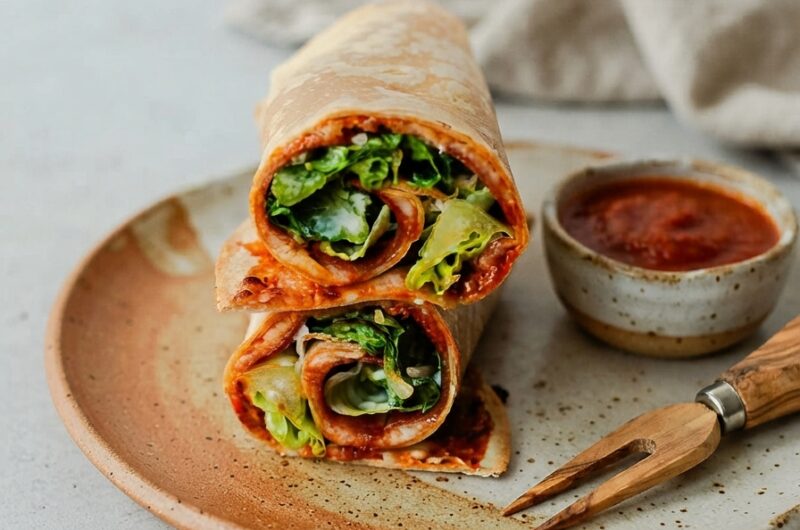
This crispy pepperoni pizza Caesar wrap brings two familiar favorites together in one easy meal. A flour tortilla is covered with pizza sauce, mozzarella, and turkey pepperoni, then baked until the cheese melts and the edges turn lightly crisp. Fresh Caesar salad is added before the tortilla is rolled into a handheld wrap.
Why This Recipe Is So Easy
There is very little preparation involved in this recipe. The tortilla pizzas bake on one parchment-lined baking sheet, while the Caesar salad can be mixed in a bowl at the same time. Once the cheese is melted and the salad is ready, everything comes together in just a few minutes.
The Tortilla Makes the Pizza
Flour tortillas work as a thin and quick pizza base. They become slightly crisp around the edges while staying flexible enough to roll once the salad is added. Use tortillas that are around 8–10 inches so there is enough room for the pizza toppings and Caesar salad.
Choosing the Pizza Sauce
Homemade pizza sauce works well, but store-bought pizza sauce or marinara can also be used. The sauce gives the tortilla its familiar pizza flavor and helps keep the cheese from tasting too dry. Spread it evenly over the tortilla, leaving enough room around the edges for easy handling.
Using Mozzarella Cheese
Shredded mozzarella melts smoothly and gives the tortilla pizza its cheesy texture. Part-skim mozzarella is a lighter option, while fresh mozzarella can create a softer and more gooey topping. Since the pizza cooks quickly, shredded cheese is convenient and spreads evenly across the tortilla.
Turkey Pepperoni for Pizza Flavor
Turkey pepperoni adds the classic pepperoni taste while keeping the recipe based on the original ingredients. Spread the slices over the mozzarella so each section gets some pepperoni. Regular pepperoni can also be used when you want a richer and more traditional pizza flavor.
The Role of Romaine Lettuce
Romaine gives the wrap the crisp texture you would expect from a Caesar salad. Its sturdy leaves hold up well after being tossed with dressing, making it a good choice for a rolled wrap. Chop the lettuce into manageable pieces so it is easier to eat.
High Protein Caesar Dressing
The Caesar dressing brings the salad portion together and adds a creamy, savory flavor. A high-protein Caesar dressing works particularly well here because it contributes to the overall protein content. Toss the romaine until the leaves are evenly coated without using more dressing than necessary.
Parmesan Adds Extra Flavor
Grated Parmesan adds a salty, savory taste to the Caesar salad. It works naturally with romaine and Caesar dressing and also echoes the cheesy flavor of the pizza. The amount in the recipe is small, but it helps tie the salad and pizza components together.
How to Make the Tortilla Pizza
Start by heating the oven to 400°F and lining a baking sheet with parchment. Place the tortillas flat on the sheet and spread the pizza sauce across each one. Add the shredded mozzarella and turkey pepperoni, making sure the toppings are distributed fairly evenly.
Bake Until the Cheese Melts
Bake the tortilla pizzas for 8–9 minutes. The cheese should be melted, and the edges of the tortillas should be lightly golden. Keep an eye on them near the end of the cooking time because thin tortillas can brown quickly in a hot oven.
Why Parchment Helps
Using parchment paper makes cleanup easier and helps prevent the tortillas from sticking to the baking sheet. It also gives you a clean surface for assembling the pizzas. Once the pizzas are baked, you can move directly to the next step without needing another pan.
Prepare the Caesar Salad
While the tortilla pizzas are in the oven, add the chopped romaine to a bowl. Pour in the high-protein Caesar salad dressing and add the grated Parmesan. Toss everything together until the lettuce is evenly coated and the Parmesan is distributed throughout.
Do Not Dress the Salad Too Early
The Caesar salad is best prepared while the pizza is baking rather than far in advance. This keeps the romaine crisp and prevents it from sitting in the dressing for too long. The timing works well because the salad can be ready by the time the tortillas come out of the oven.
Building the Wrap
Once the tortilla pizzas are out of the oven, let them sit for a moment so they are easier to handle. Place half of the dressed Caesar salad in the center of one tortilla pizza. Add the remaining salad to the second tortilla.
Rolling the Pizza Wrap
Fold the sides of the tortilla inward and roll it tightly like a burrito. Try to keep the filling toward the center as you roll. A firm roll makes the wrap easier to hold and helps prevent the salad from falling out while you eat.
Slice Before Serving
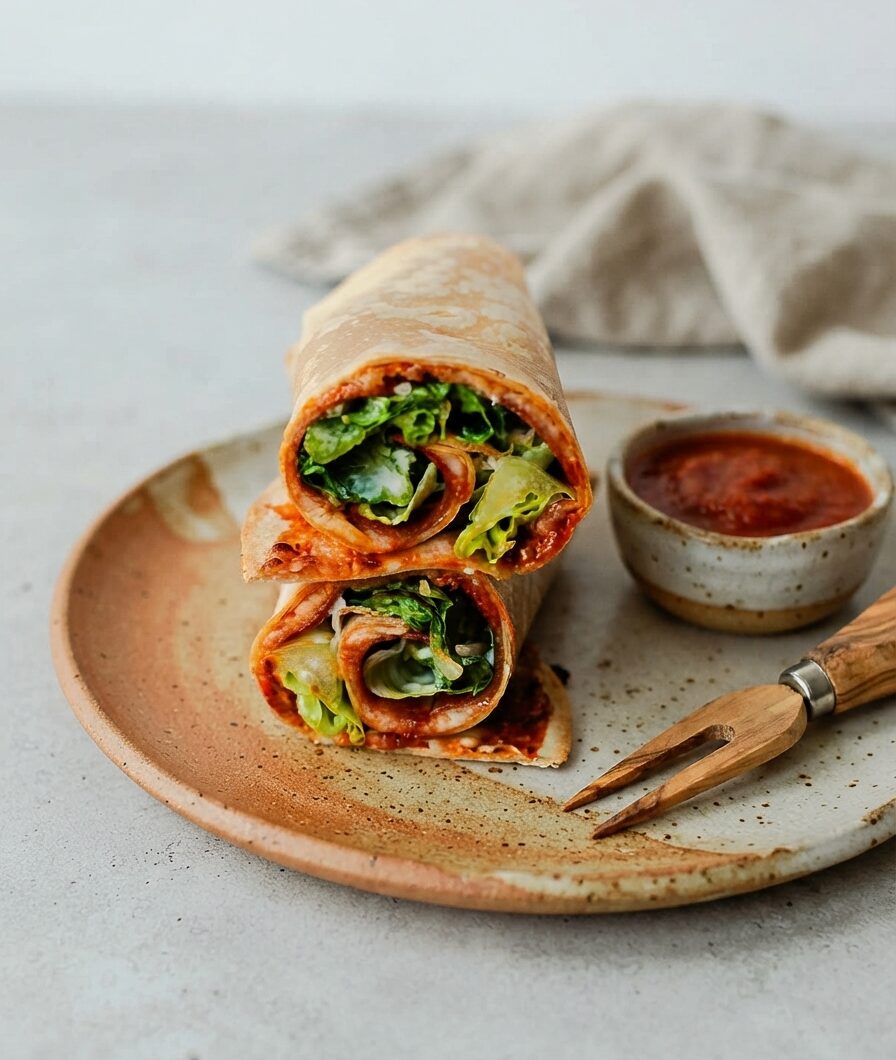
After rolling each wrap, slice it in half. Cutting the wrap makes it easier to serve and also shows the layers of melted cheese, pepperoni, and Caesar salad inside. You can serve the halves immediately while the pizza portion is still warm.
Add a Dipping Sauce
Extra pizza sauce or Caesar dressing can be served on the side for dipping. Pizza sauce adds more tomato flavor, while Caesar dressing gives the wrap a creamier finish. This is optional, but it can make the meal more enjoyable when you like extra sauce.
A Good Meal for Busy Weekdays
This recipe requires only a few basic ingredients and has a short cooking time. You do not need to prepare a complicated pizza dough or make a separate side salad. The tortilla acts as both the pizza base and the wrap, which keeps the preparation simple.
Meal Prep the Pizza Portion
The tortilla pizzas can be baked up to one day ahead. After they cool, place them in an airtight container and refrigerate them. When you are ready to eat, warm the pizzas before adding freshly dressed Caesar salad.
How to Reheat the Pizza
Reheat the baked tortilla pizzas in a 375°F oven for 2–3 minutes. An air fryer can also be used at the same temperature for a short reheating period. The goal is simply to warm the pizza and bring back some of its crisp texture without overcooking the tortilla.
Add the Salad After Reheating
Do not add the dressed Caesar salad before reheating the pizza. The lettuce and dressing are meant to stay fresh and cool while the tortilla and cheese are warm. Add the salad after reheating and then roll the wrap immediately.
Storing Leftovers
If you have leftover assembled wraps, the texture may become softer as the Caesar dressing sits against the tortilla. For the best results, store the baked tortilla pizzas separately from the salad. Assemble each wrap shortly before eating.
Tortilla Substitutions
Whole-wheat, gluten-free, or high-protein tortillas can be used in place of regular flour tortillas. A high-fiber or low-carb tortilla can also be chosen if that better suits your meal plan. Corn tortillas are less suitable because they can crack when rolled.
Pizza Sauce Alternatives
Marinara sauce or tomato basil sauce can replace pizza sauce. Crushed tomatoes can also work when combined with Italian seasoning and garlic powder. Pesto provides another flavor direction if you want a pizza wrap that tastes different from the tomato-based version.
Cheese Substitutions
Mozzarella is an easy melting cheese for this recipe, but other cheeses can also work. Provolone, Monterey Jack, part-skim string cheese, or dairy-free mozzarella shreds are possible alternatives. Choose a cheese that melts well so the tortilla pizza remains easy to roll.
Pepperoni Alternatives
Turkey pepperoni can be replaced with regular pepperoni if preferred. Mini pepperonis, turkey sausage crumbles, cooked chicken, or deli turkey slices can also be used. For a vegetarian version, plant-based pepperoni can be added or the pepperoni can be left out.
Other Greens for the Salad
Romaine is the classic choice for Caesar salad because it stays crisp. Little gem or iceberg lettuce can provide a similar crunch. Shredded kale can also work if it is mixed thoroughly with the dressing so the leaves soften slightly.
Caesar Dressing Alternatives
A Greek-yogurt Caesar or cottage-cheese Caesar can be used when you want to keep the dressing high in protein. Regular Caesar dressing can also be mixed with Greek yogurt to make a lighter version. For a dairy-free option, tahini or cashew-based Caesar dressing can be considered.
Parmesan Alternatives
Parmesan gives the Caesar salad its familiar savory flavor, but other hard cheeses can be used. Pecorino Romano and Asiago are two options with a similar salty character. A dairy-free Parmesan-style sprinkle can also be used if needed.
Extra Vegetable Add-Ins
The Caesar salad can be customized with small amounts of additional vegetables. Banana peppers, black olives, or thinly sliced red onion can add more flavor and texture. Keep the additions moderate so the wrap remains easy to roll and hold.
Making It Kid-Friendly
The basic combination of melted mozzarella and pepperoni is familiar enough for many children. You can keep the Caesar salad simple or serve it separately if someone does not enjoy lettuce inside the wrap. Cutting the finished wrap into smaller pieces can also make it easier to eat.
A Simple Teen Lunch
Older children and teenagers often need something quick and filling between activities. This pizza wrap can be prepared in advance and assembled when needed. The combination of protein, cheese, vegetables, and carbohydrates makes it a practical lunch option.
Serving the Wrap Warm
The best texture comes from assembling the wrap shortly after the tortilla pizza is baked. The cheese remains soft, the tortilla is still slightly crisp, and the Caesar salad is cool and crunchy. This contrast makes the wrap more interesting than a standard cold sandwich.
Keeping the Romaine Crunchy
Use fresh romaine and avoid soaking it with too much dressing. Toss the lettuce just enough to coat the leaves. If you are preparing the meal ahead, keep the lettuce and dressing separate until you are close to serving time.
Avoid Overbaking the Tortilla
The tortilla needs only enough time in the oven for the cheese to melt and the edges to turn lightly golden. Baking it for much longer can make it too crisp to roll without cracking. Check the edges after about 8 minutes.
Watch the Filling Amount
It may be tempting to add a large amount of Caesar salad to each wrap, but too much filling can make rolling difficult. Using half of the prepared salad in each tortilla gives you a more manageable wrap. Keep the salad in the center before folding and rolling.
Notes for Better Results
Bake the Tortillas Flat
Keep the tortillas flat on the parchment-lined baking sheet while the cheese and pepperoni cook. This allows the toppings to heat evenly and gives the tortilla a consistent texture.
Dress the Lettuce Just Before Assembly
Toss the romaine with Caesar dressing and Parmesan while the pizzas are baking. This gives you crisp lettuce without leaving it in the dressing for too long.
Roll While the Tortilla Is Flexible
Allow the pizza to cool just enough to handle safely, but do not wait too long. A warm tortilla is easier to fold and roll than one that has cooled completely and become stiff.
Making the Wrap for Meal Prep
For meal prep, bake the tortilla pizzas ahead and store them in an airtight container for up to one day. Keep the romaine, dressing, and Parmesan separate. Reheat the tortilla pizza when needed, toss the salad, and assemble the wrap just before eating.
What You Get in Every Bite
The finished wrap has several textures and flavors in one bite. The tortilla provides a lightly crisp base, melted mozzarella brings creaminess, and turkey pepperoni adds a savory pizza flavor. The cool romaine and Caesar dressing then add freshness and crunch.
A Simple Way to Enjoy Pizza Differently
You do not need traditional pizza dough to enjoy the flavors of pizza. A flour tortilla gives you a quick base that can be baked in minutes. Adding Caesar salad after baking turns the pizza into a fresh handheld meal that is easy to customize and serve.
Easy Pepperoni Pizza Caesar Salad Tortilla Wrap
This crispy pepperoni pizza Caesar wrap combines a cheesy tortilla pizza with crunchy romaine Caesar salad. Flour tortillas are topped with pizza sauce, mozzarella, and turkey pepperoni, then baked until golden and melty. The warm pizza is filled with dressed romaine and Parmesan for a quick, high-protein lunch.
2
servings5
minutes8
minutes319
kcal13
minutesIngredients
- Pizza Wrap:
2 flour tortillas, 8–10″ – I used Tumaro’s
1/4 cup pizza sauce
1 cup mozzarella cheese, shredded
1.5 oz turkey pepperoni
- Caesar Salad:
2 cups romaine lettuce, chopped
3 tbsp high-protein Caesar salad dressing
1 tbsp parmesan cheese, grated
Instructions
- Heat the oven to 400°F. Line a baking sheet with parchment paper and place the two flour tortillas on it.
- Spread the pizza sauce over each tortilla, then top evenly with the shredded mozzarella cheese and turkey pepperoni.
- Bake for 8–9 minutes, or until the cheese is melted and the tortilla edges are lightly golden.
- While the tortillas bake, place the chopped romaine in a bowl. Add the high-protein Caesar salad dressing and grated Parmesan, then toss until the lettuce is evenly coated.
- Remove the tortilla pizzas from the oven and place half of the dressed Caesar salad in the center of each one.
- Roll each tortilla tightly like a burrito, slice in half, and serve with extra pizza sauce or Caesar dressing for dipping if desired.
Notes
- Optional Add-Ins
For extra flavor, you can add small amounts of banana peppers, black olives, or red onion to the Caesar salad before assembling the wraps - Make-Ahead Storage
The tortilla pizzas can be baked up to 1 day ahead and stored in an airtight container. Reheat them at 375°F for 2–3 minutes in an oven or air fryer, then add freshly dressed Caesar salad.
Nutrition Facts
- Calories: 319kcal
- Fat: 18g
- Carbohydrates: 17g
- Fiber: 9g
- Sugar: 4g
- Protein: 28g
- Iron: 3mg