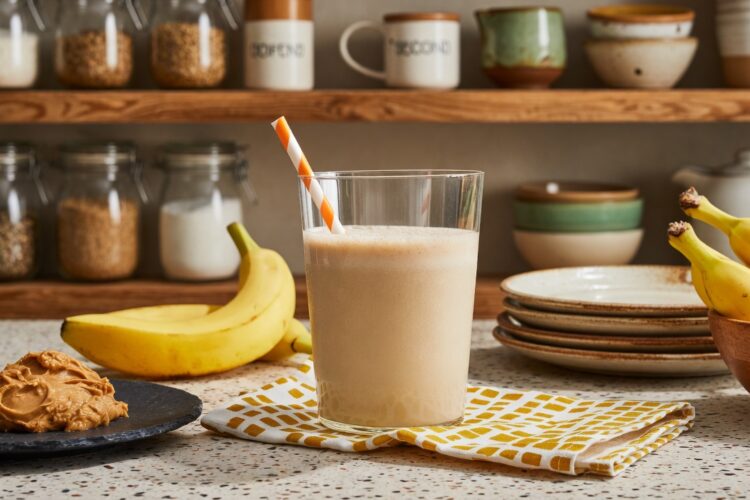
Peanut Butter Banana Smoothie is a thick, creamy, and satisfying drink that combines the natural sweetness of frozen banana with rich peanut butter flavor and a substantial amount of protein. Unlike a basic fruit smoothie made mainly with fruit and juice, this recipe uses vanilla protein powder, peanut butter powder, peanut butter, and milk to create a more filling drink. It works especially well as a quick breakfast, post-workout smoothie, or convenient high-protein snack when you have only a few minutes available.
Another ingredient makes this peanut butter banana protein smoothie particularly interesting: frozen cauliflower rice. Although cauliflower may sound unusual in a sweet smoothie, its mild flavor blends easily with banana and peanut butter. It helps create additional volume and thickness without overpowering the familiar peanut butter banana taste. Because everything goes directly into a blender, the entire smoothie can be prepared in approximately five minutes, with no cooking or complicated preparation required.
Why This Recipe So Special?
A major advantage of this high protein smoothie is convenience. Breakfast recipes that require cooking, cooling, or extensive cleanup are not always practical on busy mornings. Here, you simply measure the ingredients, add them to a blender, blend until creamy, and serve. The original recipe requires only five minutes of preparation, making it suitable for mornings when you need something substantial without spending much time in the kitchen.
The combination of banana and peanut butter also gives the smoothie a familiar flavor that works naturally with vanilla protein powder and cinnamon. Banana provides sweetness, peanut butter adds richness, and cinnamon gives the drink a warm finishing note. A small pinch of sea salt helps balance the sweeter ingredients. Together, these simple flavors produce a smoothie that feels more like a creamy peanut butter banana shake than a vegetable-containing drink.
What Makes This Smoothie High in Protein?
Several ingredients contribute protein instead of relying on a single source. Vanilla protein powder is one of the primary contributors, while peanut butter powder and regular peanut butter add more. The type of milk selected can also affect the final protein content. According to the nutritional information supplied with the original recipe, one serving contains an estimated 43.7 grams of protein, although actual values can change depending on the specific brands used.
This combination makes the smoothie useful when you want a protein-rich breakfast or snack in drinkable form. It can also work as a post-workout smoothie because it combines protein with carbohydrates from banana and other ingredients. Rather than adding several complicated components, the recipe achieves its protein content through everyday ingredients that blend together easily and complement one another in both flavor and texture.
Why Frozen Banana Works Best
Frozen banana is one of the most important ingredients for achieving a thick and creamy smoothie. A fresh banana adds sweetness and banana flavor, but it does not create quite the same cold, milkshake-like consistency. Freezing the banana before blending allows it to function as both fruit and a natural thickening ingredient. This also reduces the need for ice cubes, which can gradually water down a smoothie as they melt.
If you only have fresh bananas available, preparation is simple but needs to happen ahead of time. Peel the banana, slice it into smaller pieces, and freeze until completely solid. Keeping a supply of peeled and sliced frozen bananas in the freezer can make future smoothies especially convenient. Once frozen, the pieces can go directly from the freezer into the blender whenever you want to make this peanut butter banana smoothie.
Why Add Frozen Cauliflower Rice?
Frozen cauliflower rice adds volume and contributes to the smoothie’s thick texture. Because cauliflower has a relatively neutral taste, banana, peanut butter, vanilla protein powder, and cinnamon remain the dominant flavors. Thorough blending is important, however, because the goal is to create a completely smooth drink without noticeable cauliflower pieces.
Using frozen cauliflower rather than fresh also supports the cold, creamy texture of the drink. Both the banana and cauliflower act as frozen ingredients, helping produce a substantial smoothie without depending heavily on ice. This technique can be useful for people who want to incorporate vegetables into smoothies while maintaining a sweeter flavor profile.
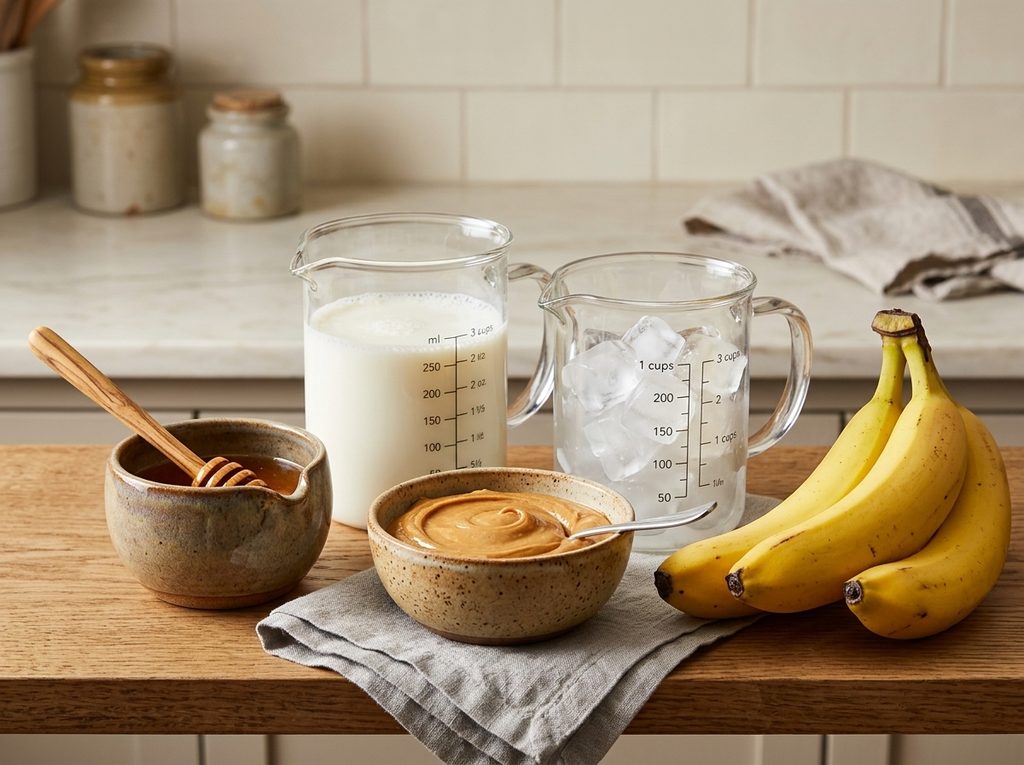
The Role of Peanut Butter
Peanut butter gives this smoothie much of its characteristic flavor and creamy mouthfeel. Even though the recipe contains only one tablespoon of regular peanut butter, its richness works particularly well with banana. Peanut butter also contributes fats and some protein, making the finished smoothie more substantial than a simple banana-and-milk drink.
Peanut butter powder provides another layer of peanut flavor. Using both regular peanut butter and peanut butter powder allows the smoothie to develop a noticeable peanut taste while maintaining the proportions established in the original recipe. The combination pairs naturally with vanilla protein powder, cinnamon, and banana, creating a balanced flavor where no single ingredient needs excessive amounts.
Choosing the Milk
The recipe uses ¾ cup of milk, with the option to adjust the amount according to the desired consistency. Dairy milk or plant-based milk can be used, allowing the recipe to accommodate different preferences. The specific choice can affect the smoothie’s flavor, texture, protein content, calories, and overall nutritional profile, so nutrition values should be treated as estimates rather than identical for every preparation.
The amount of milk also controls thickness. If you prefer a thick smoothie that is almost spoonable, avoid adding unnecessary extra liquid. For a thinner, easier-to-drink consistency, add a small amount of additional milk after the first blend. Adding it gradually gives you more control because it is much easier to thin a smoothie than to make an overly thin smoothie thick again.
Why Blending Order Matters
Pouring the milk into the blender first is a small but useful technique. Liquid surrounding the blender blades helps the frozen ingredients circulate once blending begins. Adding dense frozen banana and cauliflower first can make it more difficult for some blenders to establish the movement needed to process everything evenly.
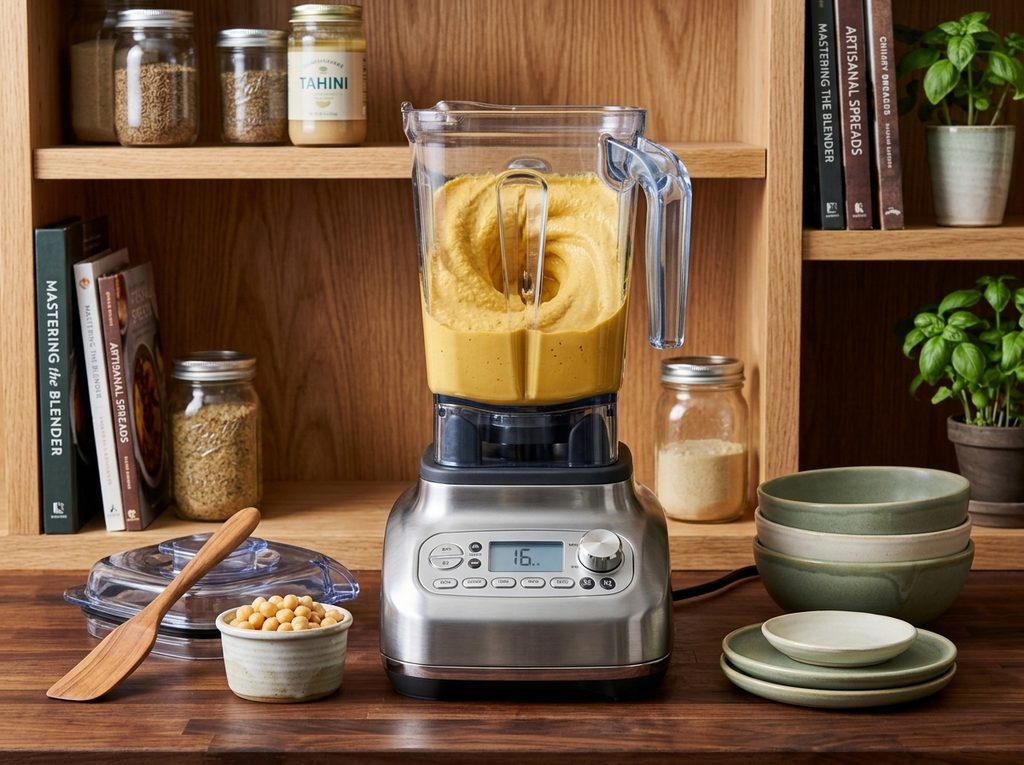
After adding the milk, place the frozen banana, frozen cauliflower rice, protein powder, peanut butter powder, peanut butter, cinnamon, and sea salt into the blender. Blend at high speed until completely smooth. If ingredients stick to the sides, stop the machine safely, scrape them downward, replace the lid, and continue blending until no noticeable pieces remain.
Getting the Perfect Smoothie Consistency
A good peanut butter banana smoothie should be creamy rather than watery. Frozen ingredients are key to reaching that texture, but the liquid ratio also matters. Begin with the quantity of milk specified in the recipe rather than pouring in a large amount immediately. After blending, check the texture and add only a small amount of additional milk if necessary.
A powerful blender makes processing frozen ingredients easier, but even with a standard blender, patience can help. Pause if necessary, scrape down the sides, and continue blending. Avoid replacing the frozen banana with a room-temperature banana if you want the thick texture described in the original recipe. The source specifically identifies frozen banana and proper blending as important for the best result.
When to Enjoy This Smoothie
This high protein peanut butter banana smoothie can fit into several parts of the day. It is quick enough for breakfast, portable enough for a busy morning, and substantial enough to work as a snack. The source also suggests it as a pre-workout or post-workout option, afternoon energy boost, quick lunch, or lighter evening treat.
Its five-minute preparation time is particularly useful when convenience is a priority. You can make the process even faster by keeping frozen banana portions and frozen cauliflower rice ready in the freezer. Then only the milk, protein powder, peanut products, cinnamon, and salt need to be measured when you are ready to blend.
Serving Ideas
The simplest way to serve this smoothie is immediately after blending while it is still cold and thick. Pour it into a tall glass, smoothie jar, or reusable travel cup. A small sprinkle of cinnamon or drizzle of peanut butter can be added on top if desired. These finishing touches are optional because the smoothie already contains both ingredients.
You can also create a thicker smoothie bowl by using less liquid. Pour the thick mixture into a bowl and enjoy it with suitable toppings. The source suggests options such as banana slices, peanut butter, chopped peanuts, cinnamon, and unsweetened coconut flakes. Remember that toppings will change the nutritional values and should be considered separately if you are closely tracking calories or macronutrients.
Simple Variations
For a dairy-free version, use an appropriate plant-based milk rather than dairy milk. If increasing protein is the goal, the source suggests selecting a higher-protein milk or protein powder containing more protein per serving. These choices can significantly affect the final nutritional profile, so the listed nutrition should not automatically be applied to modified versions.
Consistency is another easy adjustment. More milk produces a thinner smoothie, while slightly less creates a thicker result. Cinnamon can also be adjusted according to taste. The basic peanut butter, banana, and vanilla combination is versatile enough that these small changes can alter the drinking experience without requiring an entirely different preparation method.
Common Mistakes to Avoid
One common mistake is adding too much milk at the beginning. This can turn an intentionally thick smoothie into a thin drink, and correcting that texture afterward can be difficult. Another is using fresh banana instead of frozen banana when expecting the same creamy consistency. Frozen banana contributes significantly to the thick texture, so this preparation detail matters.
Under-blending can also leave pieces of cauliflower or banana in the drink. Blend until the mixture looks completely smooth before serving. The small pinch of sea salt should not be overlooked either because it helps balance the sweetness and peanut flavor. Finally, use cold and frozen ingredients as directed so the smoothie stays refreshing and thick.
Storage Notes
This smoothie is best enjoyed immediately after blending because that is when its consistency is thickest and freshest. Smoothies naturally change texture while sitting, particularly when they contain frozen fruit. If you need to prepare it ahead, transfer it into a tightly sealed container or jar and keep it refrigerated.
The supplied recipe recommends refrigeration for up to 24 hours. Some separation may occur during storage, which is normal for blended ingredients. Shake or stir the smoothie thoroughly before drinking it again. Freezing individual portions is another possibility, but the smoothie should be allowed to thaw slightly and may need to be stirred or blended again to restore a smoother texture.
Notes
For the best High Protein Peanut Butter Banana Smoothie, start with completely frozen banana and cauliflower rice. Pour the milk into the blender first so the frozen ingredients blend more easily, and process everything until completely smooth. Add extra milk only when necessary because too much liquid can quickly make the smoothie thin. Serve immediately whenever possible for the best cold, creamy texture.
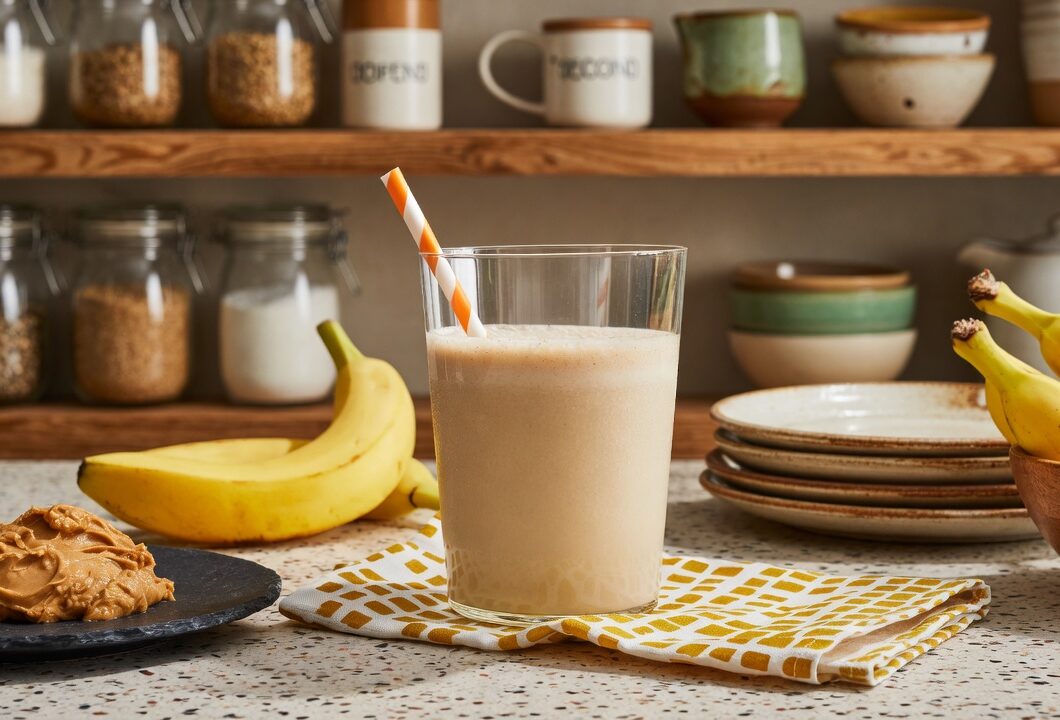
Peanut Butter Banana Smoothie
This quick smoothie is ready in just 5 minutes and can be served for breakfast, as a snack, lunch, or a light dessert.
4
servings5
minutes335
kcal5
minutesIngredients
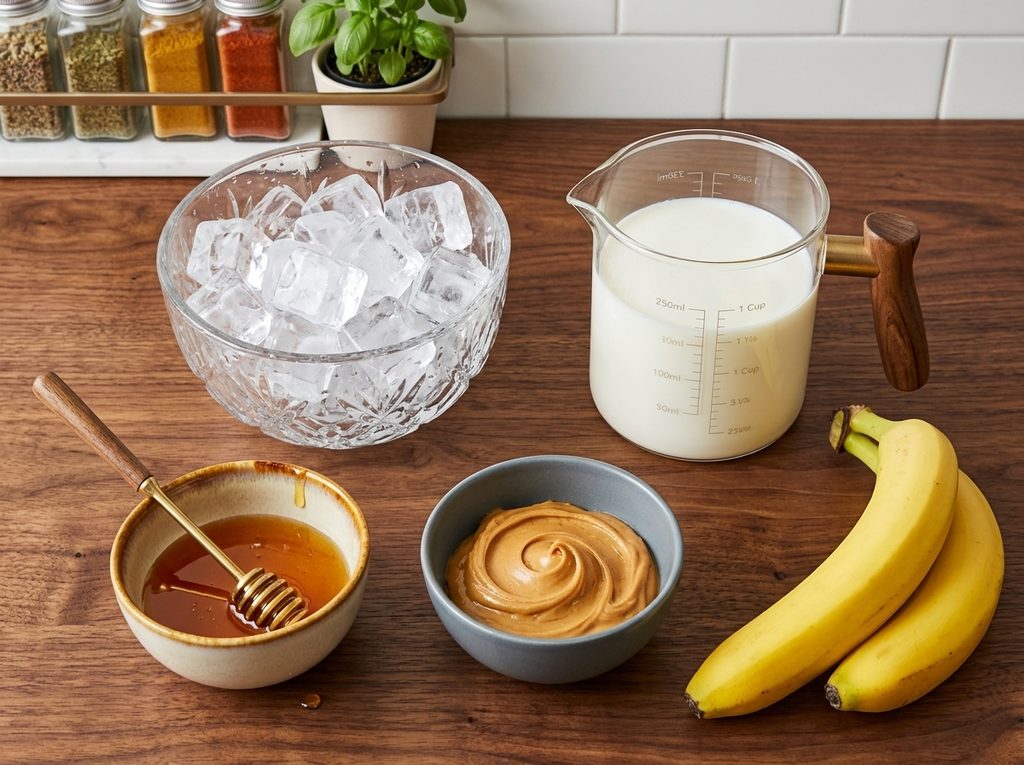
2 bananas, broken into chunks
½ cup peanut butter
2 cups milk
2 tablespoons honey, or to taste
2 cups ice cubes
Instructions
- Gather all the ingredients and prepare the bananas by breaking them into chunks. Add the banana chunks, milk, peanut butter, honey, and ice cubes to a blender.
- Secure the lid and blend the ingredients until the mixture becomes smooth. Blend for about 30 seconds, checking that the banana and ice are fully combined.
- Pour the peanut butter banana smoothie evenly into serving glasses.
- Serve immediately and enjoy while cold and creamy.
Nutrition Facts (per serving)
- Calories: 335kcal
- Fat: 19g
- Carbohydrates: 34g
- Protein: 13g