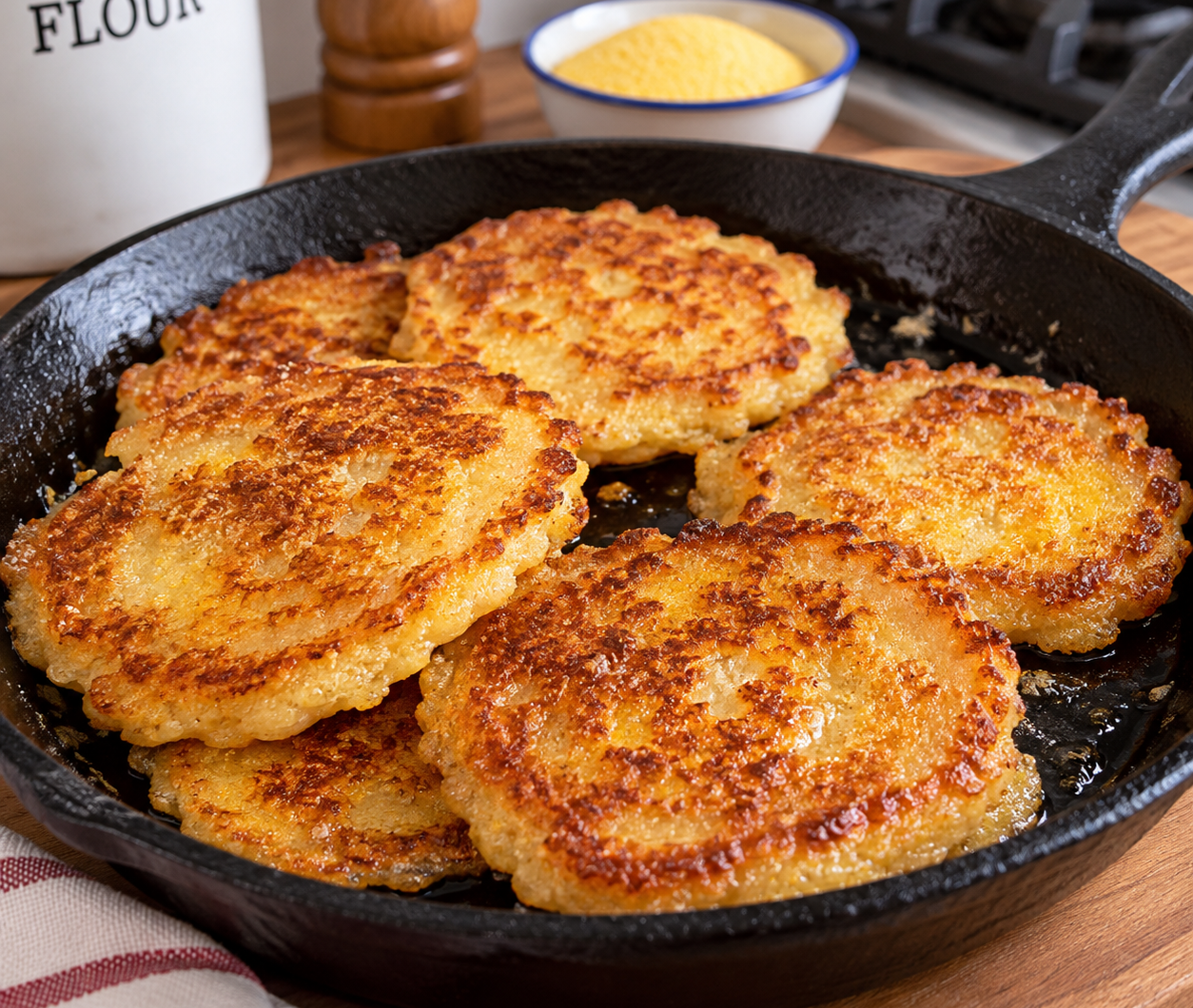
Southern Poor Man Hoecakes are old-fashioned cornmeal cakes cooked in a hot skillet until the outside becomes crisp and golden while the center stays soft and hearty. Made with only a few inexpensive pantry ingredients, these traditional Southern hoecakes show how simple food can still deliver plenty of flavor and satisfying texture. They can be served at breakfast with butter and syrup or alongside savory dishes such as beans, greens, fried chicken, or fried fish.
This easy Poor Man Hoecakes recipe requires only stone-ground cornmeal, buttermilk or water, salt, and bacon grease, lard, or oil for cooking. There is no wheat flour or complicated preparation involved in the original recipe. The batter comes together in minutes, rests briefly to hydrate the cornmeal, and is then spooned into a very hot skillet. Each cake cooks for only a few minutes per side, making hoecakes a convenient choice for a quick homemade breakfast or side dish.
What Are Poor Man Hoecakes?
Poor Man Hoecakes are simple skillet-fried cornmeal cakes associated with traditional Southern cooking. Unlike fluffy wheat pancakes, these rustic cakes rely on cornmeal for their characteristic texture and flavor. The batter is prepared with liquid and salt before being cooked in hot fat. As each portion hits the skillet, the outside begins to brown and crisp while the inside develops a softer cornmeal texture.
The appeal of traditional hoecakes comes largely from this contrast. A properly heated skillet creates deeply golden edges and a lightly crunchy surface, while the interior remains moist enough to be enjoyable. They are particularly good when eaten immediately after cooking, when the crust is at its crispest. Their simple flavor also makes them versatile enough to work with both sweet toppings and savory Southern meals.
Why They Are Called Poor Man Hoecakes
The name reflects the recipe’s reputation as affordable, filling food made from basic ingredients. Cornmeal was a practical staple because it could be stored and turned into a satisfying dish without requiring an expensive ingredient list. Recipes based on cornmeal became an important part of everyday cooking, particularly when households needed to prepare substantial meals with limited resources.
That simplicity remains one of the biggest attractions of this recipe today. There are no eggs, wheat flour, sugar, cheese, or specialty baking ingredients in the basic version provided. A cup of cornmeal forms the foundation, while water or buttermilk creates the batter. Salt seasons it, and a small quantity of cooking fat provides the crisp fried exterior. The result is uncomplicated, economical comfort food.
The Southern Tradition Behind Hoecakes
Hoecakes have a long association with Southern food traditions and cornmeal-based cooking. The source recipe describes them as a dish families prepared during difficult times because the ingredients were affordable and easy to keep available. Cornmeal was particularly useful because it could become a filling component of a meal with very little additional preparation.
The supplied source also notes a traditional explanation for the name “hoecake”: some accounts suggest that workers cooked cornmeal cakes on flat hoes over open fires. Regardless of the exact origin of the name, the modern version is prepared much more conveniently in a skillet. Cast iron is especially suitable because it holds heat well and helps develop the browned, crisp exterior associated with Southern-style hoecakes.
Why Stone-Ground Cornmeal Works Well
The recipe calls for one cup of stone-ground cornmeal. Compared with very finely ground cornmeal, stone-ground cornmeal creates a more rustic texture and stronger corn character. That slightly coarse texture is part of what separates traditional Poor Man Hoecakes from ordinary pancakes. It gives the finished cakes a hearty bite while still allowing the center to become tender after the batter has absorbed enough liquid.
The source notes that fine cornmeal can produce a softer and less rustic result, but stone-ground cornmeal is the specified ingredient for this recipe. Letting the batter rest for approximately five minutes after mixing is particularly helpful. During that short period, the cornmeal absorbs moisture from the buttermilk or water, helping create a more cohesive texture before the batter reaches the skillet.
Buttermilk or Water
One cup of buttermilk or water provides the liquid for these homemade hoecakes. Both choices are part of the original recipe, so either can be used without changing its basic structure. Water creates an especially simple traditional version, while buttermilk gives the cornmeal cakes a tangier flavor, richer taste, and somewhat softer interior.
When adding the liquid, pour it into the cornmeal and salt gradually and stir until the mixture becomes smooth enough to spoon into the skillet. The batter should not become excessively thick or dry. After mixing, leave it undisturbed for about five minutes so the cornmeal has time to hydrate. This short rest improves consistency and helps reduce an overly gritty texture in the finished cakes.
Choosing the Cooking Fat
The original recipe gives three choices for frying: bacon grease, lard, or oil. You need approximately two to three tablespoons. Each works by coating the skillet and providing enough hot fat to brown the surface of the cornmeal cakes. The cooking fat is particularly important because Poor Man Hoecakes are skillet-fried rather than baked like traditional cornbread.
Bacon grease provides a strong savory character that works particularly well when hoecakes are being served with eggs, beans, greens, or other savory dishes. Lard is another traditional option, while oil offers a more neutral alternative. Whichever choice you make, the skillet and fat need to become properly hot before the first spoonful of batter is added.
Why a Cast Iron Skillet Is Ideal
A cast iron skillet is particularly well suited to making crispy Southern hoecakes because it retains heat effectively. Once thoroughly heated, the pan provides a hot cooking surface that encourages the batter to brown quickly. This creates the crisp exterior that distinguishes good skillet hoecakes from cakes that are pale, soft, or greasy.
Place the skillet over medium-high heat and add two to three tablespoons of your chosen cooking fat. Give the pan enough time to heat before adding the batter. If the cooking surface is not hot enough, the cakes may absorb more grease instead of developing a crust. Proper preheating is therefore one of the most important parts of this otherwise very simple recipe.
How to Make Poor Man Hoecakes
Begin by combining one cup of stone-ground cornmeal and ½ teaspoon salt in a mixing bowl. Gradually stir in one cup of buttermilk or water until a smooth batter forms. Once combined, let the mixture rest for approximately five minutes. This gives the cornmeal time to absorb some of the liquid and improves the consistency before frying.
While the batter rests, heat a cast iron skillet over medium-high heat. Add two to three tablespoons of bacon grease, lard, or oil and let it become hot. Spoon small portions of the rested cornmeal batter into the skillet and gently flatten each portion. Avoid crowding the pan because enough space makes the cakes easier to turn and allows them to cook evenly.
How Long to Cook Hoecakes
Cook each hoecake for approximately two to three minutes on the first side. Watch the edges rather than relying entirely on the clock. They should begin to look firm, deeply golden, and crisp before you attempt to flip the cake. Turning too early can make the soft batter stick, break, or lose its shape.
Once the first side has developed a good crust, carefully flip the hoecake and cook the second side for another two to three minutes. Both surfaces should be golden, with crisp edges surrounding the softer center. Remove the finished cakes from the skillet and serve them promptly. Hoecakes are at their best while they are still hot and freshly crisped from the cooking fat.
How to Get Crispy Hoecakes
A properly preheated skillet is the key to creating crispy cornmeal hoecakes. If the pan and cooking fat are only warm when the batter is added, the cakes may soak up grease before the exterior has an opportunity to brown. Medium-high heat allows the surface to begin cooking immediately and produces a better contrast between the crisp outside and softer center.
The batter consistency also matters. Allow the cornmeal mixture to rest for the recommended five minutes, but avoid letting it become excessively thick. The cakes need enough moisture to remain tender inside. Finally, resist the temptation to move or flip them repeatedly. Let each side develop a proper golden crust before turning it.
Poor Man Hoecakes for Breakfast
These old-fashioned cornmeal cakes make a satisfying addition to a Southern-style breakfast. Their savory corn flavor pairs naturally with fried eggs, bacon, and sausage. Because the basic recipe contains no added sugar, the cakes can remain completely savory or be topped at the table according to individual preference.
The source also lists butter, maple syrup, honey, and sorghum syrup as optional toppings. Adding one of these creates a sweet-and-savory breakfast similar in spirit to serving syrup with pancakes. A warm hoecake with a crisp exterior can hold melted butter and syrup particularly well, while the cornmeal flavor remains noticeable underneath the topping.
Serving Hoecakes With Dinner
Poor Man Hoecakes are equally useful as a savory side dish. Their rustic cornmeal texture works well with pinto beans and cooked greens, where they can take the place of another bread. The source also recommends pairing them with fried chicken, fried fish, and other familiar Southern dishes.
This versatility is one reason such a simple recipe has remained useful. Instead of being limited to breakfast, a single batch can accompany several different meals. Served without sweet toppings, the cornmeal cakes function more like skillet bread. Served with honey, maple syrup, sorghum syrup, or butter, they become a comforting breakfast or snack.
Hoecakes vs. Cornbread
Although hoecakes and cornbread both use cornmeal, they are prepared differently. Traditional cornbread is generally baked as a larger loaf or pan of bread. Poor Man Hoecakes are formed into individual portions and fried directly in a skillet. This direct contact with hot cooking fat gives hoecakes their distinctive crisp edges and browned surfaces.
Their thickness and texture are also different from a pan of baked cornbread. Hoecakes are relatively thin, allowing each individual cake to develop plenty of browned exterior. The middle remains softer, creating the characteristic contrast between crust and center. This skillet-fried preparation is central to the recipe and should not be replaced with baking if you want the intended result.
Avoid Making the Batter Too Thick
One common problem with homemade hoecakes is batter that becomes too thick. Because cornmeal absorbs liquid as it rests, its consistency can change after mixing. The batter needs enough structure to form small cakes in the skillet, but it should still be soft enough to spoon out and gently flatten.
The original source suggests adding a splash of water or buttermilk if the batter becomes overly thick. This is an adjustment to consistency rather than a change to the recipe’s basic ingredients, since both liquids are already specified as options. Add only enough to restore a workable consistency rather than making the mixture excessively thin.
Don’t Flip the Hoecakes Too Early
Another common mistake is turning the cakes before the bottom has developed enough structure. Fresh batter is relatively fragile when it first enters the skillet. Attempting to slide a spatula underneath too quickly may cause the cake to stick or break apart. Waiting for visible browning makes flipping much easier.
Look for golden, crisp edges and a surface that appears more settled before turning. At approximately two to three minutes per side, the cooking process is already quite fast, so there is little advantage to rushing. Giving each side sufficient uninterrupted contact with the skillet also produces better browning and a more satisfying crisp texture.
Storing Leftover Hoecakes
Freshly cooked hoecakes offer the best texture, but leftovers can be stored when necessary. According to the supplied recipe, they can be kept in an airtight container in the refrigerator for up to three days. Allowing them to cool before storage helps prevent excess condensation from collecting inside the container.
For reheating, a skillet is preferred over a microwave. Returning the hoecakes to a hot pan can restore some of their crisp exterior, whereas microwave heating is more likely to leave them soft. Warm only until heated through, taking care not to cook them so long that the centers become dry.
Notes
For the most rustic Southern-style texture, use the one cup of stone-ground cornmeal specified in the recipe. Mix it with ½ teaspoon salt and one cup of either buttermilk or water, then allow the batter to rest for approximately five minutes before frying. This gives the cornmeal time to absorb moisture and improves its consistency.
Make sure the cast iron skillet and cooking fat are properly heated before adding the batter. A hot cooking surface helps the cakes develop crisp, deeply golden edges instead of absorbing excess grease. Cook for approximately two to three minutes per side and wait until the first side is well browned before flipping.
The supplied source discusses optional sweet and savory variations involving sugar, cinnamon, vanilla, onions, jalapeños, cheese, and bacon. These are not included in the recipe card because your instruction is to preserve the original ingredient list. Likewise, butter, maple syrup, honey, and sorghum syrup are best treated as optional serving toppings rather than ingredients in the hoecake batter.
Poor Man Hoecakes
Traditional Southern Poor Man Hoecakes are simple skillet-fried cornmeal cakes with crisp golden edges and a soft, rustic center.
1
servings5
minutes5
minutes5
minutes15
minutesIngredients
1 cup stone-ground cornmeal
1 cup buttermilk or water
½ teaspoon salt
2–3 tablespoons bacon grease, lard, or oil
- Optional Toppings
Butter
Maple syrup
Honey
Sorghum syrup
Instructions
- Combine the stone-ground cornmeal and salt in a mixing bowl.
- Slowly stir in the buttermilk or water until a smooth batter forms.
- Let the batter rest for about 5 minutes so the cornmeal can absorb the liquid.
- Heat a cast iron skillet over medium-high heat.
- Add 2–3 tablespoons bacon grease, lard, or oil and allow it to become hot.
- Spoon small portions of batter into the skillet and gently flatten each one.
- Cook for 2–3 minutes, or until the bottom and edges become golden and crisp.
- Flip carefully and cook the second side for another 2–3 minutes.
- Remove from the skillet and serve immediately while hot and crispy.