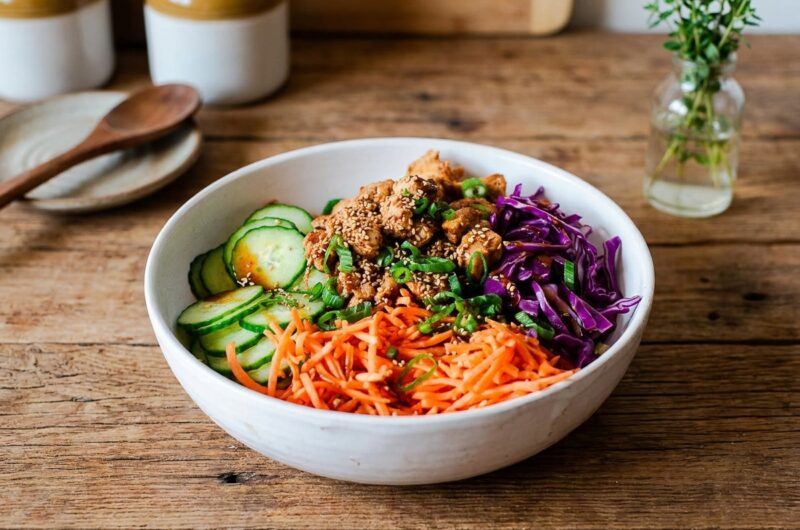
This Korean BBQ chicken bowl is a simple and filling meal made with juicy diced chicken, a rice base, fresh vegetables, Korean BBQ sauce, and toasted sesame seeds. It brings together warm chicken and cauliflower rice with cool, crunchy vegetables for a balanced texture in every bowl.
An Easy Korean BBQ Chicken Bowl in 18 Minutes
This recipe takes 18 minutes from start to finish, including 10 minutes of preparation and 8 minutes of cooking. That makes it a useful choice for busy weeknights when there is little time for a long dinner recipe. Most of the preparation involves cutting and arranging the vegetables. Once everything is ready, the chicken cooks quickly in a hot skillet before the bowls are assembled.
What Makes This Chicken Rice Bowl Filling
The combination of chicken thighs, cauliflower rice, carrots, cucumbers, purple cabbage, and green onions creates a meal with several different textures. The chicken provides the main source of protein, while the vegetables add crunch and freshness. The cauliflower rice forms the base of the bowl and works with the Korean BBQ sauce. Each component is added separately, allowing the finished bowl to have a clear mix of flavors.
Juicy Chicken Thighs for the Bowl
Boneless, skinless chicken thighs are diced before cooking, helping them cook quickly and evenly. The chicken is paired with Korean BBQ sauce, which gives the meat its main flavor. Cooking the small pieces over medium-high heat helps them develop a golden exterior while staying tender inside. The chicken should be cooked through and reach an internal temperature of 165°F before it is added to the bowls.
Korean BBQ Sauce Adds the Main Flavor
Korean BBQ sauce brings a sweet, savory, and rich flavor to the chicken. The recipe uses 1/2 cup of sauce with the chicken, while extra Korean BBQ sauce is added when serving. This helps carry the flavor through the entire bowl, including the rice and vegetables. The original recipe also mentions that pre-marinated Korean BBQ chicken from the grocery store can be used as a shortcut.
Preparing the Cauliflower Rice Base
Cauliflower rice creates the base of this Korean chicken bowl. It should be prepared according to the package directions and kept warm until the other ingredients are ready. The warm base provides a contrast to the fresh cucumber, cabbage, and carrots. The original instructions also allow regular rice as an alternative preparation choice, although cauliflower rice remains the listed ingredient for the recipe.
Fresh Carrots Add Crunch and Color
Shredded carrots are layered into the bowl after the rice base is prepared. Their crisp texture works well with the warm chicken and soft cauliflower rice. Carrots also provide a naturally mild flavor that does not compete with the Korean BBQ sauce. Preparing the carrots before cooking the chicken makes final assembly faster, which is especially helpful when making this recipe as a quick dinner.
Thinly Sliced Cucumbers Keep the Bowl Fresh
The thinly sliced cucumbers add a cool and refreshing element to the finished bowl. Since they are served fresh, they provide a clear contrast to the hot Korean BBQ chicken. Their crisp texture also works well alongside the shredded carrots and cabbage. Arrange the cucumbers in their own section of each bowl to keep the ingredients visually separate and maintain the fresh texture until serving.
Purple Cabbage Adds More Texture
Thinly sliced purple cabbage gives the bowl another crunchy vegetable layer. Its firm texture helps balance the softer chicken and rice base. The cabbage can be prepared before cooking begins, making it easy to add during final assembly. Keeping the vegetables separate rather than mixing everything together also gives each bowl a clean presentation and allows every ingredient to remain easy to identify.
Green Onions for a Fresh Finish
Chopped green onions are added near the end when the bowls are assembled. Their fresh flavor complements the rich Korean BBQ sauce and cooked chicken. Along with toasted sesame seeds, they create the finishing layer on top of the meal. Sprinkle the green onions over the chicken and vegetables shortly before serving to keep their flavor and appearance fresh.
Toasted Sesame Seeds Complete the Bowl
Toasted sesame seeds are used as a topping and add a light crunch to the finished Korean BBQ chicken bowl. A small amount is sprinkled over the assembled ingredients after the chicken and sauce have been added. The toasted flavor works naturally with Korean BBQ sauce and fresh vegetables. Because they are used as a final topping, the sesame seeds stay visible and add texture to the finished meal.
Preparing the Ingredients Before Cooking
A little preparation makes this 18-minute chicken bowl easier to manage. Dice the chicken thighs, prepare the cauliflower rice, shred the carrots, slice the cucumbers and purple cabbage, and chop the green onions. Once these ingredients are ready, the chicken can be cooked while the warm rice is kept nearby. This approach makes bowl assembly quick after the skillet cooking is complete.
Cooking the Chicken Over Medium-High Heat
Heat a skillet over medium-high heat before adding the diced Korean BBQ chicken. Cook for 6 to 8 minutes, allowing the pieces to become golden brown and cook through. Stir or move the chicken as needed for even cooking. Because the chicken is diced, it cooks faster than whole thighs. Check that the internal temperature reaches 165°F before removing it from the heat.
Building the Rice Bowl
Start each serving bowl with the prepared cauliflower rice. Once the warm base is in place, arrange the shredded carrots, sliced cucumbers, and thinly sliced purple cabbage over or beside it. Layering the ingredients rather than stirring them together creates the bowl-style presentation. This also allows the fresh vegetables to stay crisp while the warm ingredients remain in their own sections.
Adding the Korean BBQ Chicken
Place the cooked Korean BBQ chicken over the prepared rice and vegetables. The chicken is the main protein component, so distributing it evenly helps keep each serving balanced. Add the chicken while it is still warm for the best contrast with the fresh vegetables. If desired according to the original recipe, drizzle extra Korean BBQ sauce over the chicken before adding the final toppings.
Finishing with Sauce, Sesame Seeds, and Green Onion
After the chicken is added, drizzle extra Korean BBQ sauce over the bowls. Sprinkle the toasted sesame seeds and chopped green onions over the top. These final ingredients add extra flavor and texture without requiring more cooking. The bowl can then be served as it is, or the optional lime wedges or chili flakes can be used according to individual preference.
Optional Lime Wedges or Chili Flakes
The original ingredient list includes lime wedges or chili flakes as optional additions. Lime can add a fresh, sharp flavor to the finished bowl, while chili flakes can add extra heat. These ingredients are not required for the main recipe and can be added at serving time. Leaving them optional makes it easier to adjust the final flavor without changing the listed base ingredients.
A High-Protein Bowl with 35 Grams of Protein
According to the nutrition information provided, this Korean BBQ chicken bowl contains 35 grams of protein per serving. The chicken thighs provide the main source, making the recipe a suitable choice for people searching for high-protein lunch recipes or easy high-protein dinner ideas. With a total of 544 calories per serving, the bowl also contains vegetables and cauliflower rice alongside the chicken.
A Good Recipe for Meal Prep
The separate components make this recipe practical for meal preparation. The chicken, cauliflower rice, and vegetables can be prepared and arranged as individual parts of the meal. When it is time to eat, assemble the bowl with the chicken, vegetables, extra sauce, sesame seeds, and green onion. Keeping the ingredients organized also helps preserve the different textures that make this chicken bowl enjoyable.
Using Pre-Marinated Korean BBQ Chicken
For a faster option, the original recipe states that pre-marinated Korean BBQ chicken from the grocery store works well. This can reduce the amount of preparation needed before cooking. The chicken is still diced and cooked in a skillet until golden and fully cooked. Whether using the Korean BBQ sauce listed in the ingredients or the suggested shortcut, the finished chicken should reach an internal temperature of 165°F.
Keeping the Vegetables Crisp
The fresh vegetables do not need to be cooked for this recipe. Add the shredded carrots, thinly sliced cucumbers, and purple cabbage directly to the bowls during assembly. Preparing them close to serving time can help maintain their natural crunch. If the meal is being prepared ahead, keeping the vegetables separate from the warm chicken and rice can also help preserve their texture.
How to Serve This Korean Chicken Bowl
Serve the bowl with the warm cauliflower rice as the base and the fresh vegetables arranged around the chicken. Finish with extra Korean BBQ sauce, toasted sesame seeds, and chopped green onion. Lime wedges or chili flakes can be added if desired. This simple arrangement makes the meal suitable for lunch or dinner and keeps the warm and cool ingredients pleasantly distinct.
Common Questions About Korean BBQ Chicken Bowls
Can regular rice be used?
The instructions state that cauliflower rice, or regular rice, can be prepared according to package directions and kept warm. The listed ingredient remains cauliflower rice, but regular rice is mentioned as an alternative in the original preparation instructions.
How long should the chicken cook?
The diced chicken should cook over medium-high heat for 6 to 8 minutes. It should become golden brown and cook through completely. For food safety, check that the internal temperature reaches 165°F before serving.
What vegetables are used in this bowl?
The recipe includes shredded carrots, thinly sliced cucumbers, thinly sliced purple cabbage, and chopped green onions. These vegetables are added fresh after the cauliflower rice is prepared and before the cooked chicken and toppings are added.
Can extra sauce be added?
Yes. Extra Korean BBQ sauce is included in the ingredient list and is drizzled over the bowl after the chicken is added. This can provide additional flavor to the chicken, cauliflower rice, and vegetables.
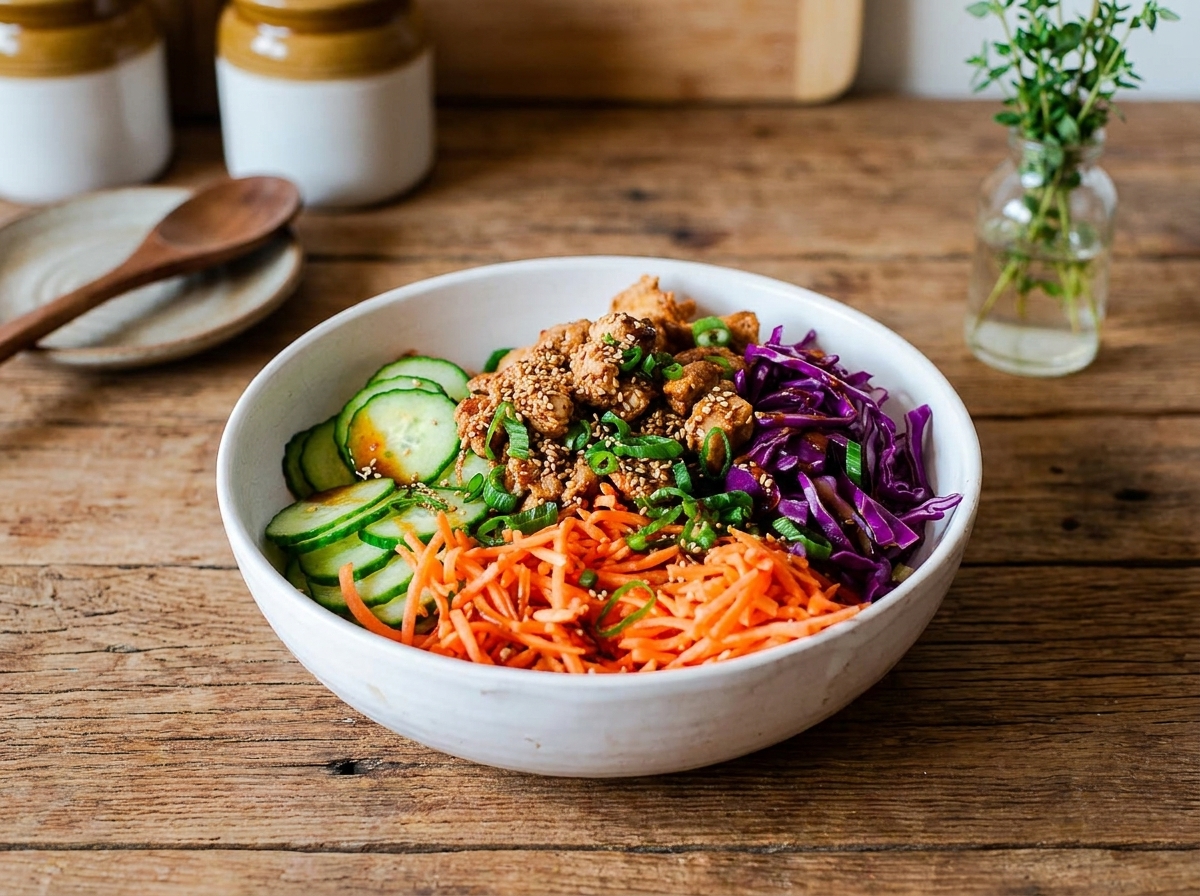
High-Protein Korean BBQ Chicken Bowls
A high-protein Korean BBQ chicken rice bowl made with diced chicken thighs, cauliflower rice, shredded carrots, fresh cucumbers, purple cabbage, green onions, Korean BBQ sauce, and toasted sesame seeds.
4
servings10
minutes8
minutes544
kcal18
minutesIngredients
24 oz chicken thighs, boneless, skinless, and diced
1/2 cup Korean BBQ sauce, Shortcut: pre-marinated Korean BBQ chicken from the grocery store works great here.
4 cups cauliflower rice
4 cups shredded carrots
4 cups cucumbers, thinly sliced
4 purple cabbage, thinly sliced
4 green onions, chopped
Extra Korean BBQ sauce
Toasted sesame seeds for topping
Optional: lime wedges or chili flakes
Instructions
- Prepare the cauliflower rice according to the package directions and keep it warm while preparing the remaining ingredients.
- Heat a skillet over medium-high heat. Add the diced marinated chicken thighs and cook for 6 to 8 minutes, until golden brown and cooked through to an internal temperature of 165°F.
- Divide the prepared cauliflower rice between serving bowls. Arrange the shredded carrots, thinly sliced cucumbers, and thinly sliced purple cabbage over the rice base.
- Add the cooked Korean BBQ chicken to each bowl and drizzle with extra Korean BBQ sauce.
- Sprinkle the bowls with toasted sesame seeds and chopped green onions. Add optional lime wedges or chili flakes if desired, then serve.
Nutrition Facts
- Calories: 544kcal
- Fat: 29g
- Carbohydrates: 37g
- Fiber: 8g
- Sugar: 13g
- Protein: 35g