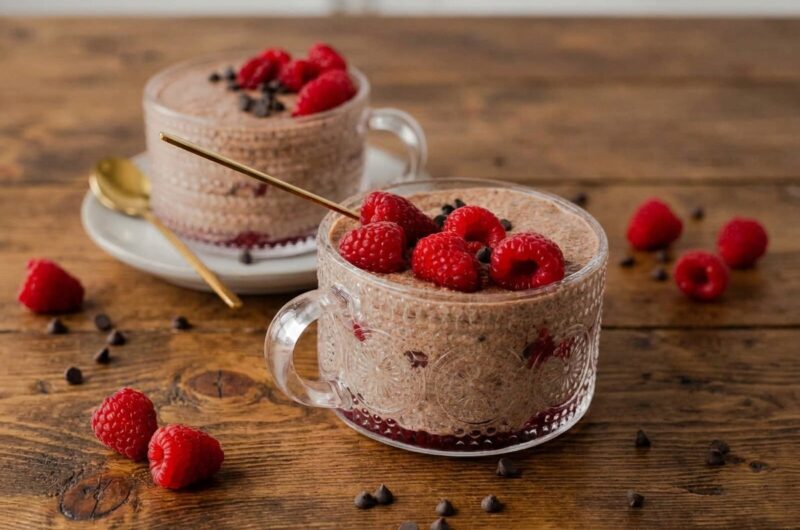
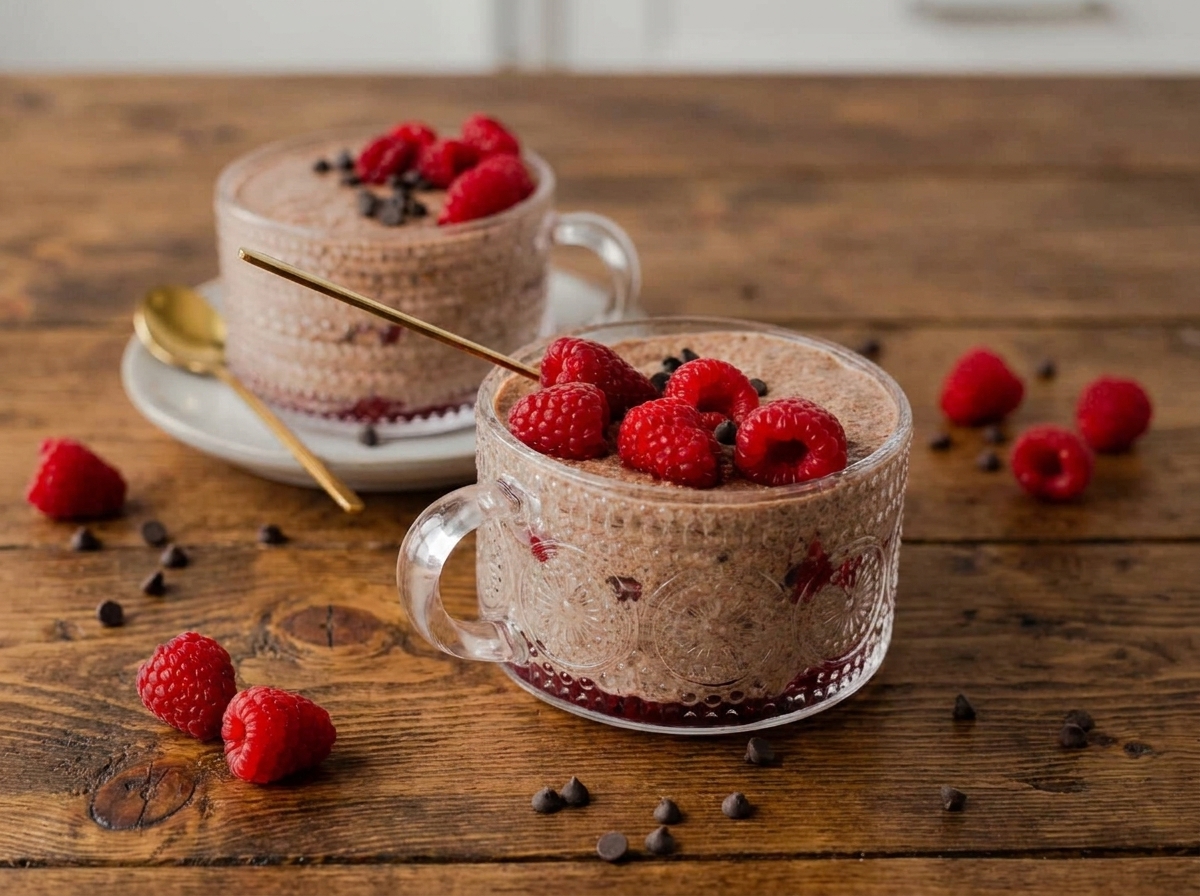
Chocolate Blended Overnight Oats are a creamy, make-ahead breakfast made with rolled oats, non-dairy milk, chocolate protein powder, chia seeds, cocoa powder, and fresh raspberries. Unlike traditional overnight oats, where the oat flakes remain whole, this recipe blends the ingredients before chilling. The result is a smooth, thick, pudding-like breakfast with rich chocolate flavor and a fresh raspberry finish. It is especially convenient for busy mornings because there is no cooking required and most of the preparation can be completed the night before.
This easy high-protein overnight oats recipe uses familiar ingredients but delivers a noticeably different texture from regular oatmeal. Blending breaks down the rolled oats and chia seeds into the liquid, creating a uniform chocolate mixture before refrigeration. During chilling, the oats and chia seeds absorb moisture and thicken the mixture. By morning, the oats have developed a creamy, spoonable consistency that feels closer to chocolate breakfast pudding than a bowl of traditional soaked oats.
Why This Recipe Popular
One of the biggest advantages of blended overnight oats is convenience. There is no stovetop cooking, and the active preparation takes only a few minutes. Once everything is blended, simply divide the mixture between two containers and refrigerate it for at least three hours. Leaving it overnight gives the oats even more time to absorb the liquid and develop their thick texture.
The recipe is also designed to be filling. Rolled oats supply carbohydrates and fiber, chia seeds add additional fiber and texture, while two scoops of chocolate protein powder increase the protein content. Fresh raspberries provide a tart fruit contrast that works particularly well with the rich cocoa flavor. According to the supplied nutritional estimate, each serving contains approximately 34 grams of protein and 18 grams of fiber.
A Smooth Alternative to Traditional Overnight Oats
Traditional overnight oats are usually prepared by stirring rolled oats into milk and leaving the flakes whole. That method creates a soft but still noticeably chewy texture. Chocolate blended overnight oats take a different approach by processing the oats with the liquid before refrigeration.
This method is particularly appealing if you enjoy the nutritional convenience of oatmeal but prefer a smoother consistency. After blending, there should be no obvious large oat flakes remaining. The mixture initially resembles a pourable batter, but it becomes much thicker as it rests in the refrigerator.
Old-Fashioned Rolled Oats Create the Base
The recipe uses one cup of old-fashioned rolled oats for two servings. Rolled oats provide the grain foundation and become much smoother once processed in a blender. Their mild flavor also makes them a useful base for chocolate protein powder and unsweetened cocoa.
Because the oats are blended rather than simply soaked whole, they become incorporated throughout the mixture. During refrigeration, they continue absorbing the non-dairy milk, contributing to the thick consistency of the finished breakfast. The result is creamy rather than grainy when the ingredients have been blended thoroughly.
Non-Dairy Milk Provides the Liquid
Two cups of non-dairy milk provide the liquid needed to blend and hydrate the oats, chia seeds, cocoa, and protein powder. The original recipe suggests unsweetened almond milk as a light option, although the supplied material notes that different milk choices can influence creaminess.
When assembling the recipe, pour the milk into the blender first. Adding liquid before the dry ingredients makes it easier for the blades to move freely and reduces the chance of powders becoming packed around the bottom of the blender container. This small preparation detail can help create a smoother mixture.
Chocolate Protein Powder Adds Flavor and Protein
Two scoops of chocolate protein powder are included in the recipe. This ingredient serves two purposes: it increases the protein content while reinforcing the chocolate flavor.
Protein powders vary significantly between brands, particularly in sweetness, flavor intensity, and liquid absorption. Because of these differences, the finished oats may be slightly thicker or thinner depending on the particular product used. If the mixture becomes unusually thick after chilling, the source suggests stirring in a small amount of cold milk until the desired consistency returns.
Chia Seeds Help Thicken the Oats
A quarter cup of chia seeds plays an important role in creating the thick texture of this blended overnight oats recipe. Chia seeds absorb liquid during refrigeration, helping turn the blended mixture into a spoonable breakfast.
Because chia is important to the structure, measure the full quantity carefully. Reducing it substantially while keeping the same amount of milk could result in a thinner finished mixture. The source specifically identifies incorrect liquid-to-chia proportions as a common reason overnight oats may fail to set properly.
Unsweetened Cocoa Deepens the Chocolate Flavor
Although chocolate protein powder already provides chocolate flavor, the recipe also includes one tablespoon of unsweetened cocoa powder. This gives the oats a deeper cocoa taste without requiring additional sugar.
Only a small quantity is needed because cocoa powder has a concentrated flavor. When combined with chocolate protein powder, it creates a richer base that contrasts nicely with tart raspberries. A small amount of fine sea salt further sharpens the chocolate flavor and helps balance the overall taste.
Why a Pinch of Salt Matters
The recipe contains only one-eighth teaspoon of fine sea salt, but even this small quantity serves a purpose. Salt can help make cocoa and chocolate flavors taste more pronounced while balancing sweetness.
Because protein powder may already contain sweeteners and other flavorings, the small amount of salt keeps the chocolate profile from tasting one-dimensional. Measure it carefully rather than adding a large pinch, since the recipe needs only a very small amount.
Fresh Raspberries Add a Bright Finish
Fresh raspberries are used as desired for the topping. Their tart flavor creates a refreshing contrast with the rich chocolate oat mixture, while their bright color makes the finished breakfast more attractive.
You can leave the raspberries whole or gently mash some with a fork before spooning them over the chilled oats. Mashed raspberries create a simple fruit layer that spreads across the surface, while whole berries provide additional texture. Because raspberries are used as a topping, you can add the amount that suits your serving preference.
How to Make Chocolate Blended Overnight Oats
Begin with a clean blender or food processor. Pour two cups of non-dairy milk into the container first. Add one cup of old-fashioned rolled oats, two scoops of chocolate protein powder, one-quarter cup of chia seeds, one tablespoon of unsweetened cocoa powder, and one-eighth teaspoon of fine sea salt.
Secure the lid and blend on high for approximately 15 to 20 seconds. Stop when the visible oat pieces have mostly disappeared and the mixture has become smooth and uniform. The consistency at this stage should remain pourable because most of the thickening occurs during refrigeration.
Why Blending Time Is Important
The source recommends blending for approximately 15 to 20 seconds. This is long enough to break down the rolled oats and chia seeds and distribute the protein powder and cocoa evenly through the milk.
Under-blending can leave noticeable pieces of oats or seeds, which changes the intended smooth texture. At the same time, there is no need to continue blending unnecessarily once the mixture is uniform. Watch the texture through the blender container and stop once it resembles a smooth, pourable batter.
Portioning the Overnight Oats
Once blended, immediately divide the mixture between two small glass jars, bowls, or airtight meal-prep containers. Dividing it before refrigeration makes breakfast particularly convenient because each serving is already portioned and ready to eat.
Cover the containers before placing them in the refrigerator. As the oats chill, both the ground oats and chia seeds absorb the milk and thicken. The mixture that initially pours easily from the blender should gradually develop a much denser consistency.
How Long Should Blended Overnight Oats Chill?
Refrigerate the oats for a minimum of three hours. This provides enough time for the ingredients to hydrate and the mixture to become noticeably thicker. For the thickest result, leave the jars in the refrigerator overnight.
Overnight chilling is particularly convenient because you can prepare breakfast in the evening and have it ready the following morning without additional cooking. Simply remove the jar from the refrigerator, add the fresh raspberries, and serve cold.
Adding Raspberries Before Serving
Once the chocolate oats are fully chilled and thick, add fresh raspberries to the surface. For a more sauce-like topping, gently mash a handful of berries with a fork before spooning them onto the oats. Whole berries can then be added for texture and presentation.
The supplied recipe also mentions optional mini dark chocolate chips or hemp seeds as additional garnishes. These are optional additions rather than part of the core ingredient list, so they are not necessary for preparing the original Chocolate Blended Overnight Oats.
The Ideal Texture
The finished blended oats should be smooth, thick, and easy to eat with a spoon. They should not be watery, but they also should not become so dense that they are difficult to stir.
Different protein powders absorb different quantities of liquid. If your oats are thicker than desired after an overnight rest, stir in a small amount of cold milk. Start with approximately one tablespoon rather than adding a large quantity immediately. You can always add slightly more if necessary.
Using Frozen Raspberries
Fresh raspberries provide the simplest topping, but the source notes that frozen berries may also be used. If using frozen fruit, thaw it separately and drain away excess liquid before placing it on top of the oats.
Adding large amounts of liquid released from frozen berries can thin the upper layer of the pudding. Draining the berries first helps maintain the intended thick consistency while still providing the tart raspberry flavor that complements the chocolate base.
Meal Prep Benefits
Chocolate protein overnight oats work particularly well for meal preparation because almost all the work is completed before refrigeration. Instead of cooking oatmeal every morning, you can prepare the blended mixture ahead and store it in individual containers.
This makes breakfast easier on busy mornings when there is little time for measuring, blending, or cleaning kitchen equipment. Take a prepared jar from the refrigerator, add the raspberry topping, and the meal is ready. Keeping fresh fruit separate until serving can also help maintain the best texture.
A High-Protein Breakfast Option
According to the nutritional estimate supplied with the recipe, one serving contains approximately 34 grams of protein. The primary protein contribution comes from the chocolate protein powder, with additional amounts supplied by oats, chia seeds, and potentially the milk depending on which variety is used.
This makes the recipe suitable for people specifically looking for a higher-protein breakfast. However, actual protein content can vary considerably between brands of protein powder and non-dairy milk, so the nutritional figures should be treated as estimates rather than guaranteed values.
Fiber-Rich Overnight Oats
The supplied nutritional estimate lists approximately 18 grams of fiber per serving. Rolled oats, chia seeds, cocoa powder, and raspberries can all contribute dietary fiber to the recipe.
Because the batch makes two servings, portioning the mixture evenly is important if you want each jar to correspond approximately to the stated nutritional values. Changing ingredient brands, adding toppings, or adjusting the serving size will naturally change the final nutrition.
Notes for the Best Chocolate Blended Overnight Oats
Add the Milk First
Pour the non-dairy milk into the blender before adding oats, protein powder, chia seeds, cocoa, and salt. This helps the ingredients blend more smoothly.
Blend Until Smooth
Process for approximately 15–20 seconds, or until visible oat pieces have disappeared and the mixture is uniform.
Chill for at Least Three Hours
The oats and chia seeds need sufficient time to absorb the liquid. Overnight chilling produces an especially thick result.
Adjust Thickness Carefully
If the oats become too thick, stir in a tablespoon of cold milk at a time until the consistency is comfortable.
Add Raspberries After Chilling
Keeping the fresh fruit topping separate until serving helps preserve its texture and prevents unnecessary liquid from entering the chocolate oats.
Common Texture Problems
If the oats remain too thin after refrigeration, first consider whether the correct quantities of chia seeds and liquid were used. Chia seeds are a major thickening ingredient in the recipe, so using less than the specified quarter cup can noticeably affect the final consistency.
If the oats become too thick, the issue may be related to the particular protein powder because some formulas absorb more liquid than others. Stirring in a small amount of milk after chilling is the simplest way to correct an overly dense texture.
Storage Instructions
The supplied recipe states that blended overnight oats can be kept in tightly sealed jars or airtight containers in the refrigerator for up to four days. This makes them practical for preparing several breakfasts in advance.
For the freshest topping, keep the raspberries separate and add them shortly before eating. This prevents fruit juices from gradually mixing into the chocolate layer during storage and helps maintain the intended appearance and consistency.
Can You Freeze Blended Overnight Oats?
The source states that the blended oat mixture can be placed in freezer-safe containers and frozen for up to six months. Leave some empty space in the container for expansion. When ready to use, transfer a frozen portion to the refrigerator and allow it to thaw gradually.
For the best presentation, add fresh raspberries only after the oats have thawed. As with refrigerated meal preparation, keeping the fruit separate prevents additional liquid from affecting the chocolate base during storage.
Can You Eat Them Warm?
This recipe is primarily designed as a cold overnight breakfast and can be eaten directly from the refrigerator. The cold temperature works particularly well with its smooth, pudding-like texture and fresh raspberry topping.
However, the supplied recipe notes that the set oats may be gently warmed in a small saucepan over low heat if a warm breakfast is preferred. Stir continuously while heating. Since the original preparation is intended for cold serving, warming will naturally create a somewhat different eating experience.
Why This Recipe Works
The success of Chocolate Blended Overnight Oats comes from combining mechanical blending with cold hydration. Blending breaks down the oats and distributes the chia seeds, cocoa, protein powder, and milk into a smooth mixture. Refrigeration then gives the oats and chia seeds time to absorb the liquid.
Instead of relying on heat to soften the grains, the recipe uses time and moisture. This creates a make-ahead breakfast requiring very little active preparation. Chocolate and raspberry flavors make it feel more dessert-like, while oats, chia seeds, and protein powder provide the substantial base.
Chocolate Blended Overnight Oats (Easy High-Protein Recipe)
Smooth and creamy chocolate overnight oats made with rolled oats, non-dairy milk, chocolate protein powder, chia seeds, cocoa powder, and fresh raspberries.
2
servings5
minutes3
hours466
kcal3
hours5
minutesIngredients
2 cups non-dairy milk
1 cup old-fashioned rolled oats
2 scoops chocolate protein powder
¼ cup chia seeds
1 tablespoon unsweetened cocoa powder
⅛ teaspoon fine sea salt
Fresh raspberries, as desired
Instructions
- Add Milk
Pour non-dairy milk into a blender. - Add Dry Ingredients
Add oats, protein powder, chia seeds, cocoa powder, and salt. - Blend
Blend on high for 15–20 seconds until smooth. - Portion
Divide the mixture evenly between two jars or containers. - Chill
Cover and refrigerate for at least 3 hours, preferably overnight. - Add Raspberries
Top the chilled oats with fresh whole or lightly mashed raspberries. - Serve
Serve cold directly from the refrigerator.
Nutrition Facts
2 servings per container
- Amount Per ServingCalories466
- % Daily Value *
- Total Fat
16g
21%
- Total Carbohydrate
53g
20%
- Protein 34g 68%
* The % Daily Value tells you how much a nutrient in a serving of food contributes to a daily diet. 2,000 calories a day is used for general nutrition advice.