
Easy Crack Green Beans are a sweet and savory vegetable side dish made with fresh green beans, crispy thick-cut bacon, brown sugar, garlic, sea salt, and black pepper. The fresh beans are cooked directly in the rendered bacon fat, allowing them to pick up plenty of smoky flavor while maintaining a crisp-tender texture. A small amount of brown sugar creates a glossy coating that balances the salty bacon and savory garlic.
This fresh green bean recipe is particularly useful when you need an easy side dish for family dinners, holiday meals, potlucks, or special occasions. Everything is prepared in one skillet, so there is no need to boil the beans separately or prepare a complicated sauce. The combination of green vegetables, bacon, garlic, and a sweet-savory glaze creates a flavorful dish that pairs easily with many main courses.
Why You Love This Recipe
One of the best features of this recipe is the contrast in texture. Fresh green beans remain crisp enough to have a satisfying bite, while the bacon becomes golden and crunchy. The brown sugar melts into the rendered bacon fat and coats the vegetables with a light glaze. Fresh garlic provides another savory layer, preventing the overall flavor from becoming overly sweet.
The preparation is also relatively quick. After trimming the beans and chopping the bacon, most of the cooking takes place in the same skillet. The bacon is cooked first, followed by the green beans, garlic, seasonings, brown sugar, and finally the reserved bacon pieces. This straightforward method makes the dish manageable even when you are preparing several other foods at the same time.
Why Fresh Green Beans Work Best
Fresh green beans are the foundation of this recipe. One pound provides enough vegetables for approximately four side-dish servings. Fresh beans are especially suitable for skillet cooking because they can become tender while maintaining some natural snap. Their bright color also provides an attractive contrast with the deeply browned bacon pieces.
Choose green beans that feel firm rather than limp and avoid beans with large soft or damaged areas. Before cooking, rinse them thoroughly and trim away the tough stem ends. Patting them completely dry is particularly important because surface moisture can create steam when the beans enter the hot bacon fat, making it more difficult to achieve the intended sautéed texture.
Why Thick-Cut Bacon Adds So Much Flavor
The recipe uses six slices of thick-cut bacon. Bacon serves two purposes in this skillet green bean recipe. First, the cooked pieces provide a smoky, salty, crisp element throughout the finished dish. Second, the rendered bacon fat becomes the cooking medium for the fresh green beans, allowing the smoky flavor to coat them as they sauté.
Thick-cut bacon is especially useful because the pieces retain more texture after cooking. Chop the slices into relatively even bite-size pieces before adding them to the skillet. Keeping the pieces similar in size helps them cook at approximately the same rate and reduces the chance of having some pieces become overly dark while others remain soft.
Brown Sugar Creates the Sweet-Savory Glaze
Two tablespoons of brown sugar give crack green beans their characteristic sweet-and-savory flavor. Once the green beans are nearly cooked, the brown sugar is added directly to the skillet with garlic, salt, and pepper. Heat causes the sugar to dissolve into the remaining bacon fat, producing a thin glaze that clings to the vegetables.
The amount of sugar is small compared with the full quantity of beans and bacon, so the intention is not to turn the vegetables into a dessert. Instead, the sweetness provides contrast to the salty bacon and sharp garlic. Allowing the finished dish to rest briefly also helps the glaze thicken slightly before serving.
Fresh Garlic Adds Savory Flavor
Two cloves of fresh garlic are minced and added near the end of cooking. Timing matters because minced garlic can burn quickly in a hot skillet. Adding it after the green beans have mostly cooked allows the garlic to become fragrant without remaining over direct heat for too long.
The original method calls for approximately 30 seconds of cooking before the remaining glaze ingredients are incorporated. This short period is usually enough for minced garlic to release its aroma. Stir or toss it through the beans so it does not remain concentrated in one hot area of the pan.
Sea Salt and Black Pepper Complete the Seasoning
The recipe includes half a teaspoon of sea salt and one-quarter teaspoon of black pepper. These simple seasonings strengthen the savory character of the dish and complement the garlic and bacon.
Because bacon already contains substantial salt, avoid adding more than the recipe specifies before tasting the finished dish. Different bacon brands vary considerably in saltiness. Black pepper adds gentle warmth without making the recipe spicy, making this green bean side dish suitable for a broad range of tastes.
Preparing Fresh Green Beans Correctly
Begin by washing one pound of fresh green beans under cool running water. Trim the tough stem ends and inspect the beans for any damaged areas. Once cleaned, dry them thoroughly with a kitchen towel.
This drying step is easy to overlook but makes a noticeable difference. Excess water entering hot bacon fat creates steam. Instead of sautéing efficiently, damp beans can begin steaming and release additional moisture into the skillet. Starting with properly dried vegetables helps the beans cook more evenly and maintain a better crisp-tender texture.
How to Cook Bacon for Crack Green Beans
Place a large skillet over medium-high heat and add the chopped thick-cut bacon. There is no need to add oil because the bacon will gradually release its own fat as it heats.
Cook the bacon for approximately five to seven minutes, stirring occasionally so the pieces brown evenly. Continue until the bacon is golden and crisp and enough fat has rendered into the skillet to cook the green beans. Avoid unnecessarily high heat because bacon can burn before enough fat has been released.
Why the Bacon Is Removed Before Cooking the Beans
Once the bacon becomes crisp, remove it from the skillet with a slotted spoon and transfer it to a paper towel-lined plate. Leave the rendered bacon fat in the pan.
Removing the bacon temporarily prevents it from becoming excessively cooked while the fresh green beans sauté. It also gives the pieces time to drain and become even crisper. The bacon is returned during the final stage, where it is tossed with the beans and glaze for only a short period.
How to Sauté Fresh Green Beans
Reduce the heat to medium and carefully add the dried, trimmed green beans to the rendered bacon fat. Toss them so their surfaces become lightly coated.
Cook for approximately six to eight minutes, tossing frequently. The goal is a crisp-tender texture rather than completely soft green beans. They should lose their raw firmness while still maintaining some bite. Cooking times can vary depending on the thickness and freshness of the beans, so texture is a better guide than relying exclusively on the timer.
How to Keep Green Beans from Becoming Mushy
Overcooking is one of the easiest ways to spoil the texture of fresh green beans. Continue checking them as they sauté and remove the pan from direct heat once they have reached the desired crisp-tender stage.
A large skillet also helps. When too many green beans are crowded into a small pan, they trap steam and moisture. A wider cooking surface gives the beans more contact with the hot skillet and allows moisture to escape more efficiently. This produces a better sautéed texture rather than the softer result associated with steaming.
How to Make the Brown Sugar Bacon Glaze
When the beans are almost ready, push them slightly toward the outside of the skillet to create an open area in the center. Add the two minced garlic cloves and cook for approximately 30 seconds, just until fragrant.
Sprinkle two tablespoons of brown sugar, half a teaspoon of sea salt, and one-quarter teaspoon of black pepper over the beans. Return the crispy bacon to the skillet and toss everything together for another one to two minutes. The brown sugar will dissolve into the hot bacon fat and lightly coat the beans and bacon.
Why the Finished Green Beans Need a Short Rest
After the final toss, remove the skillet from the heat and transfer the green beans and bacon to a serving dish. Allow them to rest for approximately two to three minutes.
The brief resting period allows the hot glaze to cool slightly and become a little thicker, helping it cling to the beans rather than immediately collecting at the bottom of the serving dish. The vegetables should still be served while warm, since their crisp-tender texture and the bacon’s crunch are best shortly after cooking.
How to Prevent Watery Crack Green Beans
A small amount of liquid can develop if cooked vegetables sit in a sugar-based glaze for a long period. Green beans naturally contain moisture, and salt can gradually draw some of that moisture to the surface.
The best approach is to avoid overcooking the beans and serve the dish soon after its brief resting period. Thoroughly drying the fresh beans before cooking is equally important. These two steps reduce excess moisture and help the brown sugar and bacon fat form a better coating around the vegetables.
Why Garlic Should Be Added Near the End
Garlic needs considerably less cooking time than fresh green beans. If minced garlic were added at the beginning of the six-to-eight-minute sauté, the small pieces could become overly browned or burnt before the beans were ready.
Adding garlic during the final cooking stage provides a fresher, cleaner flavor. Approximately 30 seconds in the hot skillet is enough to release its aroma before the brown sugar and seasonings are introduced. Keeping a close eye on the garlic at this point helps prevent bitter flavors from developing.
Can You Use Frozen Green Beans?
The supplied recipe recommends fresh green beans for the best result. Frozen beans contain more surface and internal moisture once thawed and can release that liquid during cooking. This can dilute the bacon and brown sugar glaze and make it more difficult to achieve a crisp-tender sautéed texture.
Canned green beans are even softer because they are already fully cooked during processing. They can physically be used in green bean dishes, but they will not reproduce the texture intended for this recipe. For authentic skillet crack green beans, fresh beans are the preferred option.
Brown Sugar Alternatives
The original recipe uses two tablespoons of brown sugar, and that ingredient remains unchanged in the recipe card. However, the supplied variations allow an equal amount of pure maple syrup or honey when a different type of sweetness is preferred.
Liquid sweeteners will naturally produce a somewhat different glaze because they already contain moisture. They may also introduce their own flavor. Maple syrup creates a warmer maple note, while honey contributes floral sweetness. These should be considered variations rather than changes to the standard brown sugar recipe.
Bacon Variations
Traditional thick-cut pork bacon is the standard ingredient, but the supplied recipe also suggests turkey bacon or beef bacon as alternatives. Because these products may render less fat than pork bacon, the cooking process can differ slightly.
If an alternative bacon does not produce enough rendered fat to coat and sauté the green beans, the original guidance suggests adding a small amount of olive oil. This adjustment should only be necessary for the variation. When using the standard six slices of thick-cut bacon, cook the beans directly in the rendered bacon fat as instructed.
Other Flavor and Texture Variations
For additional flavor, the supplied recipe suggests a small amount of red pepper flakes for gentle heat. It also lists balsamic vinegar reduction as a possible way to create a different sweet-and-tangy profile.
Additional crunchy toppings can include toasted sliced almonds, chopped pecans, or crispy fried shallots. These ingredients are not part of the original recipe and therefore should be treated as optional variations. The standard version remains intentionally simple, relying on bacon itself for most of the additional crunch and savory flavor.
Vegetable Variations
Fresh asparagus or halved Brussels sprouts can be prepared using a similar skillet approach if green beans are unavailable. However, cooking times will need to be adjusted because each vegetable has a different structure and thickness.
Asparagus generally cooks relatively quickly, while Brussels sprouts may require additional time to become tender. These options create different side dishes rather than identical substitutes. For the classic crack green beans recipe, fresh green beans provide the intended combination of crispness, color, and ability to hold the brown sugar bacon glaze.
How to Store Leftover Crack Green Beans
Allow leftovers to cool before placing them in an airtight container in the refrigerator. According to the supplied storage guidance, the green beans and bacon can be refrigerated for up to four days.
The texture will naturally soften somewhat during storage because cooked vegetables continue absorbing moisture from the glaze. For that reason, this recipe has its best texture when freshly prepared. Still, properly refrigerated leftovers can make a convenient side dish for another meal during the following few days.
How to Reheat Green Beans with Bacon
For the best reheated texture, return the refrigerated green beans and bacon to a skillet over medium-high heat. Toss them for approximately three to five minutes until thoroughly heated.
Skillet reheating helps warm the glaze while restoring some of the bacon’s texture. The supplied recipe prefers this method over microwaving because microwave heating can make the green beans softer. Whatever reheating method is used, heat leftovers appropriately and avoid repeatedly cooling and reheating the same portion.
Can You Freeze Crack Green Beans?
Freezing is not recommended for this recipe. Cooked green beans can lose much of their crisp texture after freezing and thawing because ice crystals affect the vegetable’s structure.
The bacon and glaze may still taste flavorful, but the overall texture will not closely resemble freshly prepared crack green beans. Since refrigerated leftovers can be stored for several days, refrigerator storage is the more suitable option when preparing the recipe in advance or saving leftovers.
What to Serve with Crack Green Beans
These bacon green beans work well as a side dish for both everyday dinners and holiday menus. Their sweet, salty, and smoky flavor pairs especially well with relatively simple main courses because the green beans already contain plenty of seasoning.
They can accompany roasted chicken, turkey, beef, pork, potatoes, rice dishes, casseroles, and other traditional dinner foods. The green color also makes the dish visually useful on holiday tables where many other foods may be brown, beige, or creamy. Serving the beans shortly after cooking gives you the best combination of color, crispness, and glossy glaze.
Are Crack Green Beans Gluten-Free and Dairy-Free?
The supplied recipe contains fresh green beans, bacon, brown sugar, garlic, sea salt, and black pepper, with no flour, butter, cream, or other obvious gluten- or dairy-based ingredient in the basic formula.
However, anyone following a strict gluten-free or dairy-free diet should check the label of packaged bacon and other processed ingredients. Seasonings, flavorings, and processing methods vary by manufacturer. The finished dish can only meet a particular dietary requirement when every ingredient selected is appropriate for that requirement.
Notes for Perfect Crack Green Beans
Dry the green beans thoroughly after washing because excess moisture encourages steaming. Use a large skillet with enough room for the vegetables to move freely. Cook the bacon until crisp, remove it temporarily, and keep the rendered fat in the skillet for sautéing the beans.
Add the garlic only during the final stage to prevent burning. Watch the green beans closely and stop cooking once they become crisp-tender. After adding the brown sugar, seasonings, and bacon, toss just long enough to create the glossy coating. Finally, allow the finished dish to rest for two to three minutes before serving.
Why This Easy Crack Green Beans Recipe Works
This recipe naturally targets useful search phrases such as crack green beans recipe, easy crack green beans, fresh green beans with bacon, bacon green beans, brown sugar green beans, skillet green beans, holiday green bean side dish, fresh green bean recipe, green beans with bacon and brown sugar, and easy vegetable side dish. These keywords describe the actual food naturally without making the article sound repetitive.
The recipe itself works because the flavors are carefully contrasted. Fresh green beans provide crispness, bacon contributes smoky richness and saltiness, brown sugar supplies sweetness, and garlic adds savory depth. Cooking the vegetables in rendered bacon fat connects all these flavors, while the short final caramelization creates the glossy finish that makes this simple green bean side dish particularly satisfying.
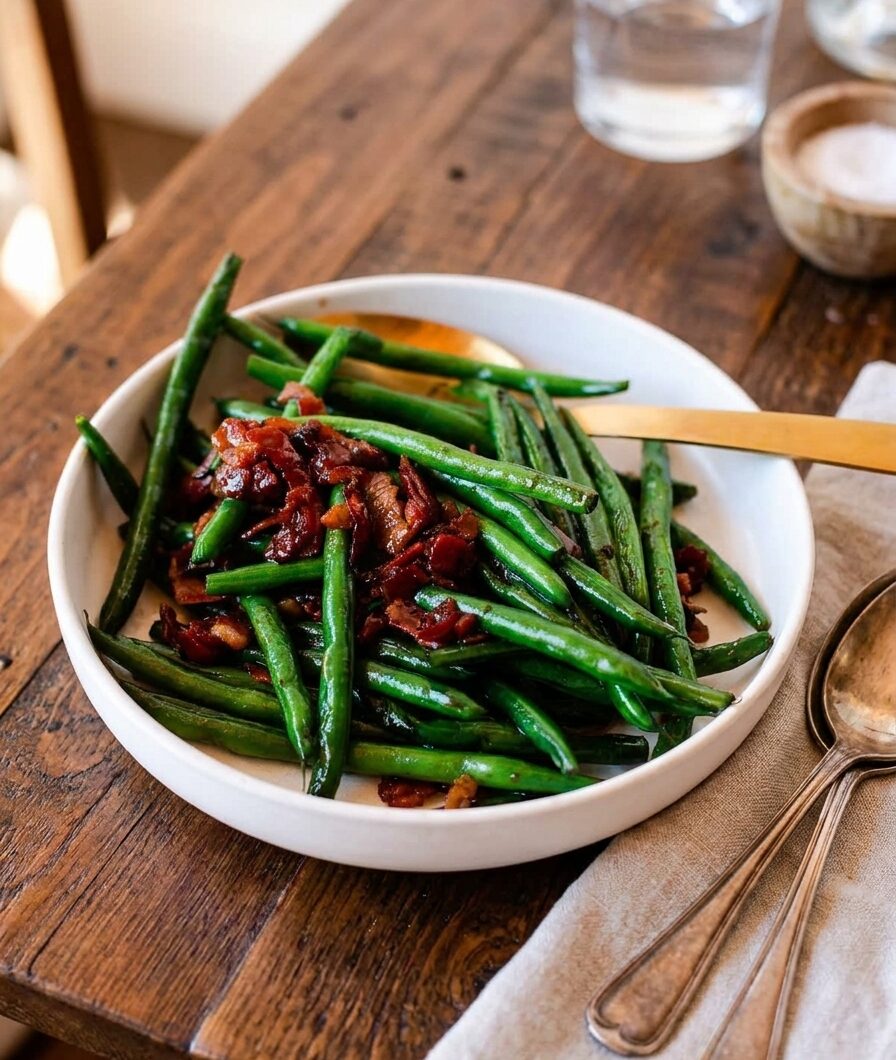
Easy Crack Green Beans Recipe – Fresh Green Beans with Bacon
Fresh green beans sautéed in rendered bacon fat and finished with crispy thick-cut bacon, brown sugar, fresh garlic, sea salt, and black pepper.
4
servings10
minutes15
minutes185
kcal25
minutesIngredients
1 lb fresh green beans
6 slices thick-cut bacon
2 tablespoons brown sugar
2 cloves fresh garlic
½ teaspoon sea salt
¼ teaspoon black pepper
Instructions
- Wash and trim the fresh green beans.
- Pat the beans completely dry.
- Cut the bacon into bite-size pieces.
- Cook bacon over medium-high heat for 5–7 minutes until crisp.
- Remove bacon with a slotted spoon, leaving the rendered fat in the skillet.
- Reduce the heat to medium.
- Add green beans and sauté for 6–8 minutes until crisp-tender.
- Push the beans toward the sides of the skillet.
- Add minced garlic and cook for about 30 seconds.
- Sprinkle in brown sugar, sea salt, and black pepper.
- Return the crispy bacon to the skillet.
- Toss everything together for 1–2 minutes until evenly glazed.
- Remove from the heat.
- Rest for 2–3 minutes before serving.
Nutrition Facts
4 servings per container
- Amount Per ServingCalories185
- % Daily Value *
- Total Fat
11g
15%
- Total Carbohydrate
12g
5%
- Protein 6g 12%
* The % Daily Value tells you how much a nutrient in a serving of food contributes to a daily diet. 2,000 calories a day is used for general nutrition advice.


