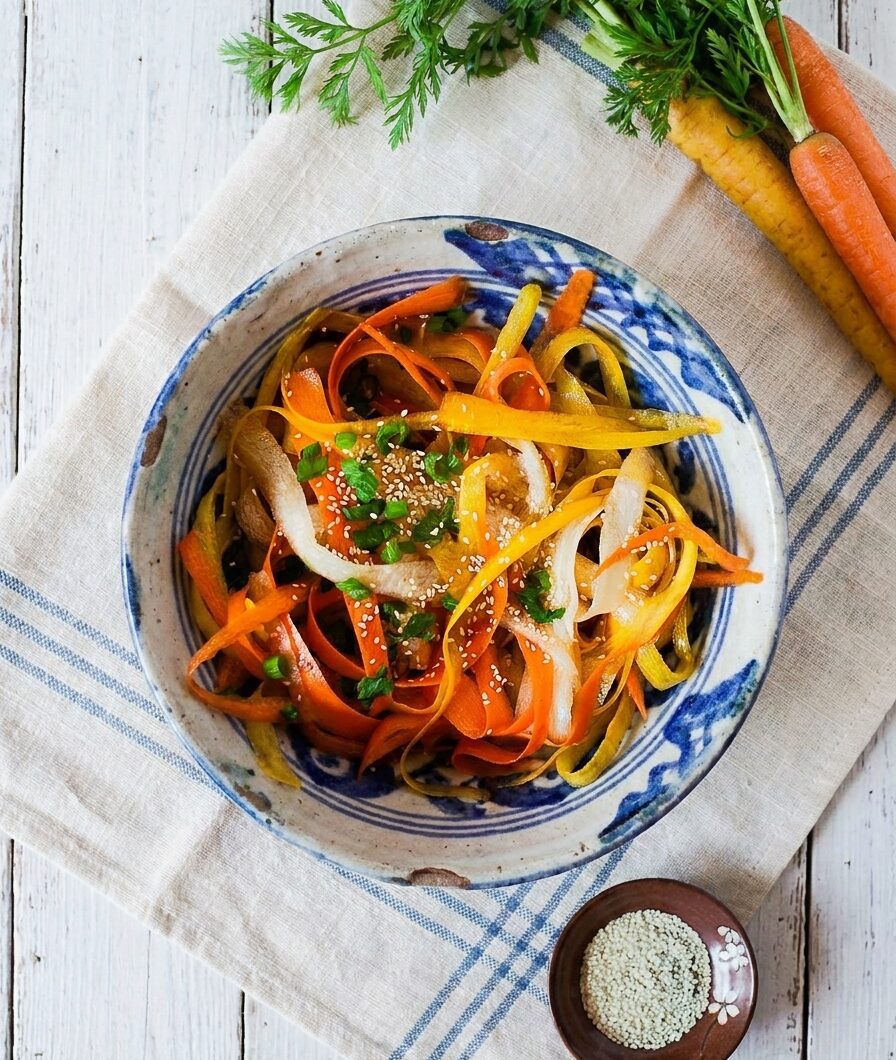
This carrot ribbon salad is a fresh, colorful side dish made with thinly shaved rainbow carrots and a simple homemade dressing. Extra virgin olive oil, rice vinegar, coconut aminos, and maple syrup create a balanced mixture of savory, sweet, and tangy flavors, while green onions and sesame seeds add freshness and crunch. The entire salad requires no cooking, making it a convenient choice when you want a quick vegetable side dish that looks attractive without requiring complicated preparation.
Shaving carrots into long, thin ribbons completely changes their texture compared with chopped or grated carrots. The ribbons remain crisp but are delicate enough to absorb the dressing quickly. This allows every piece to pick up the flavors of rice vinegar, coconut aminos, maple syrup, and olive oil. A short rest in the refrigerator softens the ribbons slightly while preserving their fresh crunch, creating a salad that works well alongside many different meals.
Why You Prefer This Recipe
One of the biggest advantages of this easy carrot salad is its simplicity. There is no boiling, roasting, or baking required, and the active preparation takes only a few minutes. Once the carrots have been shaved and the dressing whisked together, everything is tossed in one bowl and chilled briefly. This makes the recipe particularly useful when the main dish already requires considerable oven or stovetop preparation.
The presentation is another reason this salad stands out. Rainbow carrots naturally provide several colors, while the thin ribbon shape creates height and movement on the plate. Green onions introduce contrasting green flecks, and sesame seeds provide a simple finishing touch. Despite its elegant appearance, the recipe relies on familiar ingredients and straightforward preparation, so it can easily become part of a regular lunch or dinner rotation.
What Makes Carrot Ribbon Salad Different?
A carrot ribbon salad uses the same familiar vegetable found in many everyday salads but prepares it in a completely different shape. Instead of grating the carrots into tiny pieces or cutting them into thick coins, a vegetable peeler is used to create long, thin strips. This gives the salad a lighter texture while still preserving the natural crispness of raw carrots.
The ribbon shape also provides a large surface area for the dressing. Rather than sliding off thick pieces, the vinaigrette lightly coats the wide carrot strips. The result is a salad where the dressing and vegetables feel integrated rather than separate. Each bite combines sweet carrot, tangy vinegar, savory coconut aminos, maple syrup, fresh onion, and nutty sesame flavor.
Why Rainbow Carrots Work So Well
The recipe uses five to six rainbow carrots as its main ingredient. Rainbow carrots are especially attractive because their natural colors can include orange, yellow, purple, red, and pale shades. When shaved into ribbons, these colors mix together and give the finished salad an eye-catching appearance without requiring any decorative ingredients or artificial coloring.
Regular orange carrots can still provide the crisp texture and naturally sweet flavor associated with the dish, but rainbow carrots are the ingredient specified in the original recipe and therefore remain unchanged here. Whatever carrots you use, choose firm, fresh roots without soft areas. Fresh carrots are easier to shave into clean ribbons and provide the crisp texture that makes this salad appealing.
Extra Virgin Olive Oil Creates a Smooth Dressing
One tablespoon of extra virgin olive oil provides the fat component of the dressing. It softens the sharper taste of rice vinegar and helps the remaining dressing ingredients coat the carrot ribbons evenly. Since the recipe contains only a small number of ingredients, using an olive oil with a pleasant flavor can make a noticeable difference.
The oil should be whisked thoroughly with the rice vinegar, coconut aminos, and maple syrup before the dressing is added to the carrots. Although the ingredients may naturally begin separating after sitting, vigorous whisking temporarily combines them into a smoother mixture that is easier to distribute over the salad.
Rice Vinegar Adds a Clean, Tangy Flavor
One tablespoon of rice vinegar supplies acidity to the dressing. Its bright tang balances both the natural sweetness of the carrots and the maple syrup. The quantity is equal to the olive oil, coconut aminos, and maple syrup, creating an easy-to-remember dressing formula with one tablespoon of each main liquid ingredient.
Rice vinegar works particularly well in a raw carrot salad because its acidity helps brighten the vegetables without requiring cooking. During the short chilling period, the vinegar has time to interact with the thin ribbons, slightly softening their texture while allowing them to remain pleasantly crisp.
Coconut Aminos Add Savory Depth
Coconut aminos provide the savory element in this carrot ribbon salad. The recipe uses one tablespoon, giving the dressing a deeper flavor that contrasts with the sweetness of the carrots and maple syrup. Its darker color also gives the otherwise pale dressing a richer appearance.
Because coconut aminos already contribute saltiness, additional sea salt should be added carefully at the end rather than measured heavily into the dressing. Taste the finished salad after tossing and add only the amount needed. The original recipe also provides gluten-free tamari or low-sodium soy sauce as possible substitutions, although coconut aminos remain the standard ingredient.
Maple Syrup Balances the Dressing
One tablespoon of maple syrup provides sweetness and rounds out the acidity of the rice vinegar. It also complements the naturally sweet character of raw carrots without turning the salad into a dessert-like dish. Since the dressing contains equal amounts of olive oil, vinegar, coconut aminos, and maple syrup, no complicated measuring is necessary.
Whisk the maple syrup thoroughly with the other liquids so it is evenly distributed. When the dressing is properly combined, no single component should dominate. Instead, you should notice a balance of sweetness, acidity, savory depth, and richness surrounding the crisp carrot ribbons.
Green Onions Add Freshness
Two green onions are finely chopped and incorporated into the dressed carrot ribbons. Both the white and green sections can be used, providing a mild onion flavor and a fresh color contrast against the rainbow carrots.
Finely chopping the onions is preferable to leaving them in large pieces because smaller pieces distribute more evenly throughout the salad. This prevents one bite from having an overwhelming onion flavor while another has none. Add the chopped green onions after the carrots have been coated with dressing, then gently toss everything together before chilling.
Sesame Seeds Provide the Finishing Crunch
Sesame seeds are added at the end rather than mixed into the salad well in advance. Their small size and nutty flavor make them an effective garnish because they add another layer of texture without competing with the delicate carrot ribbons.
For the best texture, sprinkle the sesame seeds over the salad shortly before serving. Adding them too early allows them to absorb moisture from the dressing, reducing their crispness. Keeping the garnish until the end preserves the contrast between tender-crisp carrot ribbons and the small crunchy seeds.
How to Make Perfect Carrot Ribbons
Start by thoroughly scrubbing the carrots under cool running water. Place one carrot flat against a cutting board rather than holding it in the air. Using a sharp Y-shaped vegetable peeler, begin near the thicker end and pull downward in one smooth motion. Each pass should create a long, thin strip.
Rotate the carrot periodically so you continue shaving evenly around its surface. Continue until you reach the firmer center and the peeler begins meeting more resistance. Repeat the process with the remaining carrots, placing all the colorful ribbons into a large mixing bowl as you work.
Why Thin Carrot Ribbons Are Important
The thickness of the ribbons directly affects how the salad tastes. Very thick strips remain hard and may not absorb much dressing during the short resting period. Thin ribbons, by contrast, maintain their crunch while becoming flexible enough to pick up the vinaigrette.
Try to keep the pressure on the vegetable peeler consistent so the strips have a similar thickness. They do not need to be perfectly identical because the natural variation gives the salad an attractive homemade appearance. However, avoiding extremely thick pieces will make the overall texture more consistent and pleasant.
How to Prepare the Maple Sesame Dressing
Place one tablespoon each of extra virgin olive oil, rice vinegar, coconut aminos, and maple syrup into a small bowl. Whisk vigorously with a fork or small whisk until the ingredients are well combined.
There is no need for a blender or food processor because the quantity is small and the dressing comes together quickly by hand. Whisk immediately before pouring it over the carrot ribbons so the oil remains well distributed. The simple combination provides sweetness, acidity, savory flavor, and richness in a single light coating.
How to Toss Carrot Ribbons Without Breaking Them
Pour the prepared dressing over the bowl of shaved carrots. Instead of stirring aggressively, use two large spoons, salad servers, or clean hands to gently lift the ribbons from the bottom and turn them over.
This lifting motion helps distribute the dressing without crushing or tearing the delicate strips. Carrot ribbons also tend to stick together in flat layers, so gently separate them as you toss. Continue until the ribbons appear lightly and evenly coated rather than leaving pools of dressing at the bottom of the bowl.
Seasoning the Salad
After coating the carrots, add the finely chopped green onions and season with sea salt and black pepper to taste. Toss gently again so the seasoning and onions are distributed throughout the ribbons.
Since coconut aminos already provide savory flavor and saltiness, begin with only a small amount of additional sea salt. You can always add more after tasting. Freshly ground black pepper adds a mild sharpness that works well with the sweet carrots and maple syrup without overwhelming the delicate dressing.
Why the Salad Should Rest Before Serving
Once assembled, refrigerate the carrot ribbon salad for approximately 15 to 20 minutes before serving. This short resting period gives the dressing enough time to flavor the ribbons more thoroughly while slightly softening their raw texture.
The goal is not to marinate the carrots until they become limp. The supplied recipe advises against leaving the fully dressed salad for more than about an hour before a gathering because salt can draw additional water from the vegetables. A brief chill provides a better balance between absorbed flavor and crisp texture.
How to Prevent Watery Carrot Salad
Raw vegetables naturally release moisture after being salted and dressed. This process becomes more noticeable the longer the prepared salad sits. If you find liquid collecting at the bottom after overnight storage, it does not necessarily mean the salad has spoiled.
Give the salad a quick toss before serving so some of the dressing is redistributed. If there is a large amount of excess liquid, it can be drained away. For the crispest result, especially when meal prepping, store the shaved carrots and dressing separately and combine them shortly before eating.
Can You Use a Mandoline Slicer?
A mandoline can be used if it has a suitable ultra-thin flat or julienne blade. It can create consistent slices quickly, particularly when preparing a larger quantity of carrots.
However, a standard Y-shaped vegetable peeler is an easy choice for the wide ribbon appearance used in this recipe. It also requires less specialized equipment. Whichever tool you choose, use it carefully and follow the manufacturer’s safety guidance, especially when working close to the end of a carrot.
Ingredient Substitutions and Variations
The supplied recipe includes several approved variations. Rainbow carrots may be replaced with parsnips or raw heirloom beets. Coconut aminos can be exchanged for gluten-free tamari or low-sodium soy sauce, while rice vinegar can be replaced with apple cider vinegar or fresh lime juice.
Extra virgin olive oil can also be replaced with toasted sesame oil for a stronger sesame-style flavor. Instead of sesame seeds, the original variations suggest roasted almonds, sliced cashews, or toasted pumpkin seeds. These alternatives can change the character of the salad while keeping the same basic ribbon-and-dressing preparation method.
How to Meal Prep Carrot Ribbon Salad
Carrot ribbons are more durable than many leafy salad greens, which makes this recipe suitable for meal preparation. For the best texture, prepare and store the shaved carrots in an airtight container while keeping the dressing in a separate small jar.
When you are ready to eat, shake or whisk the dressing, pour it over the carrots, and toss everything together. Allow approximately 15 minutes for the flavors to develop before serving. This method helps prevent the carrots from sitting in salt and vinegar for several days, which would gradually soften them and release additional moisture.
How to Store Leftover Carrot Ribbon Salad
The supplied recipe states that leftover carrot ribbon salad can be stored in an airtight container in the refrigerator for up to five days. The texture will gradually become softer as the carrots continue absorbing the dressing, so the salad will not remain exactly as crisp as it was on the first day.
For maximum freshness, keep undressed ribbons and dressing separately whenever possible. The recipe does not recommend freezing the prepared salad because freezing damages the structure of raw carrots. Once thawed, the ribbons can become soft and watery rather than maintaining the crisp texture intended for this dish.
What to Serve with Carrot Ribbon Salad
This easy raw carrot salad can be served alongside a wide range of lunches and dinners. Its light, tangy dressing can provide a refreshing contrast to richer main dishes, while the carrot and sesame flavors also work naturally alongside grain bowls, sandwiches, grilled foods, roasted vegetables, and simple protein-based meals.
Because the salad requires no cooking, it is particularly convenient when preparing a meal with a hot main course. You can make the carrot ribbons and dressing while another dish is cooking, refrigerate the salad briefly, and have a fresh side ready by the time the rest of the meal reaches the table.
Is Carrot Ribbon Salad Gluten-Free?
The standard recipe uses coconut aminos rather than conventional soy sauce, and the listed ingredients do not contain an obvious wheat-based component. However, anyone who needs strict gluten avoidance should verify the labels of packaged products such as coconut aminos and other ingredients according to their individual requirements.
If using one of the recipe’s suggested substitutions, pay particular attention to the savory sauce. The source specifically identifies gluten-free tamari as an alternative, while conventional soy sauce may contain wheat. Ingredient labels therefore matter when preparing the dish for someone with celiac disease or another reason for strict gluten avoidance.
Is Carrot Ribbon Salad Hormone Supporting?
The supplied recipe describes the salad as hormone supporting and attributes this mainly to the fiber in raw carrots. However, claims that eating raw carrots specifically binds excess estrogen or meaningfully balances hormones go beyond what should be promised from a single recipe without strong clinical evidence.
Carrots are nutritious vegetables that provide fiber and carotenoids, including beta-carotene, but this salad should be presented as food rather than a treatment for hormonal conditions. For website content, terms such as fresh carrot ribbon salad, raw carrot salad, healthy carrot salad, or maple sesame carrot salad are clearer and more appropriate than suggesting that the recipe can treat or correct a hormonal imbalance.
Notes for the Best Carrot Ribbon Salad
Use firm, fresh carrots and a sharp vegetable peeler to produce long, thin ribbons. Keep the carrot flat against the cutting board while shaving and rotate it as you work. Stop when you reach the tough center rather than forcing the peeler through increasingly hard pieces. Gently separate ribbons that stick together before adding the dressing.
Whisk the dressing immediately before using it, toss gently, and allow the salad to chill for about 15 to 20 minutes. Add sesame seeds just before serving for maximum crunch. If preparing the recipe several days ahead, storing the carrots and dressing separately will give you a fresher texture than keeping the salad fully dressed.
Why This Carrot Ribbon Salad Recipe Works
This recipe naturally fits useful search phrases such as carrot ribbon salad, viral carrot salad, raw carrot salad, healthy carrot salad recipe, shaved carrot salad, rainbow carrot salad, maple carrot salad, sesame carrot salad, easy carrot salad, no-cook salad, and fresh carrot side dish. These terms describe the actual recipe and can be included naturally without repeatedly forcing the same keyword into the article.
The flavor balance is equally straightforward. Carrots provide natural sweetness and crunch, rice vinegar contributes acidity, coconut aminos bring savory depth, maple syrup rounds out the dressing, and olive oil gives it a smoother finish. Green onions and sesame seeds then add freshness and texture, producing a simple salad with enough flavor to stand alone as a side dish.
Carrot Ribbon Salad (Viral Recipe + Hormone Supporting)
A fresh and colorful carrot ribbon salad made with rainbow carrots, green onions, sesame seeds, and a simple sweet and tangy dressing.
4
servings10
minutes20
minutes88
kcal30
minutesIngredients
5–6 rainbow carrots
1 tablespoon extra virgin olive oil
1 tablespoon rice vinegar
1 tablespoon coconut aminos
1 tablespoon maple syrup
2 green onions
Sea salt, to taste
Black pepper, to taste
Sesame seeds, for topping
Instructions
- Wash and scrub the rainbow carrots thoroughly.
- Place one carrot flat on a cutting board.
- Use a Y-shaped peeler to shave it into long, thin ribbons.
- Rotate the carrot and continue shaving toward the center.
- Repeat with the remaining carrots.
- Place all carrot ribbons in a large bowl.
- Whisk olive oil, rice vinegar, coconut aminos, and maple syrup in a separate bowl.
- Pour the dressing over the carrot ribbons.
- Toss gently until evenly coated.
- Finely chop the green onions.
- Add green onions, sea salt, and black pepper.
- Toss gently again.
- Refrigerate for 15–20 minutes.
- Sprinkle with sesame seeds just before serving.
Nutrition Facts
4 servings per container
- Amount Per ServingCalories88
- % Daily Value *
- Total Fat
4g
6%
- Total Carbohydrate
13g
5%
- Protein 1g 2%
* The % Daily Value tells you how much a nutrient in a serving of food contributes to a daily diet. 2,000 calories a day is used for general nutrition advice.