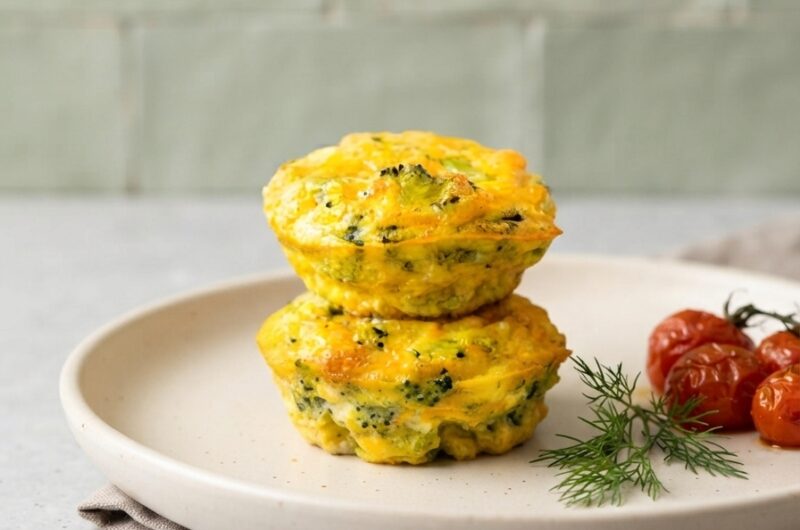
My 3-ingredient cheddar broccoli egg muffins will become your go-to simple, protein-packed breakfast or snack! Who doesn’t love cheddar and broccoli together? Throw these healthy broccoli and cheese egg muffins together quickly and simplify your eating for the week. They are absolutely perfect for baby-led weaning, toddler snacks, or an easy, high-protein breakfast for the entire family.
When you introduce solid foods to infants, utilizing structurally soft, easily grabbable formats completely redefines morning convenience. This simple methodology blends protein-rich whole eggs with high-fiber green vegetables and flavorful cheese, turning primary nutritional components into manageable finger foods. They store beautifully for busy mornings or post-workout fuel on the go, providing a structurally sound asset that helps little ones practice their pincer grasp safely.
Core Structural & Health Advantages
- Minimalist 3-Ingredient Assembly: By focusing strictly on eggs, broccoli, and cheese, this formulation delivers an ultra-clean, whole-food profile completely free of processed starches or grain fillers.
- Baby-Led Weaning Friendly: The soft, fluffy internal structure yields easily to gumming and chewing, while the molded muffin shape is sized perfectly for tiny hands to hold securely.
- High-Volume Nutrient Delivery: Incorporating finely chopped broccoli introduces a wealth of dietary fiber and vitamins C and K, seamlessly blending essential greens directly into a kid-approved cheesy base.
- Immaculate Non-Stick Stability: When prepped inside food-grade silicone liners, these egg cups release flawlessly without tearing apart, preserving their clean presentation for meal-prep displays.
Section 1: The Ultimate Ingredients Blueprint
To consistently secure a soft, fluffy internal matrix and an even distribution of ingredients, you must assemble pristine components and recognize exactly how each element functions inside this egg muffin mold.
- 4 Whole Eggs: The vital structural and liquid foundation of the entire recipe. Eggs serve as a highly bioavailable source of lean protein, choline, and healthy fats, binding the ingredients into a delicate, easy-to-chew crumb.
- 1 cup Steamed Broccoli: Freshly steamed or thoroughly defrosted from frozen, chopped into miniature bits. Broccoli delivers essential dietary fiber and micronutrients, offering texturized green flecks that are perfect for toddler handling.
- 1/2 cup Sharp Cheddar Cheese: Shredded uniformly to melt evenly across the top layer. Cheddar introduces a rich, savory dairy lipid profile and a distinct flavor that helps selective eaters welcome green vegetables.
- 1/2 tsp Sea Salt: Used optionally for adult portions to sharpen the rich savory notes of the egg and melted cheese. (Omit or minimize significantly if preparing strictly for infant weaning).
- 1/2 tsp Black Pepper: Introduces a very mild, aromatic warmth that enhances the savory depth of the baked egg matrix.
Section 2: Step-by-Step Master Home Cooking Instructions
The preparation process moves exceptionally fast, requiring a rapid raw whisking sequence followed by a precise dividing stage, targeted oven baking, and a critical cooling period.
- The Thermal and Tin Setup: Preheat your kitchen oven to 375°F. Arrange a high-quality 6-hole silicone muffin tin across a sturdy baking sheet. Lightly coat the interior walls of each muffin cup with a brief mist of olive oil or avocado oil to guarantee a clean release.
- Compounding the Raw Egg Matrix: Thoroughly wash and finely chop 1 cup of steamed or defrosted broccoli florets into tiny, uniform bits. In a medium glass mixing bowl, crack the 4 whole eggs. Add the chopped broccoli bits, 1/2 teaspoon of sea salt, and 1/2 teaspoon of black pepper. Whisk the contents vigorously with a fork until the eggs are completely broken down and the vegetables are evenly distributed.
- The Precision Pour and Cheese Division: Carefully pour the raw egg and vegetable mixture into the prepared silicone muffin cups, filling each opening roughly three-quarters of the way to leave adequate room for expansion. Measure out the 1/2 cup of shredded sharp cheddar cheese and divide it evenly across the top surface of the 6 filled cups.
- The Targeted Thermal Bake: Slide the baking sheet containing the filled silicone tin onto the center rack of your preheated oven. Bake undisturbed for 12 to 15 minutes. Watch the centers closely; remove the pan from the heat the exact moment the egg structure puffs up and sets completely, turning light golden around the cheesy edges.
- The Vital Separation and Cooling Stage: Set the hot muffin tin on a wire cooling rack and let the egg cups rest undisturbed for 5 minutes. As they cool slightly, the steam vents out and the proteins solidify, allowing you to easily pop the whole muffins out of the silicone liners without any sticking or tearing. Serve warm or pack away.
Section 3: Professional Kitchen Secrets for Quiche Success
Baking small egg-based portions requires adhering to strict moisture control guidelines to prevent your breakfast cups from turning rubbery, watery, or unpleasantly deflated. Incorporate these expert insights into your routine:
- Execute Thorough Broccoli Moisture Extraction: The absolute primary secret to avoiding a soggy, water-logged egg muffin lies in removing excess ambient moisture from your vegetables. If using defrosted frozen broccoli, wrap the chopped bits in a clean paper towel and squeeze firmly to extract any hidden water before whisking them into the raw eggs.
- Rely Firmly on Food-Grade Silicone: Traditional metal tin surfaces trap egg proteins tightly, causing them to stick and tear apart aggressively during removal—even when heavily greased. Transitioning to flexible silicone liners allows you to simply invert and peel the mold away cleanly.
- Avoid the Pitfall of Over-Baking: Keep a strict eye on your oven timer. Leaving eggs under dry heat for too long forces the protein molecules to constrict tightly, squeezing out internal moisture and turning the muffins rubbery and wet. Pull them the moment the centers stop jiggling.
- Chop Elements to Match Age Development: If preparing this specific batch for young babies (6–9 months old), ensure you mince the broccoli into microscopic bits or grate it on a box grater so large fibrous stems do not present a structural handling issue.
Section 4: Strategic Ingredient Substitutions and Variations
This clean, dairy-inclusive breakfast recipe is highly versatile, making it exceptionally simple to alter individual components based on your current refrigerator inventory or specific allergy parameters:
- The Dairy-Free Modifications: If your household manages a dairy allergy, omit the cheddar entirely. Replace it with an equal volume of dairy-free shredded cheese or stir 1 tablespoon of nutritional yeast directly into the egg batter to preserve that savory flavor profile.
- The High-Fiber Veggie Swaps: You can replicate this methodology beautifully using alternative chopped vegetables. Swap the broccoli 1:1 for tender baby spinach leaves, steamed cauliflower bits, or finely diced roasted bell peppers.
- The Creative Cheese Transformations: Sharp cheddar delivers an exceptional classic finish, but you can alter the flavor profile entirely by swapping it out for crumbled feta, mild mozzarella, or creamy goat cheese.
- The Savory Protein Add-Ins: To transform these simple cups into a heartier meal for older kids and adults, fold a handful of diced cooked ham, crispy bacon bits, or a spoonful of cooked quinoa into the raw batter before baking.
Section 5: Long-Term Preservation, Meal Prepping, and Reheating
Because these pristine, scratch-made egg muffins contain zero chemical dough stabilizers or artificial preservatives, following these exact kitchen storage parameters will protect their quality:
- Short-Term Refrigeration: Allow your baked egg muffins to cool completely to room temperature on a wire rack. Place them inside an airtight storage container lined with a paper towel to absorb ambient humidity. Store in the refrigerator for up to 5 days for an immediate morning asset.
- The Flash-Freezing Framework: To preserve these long-term, lay the cooled muffins in a single layer across a baking tray and freeze solid for 2 hours. Once firm, transfer them into a heavy-duty freezer-safe bag for up to 6 months. This prevents them from clumping together.
- The Rapid Reheating Routine: To warm a refrigerated or thawed muffin, place it on a microwave-safe plate and heat on high for 20 to 30 seconds until steaming. Alternatively, warm them in an oven or toaster oven at 325°F for 5 to 8 minutes to maintain a firmer exterior.
Section 6: Frequently Asked Kitchen Questions
- Why do my egg muffins sink drastically in the center after taking them out of the oven?A minor amount of deflation is completely normal as the hot air inside the egg matrix cools down. However, extreme sinking usually indicates that the eggs were whipped too aggressively before baking, trapping excess air that collapses instantly under cooler kitchen temperatures. Whisk gently just until combined.
- How should I slice these muffins safely for a baby practicing baby-led weaning?For infants around 6 to 9 months old, slice the cooled egg muffins into long, finger-width vertical strips. This shape allows them to grasp the strip securely in their fist and munch from the top down. For older toddlers with a developed pincer grasp, cut them into small bite-sized cubes.
Section 7: Estimated Nutritional Profile
The following nutritional metrics are automatically calculated as a close approximation for a single complete egg muffin portion, based on a total yield of 6 uniform muffins from this specific 3-ingredient formula:
. Total Calories: 85 kcal
. Protein: 6g
. Fat: 6g
. Saturated Fat: 3g
. Polyunsaturated Fat: 1g
. Monounsaturated Fat: 2g
. Trans Fat: 1g
. Cholesterol: 111mg
. Sodium: 294mg
. Potassium: 52mg
. Fiber: 1g
. Sugar: 1g
. Vitamin A: 254 IU
. Calcium: 85mg
. Iron: 1mg
Section 8: Important Medical Disclaimer
⚠️ Medical & Nutritional Disclaimer
The nutritional information, ingredient calculations, macro breakdowns, and health-related variations provided throughout this recipe article are calculated approximations based purely on raw ingredient databases and standard serving metrics. They are intended strictly for general educational, illustrative, and informational purposes only.
Every individual’s personal physical health condition, metabolic rate, food allergen spectrum, and specific dietary needs are completely distinct. This content should not under any circumstances be used as a substitute for professional medical advice, clinical diagnosis, or personalized nutritional treatment plans. Always consult thoroughly with a qualified healthcare professional, certified dietitian, or licensed medical expert before executing significant dietary modifications or introducing new food groups if you manage pre-existing health conditions or food severe allergies.