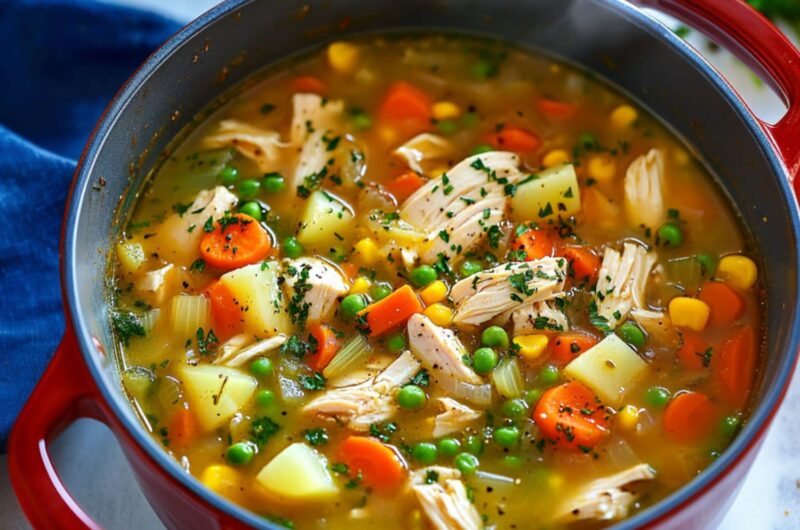
This chicken vegetable soup builds its flavor in stages, starting with a classic vegetable base of celery, carrots, and onion, layering in dried herbs and garlic, and finishing with a broth enriched by fire-roasted tomatoes, red potatoes, and green beans. Using rotisserie chicken as the protein means there’s no need to cook raw chicken separately — it’s simply warmed through at the very end, which keeps the overall process efficient without sacrificing a hearty, satisfying result.
What makes this soup approachable is its straightforward, single-pot method. Everything happens in one Dutch oven or heavy stockpot, moving through a logical sequence: sauté the aromatic vegetables, bloom the dried herbs and garlic briefly in the residual heat, then add the liquid and remaining vegetables to simmer until tender. The rotisserie chicken goes in last, since it’s already cooked and only needs a couple of minutes to warm through.
Below is a full breakdown of the workflow, ingredient roles, and technique for building a well-balanced, properly cooked pot of soup.
Kitchen Workflow: How the Process Is Organized
This recipe breaks into three stages: building the vegetable and herb base, simmering the broth with the remaining vegetables, and finishing with the chicken.
Stage 1 — Build the Vegetable and Herb Base. Vegetable oil is heated over medium heat in a Dutch oven or heavy stockpot, and the celery, carrots, and onions are added. These cook until the onions begin to brown on the edges, which takes about 5 minutes. The heat is then turned down to medium-low, and the dried parsley, oregano, basil, fresh ground black pepper, and minced garlic are added, cooking for 1 minute while stirring constantly. Lowering the heat before adding the dried herbs and garlic is important — garlic in particular can burn quickly and turn bitter if exposed to higher heat for too long, so this brief, gentler cook is what allows the herbs and garlic to release their flavor into the oil without scorching.
Stage 2 — Simmer the Broth with Remaining Vegetables. Low-sodium chicken broth, fire-roasted tomatoes, diced red potatoes, and green beans are added to the pot. This mixture simmers for 15–20 minutes, or until the potatoes and green beans are tender. This simmering stage is where the bulk of the soup’s flavor develops further, as the broth absorbs the vegetable and herb flavors from the earlier stage while the potatoes and green beans cook through.
Stage 3 — Add the Chicken. Once the potatoes and green beans are tender, cubed rotisserie chicken is added to the pot and warmed for 1–2 minutes. Since the chicken is already fully cooked, this step is only about bringing it up to temperature rather than cooking it further, which helps keep the chicken from drying out or becoming tough from extended heat exposure.
Component Breakdown
It’s useful to think of this recipe in terms of four functional components.
1. The Aromatic Vegetable Base — Celery, Carrots, and Onion This classic trio forms the foundational flavor of the soup, sautéed until the onions begin to brown at the edges, which develops a deeper, more savory base than simply softening the vegetables without any color.
2. The Herb and Aromatic Layer — Dried Parsley, Oregano, Basil, Black Pepper, and Garlic These dried herbs and fresh garlic are cooked briefly over lower heat to bloom their flavors into the oil before any liquid is added, building a more concentrated herbal backbone for the broth.
3. The Broth and Simmered Vegetables — Chicken Broth, Fire-Roasted Tomatoes, Red Potatoes, and Green Beans Low-sodium chicken broth forms the liquid base, while fire-roasted tomatoes add a subtle smoky depth. Red potatoes and green beans simmer directly in this broth until tender, absorbing the surrounding flavors while contributing their own texture and substance to the finished soup.
4. The Protein — Rotisserie Chicken Cubed rotisserie chicken adds convenient, ready-to-eat protein to the soup. Since it’s added at the very end and only warmed briefly, it retains its texture rather than becoming overcooked or stringy from extended simmering.
Step-by-Step Assembly Strategy
To build a well-balanced pot of chicken vegetable soup, follow this sequence:
- Heat the vegetable oil over medium heat in a Dutch oven or heavy stockpot. Add the celery, carrots, and onions.
- Cook until the onions begin to brown on the edges, about 5 minutes.
- Turn the heat down to medium-low. Add the dried parsley, oregano, basil, fresh ground black pepper, and minced garlic, cooking for 1 minute while stirring constantly to prevent burning.
- Add the low-sodium chicken broth, fire-roasted tomatoes, diced red potatoes, and green beans to the pot.
- Simmer for 15–20 minutes, or until the potatoes and green beans are tender.
- Add the cubed rotisserie chicken and warm for 1–2 minutes, just until heated through.
- Serve hot, ladled into bowls.
Part 2: Recipe Card
Chicken Vegetable Soup
Description: A hearty, herb-flavored soup built on a classic vegetable base, simmered with fire-roasted tomatoes, red potatoes, and green beans, and finished with warm rotisserie chicken.
Ingredients:
- 2 tbsp vegetable oil
- 3 stalks celery, thinly sliced
- 2 large carrots, peeled and cut in thin half rounds
- 1 medium onion, finely chopped
- 1 tbsp dried parsley
- 1 1/2 tsp dried oregano
- 1/2 tsp dried basil
- 1/4 tsp fresh ground black pepper
- 2 cloves garlic, minced
- 6 cups low-sodium chicken broth
- 1 can (14.5 oz) fire-roasted tomatoes
- 1 lb red potatoes, diced small
- 1/2 lb green beans, trimmed and cut in 1-inch segments
- 3 cups cooked, cubed rotisserie chicken
Instructions:
- Heat the vegetable oil over medium heat in a Dutch oven or heavy stockpot. Add the celery, carrots, and onions. Cook until the onions begin to brown on the edges, approximately 5 minutes.
- Turn the heat to medium-low. Add the parsley, oregano, basil, fresh ground black pepper, and minced garlic. Cook for 1 minute, stirring constantly.
- Add the low-sodium chicken broth, fire-roasted tomatoes, diced red potatoes, and green beans. Simmer for 15–20 minutes, or until the potatoes and green beans are tender.
- Add the cubed rotisserie chicken; warm for 1–2 minutes.
Notes:
- Turning the heat down before adding the garlic and dried herbs helps prevent burning and bitterness.
- Using rotisserie chicken keeps this recipe quick, since the chicken only needs to be warmed through rather than cooked from raw.
Medical and Nutritional Disclaimer
The information provided in this recipe and guide is intended for general informational and educational purposes only and does not constitute medical, dietary, or nutritional advice. This recipe is not intended to diagnose, treat, cure, or prevent any disease or health condition. Individuals with food allergies, dietary restrictions, or specific medical conditions should consult with a qualified healthcare provider or registered dietitian before making dietary changes or preparing this recipe. The author and publisher assume no responsibility for any adverse effects resulting from the use or application of the information contained herein.