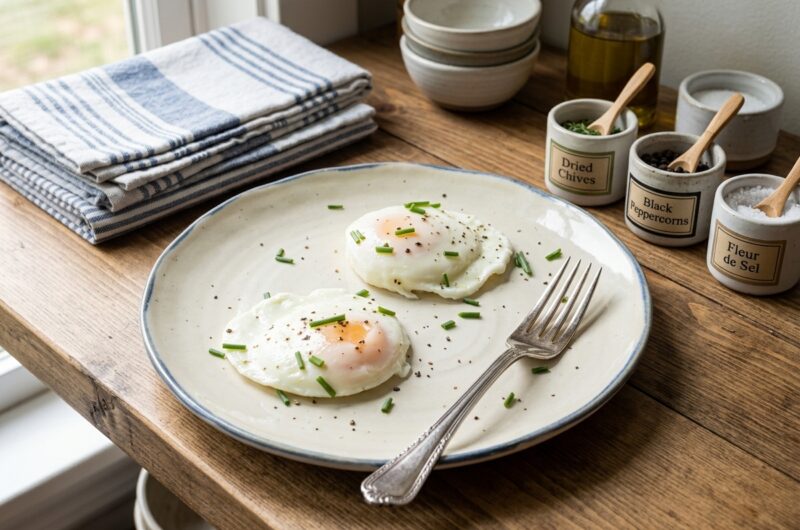
Air fryer poached eggs are a simple way to prepare a delicious breakfast without standing over a saucepan or dealing with a large pot of simmering water. This cooking method uses small, heat-safe ramekins, a little oil, hot water, and fresh eggs to create beautifully shaped poached eggs with tender whites and soft, creamy yolks. With a few minutes of preparation and a short cooking time, you can enjoy a satisfying breakfast at home.
Making poached eggs in an air fryer is especially convenient when you want a quick meal with minimal cleanup. Instead of carefully dropping eggs into swirling water, you crack each egg directly into an individual dish and let the air fryer do the work. The ramekins help hold the eggs in place, making the process easier to manage and giving each serving a neat, rounded appearance.
This Air Fryer Poached Eggs Recipe
One of the main reasons to try air fryer poached eggs is how straightforward the cooking process is. Traditional poaching requires attention to water temperature and careful handling, but this method keeps everything contained in small dishes. You can prepare the ramekins, add the eggs, and place them in the air fryer without worrying about eggs spreading throughout a pot of water.
Another advantage is the ability to adjust the cooking time to suit your preferred yolk texture. If you enjoy a runny center for dipping toast, start with a shorter cooking time. If you prefer a thicker, medium-runny yolk, allow the eggs to cook a little longer. Because air fryer models vary, experimenting with the timing is the easiest way to find the result you enjoy most.
These eggs are also useful for meal planning because they work with many different breakfast and lunch combinations. Serve them over avocado toast, add them to a breakfast bowl, or pair them with roasted vegetables. Their mild flavor makes them easy to combine with fresh herbs, vegetables, cheese, and other familiar breakfast ingredients.
What Makes Air Fryer Poached Eggs Different?
Traditional poached eggs are cooked directly in hot water, usually in a saucepan. The egg white sets around the yolk while the egg cooks, creating the familiar soft shape associated with poaching. In an air fryer, the eggs are cooked inside individual heat-safe dishes containing hot water, which helps the whites cook gently while keeping the eggs contained.
The ramekins are an important part of this method. They provide a stable space for each egg and make it easier to lift the cooked eggs out of the air fryer. They also help maintain the egg’s shape as the white firms up. Using a little oil spray around the inside of each dish makes removing the eggs easier after cooking.
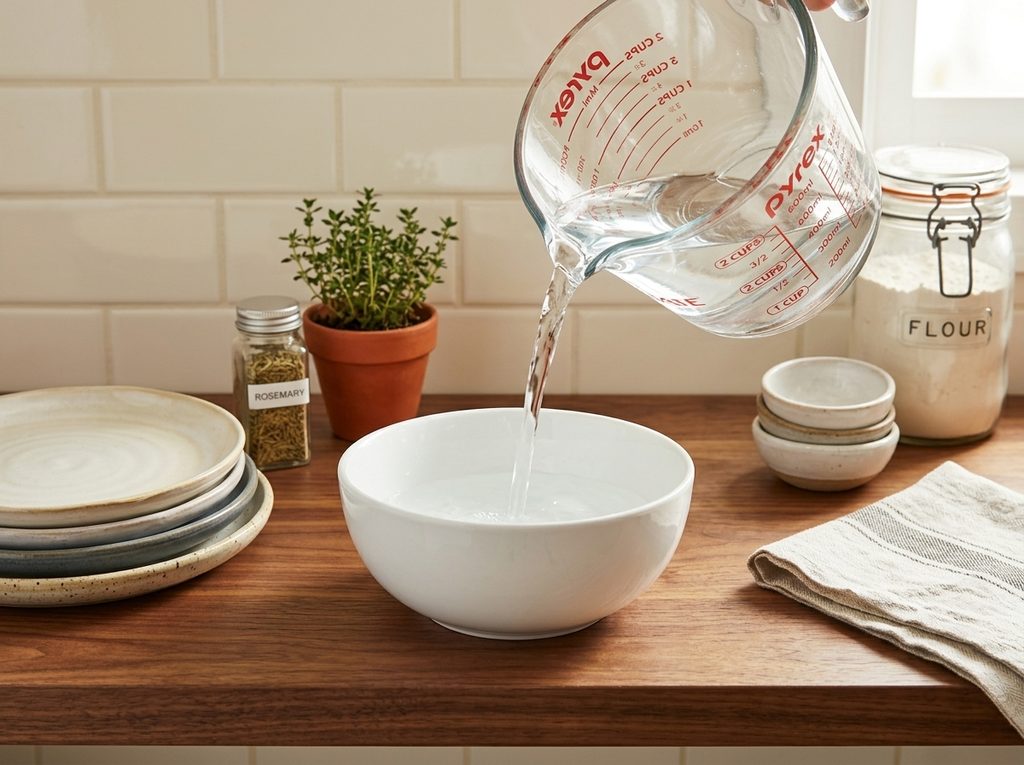
Adding hot water is another useful detail. It helps provide a moist cooking environment and can reduce the chance of the egg white developing an overly firm or dry outer layer. The amount of water and cooking time can influence the finished texture, so following the method and checking your first batch are worthwhile.
Ingredients for Air Fryer Poached Eggs
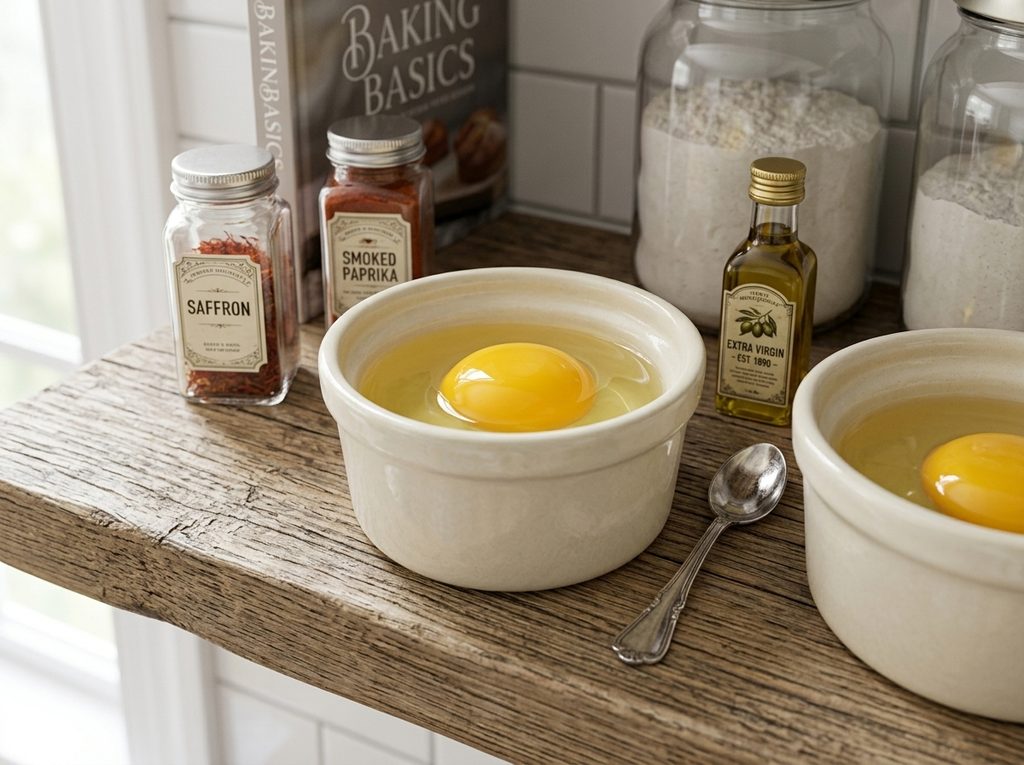
This recipe uses a short list of everyday ingredients. You do not need special seasonings, complicated equipment, or a long preparation process. The eggs provide the main flavor and texture, while oil spray helps prevent sticking. Hot water supports the cooking process, and salt and pepper finish the eggs just before serving.
1. Large Eggs
Large eggs are the main ingredient in this recipe. They provide the tender white and rich yolk that make poached eggs so popular. Fresh eggs are a convenient choice because they are easy to handle and suitable for a variety of breakfast dishes. Use one egg per ramekin so each egg has enough room to cook evenly.
2. Oil Spray
A small amount of oil spray coats the ramekins and helps prevent the egg whites from sticking to the sides. You can use your preferred cooking spray, including the ghee butter spray mentioned in the original recipe. Apply a light coating rather than using too much oil, since the purpose is simply to make removing the cooked eggs easier.
3. Salt and Pepper
Salt and pepper add a simple finishing touch to the eggs. Since the flavor of poached eggs is naturally mild, seasoning after cooking allows you to adjust each serving according to taste. Freshly ground black pepper works well, but ordinary ground pepper is also suitable. Add the seasoning just before serving.
4. Hot Water
Hot water is added to the ramekins before the eggs go into the air fryer. The original recipe uses six tablespoons in total, with approximately three tablespoons per ramekin. Freshly boiled water is convenient for this method. Measure carefully so the dishes have enough water without overflowing when you add the eggs.
5. Toast (Optional)
Toast is an optional serving ingredient rather than a requirement for cooking the eggs. A slice of toasted bread provides a crisp base for the soft egg and makes an easy breakfast. You can serve the eggs on ordinary toast, whole-grain toast, or another bread you enjoy. Leave it out if you prefer a low-carbohydrate meal.
Equipment You Need
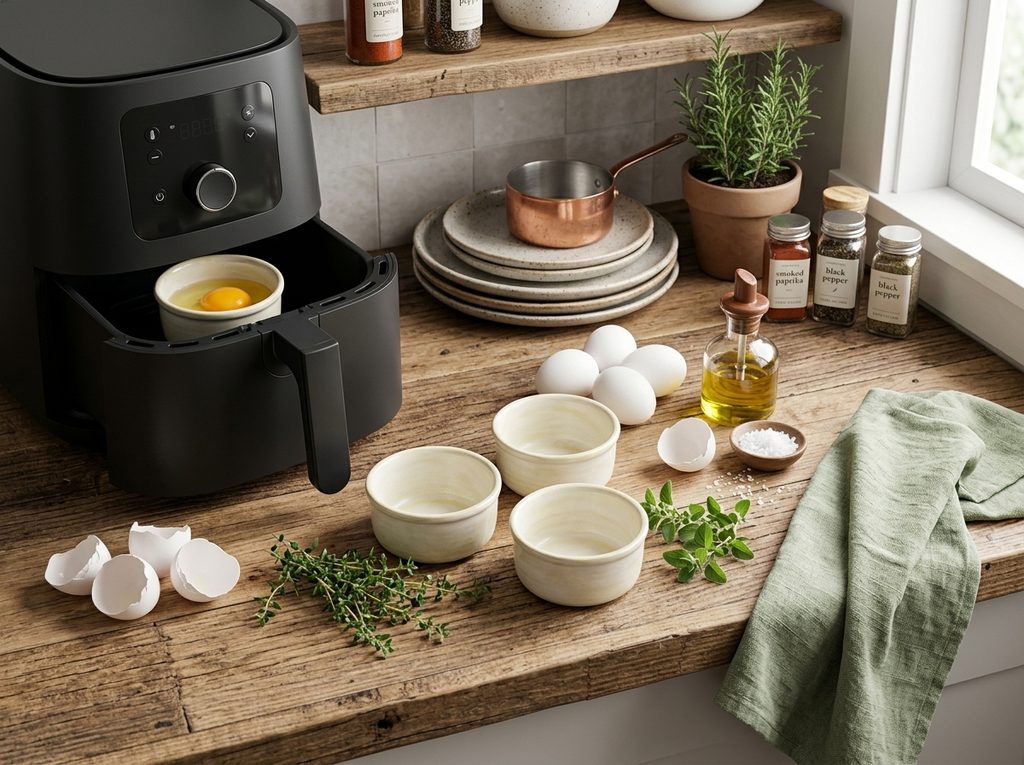
The most important equipment is an air fryer and small dishes that are safe for use at the cooking temperature. Four-ounce ramekins are particularly convenient because they provide an individual space for each egg. Their compact size also makes them easier to arrange inside many air fryer baskets and trays.
A small spoon or flexible rubber spatula is helpful for loosening the cooked eggs. If an egg sticks around the edge, carefully running a thin knife around the inside of the ramekin can help release it. Use oven mitts or suitable heat-resistant protection when removing the hot dishes, as the ramekins and water can become very hot.
If you do not have ramekins, small oven-safe ceramic or glass dishes may work, provided they fit comfortably in your air fryer and are rated for the cooking temperature. Silicone baking cups or suitable muffin tins are other possible alternatives. Always check that the cookware is approved for air fryer use and can withstand the heat.
How to Make Air Fryer Poached Eggs
Step 1: Preheat the Air Fryer
Preheat your air fryer to 350°F (177°C) for approximately three minutes using the air fry or air crisp setting. Preheating helps establish a consistent cooking temperature before you add the eggs. Although some air fryers do not require preheating, following this step provides a useful starting point when you are learning how your appliance cooks eggs.
Step 2: Prepare the Ramekins
Lightly spray the inside of each ramekin with oil. Make sure the bottom and sides receive a thin coating, particularly around the edges where the egg white may stick. You can spread the oil with a clean finger or a food brush if needed. Avoid using an excessive amount because a light layer is sufficient for releasing the cooked eggs.
Step 3: Add the Hot Water
Pour approximately three tablespoons of hot water into each ramekin. Use freshly boiled water and pour slowly to avoid splashing. The water should be in the dish before you add the egg. Keeping the water amount consistent between ramekins helps make the cooking process easier to repeat and compare.
Step 4: Crack in the Eggs
Carefully crack one large egg into each prepared ramekin. Try to keep the yolk intact as you transfer the egg into the water. If a small amount of shell falls into the dish, remove it before cooking. Keep the ramekins on a stable surface while preparing them so the water does not spill.
Step 5: Cook the Eggs
Place the filled ramekins directly into the air fryer basket or tray, arranging them so they sit flat and do not tip. Cook at 350°F (177°C), starting with five minutes if you prefer a runny yolk and set whites. For a firmer result, extend the cooking time gradually. The exact timing depends on your air fryer and the texture you want.
Step 6: Check the Doneness
When the cooking time is complete, carefully check the egg whites and yolks. The whites should be set enough to hold their shape, while the yolk should have the consistency you prefer. If the white is still too loose, return the ramekin to the air fryer for a short additional period. Check frequently toward the end to avoid overcooking.
Step 7: Remove and Serve
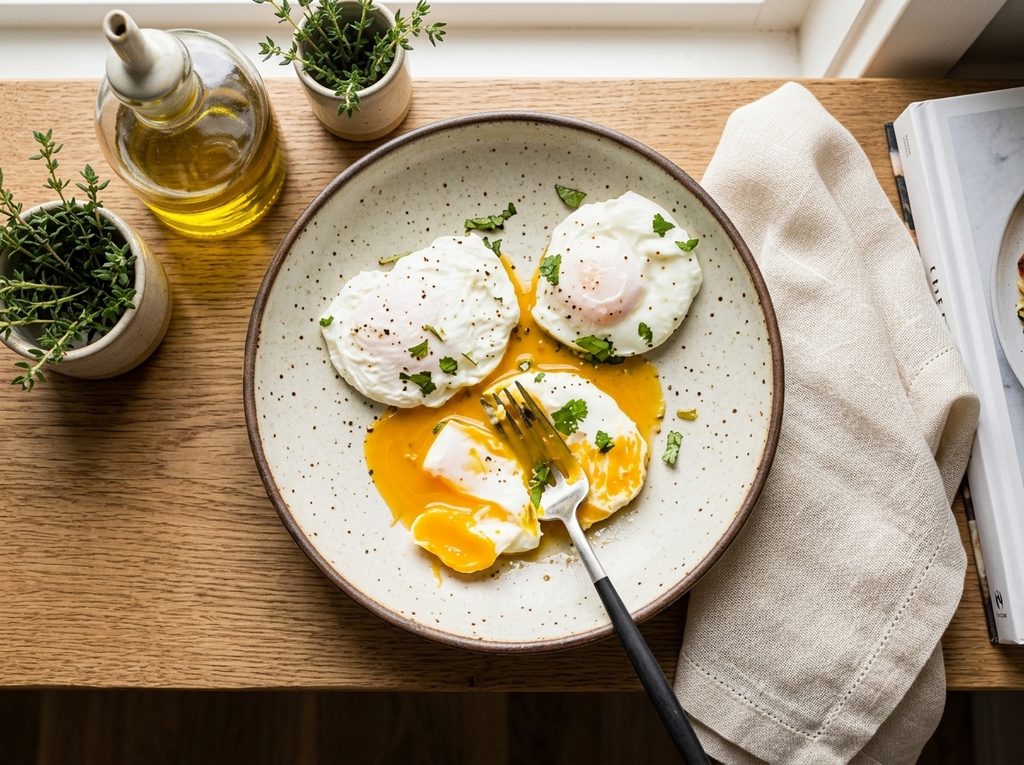
Use heat-resistant protection to remove the ramekins from the air fryer. Allow them to rest briefly if necessary, then gently loosen each egg with a rubber spatula or spoon. If the egg sticks, carefully run a thin knife around the inside edge of the dish. Transfer the egg to a plate or prepared toast, season with salt and pepper, and serve warm.
Air Fryer Poached Eggs Cooking Times
Cooking time is the most important adjustment in this recipe because it determines how soft or firm the yolk will be. The following timings are a practical starting guide for an air fryer preheated to 350°F (177°C). Your results may differ depending on the appliance, the size of the ramekins, the temperature of the water, and the eggs themselves.
Important Tips for Tender, Round Poached Eggs
Use Hot Water
Hot water is a useful part of this method because it helps the egg begin cooking in a moist environment. It can encourage the whites to set without developing the firmer outer texture that sometimes occurs when eggs are cooked without water. Measure the water consistently so the eggs have a similar cooking environment each time.
Grease the Ramekins Properly
A light coating of oil spray makes the eggs easier to release after cooking. Pay attention to the edges and base of the ramekin, since these are the areas where the egg white is most likely to adhere. If you find that your eggs stick during the first attempt, slightly improve the oil coverage next time rather than adding a large amount of oil.
Avoid Overcooking
Eggs can change texture quickly during the final minutes of cooking. A yolk that is runny at five minutes may become medium or firm if you leave it in the air fryer for several more minutes. Check the eggs early, especially when using an unfamiliar appliance. It is easier to add a little more cooking time than to reverse an overcooked yolk.
Keep the Ramekins Stable
Set the ramekins on a flat surface inside the basket or tray. If they tilt, the water may spill and the egg may cook unevenly. Arrange the dishes with enough space to sit securely, and avoid moving the basket abruptly while the eggs are cooking.
Adjust for Your Air Fryer
Different air fryers can produce different results at the same temperature and cooking time. Some models may cook eggs in around five minutes, while others may need considerably longer. Basket-style air fryers and oven-style models can also distribute heat differently. Treat the listed timings as a starting point, then record the time that gives you the preferred texture.
Frequently Asked Questions
Do I Need to Add Hot Water to the Ramekins?
Yes, hot water is part of the original method and is recommended for the intended texture. Approximately three tablespoons per ramekin provides a small amount of water around the egg. Without water, the whites may develop a firmer or crispier outer layer and can take longer to cook. If you experiment without water, monitor the eggs closely and expect a different result.
Can I Make Air Fryer Poached Eggs Without Vinegar?
Yes. Vinegar is not required for this recipe. Some traditional poaching methods use vinegar to help the whites hold together in water, but this air fryer method cooks each egg inside its own ramekin. The egg is already contained, so you can prepare it without vinegar and avoid adding a flavor you may not enjoy.
What Can I Use Instead of Ramekins?
Small oven-safe ceramic or glass dishes are suitable alternatives if they fit in your air fryer and are rated for the cooking temperature. Silicone baking cups and suitable muffin tins may also work. Choose dishes that are stable and deep enough to hold the egg and hot water without spilling. Never place cookware in the air fryer unless it is rated for the heat.
Why Are My Egg Whites Still Runny?
Runny whites may mean that the egg needs additional cooking time. Air fryer temperature differences, water temperature, ramekin size, and egg size can all influence how quickly the whites set. Return the ramekin to the air fryer for a short interval and check again. Adjust your timing for the next batch once you know how your appliance behaves.
Can I Cook More Than Two Eggs at Once?
You can cook more eggs at once if your air fryer has enough room for the ramekins to sit flat and securely. Each egg should have its own dish, and the ramekins should not be overcrowded or unstable. If you prepare a larger batch, keep in mind that the air fryer may take longer to recover its temperature after you load it.
Serving Ideas for Air Fryer Poached Eggs
Air fryer poached eggs can be served in several ways, from a simple breakfast plate to a more substantial meal. Toast is an easy option because its crisp texture contrasts with the soft egg. Place the poached egg on warm toast and season with salt and pepper for a quick breakfast that requires very little extra preparation.
For a fresh and satisfying combination, serve the eggs with avocado. The creamy avocado pairs naturally with the soft yolk, and you can add the egg to avocado toast or a breakfast bowl. Bacon is another optional topping if you want a more substantial plate. You can also serve the eggs with cooked vegetables for a meal that includes a variety of textures.
Roasted potatoes make a hearty base for poached eggs, especially when you want something more filling than toast. Air fryer peppers and mushrooms are another option, providing savory flavors that complement the egg. For a lighter meal, serve the eggs alongside air fryer asparagus or other vegetables you enjoy. Choose the sides according to your appetite and the kind of breakfast you want.
Air Fryer Poached Eggs
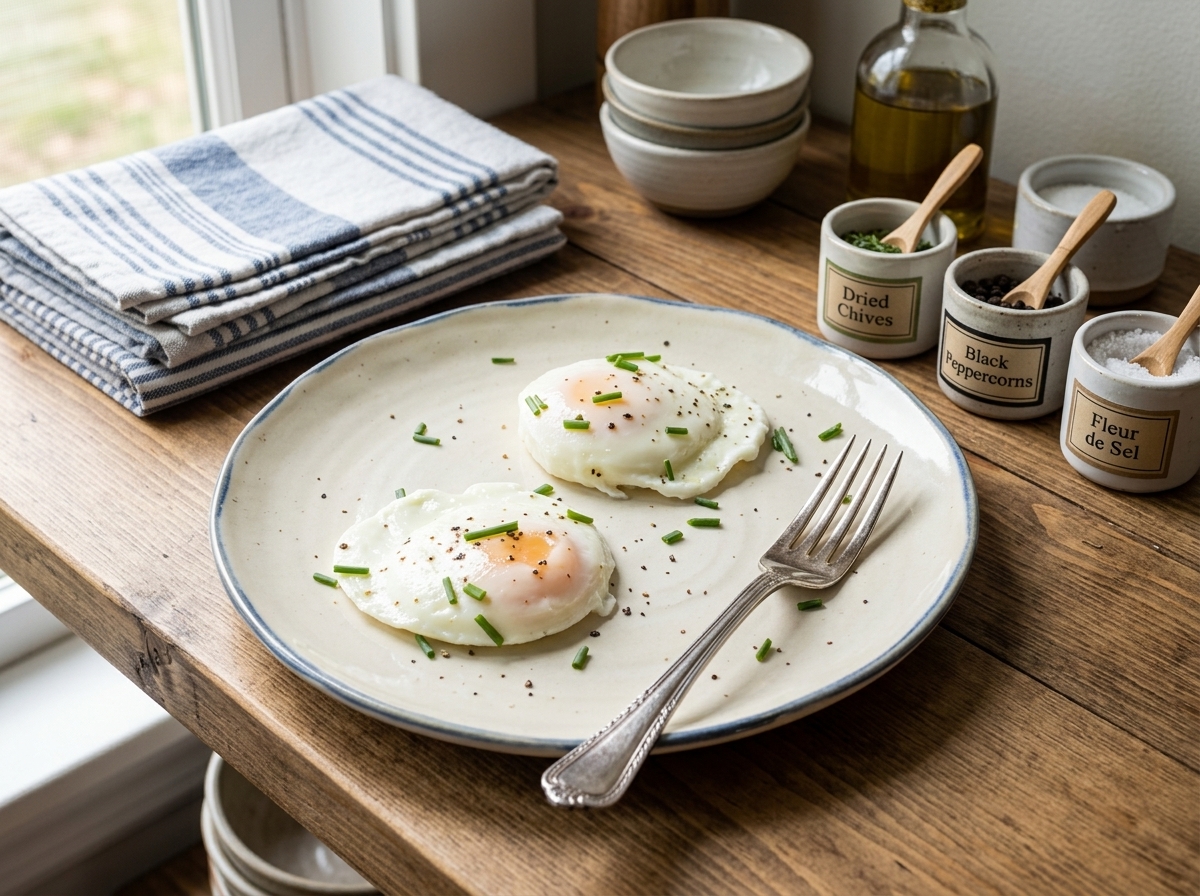
Easy air fryer breakfast with tender whites and creamy yolks, ready in minutes.
2
servings3
minutes5
minutes63
kcal8
minutesIngredients
2 large eggs
Oil spray
Salt & pepper to taste
6 tablespoons hot water (boiled water)
Toast (optional)
Instructions
- Preheat the air fryer to 350°F (177°C) for 3 minutes using the air fry or air crisp setting.
- Spray each ramekin lightly with oil. Rub the oil around the bottom and edges with your finger or a food brush.
- Pour approximately 3 tablespoons of hot water into each ramekin.
- Place the ramekins directly in the air fryer basket or tray, making sure they sit flat and securely.
- Cook at 350°F (177°C), checking at 5 minutes for runny yolks. Continue cooking as needed to reach your preferred doneness.
- Carefully remove the hot ramekins. Loosen the eggs gently with a spoon or rubber spatula, then transfer to toast or a plate.
- Season with salt and pepper and serve immediately.
Notes
- Runny yolk: Cook about 5 minutes.
- Medium-runny yolk: Cook 6–7 minutes.
- Firmer yolk: Cook 7–8 minutes.
- Hard yolk: Cook 8–10 minutes.
- Air fryer models vary, so check the eggs early and adjust the cooking time.
- Vinegar is optional and is not needed for this ramekin method.
Nutrition Facts
- Calories: 63kcal
- Fat: 4g
- Carbohydrates: 0.3g
- Sugar: 0.2g
- Protein: 6g