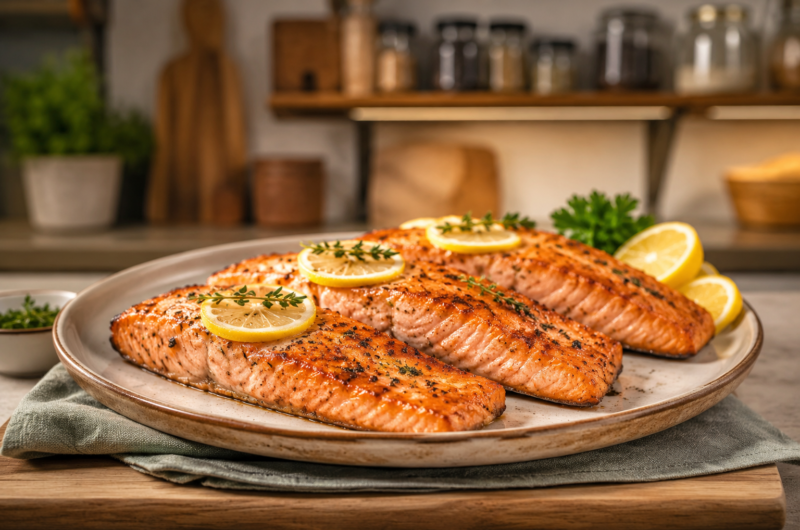
Easy healthy baked salmon is a simple dinner that brings together tender fish, fresh lemon, garlic, olive oil, and dried herbs. The salmon is baked until it becomes flaky and moist, while the lemon and garlic create a fresh, savory flavor. With a short preparation time and about 15 minutes in the oven, this baked salmon recipe is a practical choice for busy weeknights, family dinners, or a light weekend meal.
Why This Baked Salmon Recipe Works
This healthy baked salmon recipe keeps the preparation straightforward while giving the fish plenty of flavor. Olive oil helps coat the fillets, while minced garlic and Italian herbs add savory notes. Lemon juice brightens the seasoning and thin lemon slices add a mild citrus aroma as the salmon cooks. Because the fillets are baked at a high temperature, they cook fairly quickly and can be ready for the table in about 25 minutes from start to finish.
Choosing Good Salmon Fillets
For the best baked salmon, choose fresh or properly thawed fillets that are similar in size and thickness. Evenly sized pieces are useful because they tend to finish cooking at around the same time. The recipe uses four salmon fillets of about 6 ounces each, making it suitable for four servings. If your fillets are noticeably thicker or thinner, the cooking time may vary slightly, so check the fish rather than relying only on the clock.
Preparing the Salmon
Before seasoning, pat the salmon fillets dry with paper towels. Removing excess surface moisture allows the olive oil and seasonings to coat the fish more evenly. Arrange the fillets on a greased baking pan with enough space between them so they are not crowded. Season them with salt and cracked black pepper, making sure the seasoning is spread across the tops. This simple first layer gives the salmon a balanced base before the lemon, garlic, and herbs are added.
Making the Lemon Garlic Mixture
The main flavor mixture combines olive oil, minced garlic, Italian herb seasoning, and the juice from half of the lemon. Stir these ingredients together in a small bowl until evenly combined. The olive oil helps distribute the garlic and dried herbs over the salmon, while the lemon juice adds brightness. Spoon the mixture over each fillet and gently rub it across the top and sides, making sure there are no large dry areas left on the fish.
Adding Fresh Lemon
Fresh lemon is one of the easiest ways to add flavor to baked salmon without making the recipe complicated. After squeezing half of the lemon into the seasoning mixture, thinly slice the remaining half. Place a lemon slice over each salmon fillet before baking. As the fish cooks, the lemon warms and releases its citrus aroma. The slices also make the finished salmon look fresh and appealing when served directly from the baking pan.
Baking the Salmon
Preheat the oven to 400°F before putting the salmon inside. Once the oven is hot, place the prepared baking pan on the center rack and bake the fillets for approximately 12 to 15 minutes. The exact cooking time depends on the thickness of the fish. Properly cooked salmon should look opaque and should separate easily when gently tested with a fork. Avoid leaving it in the oven longer than necessary, as overcooking can make the fish dry.
How to Tell When Salmon Is Done
A simple way to check baked salmon is to gently pull apart the thickest part of a fillet with a fork. The flesh should separate into flakes and appear opaque rather than translucent. If you use a kitchen thermometer, salmon is generally considered safely cooked when it reaches 145°F in the thickest part. Checking the thickest fillet is helpful when the pieces are different sizes. Remove the salmon from the oven as soon as it reaches the desired level of doneness.
Using the Broiler
The recipe also allows an optional short broiling step during the final one or two minutes of cooking. Broiling can add a little extra color to the surface of the salmon and help the seasoned topping look more finished. If you choose this option, keep a close eye on the fish because the broiler works quickly. Do not walk away while the salmon is under direct heat. Once the surface has lightly browned, remove the pan and allow the fish to rest briefly before serving.
Italian Herbs and Seasoning Choices
Italian herb seasoning gives this baked salmon recipe a convenient blend of familiar dried herbs. If you do not have an Italian seasoning blend, the original recipe allows herbs de Provence or a combination of dried thyme, parsley, oregano, and basil. These herbs work well with salmon because they add flavor without covering up the natural taste of the fish. Use the stated amount so the seasoning remains balanced with the garlic, olive oil, salt, and lemon.
Olive Oil and Garlic Flavor
Olive oil and garlic form an important part of the seasoning for this easy salmon recipe. The oil helps the herbs and garlic spread over the fillets and contributes a mild richness. Minced garlic provides a stronger savory taste that works especially well with lemon. When combined, these ingredients create a simple coating that does not require a complicated marinade or a long resting period. This makes the recipe useful when you want a flavorful salmon dinner without extensive preparation.
Keeping Baked Salmon Moist
The key to moist baked salmon is avoiding unnecessary overcooking. Salmon naturally contains healthy fats, but the texture can still become dry when exposed to heat for too long. Start checking the fillets toward the lower end of the recommended cooking time, particularly if they are smaller. Keeping the lemon slices on top during baking can also help maintain a moist surface. Once the fish is flaky and opaque, remove it from the oven instead of continuing to cook it.
Healthy Dinner Serving Ideas
This easy healthy baked salmon pairs well with a wide range of simple side dishes. Serve it with steamed vegetables, roasted broccoli, green beans, asparagus, or a fresh garden salad for a lighter meal. For a more filling dinner, pair the salmon with brown rice, quinoa, roasted potatoes, or another grain. Since the salmon already has lemon, garlic, and herbs, the side dishes do not need heavy sauces. A simple vegetable and grain combination can complete the plate.
Salmon for Busy Weeknights
One of the main advantages of this recipe is its short preparation time. The salmon can be seasoned while the oven preheats, and the baking process takes only about 12 to 15 minutes. There is no need for a long marinade, complicated sauce, or multiple cooking methods. This makes lemon garlic baked salmon a useful option for evenings when you want a homemade meal without spending a lot of time in the kitchen. It can also be prepared for a small family dinner.
Preparing Salmon for the Oven
Good preparation starts with a clean baking pan and a properly heated oven. Grease the large baking pan before arranging the fillets to reduce sticking and make cleanup easier. Place the salmon skin-side down if the fillets have skin attached. Season the fish evenly before adding the lemon garlic mixture. Keeping the preparation organized makes the process quick and reduces the chance of forgetting an ingredient. Once the salmon is coated, add the lemon slices and transfer the pan to the oven.
Lemon Garlic Salmon Flavor
The combination of lemon and garlic gives this salmon a clean, familiar flavor that works for many occasions. Lemon adds acidity and freshness, while garlic provides depth. Olive oil smooths the mixture and helps the seasonings cling to the fish. Dried herbs add another layer without requiring fresh ingredients. Together, these simple components create a balanced baked salmon recipe that tastes more involved than the preparation actually is. The result is suitable for both casual family meals and more polished dinner plates.
Adjusting the Seasoning
Salt and black pepper can be adjusted according to personal preference. The recipe uses half a teaspoon of salt and a quarter teaspoon of cracked black pepper, with the pepper amount kept light when finely ground pepper is used. Since the salmon, lemon, garlic, and herbs all contribute their own flavors, there is no need to heavily season the fish. If you are serving the salmon with strongly seasoned side dishes, keeping the fish seasoning moderate can also help the meal taste balanced.
Using Fresh or Thawed Salmon
Fresh salmon can be used directly after preparation, while frozen salmon should be completely thawed before following the recipe. Thawing the fillets evenly helps them cook more predictably. After thawing, pat the fish dry before adding the seasonings. Avoid placing partially frozen salmon into the oven because the outside may cook faster than the center. Properly thawed fillets also make it easier to judge their texture and determine when they have reached the right level of doneness.
Storing Leftover Baked Salmon
If you have leftover baked salmon, allow it to cool promptly and place it in a covered container in the refrigerator. Use refrigerated leftovers within a safe storage period and reheat them gently to help protect the texture. Salmon can also be added cold to salads, grain bowls, or wraps. When reheating, avoid excessive heat because already-cooked fish can become dry quickly. Adding a small amount of lemon juice before serving can refresh the flavor.
Simple Meal Preparation
This recipe can fit easily into a basic weekly meal plan. Prepare the salmon fresh when you need it, or portion cooked fillets with vegetables and grains for convenient meals. Because the seasoning is made from everyday ingredients, there is little preparation required. You can also wash and prepare your vegetables while the oven heats. Keeping the process simple makes it easier to include fish in your regular dinner rotation without needing a complicated recipe or a large ingredient list.
Common Preparation Mistakes
A few simple mistakes can affect the final texture of baked salmon. Using very uneven fillets may cause some pieces to finish before others. Cutting into the salmon repeatedly during cooking can also release juices and make it harder to judge doneness. Another common problem is leaving the fish in the oven after it has already become flaky. Following the temperature and checking the thickest section near the end of the cooking time can help produce tender, well-cooked salmon.
Making the Recipe for a Family
The recipe provides four salmon fillets, making it convenient for a family meal. If you need more servings, arrange additional fillets in a larger baking pan without overcrowding them. You may need to adjust the amount of seasoning according to the number of portions. Cooking time can also change if the pan becomes very full or the fillets differ in thickness. Rather than automatically adding a large amount of extra cooking time, check the fish for flakiness and doneness.
Natural Lemon Flavor
Fresh lemon gives this salmon recipe a bright flavor without requiring a bottled sauce. Using both lemon juice and lemon slices allows the citrus to work in two ways. The juice becomes part of the olive oil and herb mixture, while the slices sit directly on the fish during baking. This approach keeps the ingredient list short while giving the finished salmon a noticeable lemon flavor. A small amount of fresh lemon juice can also be added at serving time if desired.
Garlic and Herb Salmon
Garlic herb salmon is a practical choice when you want a flavorful dinner without a rich coating. The dried herbs provide a gentle savory taste, while garlic adds a stronger note. Because the salmon is baked rather than fried, the preparation stays relatively light. The olive oil is measured rather than used as a heavy cooking base, allowing the fish itself to remain the main part of the meal. This combination works especially well with vegetables and simple grains.
A Light and Balanced Dinner
Salmon is naturally a source of protein and healthy fats, which makes it a useful part of a balanced meal. This recipe keeps the preparation simple by using olive oil, lemon, garlic, herbs, salt, and pepper instead of a heavy cream sauce. Pairing the fish with vegetables can add color, fiber, and variety to the plate. For a complete dinner, choose one vegetable side and one grain or potato side according to your preferences.
Serving the Finished Salmon
Once the salmon is cooked, remove it from the oven and garnish with fresh thyme or parsley if desired. The herbs are optional and are not necessary for the recipe’s main flavor. Serve the fillets while warm with the baked lemon slices still on top or remove them before plating. A little fresh lemon juice can be added at the table for extra brightness. Serve immediately with your preferred vegetables, salad, rice, quinoa, or roasted potatoes.
Notes for Best Results
Use firm salmon fillets of similar thickness, pat them dry before seasoning, and preheat the oven fully before baking. Spread the olive oil mixture across the entire surface so the herbs and garlic are distributed evenly. Check the fish at around 12 minutes rather than automatically cooking it for the full time. If the fillets need additional time, return them to the oven for a few minutes and check again. These small steps can make a noticeable difference in texture.
Recipe Variations
The original recipe includes a simple flavor variation that replaces lemon with lime and adds cilantro at the end. This creates a slightly different citrus profile while keeping the preparation just as easy. If using the stated herb alternatives, choose either Italian herb seasoning, herbs de Provence, or the specified dried thyme, parsley, oregano, and basil combination. Keeping the basic olive oil, garlic, citrus, salt, and pepper foundation intact makes it easy to change the flavor without complicating the recipe.
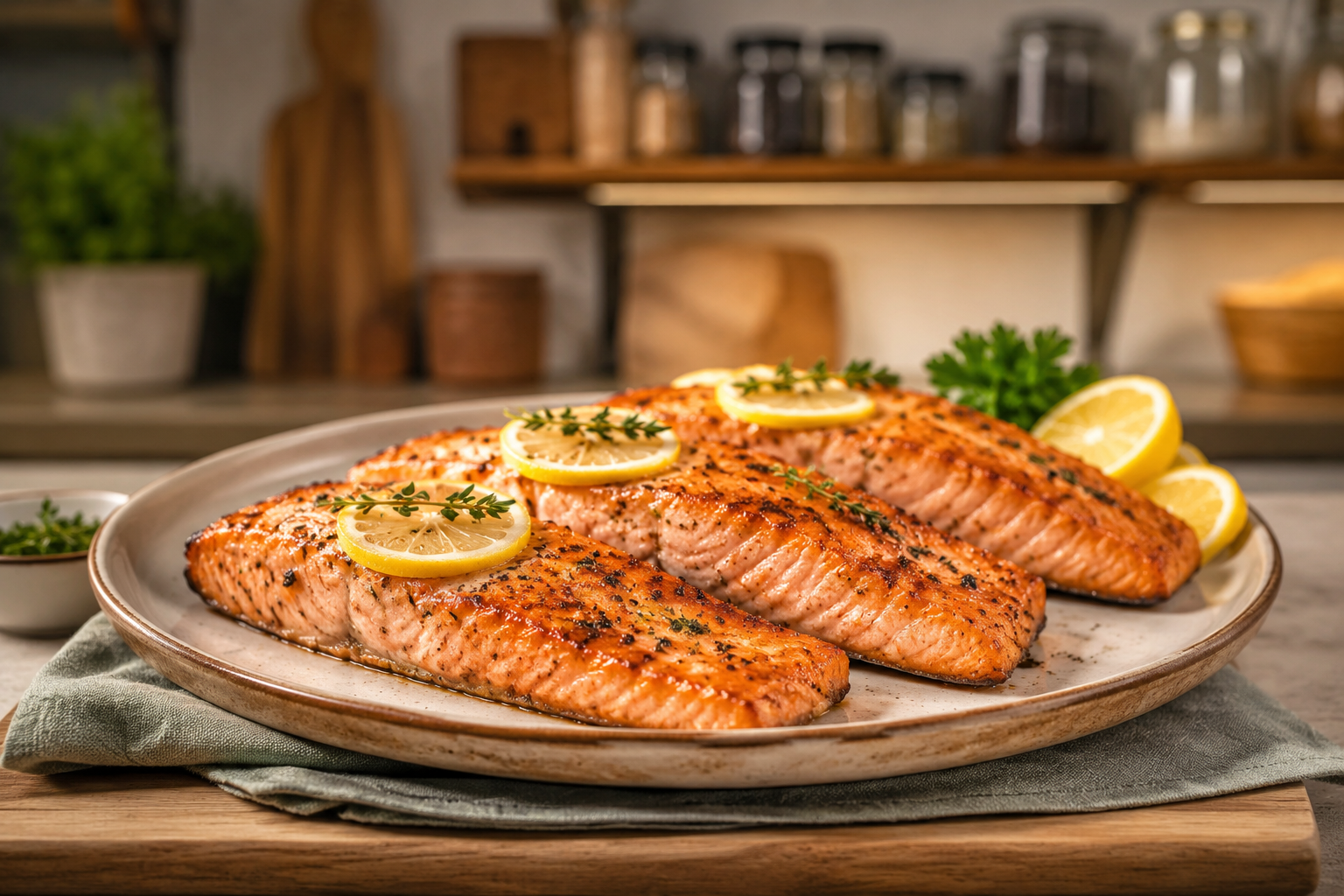
Best Easy Healthy Baked Salmon
Tender baked salmon fillets seasoned with olive oil, garlic, lemon, black pepper, and Italian herbs. This easy healthy salmon recipe takes about 25 minutes from start to finish and makes four servings.
4
servings10
minutes15
minutes306
kcal25
minutesIngredients
4 salmon fillets, about 6 ounces each
2 tablespoons olive oil
½ teaspoon salt, or to taste
¼ teaspoon cracked black pepper
2 teaspoons minced garlic
1 teaspoon Italian herb seasoning blend, or herbs de Provence
1 medium lemon
- Optional herb alternative:
¼ teaspoon each dried thyme, parsley, oregano, and basil.
Instructions
- Preheat the oven to 400°F and grease a large baking pan. Arrange the salmon fillets on the pan and season them evenly with salt and black pepper.
- Mix the olive oil, minced garlic, Italian herbs, and juice from half of the lemon in a small bowl. Spoon the mixture over the salmon, coating the tops and sides evenly.
- Thinly slice the remaining half of the lemon and place one or more slices over each salmon fillet.
- Bake for 12 to 15 minutes, or until the salmon is opaque and flakes easily when tested with a fork. For extra browning, broil for the final 1 to 2 minutes, watching carefully.
- Remove the salmon from the oven and garnish with fresh thyme or parsley if desired. Serve warm with your preferred vegetables, salad, rice, quinoa, or potatoes.
Notes
- Store leftovers covered in the refrigerator and reheat gently to help maintain their texture.
Nutrition Facts
- Total number of serves: 1
- Calories: 306kcal
- Fat: 18g
- Carbohydrates: 1g
- Fiber: 1g
- Sugar: 1g
- Protein: 34g