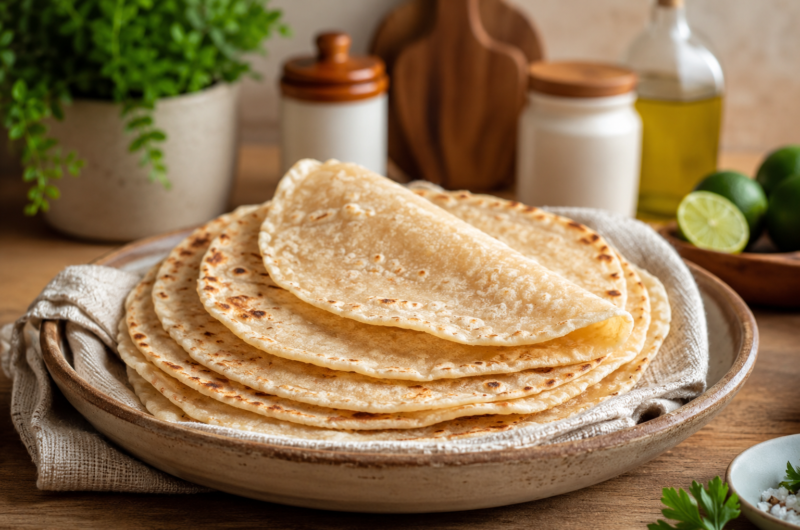
Making soft gluten-free tortillas at home is easier than it may seem. This simple gluten-free tortillas recipe uses only five ingredients and takes about 13 minutes from start to finish. The tortillas are thin, flexible, and suitable for tacos, wraps, quesadillas, or other Mexican-inspired meals. Homemade tortillas also let you control the freshness and texture.
Why Make Homemade Gluten-Free Tortillas
Store-bought gluten-free tortillas can sometimes be dry, stiff, or difficult to fold without cracking. Homemade gluten-free flour tortillas are different because you can cook them just until they develop a few bubbles and light brown spots. Keeping the cooking time short helps maintain a soft texture. These tortillas are especially useful when you want an easy gluten-free alternative for everyday meals.
Five Simple Ingredients
This recipe keeps the ingredient list short. Gluten-free all-purpose flour with xanthan gum forms the base, while gluten-free baking powder gives the tortillas a little lift. Salt adds flavor, warm water brings the dough together, and vegetable oil helps create a workable dough. Using the ingredients in the stated amounts helps produce dough that can be rolled into thin, flexible tortillas.
Choosing Gluten-Free Flour
The recipe calls for gluten-free all-purpose flour with xanthan gum. Xanthan gum is useful in gluten-free baking because it helps provide structure that would normally come from gluten. Different gluten-free flour blends can behave differently, so use a flour blend designed as a general-purpose gluten-free flour. The original recipe specifically recommends a blend containing xanthan gum.
Preparing the Tortilla Dough
Start by placing the gluten-free flour, baking powder, and salt in a large bowl. Stir the dry ingredients together so the baking powder and salt are spread evenly throughout the flour. Add the very warm water and vegetable oil, then mix with a spoon or spatula. Continue working the mixture with your hands until it forms a dough ball and the liquid has been absorbed.
Why Warm Water Helps
Very warm water makes the gluten-free flour easier to combine and helps produce a softer dough. The water should be warm rather than boiling. The original method uses water heated in a microwave for about 20 seconds. Since microwaves differ, check the water before using it. It should feel very warm and be comfortable enough to handle once incorporated into the dough.
Forming Eight Dough Balls
Once the dough is ready, divide it into eight portions. Pinch off a golf ball-sized piece and roll it between your hands until it forms a smooth ball. Repeat until all the dough has been divided. Keeping the pieces covered with a towel while you work is important because gluten-free dough can dry out when exposed to air for too long.
Keeping the Dough Soft
Place a clean towel over the bowl containing the remaining dough balls. Covering the dough helps prevent the surface from drying while you roll each tortilla. This is especially helpful because you need to work with the pieces one at a time. A dry surface can make the dough harder to roll and may increase the chance of cracks along the edges.
Rolling Gluten-Free Tortillas
Place one dough ball on a sheet of parchment paper and flatten it with your hand into a disk. Cover the dough with plastic cling wrap or another sheet of parchment paper. Use a rolling pin to carefully roll it into a thin circle about 7 inches wide. Rolling between sheets helps keep the dough from sticking and makes the process easier.
Getting the Right Tortilla Thickness
The tortillas should be thin rather than thick. A thin tortilla cooks quickly and remains easier to fold after cooking. Try to roll from the center outward while gently turning the dough if necessary to maintain a round shape. If the edges are slightly uneven, do not worry. Homemade tortillas do not need to look perfectly uniform to work well.
Preheating the Skillet
While you roll the dough, preheat a greased cast-iron skillet over medium-high heat. A heavy skillet is useful because it holds heat well and provides an even cooking surface. Make sure the pan is properly heated before adding the tortilla. If the pan is too cool, the tortilla may take too long to cook and can become stiff instead of soft.
Cooking Gluten-Free Tortillas
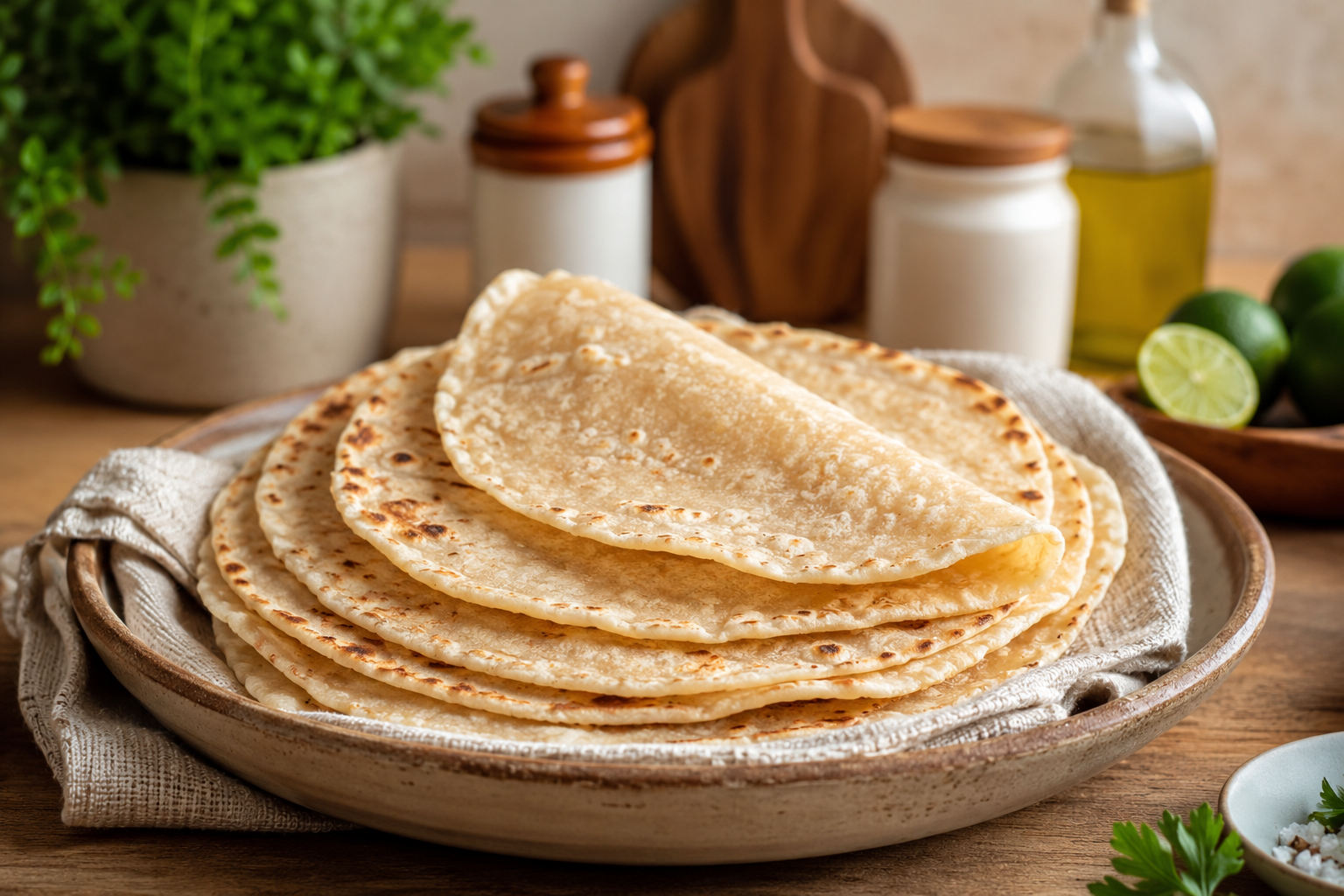
Place the rolled tortilla into the greased skillet and cook over medium-high heat. It should take about 30 seconds to 1 minute on each side. Look for a few bubbles on the top and light brown spots underneath. Once these signs appear, flip the tortilla and cook the other side briefly. Avoid leaving it in the pan longer than necessary.
Avoiding Stiff Tortillas
One of the most important parts of making soft gluten-free tortillas is controlling the cooking time. If a tortilla feels stiff after cooking, it may have been cooked for too long or over excessively high heat. Gluten-free tortillas can lose moisture quickly. Watch the surface instead of relying only on the clock, and remove each tortilla as soon as it is cooked through.
Stacking the Cooked Tortillas
As each tortilla comes out of the skillet, place it on a plate and stack it with the others. Cover the stack with a clean towel to keep the tortillas warm. The trapped warmth helps prevent the tortillas from drying while the remaining dough is cooked. Keeping the tortillas together also makes them easier to serve once the entire batch is ready.
How to Serve Gluten-Free Tortillas
These homemade tortillas are suitable for many meals. Use them as gluten-free taco shells, wrap them around cooked vegetables or other fillings, or make simple quesadillas. They can also be served alongside Mexican-inspired dishes instead of traditional wheat tortillas. Their mild flavor makes them easy to pair with both savory fillings and sauces.
Gluten-Free Tacos at Home
For a simple taco meal, use the warm tortillas as a base for your favorite taco filling. Add the filling while the tortilla is still flexible, then fold gently. Because homemade gluten-free tortillas are thin and soft, they can work well with a variety of taco ingredients. Avoid overfilling them so the tortilla remains easy to fold and eat.
Gluten-Free Wraps
These tortillas can also be used for wraps. Once cooked and still flexible, place your preferred filling in the center and fold the tortilla around it. Since the tortillas are only about 7 inches wide, keep fillings moderate. This helps prevent tearing and allows the tortilla to hold its shape. Warm tortillas are generally easier to fold than cold ones.
Using the Tortillas for Quesadillas
Soft gluten-free tortillas can be used to prepare a quick quesadilla. Place a tortilla in a skillet, add your preferred filling, and top with another tortilla. Cook until the outside is lightly browned and the filling is warm. Since these homemade tortillas are already cooked, the additional cooking should be brief to avoid drying them out.
Why Xanthan Gum Matters
Traditional wheat tortillas rely on gluten to give dough elasticity and strength. Gluten-free flour does not naturally provide the same structure. Xanthan gum helps compensate for some of that difference and makes the dough easier to handle. That is why the recipe specifies gluten-free all-purpose flour with xanthan gum rather than an unspecified gluten-free flour.
Measuring the Flour Carefully
Flour measurement can affect the texture of gluten-free dough. Too much flour can create a dry mixture that is difficult to roll, while too little can leave the dough too soft. Use the stated 1½ cups and mix it thoroughly with the other dry ingredients before adding the liquids. This helps produce a consistent dough for shaping and rolling.
Working With the Dough
The dough does not require complicated kneading. Once the warm water and oil have been added, use a spoon or spatula to combine everything. Then use your hands to finish bringing the dough together. Stop once the liquid has been absorbed and the dough forms a ball. Overworking is unnecessary because there is no wheat gluten that needs traditional kneading.
Rolling Without Sticking
Parchment paper provides a simple surface for rolling the dough. Flatten the dough ball first, then cover it before using the rolling pin. This creates a barrier between the dough and your rolling equipment. If you use plastic cling wrap, make sure it lies flat over the dough so the tortilla can be rolled evenly into a thin circle.
Cooking in Batches
Because this recipe makes eight tortillas, you will need to roll and cook them one at a time or in stages. Keep the remaining dough covered while one tortilla cooks. If your skillet is large enough, you may be able to work efficiently between rolling and cooking. The key is to avoid leaving prepared dough uncovered for long periods.
Signs a Tortilla Is Ready
A properly cooked tortilla should have a few bubbles on the surface and some light brown spots underneath. These visual signs are more useful than simply waiting for a fixed cooking time. The original cooking range is 30 seconds to 1 minute per side. Once the tortilla has those light brown marks and remains flexible, it is ready to remove.
What Happens if the Pan Is Too Hot
A skillet that is too hot can brown the tortilla too quickly and leave it stiff. If the underside develops dark spots almost immediately, reduce the heat slightly. The goal is light browning rather than deep charring. Medium-high heat is recommended, but every stovetop and skillet behaves differently, so watch the first tortilla carefully.
What Happens if the Pan Is Too Cool
A skillet that is not hot enough can make the tortilla stay on the cooking surface too long. Longer cooking can cause moisture loss and produce a firm texture. Preheating the greased skillet while rolling the dough helps the pan reach the proper temperature before the first tortilla goes in.
Storing Gluten-Free Tortillas
Allow the tortillas to cool completely before placing them in a plastic storage bag. Once cooled, store them in the refrigerator. Keeping them sealed helps limit moisture loss and protects the tortillas from absorbing odors from other foods. For best texture, handle them gently when removing them from storage and warm them before serving if desired.
Keeping Cooked Tortillas Flexible
Covering the tortillas with a towel immediately after cooking helps them stay warm and prevents unnecessary drying. Avoid leaving them exposed on a plate for an extended period. Once the full batch has been cooked, keep them covered until serving or allow them to cool completely before transferring them to storage.
A Useful Gluten-Free Staple
Having a reliable homemade gluten-free tortilla recipe can make everyday cooking easier. These tortillas provide a simple base for tacos, wraps, quesadillas, and other meals. The dough comes together quickly, and the cooking process takes only a few minutes. Because the recipe uses common ingredients, it can be prepared whenever you need a fresh gluten-free option.
Notes for Better Results
Keep the dough covered while rolling the tortillas, use parchment or cling wrap to make rolling easier, and avoid overcooking. The tortillas should be thin and should develop only light brown spots. If they become stiff, check both the heat level and cooking time. A properly heated skillet and quick cooking are the main factors for keeping them soft.
Common Gluten-Free Tortilla Questions
A common concern is whether homemade gluten-free tortillas can be flexible enough for tacos and wraps. They can be when the dough is prepared with the specified gluten-free flour containing xanthan gum and the tortillas are not overcooked. Another important point is storage: let them cool completely before sealing them in a plastic storage bag and refrigerating.
Making the Recipe Ahead
The dough can be prepared quickly, so this recipe is convenient when you need tortillas shortly before serving. If you are preparing the cooked tortillas ahead, stack them under a towel while warm and then let them cool completely before refrigeration. Reheating gently can make stored tortillas easier to fold and serve.
Recipe Notes
Use gluten-free all-purpose flour with xanthan gum as specified. Keep the water very warm, but not boiling. Roll each tortilla to approximately 7 inches and keep it thin. Cook each side for roughly 30 seconds to 1 minute, watching for bubbles and light brown spots. Remove the tortilla promptly once cooked to help preserve its soft texture.
Gluten-Free Tortilla
These soft gluten-free tortillas are made with five simple ingredients and are ready in about 13 minutes. They are thin, flexible, and suitable for tacos, wraps, quesadillas, and other meals.
8
tortilla5
minutes8
minutes105
kcal13
minutesIngredients
1½ cups gluten-free all-purpose flour with xanthan gum
1 teaspoon gluten-free baking powder
½ teaspoon salt
¾ cup very warm water
2 tablespoons vegetable oil
Instructions
- Combine the gluten-free flour, baking powder, and salt in a large bowl. Add the very warm water and vegetable oil, then stir with a spoon or spatula until combined. Finish mixing with your hands until the dough forms a ball and absorbs all the liquid.
- Preheat a greased cast-iron or heavy skillet over medium-high heat. Divide the dough into eight golf ball-sized portions and roll each portion into a ball. Keep the remaining dough covered with a towel while working.
- Place one dough ball on parchment paper and flatten it into a disk. Cover it with cling wrap or parchment paper, then roll it with a rolling pin into a thin circle about 7 inches wide.
- Place the tortilla in the preheated skillet. Cook for 30–60 seconds on each side, watching for a few bubbles and light brown spots. Do not overcook, as this can make the tortilla stiff.
- Transfer the cooked tortilla to a plate and cover it with a towel. Continue rolling and cooking the remaining dough, stacking the tortillas as they are finished.
- Allow the tortillas to cool completely before placing them in a plastic storage bag. Refrigerate until needed.
Notes
- For a strict gluten-free diet, verify that all packaged ingredients are labeled gluten-free.
Nutrition Facts
- Calories: 105kcal
- Fat: 4g
- Carbohydrates: 16g
- Fiber: 2g
- Sugar: 1g
- Protein: 2g