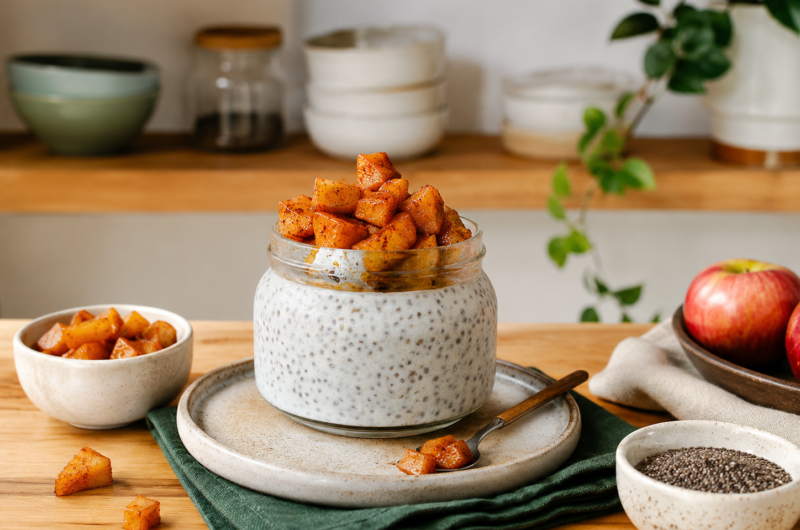
This high-protein apple pie chia pudding is a simple make-ahead breakfast that combines creamy Greek yogurt, chia seeds, applesauce, protein powder, and warm cinnamon apples. It has the familiar flavor of apple pie while providing a good amount of protein and fiber. The pudding thickens in the refrigerator, making it easy to prepare ahead for busy mornings. With no complicated cooking required, it is a practical breakfast for anyone who wants a filling and easy meal.
Why This High-Protein Chia Pudding Is So Filling
Chia seeds are the main ingredient that gives this pudding its thick texture. When mixed with liquid and left to chill, they absorb moisture and expand, creating a creamy spoonable mixture. Greek yogurt and protein powder add protein, while the apple, applesauce, and chia seeds contribute carbohydrates and fiber. Together, these ingredients make a breakfast that feels more substantial than a regular bowl of yogurt.
Apple Pie Flavor Without Making a Traditional Pie
The combination of apple and cinnamon gives this chia pudding its classic apple pie flavor. Unsweetened applesauce adds apple flavor throughout the pudding, while the cooked diced apple creates a soft topping with more texture. Cinnamon brings the ingredients together and adds warmth without making the recipe complicated. The result is a creamy breakfast that tastes fruity and lightly spiced.
A Good Choice for Meal Prep
This easy chia pudding recipe works especially well for meal preparation because most of the time is spent chilling in the refrigerator. The active preparation takes only about 10 minutes. Once the ingredients are mixed, the chia seeds need time to absorb the liquid and create the desired consistency. Preparing it the night before means breakfast can already be waiting in the refrigerator the next morning.
Greek Yogurt Adds Protein and Creaminess
Plain Greek yogurt gives this apple chia pudding a richer and creamier texture. It also contributes to the protein content, helping make the recipe suitable for people looking for high protein breakfast recipes. Because the yogurt is mixed directly with the almond milk, applesauce, and other ingredients, it blends smoothly into the pudding. Use the plain Greek yogurt listed in the original ingredients to keep the intended flavor and texture.
Protein Powder Makes the Breakfast More Substantial
Vanilla protein powder adds extra protein and a mild vanilla flavor that works well with apple and cinnamon. The small amount blends into the pudding mixture before chilling. Whisking everything together carefully helps prevent dry pockets of protein powder from remaining in the finished dish. Since protein powder can vary in sweetness and texture, mixing it thoroughly with the other ingredients is important.
Chia Seeds Create the Thick Pudding Texture
After the mixture is refrigerated, the chia seeds slowly absorb the liquid from the almond milk, yogurt, and applesauce. This changes the mixture from thin and loose into a thick chia pudding. A chilling time of at least 180 minutes gives the seeds enough time to expand properly. Overnight chilling also works well when preparing this healthy breakfast in advance.
Almond Milk Keeps the Mixture Easy to Mix
The almond milk provides the liquid needed for the chia seeds to expand. It also helps loosen the Greek yogurt and applesauce so the ingredients can be whisked together evenly. The amount listed creates a creamy mixture rather than a dry or overly solid pudding. Combining the ingredients before refrigeration is simple, making this an easy breakfast recipe for beginners.
Unsweetened Applesauce Builds Apple Flavor
Unsweetened applesauce spreads apple flavor throughout the entire pudding. Unlike the diced apple topping, which stays separate until serving, the applesauce becomes part of the creamy base. It works naturally with the cinnamon and vanilla protein powder. Using unsweetened applesauce also keeps the ingredient list exactly as intended while allowing the other flavors to come through.
Cinnamon Brings the Ingredients Together
Only one teaspoon of cinnamon is needed to give the pudding a warm apple pie character. It is mixed into the chia pudding base, while an additional sprinkle is used when cooking the diced apple according to the original preparation method. Cinnamon pairs naturally with both applesauce and fresh apple. This simple seasoning helps turn a basic chia pudding into an apple pie-inspired breakfast.
How the Cinnamon Apples Are Prepared
The apple topping is cooked separately in a small pan over medium heat. The diced apple is combined with a sprinkle of cinnamon and a splash of water, then cooked for about 5 to 7 minutes. Stirring occasionally helps the apple cook evenly. When the pieces become soft and lightly caramelized, they are ready to spoon over the chilled chia pudding.
Warm Apples or a Fully Chilled Breakfast
One of the enjoyable parts of this recipe is the contrast between warm cinnamon apples and cool, creamy chia pudding. The apples can be added immediately after cooking for a warm-and-cold combination. For a completely chilled meal-prep breakfast, the finished pudding can be refrigerated again after the topping is added. Both serving styles use the same ingredients and preparation.
How to Get the Right Chia Pudding Consistency
The mixture may look thinner immediately after it is whisked together, but this is normal. The chia seeds need time to absorb the liquid. Covering the bowl or jar and refrigerating it for at least 180 minutes allows the texture to develop. If preparing breakfast ahead, leaving it overnight is another simple option and gives the ingredients plenty of time to combine.
Make-Ahead Breakfast for Busy Mornings
This apple pie protein chia pudding can help simplify morning meals because the main preparation is completed in advance. Mix the pudding base, refrigerate it, and cook the apple topping when needed. You can also prepare the dish according to the original instructions and chill it again for a ready-to-eat cold breakfast. This makes it useful when there is little time available in the morning.
A High-Protein Recipe with Fiber
The nutritional information shows that one serving provides 24 grams of protein and 19 grams of fiber. The protein comes from ingredients including Greek yogurt and vanilla protein powder, while the chia seeds make a major contribution to the fiber content. The recipe also contains fruit from the applesauce and diced apple. These ingredients work together to create a filling breakfast with a balanced mix of nutrients.
How to Assemble the Finished Pudding
Once the chia mixture has chilled and thickened, spoon it into a jar or bowl. Add the cooked cinnamon apples over the top rather than mixing them into the pudding. This keeps the creamy base and soft apple topping distinct. The finished dish can be eaten immediately with warm apples or chilled again before serving for a cold breakfast.
Serving This Apple Chia Pudding
A jar works well for preparing and storing this recipe, while a bowl is convenient for serving it right away. The thick pudding holds the apple topping well and can be eaten with a spoon. Because the ingredients are already combined into a complete breakfast, no additional ingredients are necessary. Follow the listed ingredient quantities to keep the recipe consistent with its original version.
Keeping the Recipe Simple
The best part of this easy apple pie chia pudding is that it does not require complicated steps. The pudding ingredients are whisked together, chilled until thick, and topped with cooked cinnamon apples. There is no baking and no long cooking process. Most of the total time comes from refrigeration, making the hands-on preparation short and straightforward.
Preparation Details and Total Time
The active preparation time is 10 minutes, while the apples cook for approximately 5 to 7 minutes. The pudding then needs at least 180 minutes of chilling time. For the recipe card, the total duration is listed as 190 minutes based on the original stated total time. Overnight refrigeration is also suitable if you prefer to prepare this high-protein breakfast in advance.
Storage and Meal Prep
Keep the prepared chia pudding covered in the refrigerator during the chilling period. If you want a cool version after adding the apples, return the assembled pudding to the refrigerator. For the best texture, make sure the chia seeds have enough time to expand before serving. The make-ahead method makes this recipe especially useful as part of a simple breakfast meal-prep routine.
Common Questions About Apple Pie Chia Pudding
Can I make the pudding overnight?
Yes. The instructions allow the mixture to chill for at least 2 to 3 hours or overnight. Overnight preparation is useful because the chia seeds have plenty of time to expand and the pudding becomes thick and creamy by the next morning.
Should the cinnamon apples be served warm?
They can be. The method suggests spooning the warm cinnamon apples over the pudding and enjoying it immediately. You can also chill the completed pudding again if you prefer a cold meal-prep version.
Why does the pudding need so much chilling time?
Chia seeds need time to absorb liquid and expand. This process creates the thick consistency associated with chia pudding. Refrigerating the mixture for at least 180 minutes gives the ingredients time to develop the proper texture.
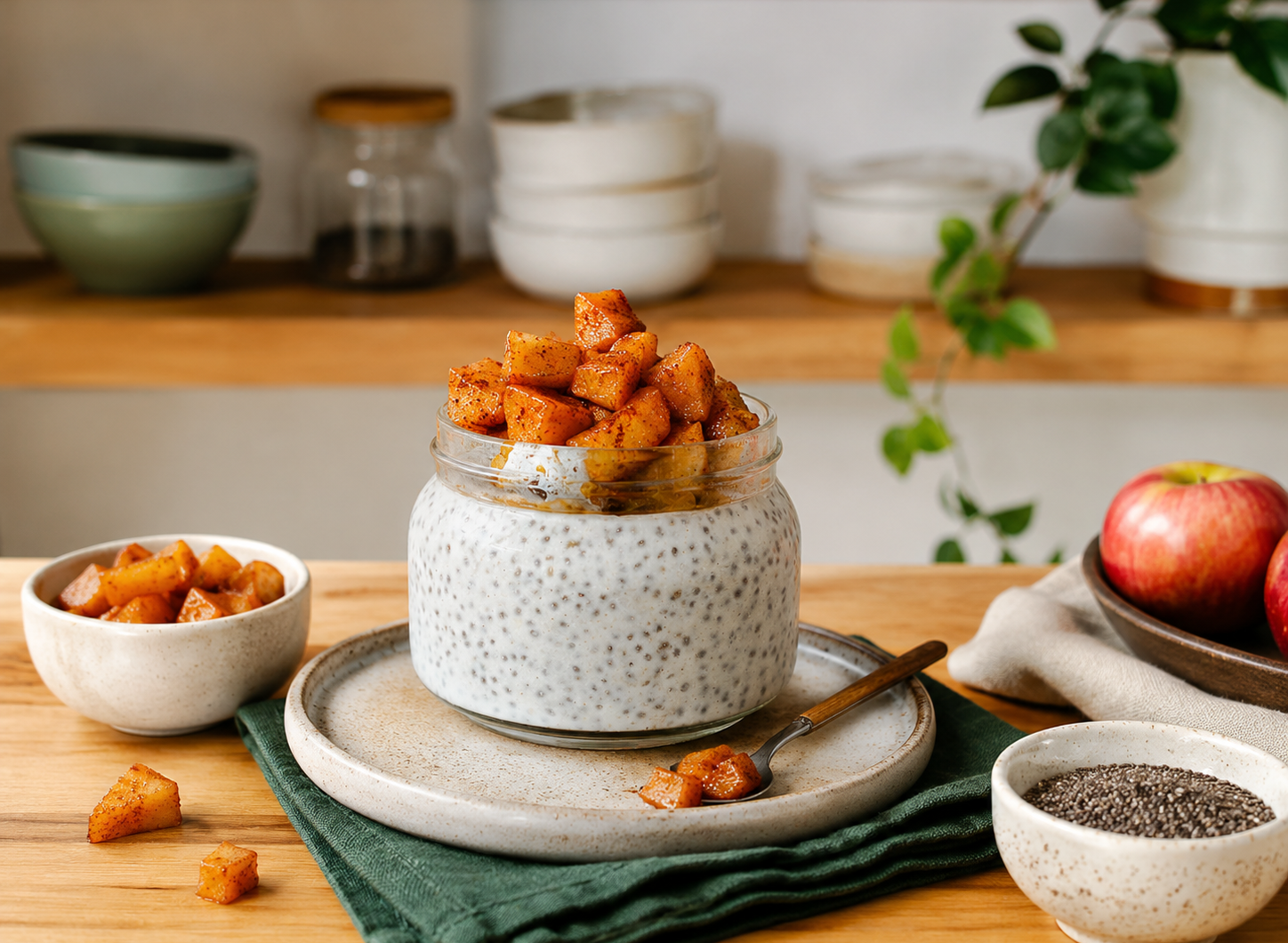
High Protein Apple Pie Chia Seed Pudding Recipe
A creamy apple pie chia pudding made with almond milk, Greek yogurt, applesauce, vanilla protein powder, chia seeds, and cinnamon. It is chilled until thick, then topped with soft cinnamon apples for an easy make-ahead breakfast.
1
serving10
minutes3
hours425
kcal3
hours10
minutesIngredients
1/2 cup almond milk
1/3 cup plain Greek yogurt
1/3 cup unsweetened applesauce
1/2 scoop vanilla protein powder
3 tbsp chia seeds
1 tsp cinnamon
1 apple, diced and cooked with cinnamon and water
Instructions
- In a small bowl or jar, add the almond milk, plain Greek yogurt, unsweetened applesauce, vanilla protein powder, chia seeds, and cinnamon. Whisk well until the mixture is fully combined.
- Cover the bowl or jar and place it in the refrigerator for at least 180 minutes. You can also leave it overnight until the chia seeds have expanded and the pudding becomes thick and creamy.
- Place the diced apple in a small pan over medium heat. Add a sprinkle of cinnamon and a splash of water, then cook for 5 to 7 minutes while stirring occasionally.
- Continue cooking until the apple pieces are soft and lightly caramelized. Remove the pan from the heat once the apples have reached the desired softness.
- Spoon the chilled chia pudding into a serving jar or bowl. Add the cooked cinnamon apples on top and serve immediately, or refrigerate again for a fully chilled version.
Nutrition Facts
- Calories: 425kcal
- Fat: 14g
- Carbohydrates: 57g
- Fiber: 19g
- Sugar: 30g
- Protein: 24g