This Italian savory cake is not what most people picture when they hear the word “cake.” There’s no frosting, no sugar, and definitely no birthday candles. Instead, you get a filling meal in cake form, packed with thinly sliced zucchini, cubes of mortadella, and two types of cheese held together by a light egg batter.
The ring shape isn’t just decorative, it helps the cake cook evenly from all sides, giving you a golden crust on every surface instead of an overcooked edge and a raw middle. This makes it perfect for serving at brunch, lunch, or as a party appetizer that actually fills people up.
Why the Bundt Pan Shape Actually Matters
Most savory bakes go into loaf pans or square baking dishes, but this recipe calls for a ring-shaped Bundt pan for good reason. The hollow center creates a tunnel that allows hot air to circulate through the middle of the batter while it bakes.
This means the inside cooks at the same speed as the outside, preventing that common problem where the edges are done but the center is still wet. The result is a cake that cooks through completely in about 40 minutes without needing to be flipped, rotated, or fussed with. Plus, it looks impressive when you turn it out onto a serving plate, which never hurts.
How This Recipe Fits Into Your Schedule
One of the best things about this savory zucchini Bundt cake is that it doesn’t require advanced baking skills or special equipment beyond the pan itself. There’s no waiting for dough to rise, no temperature-sensitive butter to cream, and no delicate folding techniques that fall apart if you breathe wrong. You mix the wet ingredients, stir in the dry ingredients, fold in the vegetables and meat and cheese, then bake.
The whole process from start to finish takes about an hour, with only 20 minutes of that being active work on your part. This makes it manageable even on a busy weekend morning when you want something homemade but don’t want to spend half your day in the kitchen.
Breaking Down Your Ingredient List
Before you start cooking, take five minutes to get everything measured and ready to go. This step saves you from hunting through cupboards with batter-covered hands later. You’ll need 2 medium zucchini sliced paper-thin—this is where a mandoline slicer really earns its keep, though a sharp knife and patience work too. The dry ingredients include 250 grams of regular all-purpose flour, 50 grams of potato starch, and 16 grams of baking powder. That potato starch is important because it makes the final texture softer and less dense than using only flour would. For the wet base, you need 3 large eggs at room temperature, 130 milliliters of milk, and 100 milliliters of sunflower seed oil.
Understanding the Cheese Component
Two different cheeses go into this savory ring cake, and they each do different jobs. The first is 60 grams of freshly grated Parmesan cheese, which gets mixed directly into the batter and provides a salty, savory backbone to every bite. The second is 100 grams of smoked provola cheese, cut into small cubes and folded in at the end so it creates melted pockets throughout the finished cake. If you can’t find smoked provola, smoked Gouda or even regular mozzarella can substitute, though you’ll lose some of that distinctive smoky flavor. Grating your own Parmesan from a block instead of buying pre-grated makes a real difference here—it melts better and tastes fresher.
The Role of Mortadella in This Recipe
Mortadella brings authentic Italian character to this cake. You’ll use 150 grams cut into small cubes, distributed throughout the batter so every slice gets some. This is a mild, fatty Italian cold cut that adds richness without overwhelming the other flavors. If you’re cooking for someone who doesn’t eat pork, you can leave it out entirely and add diced bell peppers or extra zucchini to keep the texture interesting. But if you can use it, mortadella is what makes this taste distinctly Italian rather than just generic savory cake.
How to Prepare the Zucchini Properly
The zucchini in this recipe needs to be sliced very thin—thinner than you’d cut for grilling or roasting. Thick chunks won’t cook through properly and will leave you with crunchy, undercooked vegetables in your finished cake. After slicing, put the rounds in a bowl and season them with salt, black pepper, and a drizzle of extra virgin olive oil. Let them sit for a few minutes while you mix the batter. This brief seasoning period does two things: it flavors the zucchini and allows a bit of moisture to release, which prevents the cake from becoming soggy. Don’t skip this step even though it seems small.
Mixing the Wet Ingredients First
Start by cracking your 3 eggs into a large mixing bowl. Beat them lightly with a fork or whisk until the yolks and whites are combined. Now add the sunflower seed oil slowly, whisking as you pour. This gradual addition helps the oil and eggs blend together smoothly instead of separating into greasy layers. Once the oil is fully incorporated, pour in the milk and stir until everything looks uniform. This wet base is the foundation that holds everything else together, so take an extra minute to make sure it’s smooth before moving on.
Adding Dry Ingredients Without Lumps
Once your wet ingredients are ready, stir in the grated Parmesan first. This helps the cheese distribute evenly instead of clumping up when the flour goes in. After the Parmesan is mixed in, add your all-purpose flour, potato starch, and baking powder all at once. Use a spatula to fold everything together gently until you have a smooth batter with no dry pockets of flour visible. Don’t switch to a whisk and don’t beat vigorously—you want to combine things just enough to form a batter, not develop the gluten, which would make the final texture tough. Season the batter with a small pinch of salt and some freshly ground black pepper.
Folding in the Fillings Carefully
Now comes the stage where your seasoned zucchini, cubed mortadella, and diced provola all go into the batter. Add them all at once and fold them in with your spatula using gentle, sweeping motions. The goal is to distribute everything evenly without stirring so much that you deflate the batter or overwork the flour. It’s fine if you see a few streaks—those will even out as the cake bakes. Overmixing at this point is the most common mistake people make, and it results in a dense, heavy cake instead of the light, soft texture you’re aiming for.
Preparing Your Bundt Pan Correctly
This is one of those steps that seems trivial but makes or breaks the final result. Take softened butter and spread it generously over every surface of your ring pan, paying special attention to the detailed ridges if your pan has decorative edges. After buttering, dust the inside with a light coating of flour, tapping out any excess. This double layer of fat and flour creates a barrier between the batter and the metal that keeps the cake from sticking when you try to unmold it later. Skipping this step or doing it halfheartedly is the number one reason these cakes break apart or leave half their surface stuck to the pan.
The Baking Process Explained
Pour your prepared batter into the greased and floured pan, then use a spatula to smooth the top so it’s level. Slide the pan into an oven that’s been preheated to 355 degrees Fahrenheit, which is 180 degrees Celsius. Set a timer for 40 minutes, but start checking around the 35-minute mark if your oven tends to run hot. You’re looking for a cake that’s puffed up and golden brown on top. The best doneness test is to stick a toothpick or thin knife into the thickest part—if it comes out clean or with just a few moist crumbs, you’re done. If it comes out wet with raw batter, give it another 5 minutes.
Cooling and Unmolding Without Disaster
When the cake comes out of the oven, your first instinct might be to flip it out immediately so you can see how it looks. Resist that urge. Let the cake rest in the pan for 10 minutes first. This cooling period lets the structure set so the cake holds together when you invert it. After 10 minutes, run a thin knife around the edges if needed, place your serving plate upside down on top of the pan, and flip the whole thing over in one confident motion. Tap the bottom of the pan gently if the cake doesn’t release right away, then lift the pan off. You should have a clean, intact ring cake ready to slice.
Serving Temperature and Pairing Ideas
This savory zucchini ring cake is flexible when it comes to serving temperature. You can slice it while it’s still warm from the oven, which makes the cheese pockets gooey and melted. You can also let it cool to room temperature, which makes it easier to slice cleanly and gives the flavors time to settle. Some people even prefer it chilled from the refrigerator the next day. It pairs well with simple sides like a green salad dressed with lemon vinaigrette, roasted vegetables, or a bowl of tomato soup. For brunch, serve it alongside fresh fruit and coffee. For a party, cut it into thin slices and arrange them on a platter as part of an antipasto spread.
Storage Tips That Actually Work
If you have leftovers—which is common unless you’re feeding a crowd—let the cake cool completely before storing it. Wrap it well or place it in an airtight container, then refrigerate for up to 2 days. When you want to eat it again, you can serve it cold, bring it to room temperature, or warm individual slices in the oven for a few minutes to bring back that fresh-baked texture and remelt the cheese. The cake also freezes surprisingly well. Wrap individual slices tightly in plastic wrap, then put them in a freezer bag. They’ll keep for up to a month. Thaw overnight in the refrigerator before reheating.
Making This Recipe Your Own
While the original recipe is well-balanced as written, there are a few substitutions that work if you need to make changes. If you can’t find smoked provola, regular mozzarella or smoked Gouda both melt nicely and won’t throw off the recipe. If you want a sharper cheese flavor, swap the Parmesan for Pecorino Romano. To make this vegetarian, simply leave out the mortadella and add diced bell peppers or more zucchini to maintain the texture and volume. Fresh herbs like chopped parsley, basil, or chives can be stirred into the batter for extra flavor. Just avoid making multiple substitutions at once or changing the ratios of wet to dry ingredients, which could affect how the cake bakes.
Why This Recipe Works for Meal Prep
Because this savory cake holds its shape when sliced, travels well, and tastes good at multiple temperatures, it’s genuinely useful for meal prep. You can bake it on Sunday and pack slices for weekday lunches alongside a simple salad. It works as a protein-rich breakfast that’s more interesting than scrambled eggs. You can bring it to a potluck or picnic without worrying about it falling apart or needing to be kept hot. The combination of eggs, cheese, vegetables, and meat makes it filling enough to count as a main dish, not just a side or snack. This makes it more practical than most savory baking projects.
When to Choose This Over Other Savory Bakes
If you’re deciding between this and something like quiche or frittata, here’s how to think about it. Quiche requires making or buying pastry and often needs to be served warm on plates with forks. Frittata is faster but doesn’t travel as well and can be tricky to slice neatly. This zucchini ring cake sits somewhere in between—it looks more finished than frittata, doesn’t require pastry like quiche, and slices cleanly even when cold. It’s the right choice when you want something that looks like you put in effort but doesn’t demand advanced technique. It’s also the better option if you’re serving a group and need something that can sit out at room temperature for an hour without becoming unappetizing.
Understanding the Texture You’re Aiming For
The finished cake should be tender and moist but not wet or heavy. When you slice into it, you should see thin ribbons of zucchini distributed throughout, along with visible pieces of mortadella and melted cheese pockets. The crumb should be soft enough to cut with a fork but sturdy enough that the slice holds together on a plate. If your cake comes out dense and heavy, you probably overmixed the batter after adding the flour. If it’s dry and crumbly, you may have overbaked it or measured the flour incorrectly. If it’s soggy in the middle, the zucchini likely wasn’t sliced thin enough or the cake needed more time in the oven.
Common Mistakes and How to Avoid Them
The most frequent problem people run into is the cake sticking to the pan, which happens when the greasing and flouring step gets rushed or skipped. Take the extra minute to butter every ridge and dust with flour. The second issue is overmixing, which develops gluten and makes the texture tough instead of tender. Mix just until combined and use a folding motion rather than beating. Third is using cold eggs, which don’t emulsify as well with the oil and can result in a separated batter. Let your eggs sit at room temperature for 30 minutes before starting. Finally, cutting the zucchini too thick leaves you with crunchy vegetables in the finished cake—thin slices are essential.
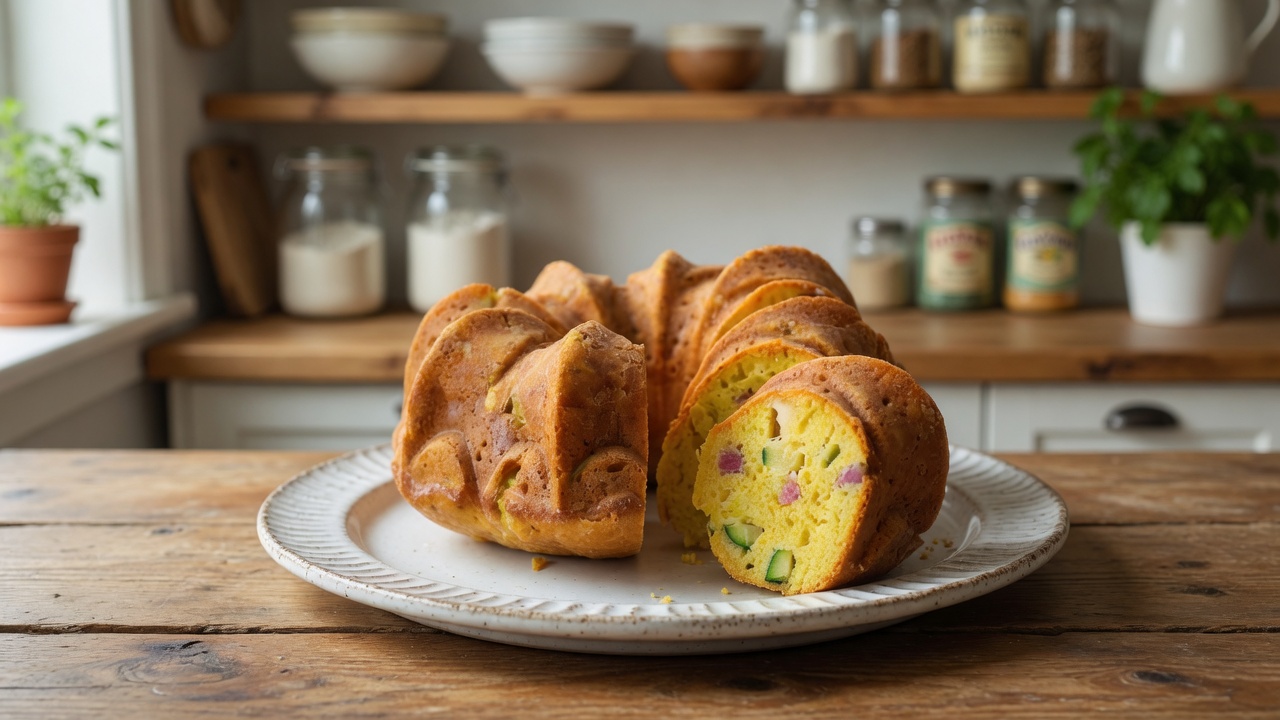
ZUCCHINI SAVORY RING CAKE
This Italian-style savory Bundt cake combines thinly sliced zucchini, cubed mortadella, Parmesan cheese, and smoked provola in a light egg-based batter.
8-10
slices20
minutes40
minutes1
hourIngredients
2 medium zucchini, thinly sliced
250 g all-purpose flour
50 g potato starch
16 g baking powder
3 large eggs, at room temperature
130 ml milk
100 ml sunflower seed oil
60 g freshly grated Parmesan cheese
100 g smoked provola cheese, diced
150 g mortadella, cut into small cubes
Salt, to taste
Freshly ground black pepper, to taste
Extra virgin olive oil, for drizzling
Instructions
- Wash and trim the zucchini, then slice into very thin rounds. Place in a bowl, season with salt, black pepper, and a drizzle of olive oil. Toss to coat and set aside while preparing the batter.
- In a large bowl, beat the eggs lightly. Slowly whisk in the sunflower seed oil until smooth, then stir in the milk until fully combined.
- Add the grated Parmesan to the wet mixture and stir. Gradually fold in the flour, potato starch, and baking powder using a spatula. Mix just until smooth. Season lightly with salt and pepper.
- Gently fold the seasoned zucchini, mortadella cubes, and diced provola into the batter. Mix just until evenly distributed without overworking.
- Grease a Bundt pan generously with butter and dust with flour. Pour in the batter and smooth the top. Bake in a preheated oven at 355°F (180°C) for 40 minutes, or until golden and a toothpick comes out clean.
- Let the cake rest in the pan for 10 minutes, then invert onto a serving plate. Slice and serve warm, at room temperature, or chilled.