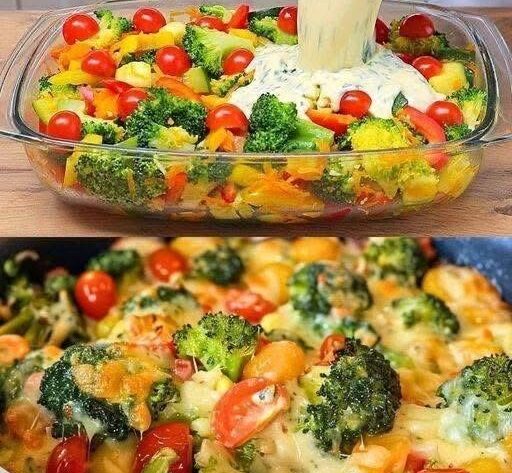
This vegetable bake is built around one simple idea: let the vegetables do the work. Instead of leaning on heavy cream, butter, or thick sauces to make a casserole feel satisfying, this dish uses roasting to concentrate natural sweetness and flavor, then finishes with just enough cheese to give it that golden, comforting top everyone wants from a bake.
It’s a flexible dish by design. The core vegetable lineup — zucchini, yellow squash, broccoli, cauliflower, carrots, bell peppers, onion, garlic, cherry tomatoes, and spinach — is really a template. If your fridge has slightly different vegetables on a given week, this recipe is forgiving enough to absorb those changes without falling apart, as long as you understand why each step exists. That’s really what this guide is for: not just the “what,” but the “how” and “why” behind each stage, so you can make this bake with confidence even if you’re improvising a little.
It works as a vegetarian main dish on its own, as a hearty side next to a protein, or as a meal-prep base you portion out for the week. None of that changes the technique — it just changes what’s on the plate next to it.
Understanding the Two-Stage Bake
Before getting into ingredients, it helps to understand the backbone of this recipe: it is baked in two stages, not one continuous bake.
Stage one is a covered bake. The vegetables go into the oven under foil, which traps steam and moisture. This is what allows the denser vegetables — carrots, cauliflower, broccoli — to soften properly without drying out or burning on top before the inside is cooked through.
Stage two is an uncovered bake with cheese added on top. Removing the foil at this point lets excess moisture evaporate, allows the vegetables to start caramelizing at the edges, and gives the cheese room to melt and turn golden instead of steaming into a wet layer.
Skipping either stage changes the result significantly. Bake covered the whole time and you’ll get soft, pale vegetables with no browning and a cheese layer that never crisps. Bake uncovered from the start and the harder vegetables may dry out or char before they’re actually tender inside. The two-stage approach is what gives you tender interiors and golden, roasted tops at the same time.
Mise en Place: Setting Up Before You Cook
Good vegetable bakes are won or lost in the prep stage, not the oven. Here’s how to set yourself up properly.
Washing and drying matters more than it seems. All vegetables should be washed under cold running water and then patted thoroughly dry with paper towels. This isn’t just a hygiene step — wet vegetables release extra moisture in the oven, which works against the roasting effect you’re going for. Dry vegetables roast; wet vegetables steam. If you want that richer, slightly caramelized flavor rather than a soft, watery bake, take the extra minute to dry everything well.
Uniform cutting size is non-negotiable. Zucchini, yellow squash, carrots, onion, and both bell peppers should all be sliced into pieces of a similar size. This isn’t about aesthetics — it’s about even cooking. If some pieces are twice the size of others, you’ll end up with some vegetables mushy and overcooked while others are still firm, because they’re not finishing at the same rate.
Group your vegetables by prep type before you start cutting. It helps to think of the vegetable lineup in three groups:
- Sliced vegetables: zucchini, yellow squash, carrots, onion, red bell pepper, yellow bell pepper
- Floret-cut vegetables: broccoli and cauliflower, cut into bite-sized pieces
- Special-prep items: cherry tomatoes (halved), garlic (finely minced), spinach (left whole, added later)
Working through your vegetables in this order — all the slicing first, then the floret-cutting, then the halving and mincing — keeps your cutting board organized and your workflow moving instead of jumping back and forth between tasks.
Spinach goes in last, and it’s supposed to look like a lot. Don’t be alarmed if the spinach seems to overwhelm the bowl when you fold it in. It cooks down dramatically in the oven, so what looks like too much at the mixing stage becomes a normal, integrated part of the dish once baked.
Workflow: How Everything Comes Together
Once your vegetables are prepped, the actual assembly moves quickly. Here’s the logical order and why it’s structured this way:
- Combine the sturdier vegetables first (everything except spinach) in a large mixing bowl. These are the vegetables that need direct contact with the oil and seasoning before baking.
- Season generously and toss thoroughly. The olive oil, Italian seasoning, oregano, paprika, onion powder, garlic powder, salt, black pepper, and optional red pepper flakes should coat every piece — not just sit at the bottom of the bowl. Take the extra 30 seconds to toss well; uneven seasoning means some bites taste great and others taste bland.
- Fold in the spinach last, right before transferring to the baking dish. Because spinach wilts so quickly, there’s no benefit to seasoning it separately or adding it early — it just needs to be distributed through the mix before baking.
- Spread everything into an even layer in the baking dish. Avoid piling vegetables into a mound. An even layer means every piece gets similar oven exposure, which ties directly back to the even-cooking principle from the prep stage.
- Cover, bake, uncover, stir, top with cheese, and bake again. This is the two-stage method described above, and the stir in between the two stages is important — it redistributes vegetables that may have shifted or clumped during the first bake, so the second stage cooks evenly too.
- Rest before serving. Ten minutes of rest time isn’t just a suggestion — it lets the dish set slightly and makes serving portions cleaner, rather than watery and loose straight out of the oven.
Approved Variations and Swaps
This recipe is intentionally built to flex around what you have on hand or what you’re craving. Based strictly on what this recipe supports, here are your options:
Additional vegetables you can fold in: Sliced mushrooms, green beans, asparagus pieces, halved Brussels sprouts, or frozen peas can all be added alongside the core vegetable lineup without changing the method.
Seasoning adjustments: Dried thyme, rosemary, lemon zest, and fresh lemon juice can be added for a brighter or more herbal profile. Nutritional yeast can be stirred in for extra savory depth if you want more flavor without more cheese.
Protein additions: Shredded cooked chicken or cooked lentils can be mixed in to turn this from a side dish into a more filling, protein-forward main.
Cheese swap: Reduced-fat feta can replace the mozzarella if you prefer a tangier finish.
Greens swap: Chopped kale can stand in for spinach if that’s what you have or prefer.
Heartier version: Diced sweet potatoes can be included for a more substantial, stick-to-your-ribs version of the bake.
Flavor direction changes: Smoked paprika can replace regular paprika for a deeper, smokier finish, and fresh rosemary and thyme can be used instead of dried for a more rustic, herb-garden flavor.
None of these swaps require changing the baking method — the two-stage cover-then-uncover approach still applies regardless of which vegetables or seasonings you choose.
Serving It Well
This bake is flexible at the table, too. It pairs naturally with grilled chicken breast or baked salmon for a complete, high-protein dinner, or with roasted turkey slices for something lighter. If you want more substance without more richness, serve it over cooked quinoa or brown rice for extra fiber, or spoon it over cauliflower rice to keep the meal on the lower-calorie side.
Leftovers are versatile too — they work well tucked into whole wheat wraps for lunch, topped with a fried or poached egg for a savory breakfast, or served simply alongside a green salad with a light vinaigrette.
Storage and Reheating
Let the bake cool completely before storing — this prevents condensation from making the vegetables soggy in the container. Transfer to airtight containers and refrigerate for up to 4 days, or freeze individual portions for up to 3 months. If frozen, thaw overnight in the refrigerator before reheating.
To reheat, use a 350°F (175°C) oven for about 15 minutes, or microwave until heated through. The oven method will do a better job of maintaining the texture of the vegetables and re-crisping the cheese slightly, while the microwave is the faster option when you’re short on time.
Ultimate Low Calorie Vegetable Bake
Description
A healthy, filling, and flavorful meal that’s easy to prepare while keeping calories low. Packed with colorful roasted vegetables, herbs, and a light, golden cheese topping, this dish delivers comfort-food satisfaction without being heavy. It works as a vegetarian main course, a nutritious side dish, or a meal-prep option for busy weekdays.
Duration
- Preparation time: 20 minutes
- Cooking time: 45 to 50 minutes
- Total time: Approximately 1 hour 10 minutes
- Servings: 6 generous portions
Ingredients
Main:
- 2 medium zucchini, sliced into thin rounds
- 2 medium yellow squash, sliced
- 2 cups broccoli florets
- 2 cups cauliflower florets
- 2 medium carrots, peeled and thinly sliced
- 1 large red bell pepper, diced
- 1 large yellow bell pepper, diced
- 1 medium onion, thinly sliced
- 3 cloves garlic, finely minced
- 1 cup cherry tomatoes, halved
- 2 cups fresh spinach
- 1 tablespoon olive oil
- 2 teaspoons Italian seasoning
- 1 teaspoon dried oregano
- 1 teaspoon paprika
- ½ teaspoon onion powder
- ½ teaspoon garlic powder
- ½ teaspoon black pepper
- 1 teaspoon salt, or to taste
- ¼ teaspoon crushed red pepper flakes, optional
- ½ cup grated reduced-fat mozzarella cheese
- ¼ cup grated Parmesan cheese
- 2 tablespoons chopped fresh parsley
- 1 tablespoon fresh basil, chopped
- Cooking spray for the baking dish
Optional:
- 1 cup sliced mushrooms
- 1 cup green beans
- 1 cup asparagus pieces
- 1 cup Brussels sprouts, halved
- ½ cup frozen peas
- ½ teaspoon dried thyme
- ½ teaspoon rosemary
- 1 teaspoon lemon zest
- 1 tablespoon fresh lemon juice
- 2 tablespoons nutritional yeast for extra flavor
Instructions
- Preheat your oven to 400°F (200°C). Lightly coat a large baking dish with cooking spray.
- Wash all vegetables thoroughly under cold running water and pat them dry with paper towels — dry vegetables roast better and develop richer flavor. Slice the zucchini, squash, carrots, onion, and peppers into evenly sized pieces, cut the broccoli and cauliflower into bite-sized florets, halve the cherry tomatoes, and mince the garlic.
- Place all prepared vegetables except the spinach into a large mixing bowl. Drizzle with olive oil and sprinkle with Italian seasoning, oregano, paprika, onion powder, garlic powder, salt, black pepper, and crushed red pepper flakes if using. Toss thoroughly until every piece is coated.
- Fold the fresh spinach into the mixture. It may seem like a lot at first, but it will wilt significantly during baking.
- Transfer everything into the prepared baking dish, spreading it into an even layer. Cover loosely with aluminum foil and bake for 30 minutes.
- Remove the foil, gently stir the vegetables, then sprinkle the reduced-fat mozzarella and Parmesan evenly over the top.
- Return the dish to the oven uncovered for 15 to 20 minutes, until the vegetables are tender and the cheese is lightly golden. For a deeper golden top, broil for 2 to 3 minutes, watching carefully to prevent burning.
- Remove from the oven and let rest for about 10 minutes. Sprinkle with fresh parsley and basil immediately before serving.
Notes
- Cut vegetables into similar sizes for even cooking.
- Do not overcrowd the baking dish, as this may cause steaming instead of roasting.
- Fresh herbs added after baking provide brighter flavor.
- Use freshly grated cheese for better melting.
- Taste the vegetables before serving and adjust seasoning if needed.
- Do not overcook the vegetables to maintain their texture and vibrant color.
- Roasting uncovered during the final stage helps caramelize the vegetables beautifully.
- Approximate nutrition per serving: Calories: 165 | Protein: 10g | Carbohydrates: 17g | Dietary Fiber: 6g | Sugars: 8g | Fat: 7g | Saturated Fat: 2g | Cholesterol: 10mg | Sodium: 370mg | Potassium: 720mg | Vitamin A: 130% DV | Vitamin C: 180% DV | Calcium: 20% DV | Iron: 12% DV
Medical Disclaimer: The nutritional and health-related information provided with this recipe is for general informational purposes only and is not intended as medical or dietary advice. It should not be used to diagnose, treat, cure, or prevent any disease or health condition, and it is not a substitute for professional medical guidance. Nutritional values are approximate and may vary based on specific ingredients, brands, and portion sizes used. Individuals with allergies, dietary restrictions, or medical conditions — including diabetes, heart disease, or food allergies — should consult a qualified healthcare provider or registered dietitian before making changes to their diet. Reliance on any information provided in this recipe is solely at your own risk.