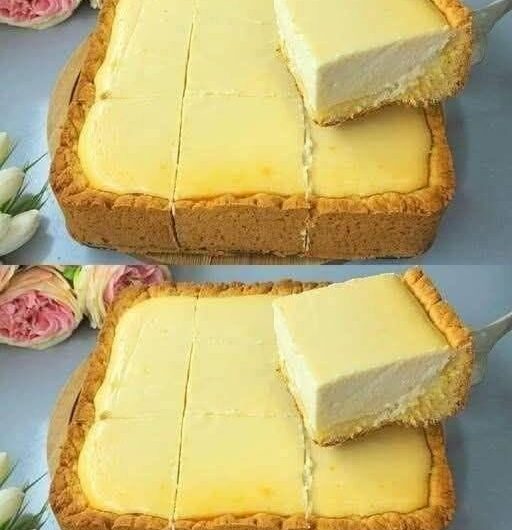
Torta della Nonna — literally “grandmother’s cake” — is one of Italy’s most cherished homestyle desserts, and it’s easy to see why once you understand what’s going on inside it. A buttery, crumbly shortcrust pastry encases a smooth, lightly lemon-scented custard, and the whole thing is finished with a scattering of pine nuts that toast to a golden color as the cake bakes. It manages to feel both rustic and elegant at the same time, which is exactly why it shows up at everything from casual afternoon coffee breaks to holiday tables.
What makes it a genuinely rewarding cake to bake at home is that none of the individual components are complicated — it’s really just a shortcrust pastry and a stovetop custard — but the payoff, once assembled and baked, looks and tastes far more impressive than the ingredient list would suggest. Traditionally, it’s built from pantry staples: eggs, milk, flour, butter, sugar, and lemon, without needing anything exotic.
Why This Recipe Works
The cake relies on a few time-honored techniques rather than any modern shortcuts: a tender, chilled pastry dough; a custard cooked slowly and constantly whisked to avoid lumps; and a bake that’s just long enough to set the filling and toast the topping without overbaking the crust. Each stage is approachable on its own, which is part of why this dessert has stayed a home-kitchen staple for generations, even though it involves a few separate components coming together.
Mise en Place: Getting Organized Before You Start
For the pastry:
- 2 1/2 cups all-purpose flour
- 3/4 cup granulated sugar
- 3/4 cup cold unsalted butter, cubed
- 2 large egg yolks
- 1 whole egg
- Zest of 1 lemon
- A pinch of salt
For the custard filling:
- 2 cups whole milk
- 4 large egg yolks
- 1/2 cup granulated sugar
- 1/3 cup all-purpose flour
- Zest of 1 lemon
- 1 teaspoon vanilla extract
For the topping:
- 1/2 cup pine nuts
- Powdered sugar, for dusting
Optional additions: a tablespoon of limoncello stirred into the custard, a pinch of cinnamon over the pine nuts, a few drops of almond extract, a thin layer of apricot jam under the custard, sliced almonds in place of pine nuts, a bit of orange zest alongside the lemon, a pinch of nutmeg in the custard, a drizzle of honey for serving, fresh berries for garnish, or a dusting of cocoa powder as an alternative finish.
Equipment to have ready: a large mixing bowl, a pastry cutter or food processor, a rolling pin, a 9-inch springform or tart pan, a medium saucepan, a whisk, a fine grater or zester, measuring cups and spoons, plastic wrap, a wire cooling rack, and a sharp knife for slicing.
This recipe makes one 9-inch cake, yielding 8 to 10 slices, with a total time of about 2 hours 50 minutes once you account for chilling, cooking, baking, and cooling.
Choosing the Right Eggs and Lemons
Since the custard depends so heavily on egg yolks for its rich, smooth texture, it’s worth choosing fresh eggs with clean, uncracked shells. For the lemons, look for ones that feel heavy for their size with bright, glossy skin — that typically indicates more juice and aromatic oil in the zest, which is where much of the cake’s signature fragrance comes from. Lemons with dull, wrinkled skin tend to produce less aromatic zest, so they’re worth avoiding if you have a choice.
Workflow: How the Process Comes Together
Making and Chilling the Pastry
- In a large bowl, combine the flour, sugar, and salt.
- Work the cold, cubed butter into the flour with a pastry cutter or your fingertips until the mixture looks like coarse crumbs.
- Add the egg yolks, whole egg, and lemon zest, and mix gently just until the dough comes together — don’t overwork it, or the crust will turn out tough rather than tender.
- Shape the dough into two flattened discs, one slightly larger than the other, wrap each tightly in plastic, and refrigerate for at least an hour, until firm enough to roll out easily.
Making the Custard
- Warm the milk in a saucepan over medium heat until just steaming — don’t let it boil.
- In a separate bowl, whisk the egg yolks and sugar together until pale and slightly thickened, then whisk in the flour until smooth.
- Slowly pour the warm milk into the egg mixture while whisking constantly, to keep the eggs from cooking too quickly.
- Return the combined mixture to the saucepan over medium-low heat, and cook, whisking constantly, until it thickens to a smooth, pudding-like consistency — about 5 to 7 minutes.
- Remove from the heat and stir in the lemon zest and vanilla extract. Transfer to a bowl, press plastic wrap directly onto the surface to prevent a skin from forming, and let cool to room temperature.
Assembling the Cake
- Preheat the oven to 350°F (175°C) and lightly grease a 9-inch springform or tart pan.
- Roll out the larger dough disc and press it into the bottom and up the sides of the pan, trimming any excess.
- Pour the cooled custard into the pastry shell and spread it evenly.
- Roll out the second disc and place it over the custard, sealing the edges with the bottom layer, then trim and crimp decoratively if you’d like.
- Sprinkle the pine nuts evenly over the top and press them gently into the surface so they stay in place during baking.
Choosing a Top Style
There’s more than one way to finish the top of this cake, and the choice comes down to preference:
- Classic solid top: simply place the rolled second disc directly over the custard and seal the edges.
- Decorative lattice top: cut the second disc into strips and weave them over the custard before sealing the edges.
- Rustic open-top version: skip the top pastry layer entirely, leaving the custard exposed and topped generously with pine nuts.
Baking and Cooling
- Bake for 30 to 35 minutes, until the pastry turns a deep golden brown and the pine nuts are lightly toasted. If the pastry browns too quickly, loosely cover it with foil for the remaining bake time.
- Let the cake cool in the pan for at least 30 minutes before removing the springform ring, then continue cooling on a wire rack until it reaches room temperature. This full cooling period is what allows the custard to fully set, which is essential for clean, neat slices.
Understanding Sweetness and Richness
Since eggs and lemons vary slightly in flavor intensity from batch to batch, there’s some room to fine-tune the custard. More egg yolks produce a richer, more golden custard, while additional lemon zest intensifies the citrus aroma without adding extra liquid. It’s worth tasting the cooled custard before assembling the cake and adjusting sweetness slightly if needed — too much sugar can overshadow the delicate lemon flavor that defines this dessert.
Approved Variations and Swaps
Based strictly on what’s outlined in this recipe, there’s a lot of room to make this cake your own:
- Limoncello version: stir a tablespoon of limoncello into the cooled custard for a bright citrus liqueur note.
- Almond version: add a few drops of almond extract to the custard and swap sliced almonds in for the pine nut topping.
- Orange-scented version: add orange zest alongside the lemon zest in both the pastry and custard for a more layered citrus flavor.
- Apricot-filled version: spread a thin layer of apricot jam over the bottom pastry layer before adding the custard.
- Cinnamon-spiced version: sprinkle a pinch of ground cinnamon over the pine nuts before baking.
- Lattice-topped version: use the woven lattice technique described above for a decorative finish.
- Mini tartlets: divide the pastry and custard among several small tart pans instead of one large cake, and reduce the baking time to 20–25 minutes — ideal for individual servings at gatherings.
- Berry-topped version: garnish the finished, cooled cake with fresh berries just before serving.
- Cocoa-dusted version: dust the finished cake with a light layer of cocoa powder in addition to, or instead of, powdered sugar.
- Open-top rustic version: skip the top pastry layer entirely, leaving the custard exposed and topped generously with pine nuts before baking.
- Pine nut-free version: the buttery pastry and lemon custard are satisfying on their own — simply skip the pine nuts and dust the finished, cooled cake with powdered sugar instead.
Common Mistakes to Avoid
- Overworking the pastry dough, which leads to a tough crust rather than a tender one.
- Skipping the chilling step, which makes the dough difficult to roll and handle.
- Not whisking constantly while cooking the custard, which can cause lumps.
- Adding hot milk too quickly to the egg mixture, which can scramble the eggs.
- Removing the cake from the oven before the pastry is fully golden.
- Slicing the cake before it has fully cooled and set.
- Overbaking the pine nuts, which can make them dark or bitter.
- Using a pan that’s too small, which can cause the filling to overflow during baking.
- Skipping the plastic wrap directly on the custard surface, which lets a skin form.
- Forgetting to properly trim and seal the pastry edges, which can lead to filling leaking out during baking.
Serving Suggestions
For a traditional presentation, dust the cooled cake generously with powdered sugar, slice into wedges, and serve at room temperature alongside coffee or tea. For a more elegant plating, place a single slice at the center of a decorative plate, dust with a fine layer of powdered sugar right before serving, garnish with a few fresh berries or a small mint leaf, and finish with a light drizzle of honey — a presentation that works particularly well for dinner parties or Italian-themed gatherings.
Storage and Freezing
Store the cake in an airtight container or tightly covered in the refrigerator, since the custard filling needs to stay chilled, and consume within 3 to 4 days for the best quality. Bring it to room temperature for about 20 minutes before serving for the best flavor and texture.
The cake also freezes well: let it cool completely, wrap individual slices or the whole cake tightly in plastic wrap and then foil, and freeze in a freezer-safe container or bag for up to 2 months. Thaw overnight in the refrigerator before serving, and dust with fresh powdered sugar after thawing rather than before freezing.
Creative Uses for Leftover Cake
Leftover slices don’t have to just be eaten plain — crumble them into a parfait with fresh berries, serve alongside a scoop of vanilla gelato, use as the base for a quick trifle with whipped cream, pair with a cup of espresso for an afternoon treat, or warm slightly and serve with a drizzle of honey.
Party Serving Suggestions
For larger gatherings, prepare the cake a day in advance to let the flavors fully develop, then slice into smaller portions for easy sharing. Serve alongside coffee or tea for an authentic Italian dessert course, present it on a decorative cake stand, and garnish the serving platter with fresh lemon slices or berries for a polished, festive look.
Torta della Nonna
Description: A classic Italian dessert featuring a buttery, crumbly shortcrust pastry filled with smooth, lemon-scented custard and topped with golden toasted pine nuts — rustic and elegant at once.
Duration: Preparation: 30 minutes | Chilling (pastry): 1 hour | Cooking (custard): 15 minutes | Baking: 35 minutes | Cooling: 30 minutes | Total Time: approximately 2 hours 50 minutes | Yield: one 9-inch cake, 8–10 slices
Ingredients:
For the pastry:
- 2 1/2 cups all-purpose flour
- 3/4 cup granulated sugar
- 3/4 cup cold unsalted butter, cubed
- 2 large egg yolks
- 1 whole egg
- Zest of 1 lemon
- A pinch of salt
For the custard filling:
- 2 cups whole milk
- 4 large egg yolks
- 1/2 cup granulated sugar
- 1/3 cup all-purpose flour
- Zest of 1 lemon
- 1 teaspoon vanilla extract
For the topping:
- 1/2 cup pine nuts
- Powdered sugar, for dusting
Instructions:
- Combine the flour, sugar, and salt in a large bowl. Cut in the cold butter until the mixture resembles coarse crumbs. Add the egg yolks, whole egg, and lemon zest, and mix gently just until the dough comes together.
- Shape into two flattened discs, wrap tightly in plastic, and refrigerate for at least 1 hour.
- Warm the milk until just steaming. Whisk the egg yolks and sugar until pale and thickened, then whisk in the flour until smooth.
- Slowly whisk the warm milk into the egg mixture, then return to the saucepan over medium-low heat. Cook, whisking constantly, until thickened, about 5–7 minutes. Stir in the lemon zest and vanilla, then cool with plastic wrap pressed directly on the surface.
- Preheat the oven to 350°F (175°C). Roll out the larger dough disc into a greased 9-inch springform or tart pan, trimming the edges.
- Pour in the cooled custard and spread evenly. Top with the second rolled disc (solid, lattice, or open-top), sealing the edges.
- Sprinkle with pine nuts and press gently to adhere.
- Bake 30–35 minutes, until deep golden brown and the pine nuts are toasted. Cover loosely with foil if browning too quickly.
- Cool in the pan for at least 30 minutes, then transfer to a wire rack to cool fully before slicing.
- Dust with powdered sugar and serve at room temperature.
Notes: Taste the cooled custard before assembling and adjust sweetness if needed. Store refrigerated in an airtight container for 3–4 days; bring to room temperature 20 minutes before serving. Freezes well, tightly wrapped, for up to 2 months — thaw overnight in the fridge and dust with fresh powdered sugar after thawing.
Disclaimer: This recipe and its accompanying information are provided for general informational and culinary purposes only and are not intended as medical, dietary, or nutritional advice. Please consult a physician, registered dietitian, or other qualified healthcare provider before making significant changes to your diet, particularly if you have existing medical conditions, food allergies, or specific nutritional requirements. The creator of this content assumes no liability for any adverse effects resulting from the preparation or consumption of this recipe.