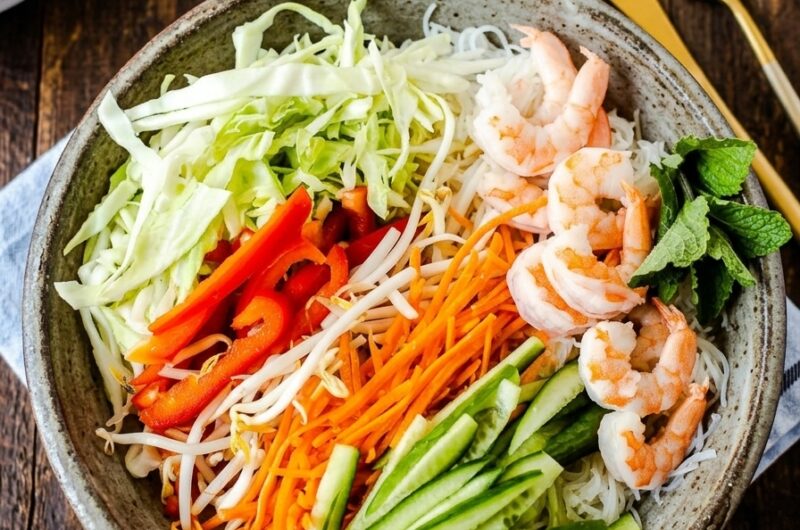
This salad takes everything people love about traditional Vietnamese spring rolls — cool noodles, crunchy vegetables, fresh herbs, and a bright peanut dressing — and skips the rolling entirely. Instead of wrapping individual rolls in rice paper, all the components are prepped separately and tossed together in one big bowl. The result is the same flavor profile with far less hands-on assembly time, and it comes together in just 20 minutes total.
The recipe has three distinct working parts: the noodles and shrimp (both of which need brief cooking or thawing), the fresh vegetables and herbs (all raw prep, no cooking), and the peanut lime dressing (a simple whisk-together sauce). None of these parts are complicated, but keeping them organized separately until the final toss is what makes the dish come together quickly and stay fresh.
Understanding the Three Components
Before starting, it helps to think of this recipe in three separate parts:
1. Noodles and Protein Rice noodles are boiled until tender, then drained and rinsed under cold water to stop the cooking and prevent sticking. Cooked shrimp — thawed if frozen, and patted dry — rounds out the protein.
2. Fresh Vegetables and Herbs Mini cucumbers, shredded cabbage, thinly sliced red bell pepper, bean sprouts, carrots, and fresh mint all get prepped raw. None of these require cooking, only slicing, shredding, or rinsing.
3. Peanut Lime Dressing Natural peanut butter, lime juice, coconut aminos, maple syrup, sriracha, garlic granules, and ground ginger are whisked together into a salty-sweet, tangy dressing that ties the whole bowl together.
Because the noodles need boiling water and the shrimp may need thawing, those two elements benefit from being started first, while the vegetable prep and dressing can happen in parallel once those are underway.
Kitchen Workflow: The Order That Actually Saves Time
Here’s the most efficient way to move through the recipe:
Step 1 — Thaw the shrimp, if frozen. Run frozen shrimp under cold water until fully thawed. Starting this first means it’s ready by the time everything else comes together.
Step 2 — Cook the rice noodles. Bring a pot of water to a boil and cook the rice noodles according to the package instructions. Once cooked, drain and rinse under cold water to remove excess starch and prevent sticking. If the noodles won’t be used right away, toss them with 1–2 teaspoons of sesame oil to keep them from clumping.
Step 3 — Make the peanut lime dressing. While the noodles cook, whisk together the peanut butter, lime juice, coconut aminos, maple syrup, sriracha, garlic granules, and ground ginger. If you prefer a thinner dressing, whisk in 1–2 tablespoons of water.
Step 4 — Prep the vegetables. Slice the mini cucumbers into thin sticks, shred the cabbage, thinly slice the red bell pepper, rinse and dry the bean sprouts, and cut the carrots into matchsticks. This can happen while the noodles are cooking or cooling.
Step 5 — Assemble the salad. In a large bowl, combine the cooked noodles, cucumber, cabbage, bell pepper, bean sprouts, carrots, shrimp, and fresh herbs. Drizzle with the peanut dressing, toss, and serve.
Because the noodles need active boiling time and the dressing and vegetables don’t, using the noodle-cooking window to knock out the dressing and vegetable prep keeps the entire process moving without any single step causing a bottleneck.
Component Organization: Setting Up Your Station
Setting up your station with these three zones makes the workflow smoother:
- A pot of boiling water — for the rice noodles, started first
- A cutting board and knife — for slicing the cucumbers, cabbage, bell pepper, and carrots
- A small bowl and whisk — for the peanut lime dressing
- A colander — for draining and rinsing the noodles
- A large serving bowl — where everything comes together at the end
Since the noodles need to cool after rinsing and the dressing can sit at room temperature while you finish vegetable prep, there’s no need to rush any one component — the pieces come together naturally by the time you’re ready to toss.
Step-by-Step Assembly Strategy
Once all three components are ready, assembly is quick:
- Add the cooled, rinsed noodles to a large bowl first, since they form the base of the salad.
- Layer in the cucumber, cabbage, bell pepper, bean sprouts, carrots, and shrimp.
- Add fresh mint (and Thai basil, if using) on top.
- Drizzle the peanut lime dressing over everything.
- Toss well so the dressing coats all the noodles and vegetables evenly.
- Serve with extra dressing on the side, since more is always welcome.
If the dressing feels too thick to toss evenly, whisk in warm water one teaspoon at a time until it reaches a pourable consistency before adding it to the bowl.
Make-Ahead Strategy
This salad is particularly well suited to meal prep, since each component holds up well when stored separately:
- Prep all vegetables ahead of time. Shred the cabbage, cut the mini cucumbers into strips, prepare or buy matchstick carrots, and slice the red bell pepper. Store everything in the fridge until ready to use.
- Cook the rice noodles according to package directions, then drain, rinse, and toss with 1–2 teaspoons of sesame oil to prevent sticking during storage.
- Make the peanut dressing and store it separately in a sealed container in the fridge. If you like a spicier dressing, feel free to add extra sriracha or red pepper flakes at this stage.
- Keep the shrimp ready to go. If using already-cooked, previously frozen shrimp, keep it defrosted and drained in the fridge, and use it within 3 days for best quality.
Storing the dressing separately from the vegetables and noodles is the key to keeping everything crisp — once the dressing is added, the salad is best eaten shortly after tossing.
Approved Variations and Swaps
The following adjustments are drawn directly from the tested substitutions for this recipe:
For the rice noodles:
- Thicker pad Thai-style rice noodles can be used in place of thin rice noodles.
- To skip noodles entirely, simply increase the amount of vegetables, or serve the salad over rice instead.
For the shrimp:
- Chicken breast, salmon, stir-fry beef, tofu, or crispy chickpeas all work as alternative proteins.
For the fresh vegetables:
- Vegetable choices are flexible — try red cabbage, mini bell peppers, green onions, red onion, butter lettuce, fresh spinach, snap peas, or any other fresh vegetables on hand.
For the fresh mint:
- Thai basil, fresh basil, and fresh cilantro all work well alongside or in place of mint.
For the peanut lime dressing:
- For a nut-free version, an almond butter dressing or a sunflower seed satay sauce can be used instead of the peanut-based dressing.
Dressing ingredient-specific swaps:
- Natural peanut butter can be swapped for almond or cashew butter; for a nut-free version, use sunflower seed butter.
- Coconut aminos can be substituted with low-sodium tamari or soy sauce, reducing the added sweetener slightly to compensate.
- Maple syrup can be swapped for honey or date syrup — start with a smaller amount and adjust to taste.
- Sriracha can be swapped for chili-garlic sauce for more heat, or omitted entirely for a kid-friendly version.
- Garlic granules can be swapped for 1 small fresh clove of minced garlic for a stronger punch.
- Ground ginger can be swapped for 1–2 teaspoons of freshly grated ginger for a brighter flavor.
Practical Notes for Best Results
- Rinse the cooked noodles under cold water immediately after draining — this stops the cooking process and prevents them from sticking together as they cool.
- Pat the shrimp dry before adding it to the salad, since excess moisture can make the whole dish watery.
- Slice the mini cucumbers into thin half-moons or sticks so they stay snappy rather than becoming limp over a few days of storage.
- Shred the cabbage finely, both for the best texture and so it absorbs the dressing more evenly.
- If the peanut dressing thickens after being refrigerated, whisk in warm water a teaspoon at a time until it’s pourable again.
- Extra dressing on the side is always a welcome addition when serving.
Part 2: Straightforward Recipe Card
Spring Roll Salad with Peanut Dressing
Description: A deconstructed take on classic Vietnamese spring rolls — cooked shrimp, crunchy vegetables, tender rice noodles, and fresh herbs tossed together with a zippy peanut lime dressing. No rolling required.
Servings: 4
Duration:
- Prep: 15 minutes
- Cook: 5 minutes
- Total: 20 minutes
Ingredients:
For the salad:
- 8 ounces rice noodles
- 12 ounces cooked shrimp, deveined and tail removed (if frozen, defrost and drain)
- 3 mini cucumbers, thinly sliced into sticks
- 4 cups shredded cabbage
- 1 red bell pepper, thinly sliced into sticks
- 2 cups bean sprouts
- 2 cups carrots, cut into matchsticks
- Fresh mint
For the peanut lime dressing:
- 1/4 cup natural peanut butter
- 2 tbsp lime juice
- 2 tbsp coconut aminos
- 2 tbsp maple syrup
- 1/4 tsp sriracha
- 1/8 tsp garlic granules
- 1/8 tsp ground ginger
Instructions:
- If the shrimp is frozen, defrost it by running it under cold water until no longer frozen.
- Bring a pot of water to a boil and cook the rice noodles according to the package instructions. Once cooked, drain, rinse in water to remove any excess starch (this prevents sticking), and toss in 1–2 teaspoons of sesame oil if not used right away.
- Make the peanut lime dressing by whisking together the dressing ingredients. If you prefer a thinner dressing, add 1–2 tablespoons of water and whisk.
- To a salad bowl, add the cooked noodles, cucumber, cabbage, bell pepper, bean sprouts, carrot, shrimp, and fresh herbs. Drizzle the peanut lime dressing on top, toss, and enjoy. Extra dressing is always welcome.
Notes:
- If the dressing is too thick, whisk in warm water 1 teaspoon at a time until it’s pourable.
- Nutrition per serving: 446 kcal, 69g carbohydrates, 22g protein, 10g fat, 2g saturated fat, 2g polyunsaturated fat, 4g monounsaturated fat, 0.01g trans fat, 107mg cholesterol, 786mg sodium, 566mg potassium, 8g fiber, 15g sugar, 11791IU vitamin A, 51mg vitamin C, 96mg calcium, 1mg iron. Nutrition information is automatically calculated and should be used only as an approximation.
Medical Disclaimer: The nutritional and dietary information provided in this document is for general informational and educational purposes only and is not intended as, and should not be substituted for, professional medical or nutritional advice, diagnosis, or treatment. Nutritional values are automatically calculated and are approximate; they may vary based on specific brands, ingredient substitutions, and portion sizes used. Individuals with food allergies, dietary restrictions, or medical conditions—including but not limited to shellfish allergies, peanut or tree nut allergies, or soy sensitivities—should consult a qualified healthcare provider or registered dietitian before making changes to their diet. Reliance on any information provided in this document is solely at your own risk.