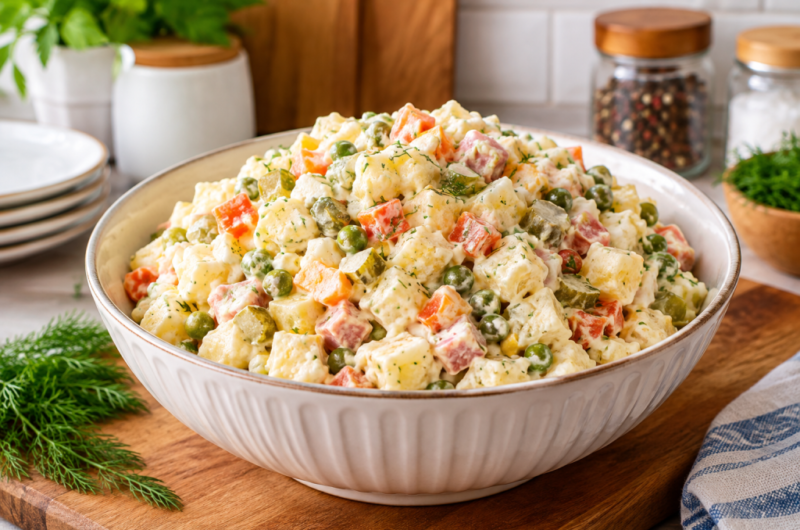
Russian Potato Salad, also known as Olivier Salad, is a hearty and creamy salad made with tender potatoes, carrots, green peas, eggs, pickles, sausage, green onions, dill, and mayonnaise. Unlike a simple potato salad served mainly as a side dish, this classic Russian salad is packed with enough ingredients to make it satisfying on its own. The combination of soft vegetables, savory sausage, tangy pickles, creamy mayonnaise, and fresh herbs creates a balanced flavor in every bite.
What Is Russian Potato Salad?
A classic Olivier Salad with a hearty twist
Russian Potato Salad is widely known as Olivier Salad, a popular dish associated with Russian and Slavic cuisine. It combines cooked vegetables with eggs, meat, pickles, peas, herbs, and mayonnaise to create a creamy, filling salad. The ingredients are generally cut into small cubes, giving the finished dish its familiar texture and making it easy to scoop and serve.
What makes Olivier Salad different from many Western-style potato salads is the number of ingredients included in the bowl. Potatoes provide a soft and satisfying base, while carrots and peas add color and mild sweetness. Pickles bring acidity and crunch, sausage adds savory flavor, eggs make the salad richer, and mayonnaise brings everything together into a creamy dressing.
Why Olivier Salad is so popular
One reason Russian Potato Salad has remained popular is its flexibility. There is no single version that every household follows exactly. Families often adjust the meat, vegetables, herbs, and dressing according to personal taste and whatever ingredients are available. That makes Olivier Salad both traditional and adaptable at the same time.
The salad is particularly well suited to celebrations because it can be prepared ahead of time and chilled before serving. Once the ingredients have been combined, the flavors have time to blend in the refrigerator. This makes it convenient for holiday meals, family gatherings, parties, and large dinners when you want a dish that can be prepared before guests arrive.
What Goes Into Russian Potato Salad?
Potatoes and carrots
Potatoes form the main vegetable base of this Russian potato salad. They are cut into small, even cubes before cooking, which helps them cook more consistently and makes the finished salad easier to mix. Carrots are prepared in the same way. Together, these vegetables provide the soft, hearty texture that makes Olivier Salad so filling.
The vegetables are cooked with salt and white vinegar. The vinegar has an important practical purpose because it helps the potatoes retain their shape during cooking. You are not adding enough vinegar to make the vegetables taste strongly acidic. Instead, it helps prevent the potato cubes from becoming overly soft and breaking apart when they are mixed with the other ingredients.
Eggs and summer sausage
Hard-boiled eggs add richness and a tender texture to the salad. Once cooled and peeled, they are cut into small cubes so that the egg is distributed throughout the mixture instead of remaining in large pieces. The eggs also complement the creamy mayonnaise and savory sausage.
Summer sausage gives this version of Russian Potato Salad its meaty, satisfying character. The sausage is diced into small cubes, just like the vegetables, which allows every serving to contain a little of each ingredient. The result is much more substantial than a basic potato salad and works especially well as a filling lunch or dinner salad.
Pickles, peas, green onions, and dill
Dill pickles provide one of the most important flavor contrasts in Olivier Salad. Their tangy taste cuts through the richness of the mayonnaise and sausage, while their texture adds a little bite to the otherwise soft ingredients. Sweet peas contribute mild sweetness and a pleasant pop of texture.
Green onions bring a fresh, lightly sharp flavor, while dill adds an unmistakable herbal note. These fresh ingredients keep the salad from tasting too heavy. When combined with creamy mayonnaise, savory sausage, tender potatoes, and tangy pickles, they create the characteristic balance that makes Russian Potato Salad so enjoyable.
How to Prepare Russian Potato Salad
Step 1: Dice the potatoes and carrots
Begin by cutting the potatoes and carrots into small, uniform cubes. Keeping the pieces close in size is important because it allows the vegetables to cook evenly. Smaller cubes also make the final salad easier to eat and help distribute the vegetables throughout every serving.
Place the diced potatoes and carrots into a large pot and cover them with water. Add the table salt and white vinegar. Bring the water to a boil over medium-high heat. Once boiling, reduce the heat to medium and continue cooking until the potatoes are tender, which should take about 15 minutes.
Check the potatoes toward the end of cooking rather than relying only on the timer. They should be cooked through but should still hold their shape. Overcooked potatoes can become soft and break apart when mayonnaise and the remaining ingredients are mixed in.
Step 2: Drain and cool the vegetables
Once the potatoes and carrots are cooked, drain them thoroughly. Spread or leave them in a suitable bowl or colander and allow them to cool to room temperature before assembling the salad.
Cooling the vegetables is an important part of making a good mayonnaise-based potato salad. If the potatoes are still very hot when mayonnaise is added, the dressing can become thinner and the overall texture may suffer. Allowing the vegetables to cool also makes it easier to mix everything without crushing the potato cubes.
Step 3: Prepare the remaining ingredients
While the potatoes and carrots are cooking, prepare the other ingredients. Cut the summer sausage and dill pickles into small cubes. Chop the green onions into small pieces so they can be evenly distributed through the salad.
Prepare the hard-boiled eggs by cutting them into small cubes as well. If you are using fresh dill rather than dill paste, chop it finely. Preparing everything before combining the salad makes the final assembly quick and straightforward.
Step 4: Combine the salad ingredients
Place the cooled potatoes and carrots in a large mixing bowl. Add the cubed summer sausage, diced dill pickles, drained sweet peas, and chopped green onions. Add the cubed hard-boiled eggs as well.
At this stage, handle the ingredients gently. The goal is to combine the vegetables and other additions without turning the potatoes into mashed potatoes. Using a large bowl gives you enough space to fold everything together without excessive stirring.
Step 5: Add mayonnaise and dill
Add the mayonnaise and dill to the bowl. Gently mix until the dressing is distributed throughout the ingredients and everything is evenly coated.
The mayonnaise should bind the ingredients together without completely covering their individual textures. If you prefer a creamier salad, you can adjust the amount of mayonnaise when preparing future batches according to your personal preference. For the recipe as written, use the specified one cup of mayonnaise.
Step 6: Season and chill
Taste the salad and add salt and pepper to taste. Keep in mind that the sausage, pickles, mayonnaise, and cooked vegetables already contribute flavor, so season gradually.
Cover the bowl with plastic wrap and refrigerate the Russian Potato Salad for at least one hour before serving. Chilling gives the ingredients time to settle and allows their flavors to blend. The salad is also particularly refreshing when served cold.
Why Chilling Makes a Difference
Let the flavors come together
Although Olivier Salad can technically be eaten immediately after it is mixed, refrigeration improves the overall experience. The cold temperature firms up the texture of the vegetables and allows the mayonnaise to coat the ingredients more evenly. The tanginess of the pickles, savory sausage, fresh dill, and mild sweetness of the peas become more integrated after resting.
This is one of the reasons Russian Potato Salad works so well as a make-ahead recipe. Instead of preparing everything at the last minute, you can assemble the salad in advance and allow it to chill until mealtime. That is especially useful when preparing several dishes for a holiday or family gathering.
How to Get the Best Texture
Cut everything into similar-sized pieces
Uniform cutting is one of the easiest ways to improve homemade Olivier Salad. Potatoes, carrots, sausage, pickles, and eggs should all be cut into relatively small pieces. This creates a consistent bite and ensures that no single ingredient dominates the salad.
Small cubes also make the salad visually appealing. When served in a bowl, you can see colorful pieces of carrot, green peas, herbs, pickles, sausage, and egg throughout the creamy potato mixture. The result is a classic-looking Russian salad that feels generous and substantial.
Avoid overcooking the potatoes
Potatoes should be tender enough to eat but firm enough to maintain their shape. If they are cooked for too long, they may absorb too much water and fall apart during mixing. This can turn the salad into a softer, less defined mixture.
The white vinegar added to the cooking water helps the potatoes hold together. This is particularly useful because the cubes are cooked before being combined with mayonnaise and the other ingredients. Proper cooking and cooling are the keys to maintaining the classic chunky texture of Olivier Salad.
Serving Suggestions for Russian Potato Salad
A filling salad for holidays and gatherings
Russian Potato Salad is a natural choice for holiday tables, family dinners, buffets, and celebrations. Its creamy texture and colorful ingredients make it attractive when served in a large bowl, while its hearty combination of vegetables, eggs, and sausage means guests can enjoy it as more than just a small side portion.
Serve it chilled directly from the refrigerator. It pairs well with a variety of savory dishes and can also be served on its own for lunch. Because the recipe makes 8 to 10 servings, it is especially practical when cooking for several people.
Make it part of a larger meal
For a larger meal, serve Olivier Salad alongside roasted meats, grilled dishes, sandwiches, or other vegetable-based sides. Its creamy and tangy flavor can complement dishes with stronger savory flavors.
You can also place it on a buffet table with other cold salads and appetizers. Because the ingredients are already combined, it requires very little work at serving time. Simply chill the salad properly, transfer it to a serving bowl if desired, and garnish or serve as written.
Russian Potato Salad for Meal Prep
A convenient make-ahead recipe
One of the biggest advantages of Olivier Salad is that it can be prepared before you need it. After mixing the ingredients and adding the mayonnaise, cover the bowl and refrigerate it for at least one hour. This gives you flexibility when planning meals because the salad does not have to be assembled immediately before serving.
For meal planning, divide the prepared salad into suitable portions and keep it refrigerated. Always use appropriate food-storage practices and keep mayonnaise-based salads properly chilled. The cold temperature is important for both texture and food safety.
Frequently Asked Questions About Russian Potato Salad
What is Russian Potato Salad called?
Russian Potato Salad is commonly known as Olivier Salad. It is a creamy salad made with potatoes and a combination of vegetables, eggs, meat, pickles, herbs, and mayonnaise. The exact ingredients can vary from one family or region to another.
Can Russian Potato Salad be made ahead?
Yes. Olivier Salad is well suited to make-ahead preparation. Once the ingredients have been combined, cover the bowl and refrigerate it for at least one hour before serving. Chilling also allows the flavors to blend and gives the salad its classic cold, creamy texture.
Can I use a different sausage?
The original recipe uses summer sausage. Its notes also mention that bologna or another smoked sausage can be used instead. However, for the recipe card below, the ingredient list remains exactly as provided.
Why is vinegar added to the potatoes?
The white vinegar helps the potatoes hold their shape while they cook. It does not make the finished vegetables strongly vinegary because only a small amount is used in the cooking water. The purpose is primarily to help maintain the structure of the potato cubes.
Should Russian Potato Salad be served cold?
Yes. Olivier Salad is traditionally enjoyed chilled, and this version is refrigerated for at least one hour before serving. Cooling helps the ingredients come together and makes the creamy salad more refreshing.
Can I use fresh dill?
Yes. The ingredient list allows for one teaspoon of dill paste or fresh dill. If using fresh dill, chop it finely before adding it to the salad so the herb can be distributed evenly throughout the mixture.
Why You’ll Want to Make This Russian Potato Salad
Russian Potato Salad is a practical recipe when you want something filling, flavorful, and easy to prepare ahead of time. The combination of potatoes, carrots, peas, eggs, summer sausage, pickles, green onions, dill, and mayonnaise gives the salad plenty of texture and flavor without requiring a complicated cooking process.
The recipe also has the flexibility that makes traditional family-style food so appealing. Once you have made the original version, you can explore different variations based on your preferences while keeping the basic character of Olivier Salad intact. Whether served at a holiday dinner, family gathering, buffet, or as a hearty cold meal, this Russian Potato Salad offers a satisfying combination of creamy, savory, tangy, and fresh flavors.
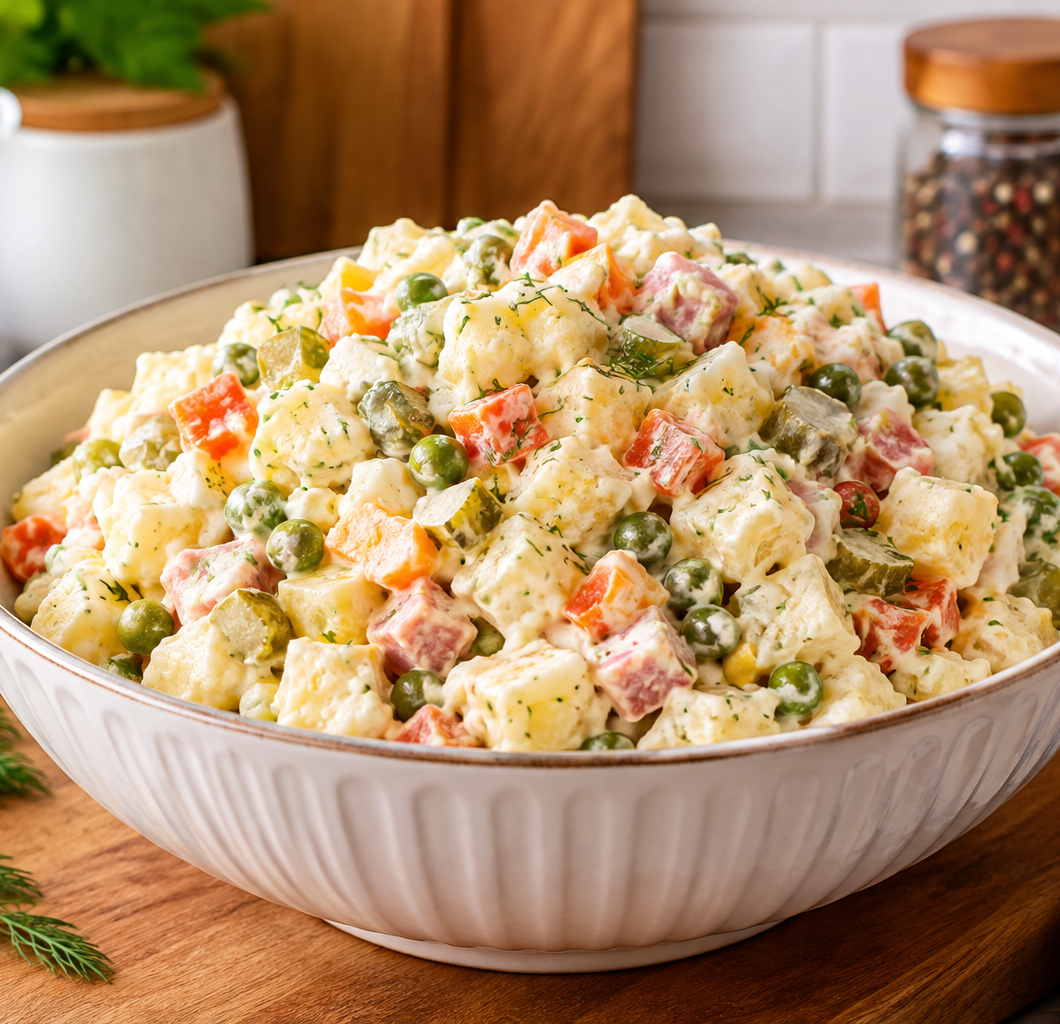
Russian Potato Salad Recipe (Olivier)
A classic Russian Potato Salad, also known as Olivier Salad, made with tender potatoes, carrots, sweet peas, hard-boiled eggs, summer sausage, dill pickles, green onions, dill, and creamy mayonnaise.
8-10
servings25
minutes20
minutes401
kcal45
minutesIngredients
4 medium potatoes, washed and peeled, if desired (2 lbs/900 g)
3 medium carrots, washed and peeled (10 oz/300 g)
1 tablespoon table salt
½ tablespoon white vinegar
4 hard-boiled eggs
7 oz (200 g) summer sausage
4 oz (100 g) dill pickles
1 (15 oz) can sweet peas, drained
1 teaspoon dill paste or fresh dill
4–5 green onions
1 cup mayo
Salt and pepper to taste
Instructions
- Cut the potatoes and carrots into small, uniform cubes.
- Place the diced potatoes and carrots in a large pot and add enough water to cover them.
- Add the table salt and white vinegar. Bring the water to a boil over medium-high heat.
- Reduce the heat to medium and cook until the potatoes are tender and cooked through, about 15 minutes.
- Drain the potatoes and carrots, then allow them to cool to room temperature.
- While the vegetables cook and cool, cut the summer sausage and dill pickles into small cubes.
- Chop the green onions.
- Cut the hard-boiled eggs into small cubes. If using fresh dill, chop it finely.
- Add the cooled potatoes and carrots to a large bowl.
- Add the summer sausage, dill pickles, drained sweet peas, and green onions.
- Add the mayonnaise and dill, then gently mix until the ingredients are well combined.
- Season with salt and pepper to taste.
- Cover the bowl with plastic wrap and refrigerate for at least 1 hour before serving.
- Serve the Russian Potato Salad chilled.
Nutrition Facts
- Calories: 401kcal
- Fat: 30g
- Carbohydrates: 22g
- Sugar: 3g
- Protein: 10g



)