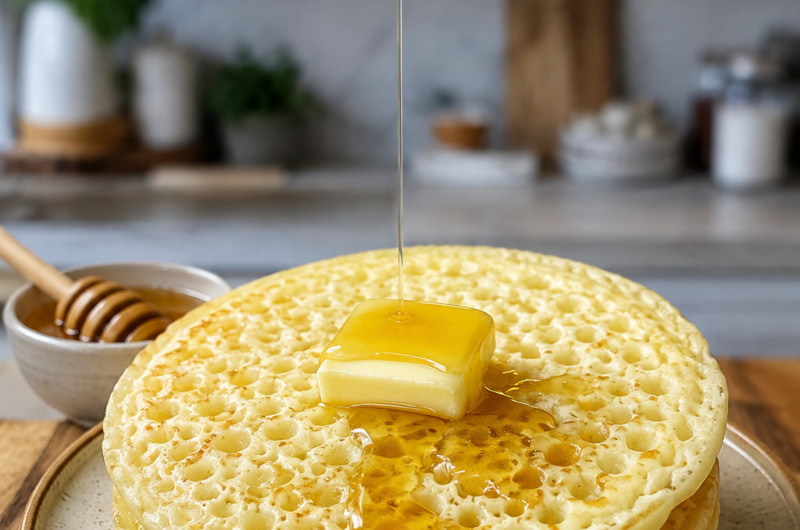
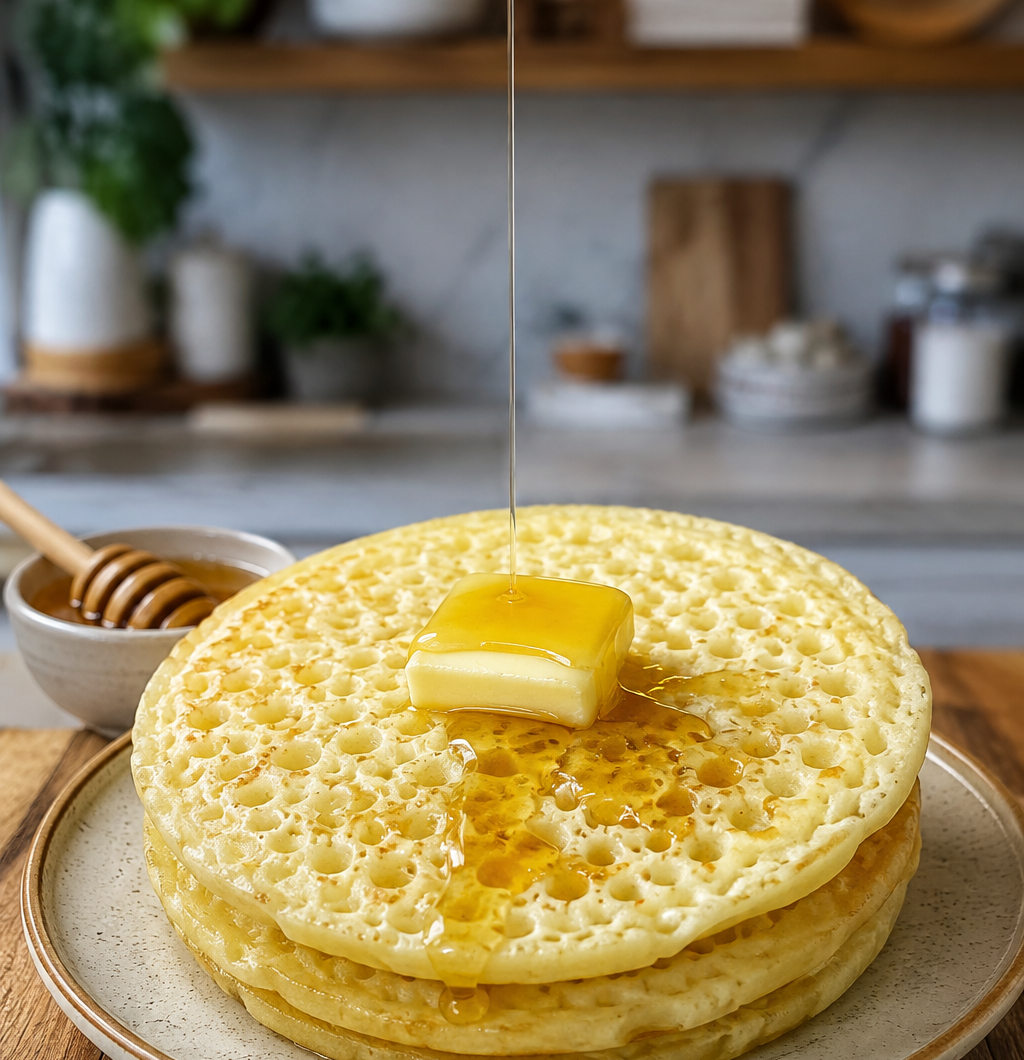
Moroccan pancakes, known as Baghrir, are a traditional Moroccan breakfast made with semolina, flour, yeast, and baking powder. They are thin, soft, and full of tiny holes across the surface. These small holes give Baghrir its familiar appearance and allow butter, honey, or syrup to soak into every bite.
Why Baghrir Is Different
Unlike regular pancakes, Baghrir is usually cooked on one side only. As the batter cooks, hundreds of tiny holes form on the surface, while the bottom becomes lightly golden. The result is a pancake with a soft, spongy texture that is very different from thick American-style pancakes.
A Simple Moroccan Breakfast
This Moroccan pancake recipe uses basic ingredients that are easy to find in most kitchens. Warm water, dry yeast, semolina, all-purpose flour, salt, and baking powder create the batter. There is no need for complicated preparation, special equipment, or a long list of ingredients.
How the Batter Comes Together
The batter starts in a blender, which makes the preparation quick and helps combine the semolina and flour smoothly. Warm water is blended with the dry yeast, flour, semolina, and salt until everything is well mixed. Baking powder is added afterward and blended into the mixture.
The Importance of Batter Consistency
The consistency of Baghrir batter is important because it needs to be thinner than ordinary pancake batter. A thin batter spreads easily across the skillet and gives the characteristic holes enough space to develop. If the mixture looks too thick after resting, add water gradually until it reaches the correct consistency.
Why the Batter Needs to Rest
After blending, the batter needs time to rise. Cover the container and allow it to rest for about 30 minutes. During this period, the yeast helps develop the batter and contributes to the light texture of the finished Moroccan pancakes.
Preparing the Skillet
An 8-inch skillet works well for this recipe because it gives the batter enough room to spread into a neat round pancake. Heat the skillet over medium heat before adding the batter. The pan should be hot enough for the pancake to begin cooking immediately, but it should not be so hot that the bottom becomes dark before the surface is cooked.
Cooking Moroccan Pancakes
Pour about half a cup of the prepared batter into the center of the heated skillet. It should naturally spread toward the edges. If it does not spread easily, the batter may be too thick. Add water one tablespoon at a time, mix well, and test again until the batter flows easily.
The Signature Holes
One of the easiest ways to recognize properly cooked Baghrir is by the small holes that appear all over the top. As the pancake cooks, the surface gradually changes from wet to dry while the holes become more visible. This is what gives Moroccan pancakes their soft, porous texture.
When Baghrir Is Done
Baghrir generally takes about two minutes to cook, although the exact time can vary slightly with the skillet and heat level. Unlike many pancake recipes, there is no need to flip these pancakes. Remove one when there is no obvious uncooked batter remaining on the surface.
Avoiding Overcooking
Keep an eye on the edges while the pancake cooks. If the edges begin to curl upward, the pancake may have stayed on the skillet too long. Overcooking can make Baghrir less soft, so remove it once the surface has cooked through and the characteristic holes are clearly formed.
Cooling Before Serving
Let the pancakes cool slightly after removing them from the skillet. Freshly cooked Baghrir is delicate, and giving it a short rest makes it easier to handle. You can continue cooking the remaining batter while the finished pancakes rest on a plate.
Traditional Serving Ideas
Baghrir is traditionally served with butter and honey, which makes a simple combination for breakfast or tea time. The butter melts into the tiny holes while honey adds sweetness. Because the pancake has a porous surface, it holds sauces and toppings particularly well.
A Savory Serving Option
Although Baghrir is commonly associated with sweet toppings, it can also be served in a savory way. One suggested option is to roll the pancakes with olive oil and chopped hard-boiled eggs. This gives the soft semolina pancakes a more filling and savory character.
Serving With Syrup
If you do not have honey or prefer another topping, your favorite syrup can also be used. Pour it lightly over the warm pancakes so that it can settle into the small holes. The simple flavor of Baghrir makes it easy to pair with different sweet toppings without changing the basic recipe.
Semolina in Baghrir
Semolina is one of the main ingredients that gives this Moroccan pancake recipe its particular texture. It works alongside all-purpose flour to create a batter that cooks into a soft, porous pancake. Using the listed amount of semolina helps maintain the balance of the original recipe.
The Role of Yeast
Dry yeast is used to help the batter rise during its resting period. This step should not be skipped because the resting time is part of the preparation process. After about 30 minutes, the batter should look ready for cooking and should have a thinner consistency than standard pancake batter.
The Role of Baking Powder
Baking powder is added after the initial blending of the batter. It works with the yeast to help create the light structure associated with Baghrir. Mixing it into the batter before the resting period ensures that it is evenly distributed throughout the mixture.
Making Baghrir at Home
This easy Moroccan pancake recipe is suitable for a simple homemade breakfast because most of the work happens in the blender and skillet. Once the batter has been prepared and rested, each pancake cooks quickly. The most important part is learning to judge the batter consistency and skillet temperature.
Troubleshooting Thick Batter
If your first pancake does not spread toward the edges of the skillet, do not immediately increase the heat. The batter may simply need more water. Add one tablespoon at a time, mix thoroughly, and check the consistency again. This gradual approach prevents the batter from becoming too thin.
Getting Even Pancakes
Use roughly the same amount of batter for each pancake to keep the batch consistent. About half a cup is recommended for an 8-inch skillet. Pouring the batter into the center and allowing it to spread naturally helps create an even round shape.
Keeping the Heat Moderate
Medium heat is a good starting point for Baghrir. Excessive heat can cause the bottom to brown too quickly while the top remains wet. Moderate heat gives the pancake enough time to cook through and develop the small holes without making the edges dry or curled.
A Family-Friendly Recipe
The mild flavor and soft texture of Moroccan pancakes make them easy to serve to different age groups. The basic recipe is not heavily seasoned, so toppings can be adjusted according to preference. Honey and butter create a traditional sweet serving, while olive oil and egg provide a savory alternative.
Moroccan Breakfast Tradition
Baghrir is a well-known Moroccan pancake that is often enjoyed as part of breakfast or a tea-time spread. Its unusual appearance comes from the many holes formed during cooking. The combination of semolina, yeast, and baking powder creates a pancake that is soft rather than dense.
How to Serve a Batch
Once all eight pancakes are cooked, arrange them on a serving plate and allow them to cool slightly. Serve them with butter and honey, syrup, or a savory topping. Because Baghrir is naturally soft and absorbent, toppings can be added just before serving for the best texture.
Making the Recipe Successfully
The recipe is straightforward, but three details make the biggest difference: the batter should be thin, the batter should rest for about 30 minutes, and the skillet should remain at medium heat. Watching the surface while cooking is also important because the holes provide a clear sign that the pancake is progressing properly.
Notes for the Batter
If the batter is too thick, add water in one-tablespoon amounts until it reaches the right consistency. Avoid adding a large quantity of water at once because it is easier to thin the mixture gradually than to correct a batter that has become excessively thin.
Notes for Cooking
Baghrir should not be flipped during cooking. Watch the top rather than waiting for the bottom to become deeply browned. When there is no obvious uncooked batter on the surface, the pancake is ready to remove from the skillet.
Notes for Serving
For a traditional sweet presentation, serve Baghrir with butter and honey. For something savory, try olive oil and finely chopped hard-boiled eggs. You can also use your preferred syrup if you want a simple sweet topping that is easy to prepare.
Moroccan Pancakes
Soft and spongy Moroccan pancakes made with semolina, all-purpose flour, yeast, and baking powder. These thin pancakes develop small holes across the surface as they cook and can be served with butter and honey, syrup, or a savory topping.
1
servings35
minutes20
minutes39.9
kcal55
minutesIngredients
2 ½ cups warm water
½ tablespoon dry yeast
1 cup semolina
½ cup all-purpose flour
A dash of salt, about ⅛ teaspoon
½ tablespoon baking powder
Instructions
- Add the warm water, dry yeast, semolina, all-purpose flour, and salt to a blender. Blend until the ingredients are well combined and the mixture is smooth.
- Add the baking powder to the blended mixture and blend again until it is evenly incorporated. Transfer the batter to a container, cover it, and let it rest for about 30 minutes.
- After resting, check the batter. It should be thin rather than thick like regular pancake batter. If necessary, add water one tablespoon at a time until it reaches the proper consistency.
- Heat an 8-inch skillet over medium heat. Pour about ½ cup of batter into the skillet and allow it to spread toward the edges. Small holes should begin appearing across the surface as it cooks.
- Continue cooking for about 2 minutes, or until there is no obvious uncooked batter remaining on top. Do not flip the pancake. Remove it from the skillet and repeat with the remaining batter.
- Let the pancakes cool slightly before serving. Serve traditionally with butter and honey, or use olive oil with chopped hard-boiled eggs for a savory option. Your favorite syrup can also be served with the pancakes.
Nutrition Facts (approximate nutrition per serving)
- Calories: 39.9kcal
- Carbohydrates: 8.7g
- Fiber: 0.4g
- Sugar: 0.5g
- Protein: 1.3g
- Calcium: 17mg