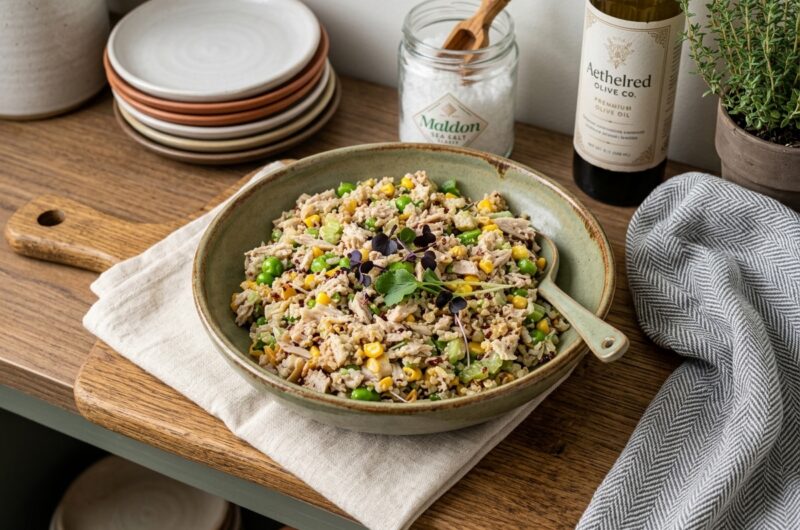
Matthew McConaughey’s Tuna Salad is a creamy, protein-rich tuna salad packed with contrasting flavors and textures. Instead of combining only canned tuna and mayonnaise, this recipe adds sharp cheddar cheese, hard-boiled eggs, sweet peas, dill pickles, red onion, and fresh parsley. A creamy dressing made with mayonnaise, Italian dressing, Dijon mustard, and lemon juice brings everything together while keeping the salad tangy, savory, and satisfying.
This easy tuna salad recipe requires no cooking apart from preparing the hard-boiled eggs beforehand. Most of the work involves draining, chopping, whisking, and gently folding the ingredients together. Preparation takes approximately 15 minutes, followed by at least 30 minutes of chilling. The finished salad can be served with crackers, piled onto bread, tucked into lettuce cups, or used as a filling for croissants and avocados.
Why You Love This Tuna Salad
The combination of ingredients makes this tuna salad considerably more interesting than a basic tuna-and-mayo mixture. Tuna provides a savory foundation, while sharp cheddar adds richness and a stronger cheese flavor. Hard-boiled eggs contribute another soft, satisfying texture, and peas bring a subtle sweetness. Chopped dill pickles and red onion cut through the richer ingredients with acidity and crunch.
The dressing is equally important. Mayonnaise provides the creamy base, while Italian dressing introduces herbs and acidity. Dijon mustard and lemon juice add brightness, helping balance the richness of the mayonnaise and cheddar. Garlic powder and black pepper provide simple seasoning without overpowering the tuna. Together, these ingredients create a creamy tuna salad with a combination of savory, tangy, fresh, and slightly sweet flavors.
A Protein-Rich Tuna Salad
Canned tuna is naturally rich in protein, making it the primary protein source in this recipe. Four 5-ounce cans are used for one batch, providing a substantial tuna base for six to eight servings. The addition of two hard-boiled eggs and one cup of cheddar cheese provides additional protein, making this recipe considerably more protein-focused than many vegetable-based salads.
The exact amount of protein per serving will depend on the brand and type of tuna, cheddar cheese, mayonnaise, Italian dressing, and serving size. Because the original recipe does not provide calculated nutritional values, it is better not to claim an exact protein amount without calculating it from the specific products used.
Choosing Tuna for the Best Results
Since tuna is the main ingredient, its quality has a noticeable influence on the finished salad. The recipe calls for four cans of canned tuna, each weighing five ounces. Tuna packed in water works well, although tuna packed in oil can also be used as long as it is thoroughly drained before mixing.
Draining is particularly important because excess liquid can make the dressing watery and dilute the flavors. Allow the tuna to drain thoroughly before transferring it to the mixing bowl. Once drained, use a fork to gently separate any larger pieces rather than aggressively mashing them. Maintaining some texture produces a chunkier, more appealing tuna salad.
Preparing the Vegetables and Mix-Ins
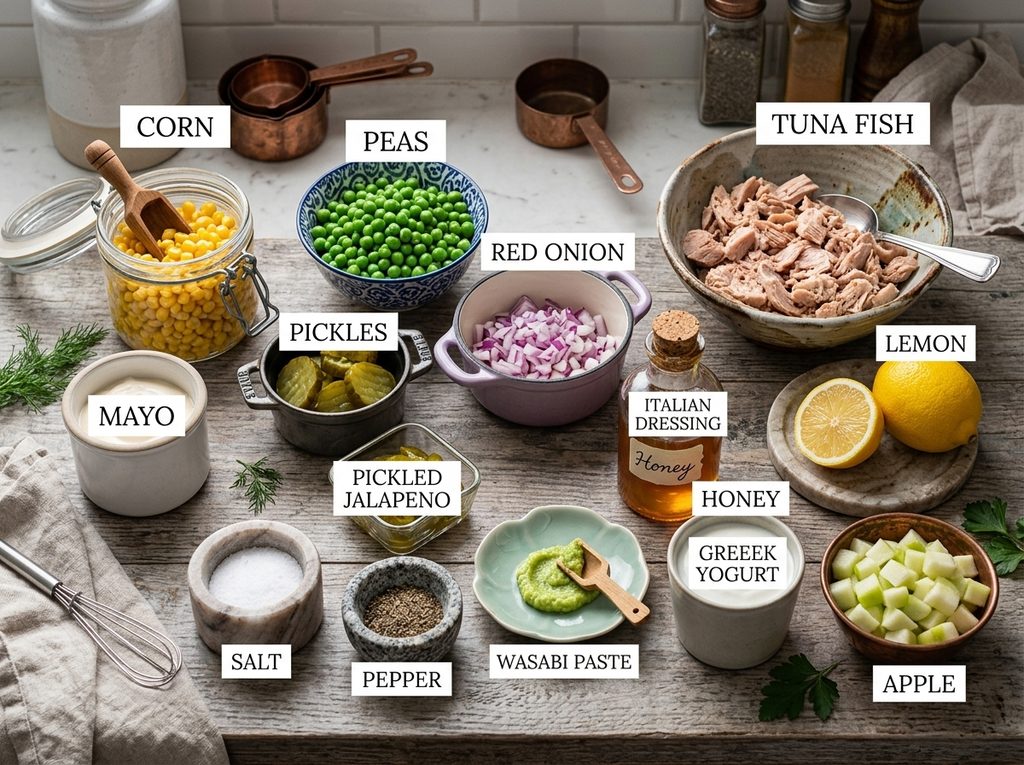
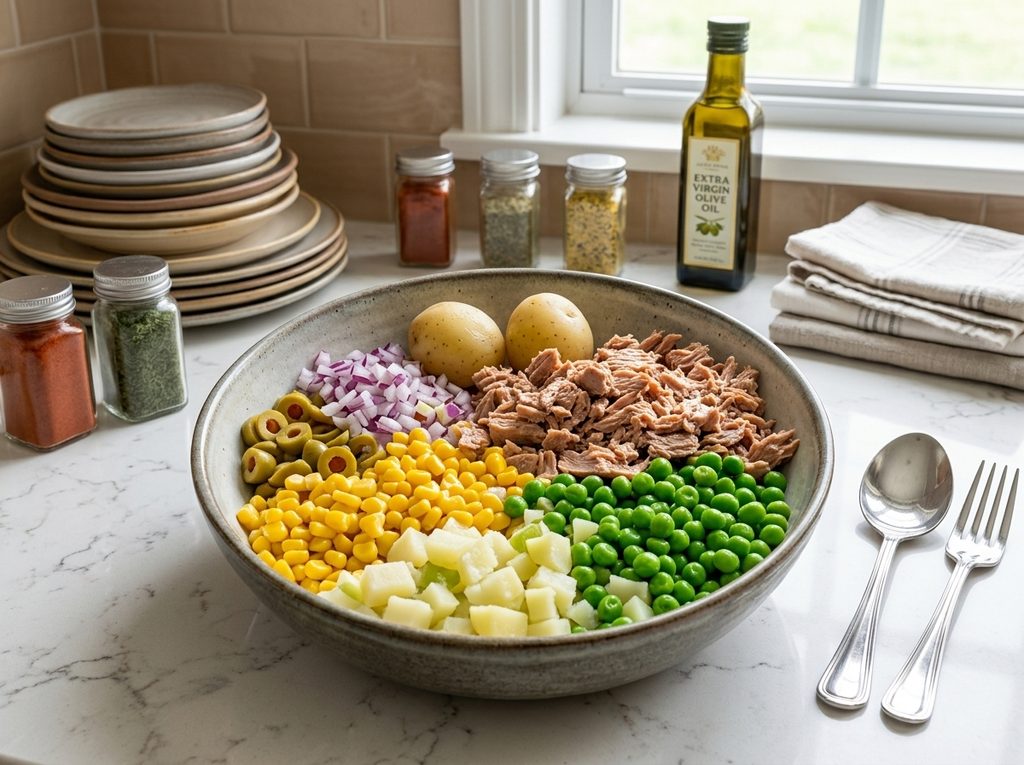
Preparing all the ingredients before mixing makes this recipe quick and straightforward. Finely dice the red onion so its stronger flavor is distributed evenly rather than concentrated in large pieces. Chop the dill pickles into small pieces, thaw the frozen peas completely, cut the cheddar into small cubes, and chop the hard-boiled eggs.
Small, evenly sized pieces create a better overall texture because each serving receives a balanced combination of tuna, cheese, vegetables, eggs, and dressing. Fresh parsley can be chopped at the same time and kept ready for assembly. Once everything is prepared, the actual mixing process takes only a few minutes.
Making the Creamy Tuna Salad Dressing
The dressing is made separately before being added to the tuna. Combine mayonnaise, Italian dressing, Dijon mustard, lemon juice, garlic powder, and black pepper in a medium bowl. Whisk until smooth and evenly blended. Making the dressing separately helps distribute the seasonings throughout the salad instead of leaving pockets of mustard, lemon, or garlic.
Each dressing ingredient has a specific role. Mayonnaise provides richness and the familiar creamy consistency associated with tuna salad. Dijon mustard contributes sharpness, lemon juice adds fresh acidity, and Italian dressing introduces additional herbal flavor. Garlic powder and black pepper complete the seasoning without requiring a complicated mixture of spices.
How to Assemble Tuna Salad
Once everything is prepared, place the drained tuna in a large mixing bowl and gently separate the larger pieces with a fork. Add the red onion, dill pickles, thawed peas, cheddar cheese, hard-boiled eggs, and chopped parsley. Distributing the ingredients around the bowl before adding the dressing makes them easier to combine evenly.
Pour the prepared dressing over the tuna mixture. Using a spatula or large spoon, gently fold everything together until evenly coated. Avoid vigorous stirring because it can break the tuna, eggs, peas, and cheese into smaller pieces and produce a mushy consistency. The goal is a creamy salad that still contains clearly recognizable pieces of its main ingredients.
Why Chilling Improves Tuna Salad
Although the salad can technically be eaten immediately after mixing, refrigerating it for at least 30 minutes produces a better result. During chilling, the tuna and other ingredients have time to absorb some of the dressing while the flavors become more integrated.
If your schedule allows, preparing the tuna salad several hours before serving can develop the flavor even further. Keep it covered in an airtight container while refrigerated. Chilling also makes this recipe convenient for meal preparation because it can be assembled ahead instead of requiring last-minute cooking.
Serving Ideas
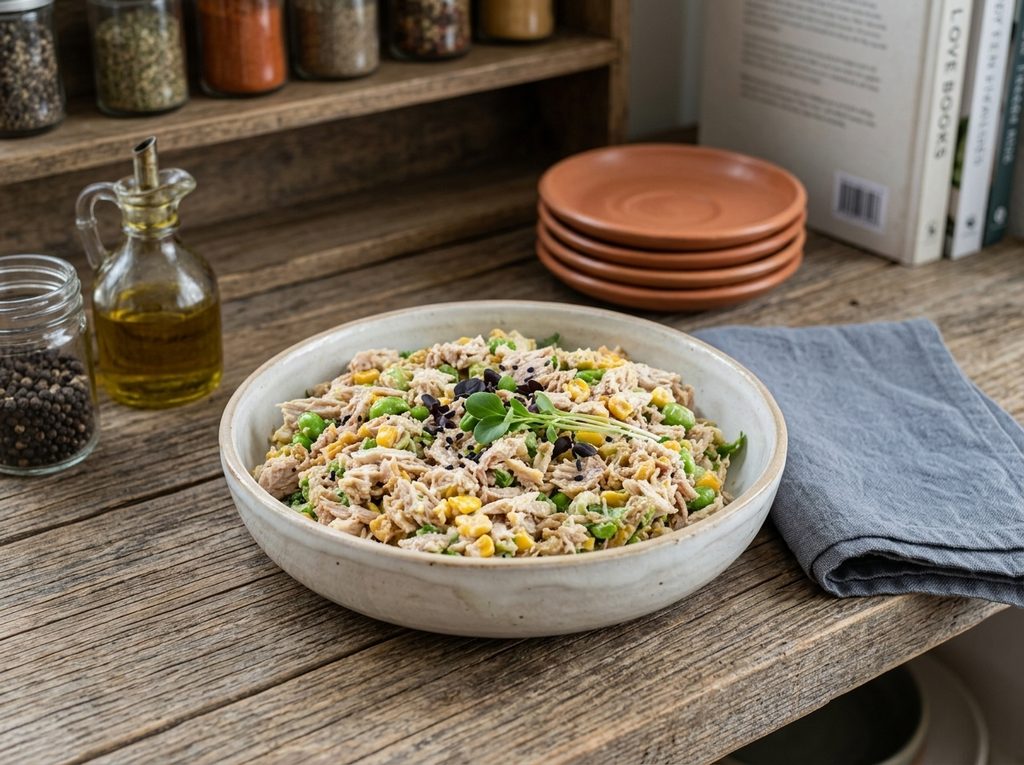
One of the simplest ways to serve this tuna salad is with crisp crackers. The creamy salad and crunchy crackers provide an easy contrast in texture and make a convenient lunch or snack. For a more traditional meal, spoon the tuna salad onto bread and add lettuce, tomato, or cucumber to create a filling tuna salad sandwich.
A buttery croissant creates a richer serving option, while lettuce cups offer a lighter alternative. The salad can also be spooned into halved avocados for an attractive presentation. These different serving methods make it possible to use the same batch for several meals without serving it exactly the same way every time.
Spicy Tuna Salad Variation
For people who enjoy heat, the original recipe allows a spicy variation using diced jalapeño, hot sauce, and crushed red pepper flakes. These additions work particularly well with the creamy mayonnaise dressing because the richness helps balance the heat.
When making a spicy version, consider adding the hotter ingredients gradually. This allows you to control the intensity without overwhelming the tuna, cheddar, pickles, and other flavors. The finished spicy tuna salad can be served in sandwiches, wraps, lettuce cups, or alongside crackers.
Mediterranean Tuna Salad Variation
A Mediterranean-style variation can be created with kalamata olives, feta cheese, diced cucumber, and fresh dill. These ingredients shift the flavor away from the cheddar-and-pickle profile of the original while retaining the same basic preparation method.
Cucumber adds freshness and crunch, olives contribute a salty flavor, feta adds richness, and dill brings a fresh herbal note. Because olives and feta can both be salty, taste the salad before adding additional salt. This same approach is useful with the original version because tuna, pickles, cheese, and dressing can already contribute substantial seasoning.
Extra Crunchy Tuna Salad
If you prefer more texture, the recipe suggests adding diced celery, bell peppers, and chopped almonds. These ingredients create additional crunch without requiring changes to the basic dressing or preparation method. They can simply be folded into the tuna mixture along with the other ingredients.
Crunchy additions are particularly useful when the salad will be eaten from a bowl or served in lettuce cups. They provide contrast to the soft tuna, eggs, and creamy dressing. If preparing the salad far ahead, chopped almonds can be added closer to serving time if you want them to retain maximum crunch.
Lighter Tuna Salad Option
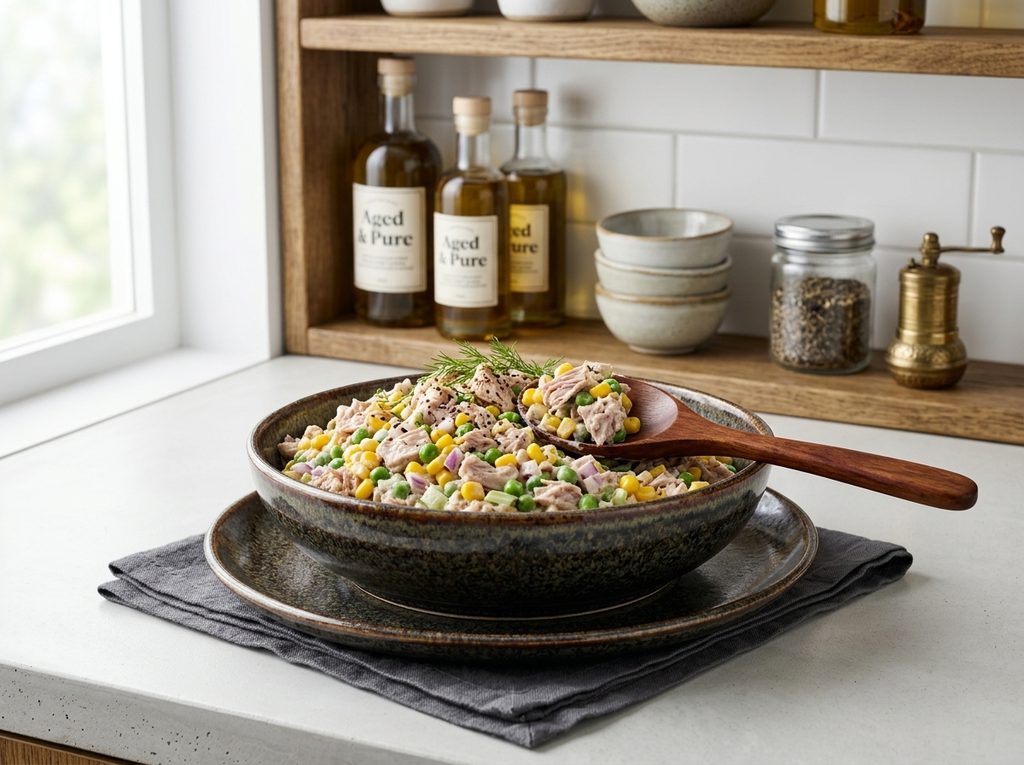
For a lighter variation, half of the mayonnaise can be replaced with plain Greek yogurt. Greek yogurt maintains creaminess while providing a tangier flavor and additional protein. It pairs naturally with the Dijon mustard, lemon juice, tuna, and fresh parsley already included in the recipe.
However, this substitution changes the original ingredient formula. If publishing the recipe exactly as supplied, keep the full mayonnaise quantity in the main recipe card and mention Greek yogurt only as an optional variation. This keeps the original recipe intact while giving readers an alternative preparation method.
Common Mistakes to Avoid
Failing to drain the tuna thoroughly is one of the biggest mistakes because excess liquid can make the salad watery. Another common problem is overmixing. Tuna, eggs, peas, and cheese should remain recognizable rather than being crushed into a uniform paste, so fold the ingredients gently instead of stirring aggressively.
Adding salt too early can also create an overly salty salad. Canned tuna, cheddar cheese, dill pickles, Italian dressing, and mayonnaise may already contribute salt. Assemble the salad first, taste it, and then decide whether additional salt is necessary. Finally, do not skip the chilling period because resting helps the dressing and other flavors come together.
Make-Ahead and Storage
This easy tuna salad is well suited to advance preparation. Once assembled, transfer it to an airtight container and keep it refrigerated. According to the supplied recipe, leftovers can be refrigerated for up to three days. If slight separation occurs during storage, gently stir the salad before serving.
Because the recipe contains tuna, mayonnaise, cheese, and eggs, proper refrigeration is important. Do not leave it sitting at room temperature for more than two hours. When preparing the salad for a gathering or picnic, keep it chilled until close to serving time and promptly refrigerate any leftovers.
Notes for the Best Tuna Salad
Drain the tuna very well before mixing to prevent a watery salad. Cut the onion and cheese into small pieces for even distribution, and thaw the peas completely. Fold rather than vigorously stir so the salad remains chunky. Taste before adding salt because several ingredients already contain sodium. Most importantly, refrigerate the finished salad for at least 30 minutes before serving so the flavors have time to develop.
Matthew McConaughey’s Tuna Salad
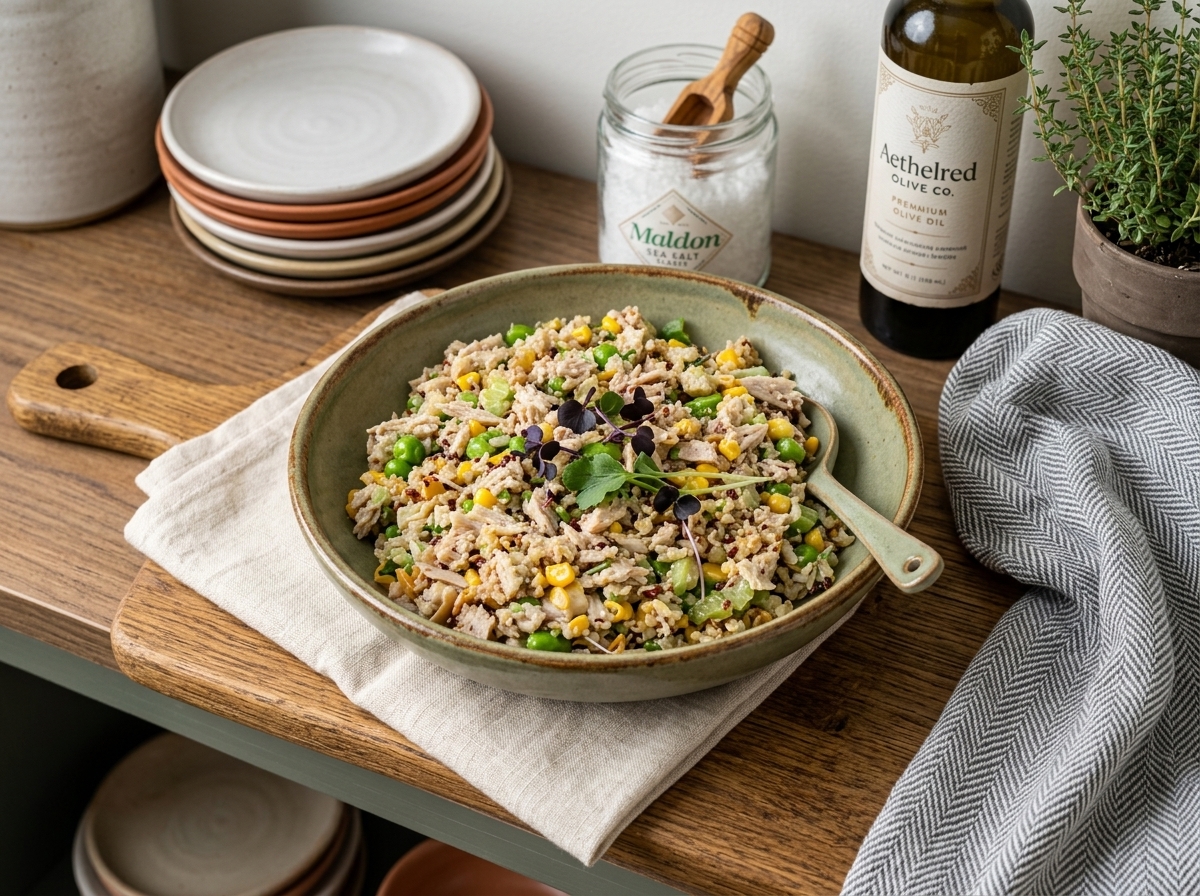
A creamy tuna salad loaded with cheddar cheese, hard-boiled eggs, peas, pickles, and red onion, finished with a tangy Dijon and Italian dressing.
6
servings15
minutes30
minutes45
minutesIngredients
4 (5 oz) cans tuna, drained
¾ cup mayonnaise
2 tbsp Italian dressing
1 tbsp Dijon mustard
1 tbsp lemon juice
½ cup red onion, diced
½ cup dill pickles, chopped
¾ cup frozen peas, thawed
1 cup sharp cheddar, cubed
2 hard-boiled eggs, chopped
½ tsp garlic powder
½ tsp black pepper
Salt, to taste
2 tbsp fresh parsley, chopped
Instructions
- Drain tuna and prep all ingredients.
- Whisk mayonnaise, Italian dressing, mustard, lemon juice, garlic powder, and pepper.
- Place tuna in a large bowl and gently break apart.
- Add onion, pickles, peas, cheddar, eggs, and parsley.
- Pour dressing over the mixture and gently fold.
- Taste and add salt if needed.
- Chill for at least 30 minutes.
- Serve cold with your preferred sides.