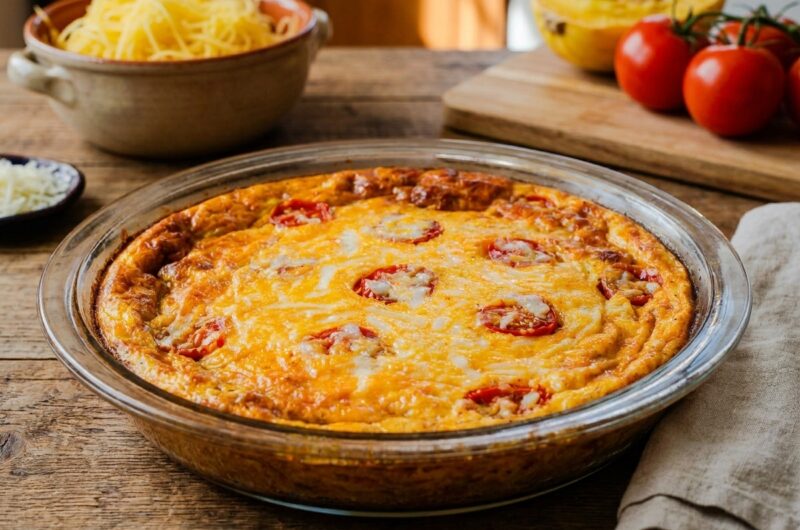
When you are craving a warm, deeply comforting breakfast pie but want to maintain a low-carbohydrate lifestyle while maximizing your daily protein efficiency, this savory spaghetti squash crustless quiche is the ultimate answer. It beautifully pairs a velvety, protein-dense custard base with tender, delicate strands of vegetable squash, creating a spectacular meal prep asset completely free of processed flour crusts or heavy industrial fats. This intuitive home cooking methodology completely redefines morning convenience, turning a simple garden vegetable into a structurally sound, highly satisfying dish that behaves exactly like a traditional gourmet quiche.
The core structural, practical, and wellness advantages of incorporating this crustless method into your regular kitchen routine include:
- Flawless Glycemic Optimization: By entirely bypassing the traditional buttery pastry crust, this formulation maintains highly stable glucose pathways, eliminating the sluggish morning energy dips associated with white flour products.
- Intelligent Nutrient Integration: Leveraging a thoughtful blend of whole farm eggs and thick strained yogurt injects an exceptional layer of protein density, supporting muscle synthesis and providing hours of genuine staying power.
- High-Volume Veggie Camouflage: Integrating thin strands of roasted squash adds volume, moisture, and dietary fiber without altering the traditional egg-pie texture, making it an excellent vehicle for introducing extra vegetables to selective eaters.
- Immaculate Fridge Stability: This recipe is engineered from the ground up to retain its structural density under cold storage, allowing busy home cooks to slice clean, uniform portions all week long without the crumb turning watery.
When you assemble this dish at home, you will discover that the interaction between the tangy cultured yogurt and a subtle dash of buffalo sauce perfectly brightens the rich, savory profiles of the whole eggs. In standard crustless egg bakes, the texture can occasionally turn rubbery or resemble a simple scramble, but the high-speed whisking process creates a delicate, custard-like emulsion. Every slice delivers a beautiful contrast between the soft, stringy vegetable strands, a golden cap of melted shredded cheese, and the juicy, sweet acidity of thin grape tomato rounds baked directly into the surface.
Section 1: The Ultimate Ingredients Blueprint
To consistently secure a firm, perfectly set custard center and a beautiful golden-brown crust, you must assemble pristine components and recognize exactly how each element functions inside this low-carb vegetable matrix.
For the core high-protein quiche custard and vegetable base, gather these exact quantities:
- 6 Large Eggs: The essential structural foundation of your entire quiche. Whole eggs provide the binding proteins necessary to coagulate the liquid into a firm, sliceable pie, while introducing high-quality amino acids and a rich mouthfeel.
- 2 Cups Spaghetti Squash Strands: This is your low-carb, veggie-packed alternative to traditional pastry crust. The squash must be roasted, shredded into long strands, and carefully pressed dry to remove the natural vegetation water before entering the mixing bowl.
- 1/2 Cup Plain Greek Yogurt: Introduces an incredibly thick, velvet-like creaminess to the custard mix without relying on heavy cream. This cultured dairy component boosts the protein density while contributing a subtle, refreshing tang.
- 2 tbsp Buffalo Sauce: Adds a professional layer of flavor complexity, infusing the egg custard with a bright vinegary acidity and a very subtle hint of background heat that cuts through the richness of the dairy.
- 3/4 tsp Sea Salt: Essential for accelerating the natural protein binding while drawing out the deep savory profiles of the surrounding egg yolks.
- 3/4 tsp Coarse Black Pepper: Distributed uniformly throughout the wet mix to provide a sharp, clean aromatic bite that balances the rich cheese layers.
- 1/2 Cup Mozzarella Cheese: Finely shredded and divided into two equal portions. This mild, clean cheese melts beautifully into the egg strands, creating long, luxurious pockets of cheese texture without overwhelming the dish.
- 3 to 4 Fresh Grape Tomatoes: Sliced thin into clean, delicate circular discs and arranged across the surface right before baking to add a beautiful visual garnish and a bright burst of natural sweetness.
Section 2: Step-by-Step Master Home Cooking Instructions
The preparation process moves exceptionally fast, requiring a brief roasting sequence for the squash followed by a simple wet whisking stage, strategic pan layering, and a controlled oven bake.
Follow these direct, unhurried home kitchen instructions to bring your savory crustless quiche to life:
- The Oven and Pan Setup: Begin by preheating your main kitchen oven to $375^\circ\text{F}$ ($191^\circ\text{C}$). Select a standard 9-inch pie dish, glass pie plate, or an equivalent ceramic baking dish. Coat the internal surfaces and sides of the pan thoroughly with a small spoonful of olive oil or non-stick cooking spray to guarantee a clean, effortless release after baking.
- Whisking the Custard Matrix: In a large, clean ceramic mixing bowl, crack your 6 large eggs. Add the 1/2 cup of plain Greek yogurt, 2 tablespoons of buffalo sauce, 3/4 teaspoon of sea salt, and 3/4 teaspoon of black pepper. Use a large hand whisk to beat these ingredients together vigorously for roughly 60 seconds, ensuring the dense yogurt fully dissolves into the eggs, creating a uniform, pale orange liquid emulsion.
- Integrating the Squash Grains: Measure out your 2 cups of pre-cooked, well-drained spaghetti squash strands. Drop them directly into the bowl of spiced egg liquid, using a large wooden spoon or silicone spatula to fold the vegetable strands through the fluid until they are completely coated and separated.
- Casting and Layering: Pour the entire contents of your mixing bowl into the greased 9-inch pie dish, using your spatula to smooth the surface so the squash strands sit flat and even. Take exactly half of your shredded mozzarella cheese (1/4 cup) and scatter it uniformly across the top of the wet egg layer.
- Decorating the Surface: Take your thin circular slices of grape tomatoes and arrange them in an attractive, even pattern across the surface of the quiche. Finish by scattering the remaining 1/4 cup of shredded mozzarella cheese directly over the tomato discs, creating a protective layer that will caramelize beautifully in the oven.
- The Baking Window: Slide the filled pie plate carefully onto the center rack of your preheated $375^\circ\text{F}$ ($191^\circ\text{C}$) oven. Bake undisturbed for 28 to 32 minutes. Keep a close watch on the oven during the final minutes; your quiche is perfectly cooked when the outer edges puff up slightly and take on a delicate golden-brown hue, and the center is completely set without wobbling.
- The Mandatory Structural Rest: Remove the blistering hot pan from your oven using heavy oven mitts and set it down onto an elevated wire cooling rack. Allow the quiche to sit undisturbed for 10 to 15 minutes before attempting to slice into it. This brief cooling window is absolutely vital, as it allows the expanded egg proteins to relax and contract, ensuring your slices hold their sharp, uniform wedge shape perfectly when served.
Section 3: Professional Kitchen Secrets for Quiche Success
Baking with high-moisture vegetables like squash requires adhering to strict structural guidelines to prevent your egg dishes from turning watery or soggy. Incorporate these expert insights into your routine:
- Execute the Ultimate Squash Squeeze: The absolute primary secret to avoiding a watery, separated quiche lies in removing the natural moisture from your squash strands. After shredding the cooked squash with a fork, place the strands into a clean kitchen towel or a stack of heavy paper towels and gather the corners, squeezing firmly over your sink to express the hidden moisture before measuring.
- Utilize Room Temperature Elements: Try to extract your whole farm eggs and Greek yogurt from the refrigerator roughly 20 minutes before you begin mixing. Bringing these components closer to room temperature ensures they blend into a perfectly uniform fluid emulsion without curdling or leaving tiny pockets of un-blended yogurt in the pan.
- Avoid the Trap of Over-Baking: Keep a close eye on your oven timer. Pull the quiche out the exact moment the center shifts from a wet liquid shine to a soft, matte set. If you leave the quiche in the oven until the center balloons up drastically, you will overcook the egg proteins, causing them to contract tightly and squeeze out their internal moisture, resulting in a tough, watery dish.
- The Advanced Stovetop Squash Blueprint: If you are new to handling spaghetti squash, the easiest way to prepare the veggie base is to slice a raw squash in half lengthwise, scoop out the internal seeds, rub the flesh with olive oil and salt, and roast cut-side down on a baking sheet at $400^\circ\text{F}$ ($204^\circ\text{C}$) for 50 to 65 minutes until the flesh shreds effortlessly with a fork.
Section 4: Strategic Ingredient Substitutions and Variations
This low-carb vegetable recipe is highly versatile, making it exceptionally simple to alter individual components based on your current pantry inventory or specific dietary goals:
- The Custard Fluid Alternatives: If you want to lower the overall fat content of the dish further, you can replace the 6 whole eggs with roughly 2 cups of liquid egg whites or a commercial liquid egg substitute, keeping in mind the final texture will emerge slightly less rich.
- The Vegetable Base Exchanges: If your market is completely out of spaghetti squash, you can replicate the texture beautifully by using finely shredded zucchini. If choosing zucchini, ensure you salt the raw shreds and squeeze out the excess moisture extremely well. Sautéed hash brown potatoes or a blend of finely chopped mushrooms and bell peppers can also step in smoothly.
- The Dairy Protein Swaps: If you run out of Greek yogurt, you can substitute it 1:1 with small-curd cottage cheese to boost the overall protein density even further while maintaining a rich texture. Traditional sour cream can also be used if you prefer a richer flavor profile.
- The Flavor Profile Transformations: The 2 tablespoons of buffalo sauce add a beautiful signature tang, but if you want to explore different flavor profiles, you can swap it for an equal amount of basil pesto, chunky tomato salsa, or a mild green chili reduction. For a simple, kid-friendly profile, you can omit the sauce entirely.
- The Cheese Alternatives: Mild mozzarella creates a beautiful, stretchy cap, but you can elevate the flavor significantly by swapping in sharp cheddar cheese, crumbled feta, tangy goat cheese, Swiss cheese, or finely grated parmesan depending on what you have on hand.
Section 5: Long-Term Preservation, Meal Prepping, and Reheating
Because this pristine, scratch-made breakfast pie contains zero chemical dough stabilizers or artificial preservatives, following these exact kitchen storage parameters will protect its quality:
- Short-Term Refrigeration: Once your baked quiche has completed its mandatory 15-minute rest on the cooling rack, slice it into wedges and place them inside an airtight glass storage container. Stored properly inside your refrigerator, the quiche will remain completely fresh, delicious, and ready-to-eat for up to 5 full days, making it an exceptional option for a Sunday prep routine.
- The Pro Freezer Strategy: This crustless quiche handles freezing remarkably well. Allow the pie to cool completely down to room temperature, slice into individual serving portions, and wrap each independent wedge tightly in plastic wrap before sliding them into a heavy-duty freezer bag. Label the front with the current date and store in the freezer for up to 4 months.
- The Rapid Reheating Routine: To warm a cold slice from the refrigerator, simply place it on a microwave-safe plate and heat on high for 30 to 60 seconds until steaming. If you prefer to restore the crisp texture of the cheese topping, place the slice onto a baking sheet and heat inside a preheated $350^\circ\text{F}$ ($177^\circ\text{C}$) oven or toaster oven for roughly 10 minutes.
- The Balanced Presentation Companion: To transform a single slice of this quiche into a beautiful, cafe-style brunch presentation, pair the warm wedge with a crisp green side salad tossed in a simple ginger dressing, a bowl of fresh seasonal fruit salad, or a side of crispy turkey bacon or artisan breakfast sausage.
Section 6: Frequently Asked Kitchen Questions
Home cooks often reach out wondering why their crustless quiches occasionally develop a thin pool of clear water at the bottom of the baking dish after sitting in the refrigerator for a day. This natural phenomenon is known as syneresis, and it occurs when egg proteins are cooked slightly too quickly or when high-moisture vegetables release their remaining cell water over time. To prevent this completely, ensure you squeeze your squash strands exceptionally well before mixing, and always stick to the moderate $375^\circ\text{F}$ ($191^\circ\text{C}$) baking temperature to keep the egg walls soft and elastic.
Another very frequent question is what specific size pan yields the best results for this recipe. This precise formulation is optimized for a standard 9-inch pie plate or tart dish. If you attempt to cast this specific egg volume into a massive 11 or 12-inch baking pan, the liquid custard will spread out much too thin across the wide surface area, causing the eggs to bake through much too quickly and dry out before the top cheese layer has an opportunity to melt and brown beautifully.
Section 7: Estimated Nutritional Profile
The following nutritional metrics are automatically calculated as a close approximation for a single complete serving wedge, based on a total yield of 3 large servings from this specific artisan quiche formula:
- Total Calories: 221 kcal
- Carbohydrates: 7g
- Protein: 19g
- Fat: 13g
- Saturated Fat: 5g
- Polyunsaturated Fat: 2g
- Monounsaturated Fat: 4g
- Trans Fat: 0.04g
- Dietary Cholesterol: 344mg
- Sodium: 1151mg
- Potassium: 281mg
- Fiber: 1g
- Sugar: 3g
- Vitamin A: 804 IU
- Vitamin C: 3mg
- Calcium: 196mg
- Iron: 2mg
Important Medical Disclaimer
Please Note: I am not a doctor, certified nutritionist, or medical professional. The nutritional information and dietary suggestions provided in this article are based purely on the historical recipe records and are intended for general educational and informational purposes only. Every individual’s body, health conditions, and dietary needs are completely different. Before making any significant changes to your diet, implementing new meal plans, or consuming specific ingredient adjustments, please consult with a qualified doctor or a registered healthcare professional to ensure it aligns safely with your personal health requirements.