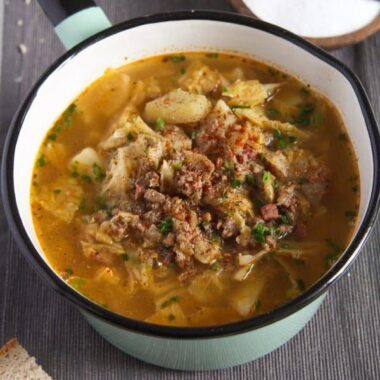
Traditional cabbage rolls are one of those comfort foods everyone loves and almost nobody wants to actually make on a weeknight. Rolling individual cabbage leaves around a filling, then baking everything carefully, is a real time investment. This soup takes the exact same flavor foundation — beef, cabbage, tomato, rice — and turns it into a single pot you can have on the table in under an hour.
What makes this format work so well is that nothing gets lost in translation. The cabbage still becomes tender in a savory tomato broth. The rice still absorbs all that surrounding flavor and thickens the soup the way it would inside a rolled cabbage leaf. The beef still forms a rich, savory base. You’re just skipping the rolling and baking, and letting the pot do the work of blending everything together instead.
It’s a practical, budget-friendly dinner that also happens to be one of those dishes that tastes even better as leftovers, which makes it a strong candidate for both weeknight cooking and batch meal prep.
Mise En Place: Getting Organized Before You Cook
Because this soup builds in layers — brown, sauté, then simmer everything together — having your ingredients prepped ahead of time keeps the process moving without gaps.
The protein station. One pound of lean ground beef (90% lean is the sweet spot here), plus salt and pepper for seasoning as it browns.
The aromatics station. One medium onion, finely chopped, and two teaspoons of fresh minced garlic, ready to go in right after the beef.
The vegetable station. Four cups of roughly chopped green cabbage and two carrots, peeled and thinly sliced.
The liquid and pantry station. Four cups of beef broth, three 8-ounce cans of tomato sauce, ½ cup of uncooked long-grain rice, one bay leaf, and three tablespoons of brown sugar — all measured out and within reach, since they go into the pot together in one step.
The garnish. Two tablespoons of fresh parsley, chopped, set aside until the very end.
Having all of this prepped means that once the beef starts browning, you’re not stopping to chop an onion or measure rice — everything after that first step comes together quickly.
Why Each Ingredient Is Doing Real Work
Lean ground beef forms the savory foundation of the soup. Browning it first, seasoned simply with salt and pepper, builds a base flavor that carries through everything added afterward. Using a lean blend keeps the soup hearty without turning greasy.
Onion and garlic go in right after the beef, releasing their natural sweetness and fragrance as they cook. This combination — beef, onion, garlic — is the same flavor backbone found in a lot of classic comfort food, and it’s what gives the broth its depth.
Green cabbage is the ingredient that defines this dish. Simmered in the tomato broth, it softens into tender bites while still holding enough texture to feel substantial, soaking up the surrounding flavor as it cooks.
Carrots bring natural sweetness that balances the acidity of the tomato sauce, while also softening into the broth and adding richness and color.
Beef broth and tomato sauce together form the liquid base of the soup — the broth adds depth, the tomato sauce adds the rich red color and tang that makes this dish instantly recognizable as cabbage-roll-flavored.
Long-grain rice goes in raw, directly into the pot, and cooks right there in the broth. As it cooks, it absorbs the surrounding flavors and naturally thickens the soup, which is also what gives it that authentic stuffed-cabbage-roll texture.
Bay leaf infuses the broth with a subtle herbal note during the simmer. It’s a small ingredient, but pulling it out before serving keeps the flavor balanced rather than overpowering.
Brown sugar might look unusual in a savory soup, but it balances the acidity from the tomato sauce, keeping the final broth from tasting too tart. It’s the ingredient responsible for that familiar, well-rounded cabbage-roll flavor profile.
Fresh parsley, sprinkled on right before serving, adds a burst of color and a light herbal freshness that brightens each bowl.
Workflow: How the Cooking Process Flows
- Brown the beef. Heat olive oil in a large soup pot or Dutch oven over medium-high heat. Add the ground beef, season lightly with salt and pepper, and cook 4 to 5 minutes, breaking it into crumbles until fully browned.
- Add the aromatics. Stir in the diced onion and minced garlic, cooking 2 to 3 minutes until the onion turns soft and fragrant.
- Combine the main ingredients. Add the cabbage, carrots, beef broth, tomato sauce, uncooked rice, bay leaf, and brown sugar all at once, stirring well so everything is evenly distributed.
- Season and bring to a simmer. Taste the broth and adjust salt and pepper as needed, then bring the soup to a gentle boil before reducing the heat to a simmer.
- Cook until tender. Cover the pot partially and let it simmer for about 25 minutes, until the rice is tender and the vegetables are fully cooked.
- Finish the soup. Remove and discard the bay leaf, then stir gently and adjust seasoning one more time if needed.
- Garnish and serve. Sprinkle fresh parsley over the soup right before ladling it into bowls.
Assembly Strategy: Why the Order Matters
This soup is essentially a one-pot build, but the sequencing does matter. Browning the beef first, on its own, lets it develop real flavor through direct contact with the hot pan — something that wouldn’t happen if it went in alongside the liquid ingredients. Adding the onion and garlic next, while the pot is still relatively dry, lets them soften and release their aromatics rather than simply boiling in broth from the start.
Once the vegetables, broth, tomato sauce, rice, bay leaf, and brown sugar all go in together, the rest of the cooking is mostly hands-off — a simmer that lets the rice cook through and thicken the broth naturally, while the cabbage and carrots soften into the final texture. The bay leaf’s removal at the end, and the parsley added only at serving, are both about timing flavor for maximum impact without letting either ingredient overstay its usefulness in the pot.
Approved Variations and Swaps
This recipe adapts easily to different preferences without losing its identity:
Protein swap. Ground turkey can replace the ground beef for a lighter version that still keeps the soup’s hearty texture.
Extra vegetables. Celery, bell peppers, or diced tomatoes can be added alongside the cabbage and carrots for additional nutrition and flavor.
Broth upgrade. Using homemade beef stock in place of store-bought broth adds extra depth of flavor.
Scaling up. The recipe doubles easily for larger gatherings or a bigger batch for the freezer.
Serving Suggestions
This soup is satisfying enough to eat on its own, but it pairs naturally with:
- Crusty bread
- Dinner rolls
- Garlic toast
- A simple side salad
For extra flavor at the table, some people like topping their bowl with additional parsley or freshly cracked black pepper.
Storage and Freezing
Refrigerator: Store in an airtight container for up to 4 days. Many people find the soup actually tastes better the next day, since the flavors have more time to develop and blend together.
Freezer: Once completely cooled, portion the soup into freezer-safe containers and freeze for up to 3 months — a good option for batch cooking and having a homemade meal ready on busy days.
Why This Recipe Works for Real Life
A few practical qualities make this soup a strong go-to option: it’s affordable, since cabbage, carrots, onions, and rice are all budget-friendly staples; it’s low-cleanup, since everything cooks in a single pot; and it’s approachable for a wide range of tastes, which makes it a solid choice for family dinners or larger gatherings. It also holds up well across seasons — hearty enough for cold weather, but light enough with its fresh vegetables to work in spring or a cooler summer evening too.
Easy One-Pot Cabbage Roll Soup
Description: A hearty, one-pot soup that captures all the classic flavors of traditional stuffed cabbage rolls — savory beef, tender cabbage, sweet carrots, and rice simmered in a rich tomato broth — without the time-consuming rolling and baking.
Duration:
- Prep Time: 15 minutes
- Cook Time: 30 minutes
- Total Time: 45 minutes
- Course: Soup, Main Dish
- Cuisine: American Comfort Food
- Servings: 6
Ingredients:
- 2 teaspoons olive oil
- Salt and black pepper, to taste
- 1 pound lean ground beef (90% lean recommended)
- 1 medium onion, finely chopped
- 2 teaspoons fresh minced garlic
- 4 cups roughly chopped green cabbage
- 2 carrots, peeled and thinly sliced
- 4 cups beef broth
- 3 cans (8 ounces each) tomato sauce
- ½ cup uncooked long-grain rice
- 1 bay leaf
- 3 tablespoons brown sugar
- 2 tablespoons fresh parsley, chopped
Instructions:
- Heat the olive oil in a large soup pot or Dutch oven over medium-high heat. Add the ground beef, season lightly with salt and pepper, and cook 4–5 minutes, breaking into crumbles until fully browned.
- Stir in the diced onion and minced garlic. Cook 2–3 minutes, until the onion is soft and fragrant.
- Add the chopped cabbage, sliced carrots, beef broth, tomato sauce, uncooked rice, bay leaf, and brown sugar. Stir well to combine.
- Taste the broth and add additional salt and pepper as desired. Bring to a gentle boil, then reduce heat to a simmer.
- Cover partially and simmer for approximately 25 minutes, until the rice is tender and the vegetables are cooked through.
- Remove and discard the bay leaf. Stir gently and adjust seasonings if needed.
- Sprinkle fresh parsley over the soup just before serving. Ladle into bowls and enjoy hot.
Notes:
- For extra flavor, use homemade beef stock in place of store-bought broth.
- Leftovers taste even better the next day as the flavors continue to develop.
- Store in an airtight container in the refrigerator for up to 4 days.
- Freeze individual portions for up to 3 months.
- Serve with crusty bread, garlic toast, or a fresh garden salad for a complete meal.
Medical Disclaimer: This content is provided for general informational and educational purposes only and is not intended as, and should not be substituted for, professional medical, nutritional, or dietary advice. Always ensure ground beef reaches a safe internal temperature and follow proper food safety practices when preparing, storing, and reheating this dish. If you have specific dietary restrictions, food allergies, or health conditions, consult a qualified healthcare provider or registered dietitian before making changes to your diet. The author and publisher assume no responsibility for any adverse effects resulting from the preparation or consumption of this recipe.