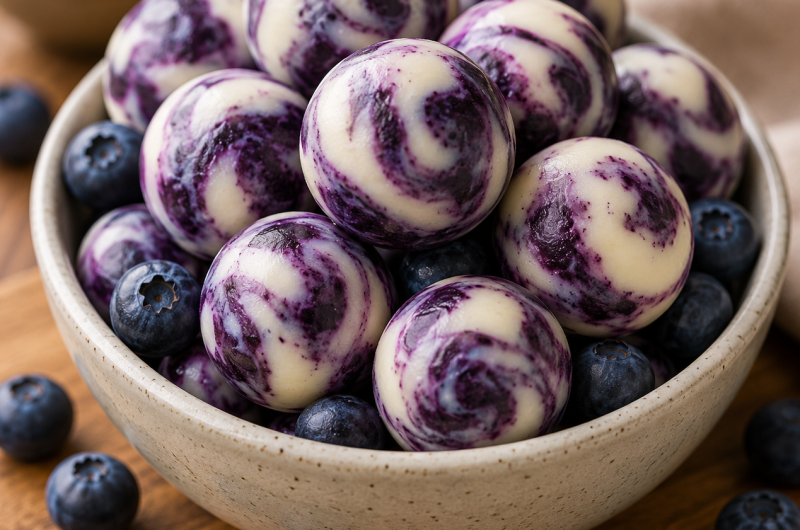
Blueberry Greek Yogurt Bites are an easy frozen snack made with just three simple ingredients: fresh blueberries, vanilla non-fat Greek yogurt, and stevia. Each blueberry is coated in creamy yogurt and frozen until firm, creating a refreshing bite with a smooth outer layer and naturally juicy fruit inside. With only a few minutes of hands-on preparation, these frozen yogurt blueberry bites are convenient for snacking, dessert, or a cool treat during warmer weather.
The simplicity of this recipe is one of its biggest advantages. There is no baking or cooking, and you do not need any specialized kitchen equipment. Once the blueberries have been coated, the freezer handles the remaining work. The finished bites can then be transferred to an airtight container and stored in the freezer, giving you an easy homemade frozen snack whenever you want something cold and sweet.
Why You Love This Recipe
These frozen blueberry yogurt bites combine creamy and fruity textures without requiring a complicated ingredient list. Fresh blueberries provide natural sweetness and a juicy center, while vanilla Greek yogurt creates a creamy coating. Stevia adds sweetness to the yogurt without requiring regular granulated sugar. Together, these three ingredients create a simple frozen fruit snack that is easy to portion and serve.
Another benefit is convenience. Preparation takes approximately 10 minutes, and the bites need about one hour in the freezer. Once frozen, they can be kept in an airtight container for later. This makes them particularly useful for meal prep or when you prefer having individual snacks available instead of preparing something from scratch each time.
Are These Blueberry Yogurt Bites High in Protein?
Despite the supplied title calling these “High Protein Blueberry Greek Yogurt Bites,” the nutritional information lists only 2 grams of protein per serving. Therefore, I would not recommend marketing this particular recipe as a high-protein recipe without changing the ingredients or serving size.
Greek yogurt is a protein-containing ingredient, but only one cup is divided across approximately ten servings in this recipe. That significantly reduces the amount of protein in each portion. A more accurate SEO-friendly name would be Blueberry Greek Yogurt Bites, Frozen Blueberry Yogurt Bites, or Easy Frozen Yogurt Blueberries.
Why Greek Yogurt Works Well
Greek yogurt is an excellent coating for frozen blueberries because of its thick consistency. Unlike thinner regular yogurt, Greek yogurt clings more easily to the berries and forms a noticeable creamy layer after freezing. Vanilla yogurt also contributes sweetness and flavor, complementing the naturally sweet and slightly tart blueberries.
The original recipe specifies non-fat vanilla Greek yogurt. Keeping the yogurt cold before coating the fruit can make it easier to work with, particularly if your kitchen is warm. Stir the yogurt and stevia until completely combined before adding any berries so the sweetness is evenly distributed throughout the coating.
Choosing the Best Blueberries
Fresh, firm blueberries are best for this recipe. Soft or overripe berries can release moisture and may become difficult to coat. Check the blueberries before starting and remove any that are damaged, excessively soft, or beginning to spoil.
After washing the blueberries, dry them thoroughly. This is one of the most important preparation steps because moisture left on the fruit can prevent the thick yogurt from adhering properly. Spread washed blueberries over a clean towel or paper towel and allow them to dry before coating.
Preparing the Yogurt Coating
Place the vanilla non-fat Greek yogurt in a medium mixing bowl and add the stevia. Stir until the sweetener is completely incorporated. Since the recipe contains only three ingredients, keeping this mixture smooth and evenly combined is important for consistent flavor.
The coating should remain thick enough to cling to the blueberries. There is no need to thin the yogurt with milk or water because that could make it more difficult for the coating to remain on the berries before freezing. Once the yogurt mixture is ready, begin coating the blueberries immediately.
Why You Should Coat the Berries in Batches
Instead of adding the entire pint of blueberries to the yogurt at once, divide them into two batches. Gently fold the first half into the yogurt until each blueberry is covered. Working with fewer berries at one time provides more room in the bowl and helps prevent them from rubbing against one another and removing the coating.
Gentle folding is preferable to vigorous stirring. Blueberries can bruise or burst if handled aggressively, releasing juice into the yogurt. Keeping the fruit intact gives the frozen bites a cleaner appearance and preserves the contrast between the creamy coating and juicy blueberry center.
Removing Excess Yogurt
Once the berries are coated, lift them individually from the bowl using a fork. Lightly tap the fork against the side of the bowl so excess yogurt falls back into the mixture. You want enough yogurt to create a creamy coating but not so much that large pools form underneath each berry.
This small step makes the frozen bites easier to separate and gives them a neater appearance. After removing excess yogurt, immediately transfer each coated berry to the prepared baking sheet.
Arranging Blueberries for Freezing
Line a baking sheet with parchment paper or a nonstick baking mat before starting. This prevents the yogurt coating from freezing directly onto the metal tray and makes the bites easier to remove once firm.
Arrange the coated blueberries in a single layer with a little space between them. Avoid allowing neighboring berries to touch because their yogurt coatings can freeze together. Once the first batch is arranged, repeat the coating process with the remaining blueberries until the tray is complete.
How Long to Freeze Yogurt Blueberries
Place the prepared tray in the freezer for approximately one hour. The exact time can vary slightly depending on your freezer, but the yogurt should be completely firm before the bites are transferred to a storage container.
Freezing the berries individually on the tray before storing them is important. If freshly coated berries are placed directly into a container, they can freeze together in one large cluster. Individually freezing them first allows you to remove just a few bites at a time later.
A Simple Frozen Dessert
These blueberry yogurt bites work well as a light dessert because they provide natural fruit sweetness and a creamy yogurt coating in small individual portions. They can be served straight from the freezer after dinner or placed in a chilled bowl for a refreshing warm-weather snack.
Because the bites are small, they can also be included on a snack board alongside fresh fruit. Their naturally colorful appearance makes them especially suitable for family gatherings, casual parties, or summer snacks without requiring additional decoration.
Other Fruits You Can Use
The same yogurt-coating technique can work with other fruits. The supplied recipe suggests raspberries, grapes, and strawberries as alternatives. Raspberries provide a more tart flavor, while frozen grapes develop a pleasantly firm and juicy texture.
Strawberries require a slightly different approach because of their larger size. Instead of folding them into the yogurt, whole strawberries can be individually dipped into the mixture before freezing. Regardless of the fruit selected, dry it thoroughly and leave enough space between pieces during freezing.
Optional Toppings
If you want additional texture, granola can be sprinkled over the yogurt-coated blueberries before freezing. Gently press it into the yogurt so it remains attached once frozen. Mini chocolate chips are another optional topping when you want to add a little chocolate flavor.
Fresh mint can be served alongside the frozen bites for presentation rather than being frozen into the coating. Optional toppings are not part of the three-ingredient base recipe and will alter the nutritional information, so they are best presented separately when publishing the recipe.
Serving Ideas
Serve the frozen blueberry bites directly from the freezer for the firmest texture. They can be portioned into small bowls for an after-dinner dessert or kept in individual freezer-safe containers for convenient snacks throughout the week.
For entertaining, add them to a fruit platter or snack board shortly before serving. Since the yogurt coating will soften as it warms, avoid leaving the bites at room temperature for an extended period. They taste best while the coating remains cold and firm.
Storage
After the yogurt coating has frozen completely, transfer the bites from the baking sheet into an airtight freezer-safe container. Because they were frozen separately first, they should remain relatively easy to separate when you want a serving.
The supplied recipe recommends enjoying them within approximately two weeks for the best texture and flavor. Keep them frozen until close to serving because the yogurt coating will gradually soften at room temperature.
Notes for the Best Results
Dry the blueberries completely before dipping because excess surface moisture can prevent the yogurt from sticking. Use fresh, firm berries rather than very soft or overripe ones. Fold the berries gently into the yogurt instead of stirring aggressively, and work in two batches for easier coating.
Leave space between the coated blueberries on the baking sheet so they freeze individually. Make sure the yogurt is completely firm before transferring the bites to an airtight container. Store them in the freezer and enjoy within about two weeks for the best overall quality.
High Protein Blueberry Greek Yogurt Bites
Easy frozen blueberry yogurt bites made with fresh blueberries, creamy vanilla Greek yogurt, and stevia. A simple three-ingredient frozen snack or light dessert.
10
servings10
minutes1
hour45
kcal1
hour10
minutesIngredients
1 pint blueberries (about 125)
1 cup vanilla non-fat Greek yogurt
1 tbsp stevia
Instructions
- Line a baking sheet with parchment paper.
- Mix Greek yogurt and stevia.
- Divide blueberries into two batches.
- Gently coat the first batch with yogurt.
- Lift berries with a fork and drain excess yogurt.
- Arrange separately on the baking sheet.
- Repeat with remaining blueberries.
- Freeze for about 1 hour.
- Transfer to an airtight freezer container.
Nutrition Facts
10 servings per container
- Amount Per ServingCalories45
- % Daily Value *
- Total Fat
.2g
0%
- Total Carbohydrate
11g
4%
- Total Sugars 7g
- Protein 2g 4%
* The % Daily Value tells you how much a nutrient in a serving of food contributes to a daily diet. 2,000 calories a day is used for general nutrition advice.