
French Dip Biscuits bring the familiar flavors of a classic French dip sandwich into a soft, golden biscuit. Each biscuit is filled with thinly sliced deli roast beef, caramelized onions, and melted provolone cheese. The finished biscuits are served with warm beef consomme for dipping, giving every bite a rich and savory taste.
This recipe is simple enough for a weeknight dinner, but it also works well for lunch, game-day food, family gatherings, or casual entertaining. Instead of building individual sandwiches with bread, the filling is tucked inside buttermilk biscuits and baked until golden. The warm dipping sauce makes these biscuit sandwiches especially satisfying.
What Makes These French Dip Biscuits So Good
The combination of roast beef, onions, provolone, and buttery biscuits gives this recipe plenty of flavor without requiring complicated preparation. The deli roast beef is already cooked, so there is no need to roast a beef cut from scratch. That makes these French dip biscuits much faster than a traditional roast beef dinner.
Caramelized onions are an important part of the recipe because they add sweetness and depth to the savory filling. They take about 15 minutes to cook, but most of the work is simply letting them soften and brown in butter. If you have extra time, preparing the onions ahead can make assembly even easier.
The Best Biscuits to Use
For this recipe, Southern Homestyle Buttermilk Biscuits work best, especially biscuits that are not flaky. The softer biscuit texture makes them easier to separate, roll, fill, and seal around the roast beef and cheese. Flaky biscuits can still be used if that is what you have, but the texture may be different.
Store-bought biscuits keep this recipe quick and convenient. If you already have homemade buttermilk biscuits available, they can also be used. The important part is choosing biscuits that can be separated into two pieces and rolled wide enough to hold the filling without becoming difficult to handle.
Why Caramelized Onions Matter
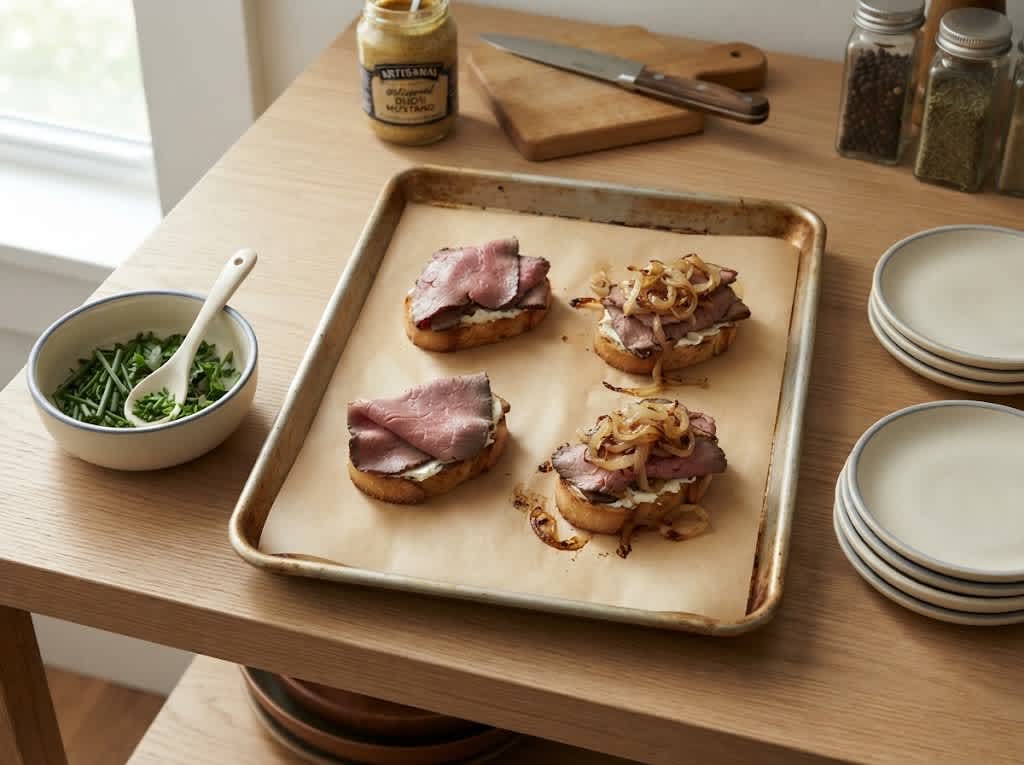
Thinly sliced yellow onion is cooked with unsalted butter until it becomes soft and lightly browned. This simple step gives the filling a deeper flavor and adds a mild sweetness that works especially well with roast beef. It is worth taking the extra few minutes to cook the onions properly rather than adding them raw.
If you are preparing the onions ahead of time, allow them to cool completely before storing them. Place them in an airtight container and refrigerate them for up to 3–4 days. Having the onions ready in advance can make these French dip biscuits much quicker to assemble.
Choosing the Roast Beef
Thinly sliced deli roast beef is an easy choice for these biscuit sandwiches. Since the beef is already cooked, you only need to divide it between the biscuit halves during assembly. Look for thin slices that are easy to layer without making the biscuits difficult to close.
The roast beef provides the main savory flavor in the filling, while the cheese and onions add richness and sweetness. You do not need a special cut of beef or a long cooking process. This is one reason the recipe is convenient when you want a French dip-style meal without making a full roast.
Provolone Cheese for the Filling
Provolone is used to give the biscuits a creamy, melted cheese layer. The original recipe uses eight slices, with each slice quartered before being added to the sandwiches. The smaller pieces make it easier to distribute the cheese evenly across all eight biscuits.
Cheese is not always included in a traditional French dip sandwich, but it works very well here. As the biscuits bake, the provolone melts around the roast beef and onions. If you prefer a different cheese, Swiss or Gruyere can be used as alternatives, although the original recipe is made with provolone.

Beef Consomme for Dipping
Warm beef consomme is what gives these biscuit sandwiches their classic French dip character. The condensed beef consomme is heated in a saucepan while the biscuits are baking, so it is ready when the biscuits come out of the oven.
There is no need to prepare a complicated dipping sauce when using canned beef consomme. It is an easy option that provides a warm, savory liquid for dipping each biscuit. Serve it on the side so everyone can dip the biscuits as much or as little as they like.
Preparing the Biscuit Dough
Begin by separating each of the eight biscuits into two pieces. This creates 16 biscuit halves, with eight used for the bottoms and eight saved for the tops. Rolling each piece to about four inches wide gives enough surface area for the roast beef, onions, and cheese.
Try not to overload the biscuit halves. Keeping the filling evenly distributed makes it easier to place the top biscuit over everything and press the edges together. A well-sealed biscuit will hold the filling better while it bakes and will be easier to pick up and eat.
Building the French Dip Biscuits
Once the biscuit pieces are ready, place eight halves on a parchment-lined baking sheet. Divide the thinly sliced roast beef evenly among them, followed by the cooked onions. Add the quartered provolone pieces on top of the filling before covering everything with the remaining biscuit halves.
Press the edges together gently to seal the sandwiches. The goal is not to create a perfectly tight seal, but to bring the dough together enough to keep the filling inside. A light coating of beaten egg on top helps the biscuits develop a golden, appealing finish as they bake.

Baking Until Golden Brown
The assembled biscuits are baked at 400°F until the tops are golden brown. The original cooking time is 15–17 minutes, but ovens can vary slightly, so keep an eye on the biscuits near the end of the baking time.
The biscuits should look fully baked and golden on top when they are ready. The cheese will be melted inside, and the roast beef and onions will be warmed through. Allowing the biscuits to cool briefly before serving can make them easier to handle.
Making the Dipping Sauce
While the biscuits are in the oven, heat the beef consomme in a medium saucepan over medium heat. It only needs about 3–5 minutes to become hot. Stir as needed and avoid letting it cook for longer than necessary.
Serve the warm consomme in small bowls or cups alongside the baked biscuits. Dipping the golden biscuit into the savory consomme adds moisture and gives the meal the familiar flavor of a French dip sandwich.
Homemade Au Jus Alternative
If you would rather prepare a quick homemade au jus instead of using beef consomme, the recipe can be made with butter, flour, beef broth, and Worcestershire sauce. This option creates a simple dipping sauce that works well with the roast beef and cheese filling.
For the sauce, use 4 tablespoons butter, 2 tablespoons all-purpose flour, 2 1/2 cups beef broth, and 1 tablespoon Worcestershire sauce. These quantities are for the optional au jus alternative and are separate from the main French Dip Biscuits ingredient list.
How to Make the Homemade Au Jus
Melt the butter in a saucepan over medium-high heat, then add the flour. Whisk the mixture until the butter and flour combine into a smooth roux. Slowly pour in the beef broth while continuing to whisk so the mixture stays smooth.
Continue whisking for 3–5 minutes after adding the broth. Stir in the Worcestershire sauce, then bring the mixture to a boil. Cook for about 5 minutes, or until the sauce is barely thickened. Salt and pepper can be added to taste if needed.

Making French Dip Biscuits in an Air Fryer
These biscuit sandwiches can also be cooked in an air fryer, which is useful when you want a smaller batch or prefer air-fried biscuits. Assemble the biscuits in the same way as the oven version, including the roast beef, caramelized onions, provolone, and beaten egg.
Place the assembled biscuits in the air fryer basket in batches so there is enough room for the hot air to circulate. Cook them at 350°F for 6–8 minutes. Check them toward the end of cooking because air fryers can vary in how quickly they brown biscuits.
How to Serve French Dip Biscuits
Serve the biscuits warm with a small bowl of heated beef consomme for dipping. The combination of the crisp golden exterior, tender biscuit, warm roast beef, melted provolone, and sweet caramelized onions makes a complete and satisfying bite.
These biscuits can be served as a dinner main course, but they also fit nicely into casual lunches and gatherings. For a party, you can arrange the baked biscuits on a serving platter and place the warm dipping sauce nearby so guests can serve themselves.
How to Store Leftover Biscuits
If you have leftover French Dip Biscuits, allow them to cool to room temperature before storing them. Place the biscuits in an airtight container and refrigerate them. They can be kept in the refrigerator for up to three days.
For the best texture, reheat the biscuits in the oven or air fryer. These methods help warm the filling while bringing some of the biscuit texture back. A microwave can also be used when speed is more important, although the biscuits may become softer.
Notes
Prepare the Onions Ahead
Caramelized onions can be made before assembling the biscuits. Let them cool completely, transfer them to an airtight container, and refrigerate for up to 3–4 days. This makes the recipe easier to prepare when you are short on time.
Use Thinly Sliced Beef
Thin deli roast beef is easiest to layer inside the biscuits. Avoid adding too much filling because overstuffed biscuits can be harder to seal and may allow the filling to escape during baking.
Keep the Dipping Sauce Warm
The beef consomme should be heated while the biscuits bake so everything is ready at the same time. Serve the sauce warm rather than cold for the best French dip experience.
Watch the Air Fryer
Air fryer cooking is faster than oven baking, so check the biscuits during the final few minutes. Cook in batches if necessary, leaving enough space around each biscuit for proper air circulation.

French Dip Biscuits
French Dip Biscuits are soft buttermilk biscuit sandwiches filled with thinly sliced deli roast beef, caramelized yellow onions, and melted provolone cheese. They are baked until golden brown and served with warm beef consomme for dipping. This easy French dip recipe is ready in about 40 minutes and can also be prepared in an air fryer.
8
servings10
minutes30
minutes336
kcal40
minutesIngredients
2 tablespoons unsalted butter
1 large yellow onion, halved and thinly sliced
1 can (8-count) Southern Homestyle Buttermilk Biscuits, not flaky
1 pound deli roast beef, thinly sliced
8 slices provolone cheese, quartered
1 can (10.5 ounces) beef consomme
1 large egg, beaten
Instructions
- Melt the unsalted butter in a medium skillet over medium heat. Add the thinly sliced yellow onion and cook for about 15 minutes, or until the onion is soft and lightly browned. Set the caramelized onions aside.
- Preheat the oven to 400°F and line a large baking sheet with parchment paper. Separate each biscuit into two pieces to make 16 biscuit halves. Roll each piece to about 4 inches wide. Place 8 biscuit halves on the prepared baking sheet. Divide the deli roast beef and cooked onions evenly among the biscuit halves, then place 4 quartered pieces of provolone cheese over each portion of filling.
- Cover each filled biscuit with one of the remaining biscuit halves. Press the edges of the dough together gently to seal the sandwiches. Brush the beaten egg over the tops of the assembled biscuits. Bake for 15–17 minutes, or until the biscuits are golden brown. While they bake, heat the beef consomme in a medium saucepan over medium heat for about 3–5 minutes, or until heated through.
- Remove the golden biscuits from the oven and serve them warm with the heated beef consomme on the side for dipping. For the air fryer method, cook assembled biscuits at 350°F for 6–8 minutes in batches.


