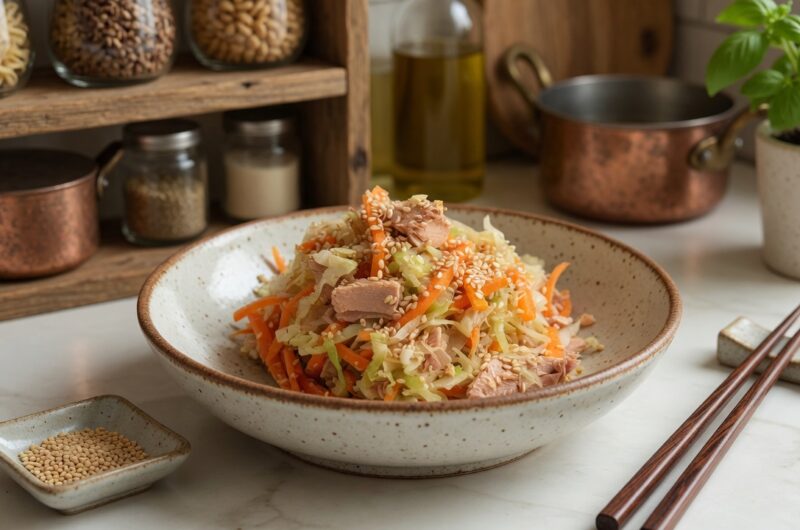
This tuna cabbage salad brings together crisp vegetables and protein-rich fish in a light, flavorful dish. The recipe skips mayonnaise entirely, relying instead on a simple Asian-style dressing that lets the natural flavors shine. You get a fresh, crunchy salad that works as a light lunch or side dish. The whole thing comes together in about thirteen minutes from start to finish.
Why Skip the Mayonnaise
Traditional tuna salads often drown in heavy, creamy mayonnaise that masks the other flavors. This version uses sesame oil, soy sauce, and chicken stock powder for a lighter approach. The dressing coats the vegetables and tuna without weighing everything down. You taste the cabbage, carrot, and tuna clearly with each bite. The result feels refreshing rather than heavy on your stomach.
Using Up Cabbage Efficiently
Buying a whole head of cabbage often leaves you wondering how to use it all before it goes bad. This salad solves that problem by using a good amount of cabbage in one dish. The blanching process softens the cabbage just enough while keeping its crunch. You can make this recipe multiple times throughout the week to work through a large cabbage head.
Nutritional Benefits of This Salad
Cabbage provides fiber, vitamin C, and vitamin K while staying very low in calories. Tuna brings lean protein and omega-3 fatty acids that support heart health. Carrots add beta-carotene for eye health and extra fiber. The minimal dressing keeps the calorie count reasonable while delivering satisfying flavor. Each serving gives you twenty-five grams of protein with plenty of vegetables.
Fresh Cabbage Preparation
Shredding cabbage into thin strips helps it cook quickly and blend well with the other ingredients. Aim for strips about three millimeters wide, roughly the width of a standard pencil. Consistent sizing ensures even cooking when you blanch the vegetables. A sharp knife makes this task easier, or you can use a mandoline slicer for speed. Keep your strips relatively uniform so nothing overcooks or stays too raw.
Carrot Cutting Technique
Julienned carrots should match the cabbage strips in width but can be longer. Cut them into matchstick shapes about five to six centimeters long. These thin pieces cook through quickly in the boiling water. The bright orange color adds visual appeal to the mostly green and white salad. If you dislike carrot, you can skip it and add more cabbage instead.
Blanching Vegetables Properly
Blanching means briefly cooking vegetables in boiling water, then cooling them quickly. This technique softens vegetables slightly while preserving their color and crunch. Carrots need a full minute in boiling water because they are denser than cabbage. Cabbage only needs thirty seconds since it cooks much faster. This timing keeps both vegetables at the perfect texture.
Cooling and Draining Process
After blanching, drain the vegetables immediately to stop the cooking process. Let them cool to room temperature before squeezing out excess water. This step prevents your salad from becoming watery and diluting the dressing. Squeeze firmly but gently to remove moisture without crushing the vegetables completely. Properly drained vegetables hold the dressing better and taste less waterlogged.
Choosing the Right Canned Tuna
Tuna packed in spring water keeps this salad light and lets you control the oil content. Look for chunk tuna rather than flaked varieties. Chunks give you more substantial pieces that do not fall apart when mixing. The larger pieces provide better texture and make the salad feel more filling. Drain the water thoroughly before adding tuna to your bowl.
Breaking Up Tuna Chunks
When mixing tuna with the vegetables, break it into smaller pieces but not tiny flakes. You want bite-sized chunks that distribute throughout the salad without disappearing. Use a fork to gently separate the tuna while mixing with the cabbage and carrot. This creates even distribution so every forkful has vegetables and protein together.
Understanding the Dressing Components
The dressing uses just three ingredients that pack serious flavor. Chicken stock powder provides savory depth and umami taste. Soy sauce adds saltiness and more umami complexity. Sesame oil brings nutty richness with just one teaspoon. These three ingredients create a balanced dressing without needing measuring cups full of oil or cream.
Chicken Stock Powder Function
Chicken stock powder dissolves into the salad, coating everything with savory flavor. It adds depth that plain salt cannot match. Any brand works fine, though some are saltier than others. Start with the recommended amount and taste before adding more. The powder also helps the dressing cling to the vegetables instead of pooling at the bottom.
Soy Sauce Selection
Regular soy sauce works perfectly for this recipe. You only need half a teaspoon, so it adds flavor without making the salad too salty. Low sodium soy sauce works if you watch your salt intake. Tamari works as a gluten-free alternative with similar flavor. The soy sauce adds a brown tint to the dressing and deepens the overall taste.
Sesame Oil Impact
One teaspoon of sesame oil goes a long way in flavoring this salad. Toasted sesame oil has a strong, nutty aroma that makes the dish smell amazing. A little bit provides enough richness without making the salad oily. Always use toasted sesame oil rather than plain sesame oil for maximum flavor. Store it in the refrigerator after opening to keep it fresh longer.
Sesame Seed Topping
Sprinkling roasted white sesame seeds over the finished salad adds crunch and visual interest. The seeds provide a slightly nutty flavor that complements the sesame oil in the dressing. Toasting brings out their flavor and makes them more aromatic. You can buy pre-roasted seeds or toast raw seeds yourself in a dry pan. This topping takes the salad from simple to special.
Mixing Everything Together
Add the dressing after combining the drained vegetables and tuna. This ensures even distribution of flavors throughout the salad. Mix thoroughly so every piece gets coated with the dressing. The vegetables and tuna should look glossy but not swimming in liquid. Taste and adjust if needed, though the recipe usually needs no changes.
Serving Temperature Options
This salad tastes good cold, at room temperature, or slightly cool. Serve it immediately after making for the crispest texture. Refrigerated leftovers lose a bit of crunch but still taste delicious. Let cold salad sit at room temperature for ten minutes before serving to bring out more flavor. The dressing flavors meld and develop over the first few hours.
Meal Planning Uses
This salad works as a standalone light lunch that keeps you satisfied without feeling heavy. Pair it with rice and miso soup for a complete Japanese-style meal. Serve it alongside grilled fish or chicken as a fresh side dish. Pack it for lunch boxes since it travels well and tastes good cold. The protein from tuna makes it substantial enough to be a main dish.
Storage and Make Ahead Tips
Keep this salad in an airtight container in the refrigerator for two to three days. The vegetables soften slightly over time but remain edible and tasty. The flavors actually improve after a few hours as everything marinates together. Make a batch at the start of the week for easy grab-and-go lunches. Just give it a quick stir before serving since some liquid might settle at the bottom.
Texture Expectations
The blanched cabbage stays crisp-tender rather than raw-crunchy or mushy-soft. Carrots soften just enough to be pleasant to chew without losing all their firmness. Tuna adds a soft, flaky contrast to the crunchy vegetables. Sesame seeds provide tiny pops of crunch throughout. The overall texture feels light and refreshing rather than heavy or creamy.
Adjusting Vegetable Ratios
The recipe calls for specific amounts of cabbage and carrot, but you can adjust based on preference. Use all cabbage if you dislike carrot or want a simpler version. Add other vegetables like cucumber, bell pepper, or radish for variety. Keep the total vegetable weight similar to maintain the right ratio with the tuna and dressing. More vegetables means you might need slightly more dressing.
Different Cabbage Varieties
Regular green cabbage works perfectly for this recipe and is usually cheapest. Napa cabbage or Chinese cabbage provides a more delicate texture and milder flavor. Red cabbage adds beautiful color but bleeds slightly when blanched. Savoy cabbage has crinkled leaves that hold dressing well. Any cabbage variety works as long as you shred it thinly and blanch it briefly.
Protein Variations
While tuna is traditional, you can swap it for other proteins. Canned salmon works similarly and adds omega-3s with a different flavor. Cooked chicken breast shredded into pieces makes it heartier. Tofu cubes work for vegetarian versions, though the flavor profile changes. Boiled eggs chopped into chunks add protein and richness. Stick with tuna for the authentic Japanese flavor.
Increasing Recipe Yield
This recipe serves two people as a main dish or four as a side. Double or triple all ingredients to feed more people or meal prep for the week. The blanching process takes barely any longer with more vegetables. Large batches store well and actually save time since you cook once and eat multiple times. Just make sure your pot is large enough to hold all the vegetables.
Calorie Consciousness
Each serving contains about 279 calories, making this a diet-friendly option. The protein keeps you full despite the relatively low calorie count. Most calories come from the tuna and sesame oil, both providing nutritious fats. The vegetables add volume and fiber without adding many calories. This salad fits into most weight management plans easily.
Gluten Free Considerations
This salad is naturally gluten free if you use gluten free soy sauce or tamari. Check your chicken stock powder label since some brands contain wheat. Most vegetables, tuna, and sesame products are naturally gluten free. This makes the salad suitable for people with celiac disease or gluten sensitivity. Always verify ingredient labels if gluten is a serious concern.
Low Carb and Keto Compatibility
The salad contains eighteen grams of carbohydrates per serving, mostly from vegetables. This might fit into a more liberal low-carb diet but exceeds strict keto limits. The high protein and moderate fat content work well for low-carb eating. You could reduce the carrot amount to lower carbs further. The lack of sugar and starch keeps it healthier than many salad options.
Flavor Balance
The finished salad should taste savory with hints of nuttiness from the sesame. You should detect a slight saltiness from the soy sauce without it being overwhelming. The chicken stock powder adds depth that makes the salad taste rich despite minimal ingredients. Fresh vegetables provide natural sweetness that balances the savory elements. Everything works together without any single flavor dominating.
Visual Presentation
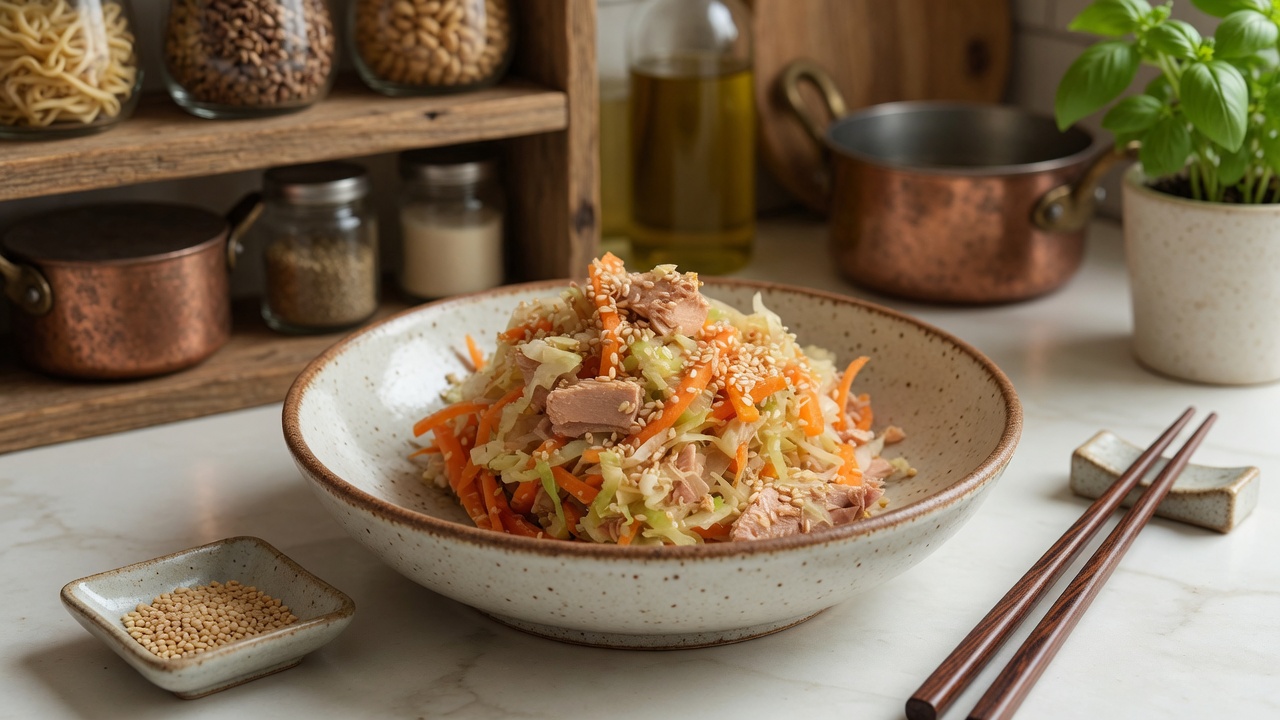
The mix of white cabbage, orange carrot, and pink-brown tuna creates an appealing color combination. Green cabbage leaves add more color variation if your cabbage has outer leaves. White sesame seeds sprinkled on top add textural interest and tiny dots of contrast. Serve in a white or light-colored bowl to showcase the salad colors. Simple presentation works best for this casual, everyday dish.
Common Mistakes to Avoid
Do not skip squeezing water from the blanched vegetables or your salad will be watery. Avoid over-blanching the cabbage or it becomes limp and loses its pleasant crunch. Do not add the dressing while vegetables are still hot or the sesame oil tastes too strong. Resist the urge to add more dressing since the small amount is perfectly sufficient. Mix gently to avoid crushing the vegetables and tuna into mush.
Equipment Needed
You need a pot large enough to hold the vegetables and enough water to cover them. A sharp knife or mandoline helps with vegetable prep. A colander drains the blanched vegetables efficiently. A mixing bowl big enough to toss everything together comfortably is essential. Optional measuring spoons ensure accurate dressing proportions, though you can eyeball it once familiar with the recipe.
Blanching Water Tips
Use plenty of water so the temperature does not drop too much when you add vegetables. Salting the blanching water is optional but can help season the vegetables lightly. Bring water to a rolling boil before adding vegetables for consistent results. You can reuse the same water for blanching both carrots and cabbage. Save the water to use as vegetable stock if you want to avoid waste.
Testing for Doneness
Blanched carrots should be tender enough to bite through easily but still have resistance. Cabbage should be wilted slightly but still crisp when you bite it. If vegetables cool and seem too crunchy, you can blanch them for a few more seconds. If they seem mushy, reduce blanching time next batch. Personal preference plays a role in ideal doneness.
Dressing Distribution
Mix the salad thoroughly after adding dressing to coat everything evenly. Use your hands or two large spoons to toss from the bottom up. Make sure dressing reaches all the vegetables and tuna pieces. You should see a light gloss on everything without pools of dressing at the bottom. If needed, let the salad sit five minutes then mix again before serving.
Leftover Ideas
Use leftover salad as a sandwich filling in pita bread or wraps. Serve it over a bed of fresh greens for added volume. Mix it with cooked pasta for a quick pasta salad variation. Top rice bowls with the salad for a protein-rich topping. The leftovers work anywhere you would use regular tuna salad, just with different flavors.
Crisp Tuna-Cabbage Salad
A light and crunchy salad combining blanched cabbage and carrots with tuna in a simple Asian-style dressing. This mayo-free version uses sesame oil, soy sauce, and chicken stock powder for fresh, clean flavors. Ready in just thirteen minutes with minimal ingredients.
10
minutes3
minutes279
kcal13
minutesIngredients
250g (8.8oz) cabbage
150g (5.3oz) carrot
180g (6.3oz) canned tuna in spring water
- For the Dressing:
1 teaspoon chicken stock powder
½ teaspoon soy sauce
1 teaspoon sesame oil
- For Topping (optional):
2 teaspoons roasted white sesame seeds
Instructions
- Shred the cabbage into thin strips about 3mm wide. Cut the carrot into matchstick pieces 3mm wide and 5-6cm long. Bring a large pot of water to a boil.
- Add carrots to the boiling water and cook for one minute. Add the cabbage strips and blanch for thirty seconds. Drain the vegetables and let them cool to room temperature.
- Squeeze excess water from the cooled vegetables and place them in a mixing bowl. Drain the tuna and add it to the bowl.
- Mix the vegetables and tuna together, breaking the tuna into smaller chunks but not tiny flakes.
- Add the chicken stock powder, soy sauce, and sesame oil to the bowl. Mix everything well until evenly coated. Transfer to a serving bowl and sprinkle sesame seeds on top.
Nutrition Facts
- Serving Size: 310 g
- Calories: 279kcal
- Fat: 12g
- Carbohydrates: 18g
- Fiber: 7.2g
- Sugar: 7.6g
- Protein: 25g