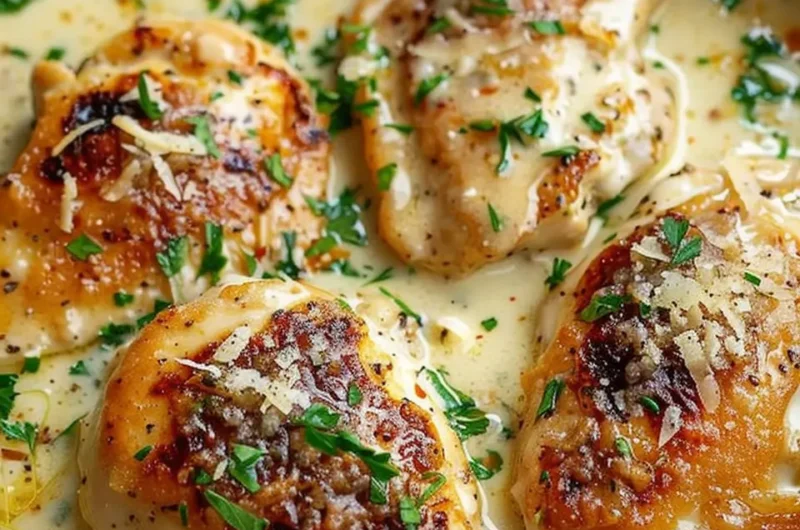
This is a one-pan chicken dish built around a rich, garlicky Parmesan cream sauce, made with just a handful of ingredients and ready in under 40 minutes. Chicken breasts are seared first to build a golden crust, then the same pan is used to build the sauce — garlic, cream, Italian seasoning, and Parmesan — before the chicken goes back in to finish simmering in that sauce. Optional spinach adds color and freshness without changing the core method.
Because it’s naturally low in carbs, this dish is a good fit for keto or low-carb eating patterns, and it’s versatile enough to pair with anything from zucchini noodles and cauliflower mash to traditional pasta or rice for non-keto servings. The one-pan approach also means minimal cleanup, which is part of why this recipe works so well for busy weeknights. With a short, familiar ingredient list and a straightforward searing-then-simmering method, it’s also approachable enough for a beginner cook while still delivering a result that feels like something you’d order at a restaurant.
Getting Everything Ready
Because the sauce is built in the same pan right after searing the chicken, having your ingredients measured and ready before you start cooking keeps the transition between searing and sauce-building quick and smooth.
Equipment to have ready:
- A large skillet
- A cutting board and knife, if halving larger chicken breasts
Ingredients to have ready:
- 4 small-medium chicken breasts, or 2 large halved
- Salt and pepper, to taste
- 2 tablespoons olive oil
- 3–4 cloves garlic, minced
- 1 cup light or heavy cream
- 1 tablespoon Italian seasoning or oregano
- ½ cup Parmesan cheese, grated
- 1 cup spinach, chopped (optional)
Choosing chicken breasts that are similar in size — or halving larger ones — helps everything cook evenly and at the same rate, rather than some pieces finishing well before others.
Workflow: How the Process Comes Together
This recipe is built around a single pan used in three connected stages:
- Season and sear the chicken, then set it aside.
- Build the sauce in the same pan — garlic first, then cream, seasoning, and Parmesan.
- Add spinach, if using, and let it wilt into the sauce.
- Return the chicken to the pan and simmer briefly to finish.
Because the sauce is built directly in the pan used to sear the chicken, this recipe naturally captures the browned bits left behind from searing, folding that flavor into the sauce rather than leaving it behind — this is part of why a one-pan approach produces more flavor than cooking the components separately would. It also means there’s genuinely less to wash up afterward, since everything from searing through simmering happens in the same skillet.
Approved Variations & Swaps
Based strictly on what’s built into this recipe, here are the adjustments it already allows for:
- Cream richness: heavy cream gives an indulgently rich sauce, while light cream gives a lighter, healthier option; heavy cream can also be diluted with a splash of chicken broth if you want something in between.
- Spinach is optional, added for extra nutrition and color, but not required for the core dish.
- Additional add-ins: mushrooms, sun-dried tomatoes, or a dash of red pepper flakes can all be added for extra flavor or a bit of heat.
- Extra garlic: an additional clove can be added for those who want a bolder garlic flavor.
- Seasoning swap: Italian seasoning or dried oregano can both be used.
- Serving base: mashed cauliflower, zucchini noodles, steamed vegetables like broccoli or asparagus, or traditional pasta or rice for non-keto servings.
No other ingredient substitutions are specified in the source recipe, so changes beyond these listed swaps would go beyond what’s actually described here. Since the sauce base itself is so simple, most of the recipe’s flexibility comes down to how rich you want the cream to be and which extras you fold in alongside the spinach.
Step-by-Step Searing and Sauce-Building Strategy
A handful of specific technique choices are what separate a properly seared chicken with a smooth, cohesive sauce from an unevenly cooked dish with a broken or bland sauce.
Season the chicken generously before searing. Salt and pepper applied directly to the chicken, rather than relying only on the sauce for flavor, ensures the meat itself is well-seasoned throughout.
Heat the olive oil until shimmering before adding the chicken. Starting with properly hot oil is what creates a golden-brown crust and helps lock in the chicken’s juices — adding chicken to oil that isn’t hot enough leads to a paler, less flavorful sear.
Avoid overcrowding the pan. Giving the chicken breasts enough space helps them sear evenly on all sides rather than steaming from being packed too closely together.
Adjust searing time based on thickness. Five to six minutes per side is the general guide, but thicker pieces may need more time — checking for a fully cooked interior rather than relying strictly on the clock is the more reliable approach.
Lower the heat before adding garlic to the pan. Cooking the garlic over medium-low heat for about 30 seconds, just until fragrant, prevents it from burning and turning bitter, which can happen quickly if the pan is still at searing temperature.
Stir in the cream, seasoning, and Parmesan together, until fully combined. This builds the sauce as a single cohesive step, rather than in a way that risks the cheese clumping or the sauce separating.
Wilt the spinach gently, if using. Two to three minutes of simmering is enough for the leaves to soften and their flavor to meld into the sauce, without overcooking them into mush.
Return the chicken to finish in the sauce, not to fully re-cook it. Since the chicken is already cooked through from searing, this final one to two minute simmer is about coating it in the sauce and warming it back through, not extending the cooking process further.
Use freshly grated Parmesan rather than pre-shredded. A high-quality block of Parmesan, grated fresh, melts more smoothly into the sauce and gives it more depth than pre-shredded cheese typically does, since pre-shredded varieties often contain anti-caking agents that can affect how evenly they melt.
Creamy Garlic Parmesan Chicken
Description: Juicy, seared chicken breasts in a rich, one-pan garlic Parmesan cream sauce. A quick, keto-friendly dinner that comes together in under 40 minutes with minimal cleanup.
Ingredients
- 4 small-medium chicken breasts, or 2 large halved
- Salt and pepper, to taste
- 2 tablespoons olive oil
- 3–4 cloves garlic, minced
- 1 cup light or heavy cream
- 1 tablespoon Italian seasoning or oregano
- ½ cup Parmesan cheese, grated
- 1 cup spinach, chopped (optional)
Instructions
- Season the chicken breasts generously with salt and pepper. Heat the olive oil in a large skillet over medium heat.
- Add the chicken and cook 5 to 6 minutes per side, until golden brown and cooked through, adjusting time based on thickness.
- Remove the chicken from the pan and set aside. Lower the heat to medium-low and add the minced garlic, stirring about 30 seconds until fragrant.
- Pour in the cream, and stir in the Italian seasoning and grated Parmesan until fully combined.
- If using, stir in the chopped spinach and simmer 2 to 3 minutes, until wilted.
- Return the chicken to the pan, spoon the sauce over the top, and simmer 1 to 2 more minutes.
- Serve hot with your favorite side dish.
Notes
- Heavy cream gives a richer sauce; light cream (or heavy cream diluted with chicken broth) gives a lighter option.
- Fresh garlic makes a real difference in flavor — add an extra clove if you love a bolder taste.
- Use a high-quality block of Parmesan, freshly grated, for the smoothest sauce.
- Optional add-ins include mushrooms, sun-dried tomatoes, or red pepper flakes for extra flavor or heat.
- Pairs well with mashed cauliflower, zucchini noodles, steamed broccoli or asparagus, or traditional pasta or rice for non-keto servings.
Disclaimer: This recipe is provided for general informational purposes only and does not constitute medical or dietary advice. Individuals with food allergies, dietary restrictions, or specific health conditions (including but not limited to dairy sensitivities) should consult a qualified healthcare provider or registered dietitian before preparing or consuming this recipe. This recipe involves raw chicken and requires cooking to a safe internal temperature; please take appropriate food safety precautions. Neither the author nor the publisher assumes responsibility for any adverse effects resulting from the preparation or consumption of this recipe.


