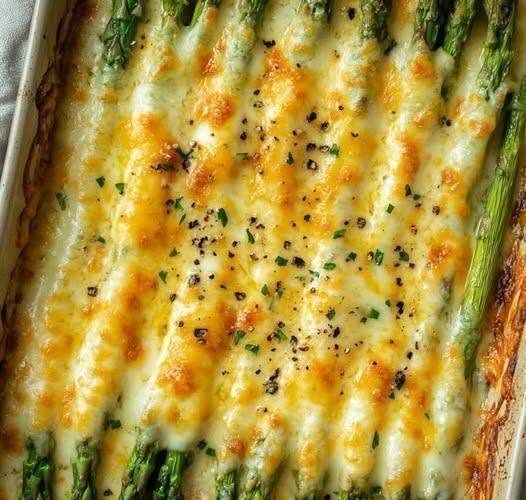
Asparagus roasted in the oven already develops a slightly sweet, concentrated flavor that raw or steamed asparagus doesn’t quite reach. Adding a layer of melted mozzarella and Parmesan on top turns that simple roasted vegetable into something genuinely comforting — the kind of side dish that pairs well with a weeknight chicken breast or a holiday roast without requiring much more effort than seasoning and baking.
The technique here is straightforward: trim, season, arrange, top with cheese, and bake until the asparagus is tender-crisp and the cheese is melted and golden. What matters most is getting the asparagus itself right — fresh, evenly sized, not overcrowded — since the cheese and seasoning are doing relatively simple supporting work around that central vegetable.
Mise En Place: Getting Organized Before You Bake
Because this recipe moves through seasoning, arranging, and topping before it ever goes in the oven, having everything measured out ahead of time keeps the process quick.
The asparagus. 1 pound fresh asparagus, with tough woody ends trimmed.
The seasoning. Olive oil, minced garlic, salt, black pepper, dried oregano, dried thyme, and paprika.
The cheese topping. Shredded mozzarella cheese, grated Parmesan cheese, and melted butter.
Optional additions. Red pepper flakes, lemon zest, fresh parsley, cheddar or Gruyère cheese, bacon bits, cherry tomatoes, mushrooms, Italian seasoning, or garlic powder.
Equipment. A baking dish or baking sheet, parchment paper (optional), a mixing bowl, measuring spoons and cups, tongs, a sharp knife, and a cutting board.
Choosing the Right Asparagus
Fresh asparagus makes a real difference in how this dish turns out. Look for spears that are bright green, firm, and have tightly closed tips — avoid anything that looks wilted, dry, or has soft or mushy tips. Thinner spears cook faster and tend toward a more tender result, while thicker spears have a meatier texture but may need a bit more time in the oven.
Workflow: How the Process Flows
- Prepare the asparagus. Rinse thoroughly, pat dry, and trim the tough woody ends from the bottom of each spear.
- Season. Drizzle with olive oil, add the minced garlic, salt, pepper, oregano, thyme, and paprika, and toss until evenly coated.
- Arrange for baking. Preheat the oven to 400°F (200°C). Lightly grease a baking dish or line a sheet with parchment, then arrange the asparagus in a single layer without overcrowding.
- Add the cheese. Sprinkle the mozzarella evenly over the asparagus, top with the Parmesan, and drizzle the melted butter over everything.
- Bake. 15 to 20 minutes, depending on thickness, until the asparagus is tender but still slightly crisp and the cheese is melted, bubbly, and lightly golden. For extra browning, broil for 1 to 2 minutes at the end, watching closely to avoid burning.
Why Trimming the Woody Ends Matters
The bottom portion of an asparagus spear is tougher and more fibrous than the rest, and it doesn’t soften the same way during roasting — it stays chewy and unpleasant to eat even after a full bake. Trimming this section off before seasoning ensures every piece that makes it into the dish will actually turn tender, rather than leaving diners to work around a tough end on each spear.
Why Not Overcrowding the Pan Matters
Arranging the asparagus in a single layer, with a bit of space between spears, allows hot oven air to circulate around each piece and roast it properly. If the spears are piled on top of each other or packed too tightly, the moisture they release as they cook has nowhere to escape, and the asparagus ends up steaming rather than roasting — resulting in a softer, less flavorful final texture than the recipe is aiming for.
Why Mozzarella and Parmesan Work Well Together
These two cheeses are doing different jobs. Mozzarella melts into a creamy, stretchy layer that coats the asparagus and gives the dish its gooey, comforting quality. Parmesan, added on top of the mozzarella, contributes a salty, nutty depth and helps the topping brown and crisp slightly in the oven’s heat — something mozzarella alone tends not to do as effectively. Together, they balance creaminess with savory complexity in a way that neither would achieve on its own.
Why the Butter Drizzle Helps
Drizzling melted butter over the cheese before baking isn’t just for extra richness — it also helps the cheese topping brown more evenly in the oven, contributing to that golden, slightly crisp finish on top rather than a topping that stays pale and simply melted.
Getting the Texture Right
The goal here is asparagus that’s tender but still has some bite — not mushy, and not undercooked and fibrous. Because thickness varies between spears and bunches, checking at the lower end of the 15–20 minute range and adjusting from there, rather than assuming a fixed time will always work, helps avoid overcooking. If you want a more deeply browned cheese topping without extending the main bake time, a brief 1 to 2 minute broil at the end achieves that, though it needs close watching since broiling can go from golden to burnt quickly.
Approved Flavor Variations
This base recipe adapts easily into several directions:
Cheddar Baked Asparagus. Replace the mozzarella with shredded cheddar for a sharper, richer flavor that pairs well with grilled meats and burgers.
Garlic Parmesan Asparagus. Increase the Parmesan and add extra garlic for a more intensely savory version with a crispier topping.
Bacon Cheesy Asparagus. Sprinkle cooked, crumbled bacon over the asparagus before baking for smoky flavor and extra crunch.
Italian Herb Asparagus. Use Italian seasoning alongside the mozzarella and Parmesan for an herb-forward version that pairs well with pasta or roasted chicken.
Spicy Cheesy Asparagus. Add red pepper flakes or a pinch of cayenne to the seasoning mix for gentle heat that balances the creamy cheese.
Mushroom and Cheese Asparagus. Add sliced mushrooms to the baking dish before roasting — they release savory juices that enhance the overall flavor of the dish.
Optional Flavor-Boosting Techniques
Simple finish. Sprinkle freshly chopped parsley over the baked asparagus before serving.
Medium upgrade. Add a little lemon zest after baking to brighten the rich cheese and roasted flavors.
Bold finish. Top with crispy bacon bits, extra Parmesan, and a pinch of red pepper flakes for a smoky, spicy, restaurant-style result.
Serving Styles
Traditional. Transfer the hot asparagus to a serving platter, garnish with parsley if desired, and serve immediately while the cheese is still melted and bubbly.
Elegant presentation. Arrange the asparagus neatly on a long platter so the golden cheese stays visible, garnish with chopped parsley, a light sprinkle of Parmesan, and a few lemon wedges on the side — well suited for holiday meals or dinner parties.
Common Mistakes and How to Avoid Them
- Overcooking the asparagus, which turns it mushy and dulls its color.
- Overcrowding the baking dish, causing steaming instead of roasting.
- Using too much cheese, which can overwhelm the asparagus’s delicate flavor.
- Under-seasoning, leading to a bland result.
- Forgetting to trim the woody ends, leaving tough, unpleasant pieces.
Storage, Freezing, and Reheating
Refrigerator: Store leftovers in an airtight container for up to 3 days.
Reheating: Use the oven or air fryer for the best texture; microwaving can make the asparagus softer and the cheese greasy.
Freezer: Let the baked dish cool completely, place in a freezer-safe container, and freeze for up to 2 months. Thaw overnight in the refrigerator and reheat in the oven until hot and bubbly.
Creative Uses for Leftovers
Chop leftover cheesy asparagus and add it to omelets or scrambled eggs, mix it into pasta dishes, use it as a pizza or flatbread topping, add it to grain bowls or salads, stuff it into wraps or sandwiches, or stir it into a creamy vegetable soup for extra flavor and texture.
Nutritional Information
This dish naturally provides dietary fiber, vitamin K, vitamin C, folate, calcium, protein from the cheese, antioxidants, and essential minerals. Actual values will vary depending on the cheese used and serving size.
Cheesy Baked Asparagus
Description: Tender asparagus spears seasoned with garlic and herbs, baked until crisp-tender and topped with melted mozzarella and Parmesan — a simple, flavorful side dish for any meal.
Duration:
- Preparation Time: 10 minutes
- Baking Time: 15–20 minutes
- Total Time: Approximately 30 minutes
- Servings: 4
Ingredients:
For the Asparagus:
- 1 pound fresh asparagus
- 1 tablespoon olive oil
- 2 garlic cloves, minced
- ½ teaspoon salt
- ½ teaspoon black pepper
- ½ teaspoon dried oregano
- ½ teaspoon dried thyme
- ¼ teaspoon paprika
For the Cheese Topping:
- 1 cup shredded mozzarella cheese
- ¼ cup grated Parmesan cheese
- 1 tablespoon melted butter
Instructions:
- Rinse the asparagus and pat dry. Trim the tough woody ends from the bottom of each spear.
- Drizzle with olive oil, then add the minced garlic, salt, pepper, oregano, thyme, and paprika. Toss until evenly coated.
- Preheat the oven to 400°F (200°C). Lightly grease a baking dish or line a baking sheet with parchment paper. Arrange the asparagus in a single layer without overcrowding.
- Sprinkle the mozzarella evenly over the asparagus, top with the Parmesan, and drizzle with the melted butter.
- Bake for 15–20 minutes, until the asparagus is tender but still slightly crisp and the cheese is melted, bubbly, and lightly golden. For extra browning, broil for 1–2 minutes at the end, watching carefully.
Notes:
- Avoid overcrowding the baking dish; the asparagus should roast, not steam.
- Trim the woody ends for the best texture in every bite.
- Store leftovers in an airtight container in the refrigerator for up to 3 days; reheat in the oven or air fryer rather than the microwave.
- The dish can be frozen for up to 2 months if needed, though fresh is best.
Medical Disclaimer: This content is provided for general informational and educational purposes only and is not intended as, and should not be substituted for, professional medical, nutritional, or dietary advice. If you have specific dietary restrictions, food allergies, or health conditions, consult a qualified healthcare provider or registered dietitian before making changes to your diet. The author and publisher assume no responsibility for any adverse effects resulting from the preparation or consumption of this recipe.