A Blooming Onion has a reputation for being a showstopper — the kind of dish that makes people at a nearby table crane their necks to ask what it is. What makes it work is how simple the underlying idea actually is: a single large onion, cut into “petals,” battered, and fried until golden and crisp, then served whole with a tangy dipping sauce in the center. The presentation does most of the heavy lifting, but getting the petals to actually separate into that dramatic bloom shape, and getting the batter to crisp up properly, both depend on some specific technique.
This is very much a special-occasion, crowd-pleasing dish rather than an everyday one — messy, indulgent, and built for sharing at the center of a table.
Mise En Place: Getting Organized Before You Fry
The onion. One large sweet onion, such as Vidalia or Walla Walla.
The batter mixture. All-purpose flour, cornstarch, smoked paprika, garlic powder, cayenne pepper (optional), salt, and black pepper.
The soak. Buttermilk (or whole milk with a splash of lemon juice as a substitute).
The frying oil. About 6 to 8 cups, enough for deep frying.
The dipping sauce. Mayonnaise, ketchup, prepared horseradish, smoked paprika, cayenne pepper, salt, and pepper.
Equipment. A deep pot or fryer, mixing bowls, a whisk, a slotted spoon, and paper towels for draining.
Why Sweet Onion Varieties Are the Right Choice
Sweet onions like Vidalia or Walla Walla have a milder, less sharp flavor than standard yellow onions, and that matters here since the onion is the star of the dish rather than a background flavor. A more pungent onion variety would come through much more aggressively once fried, potentially overwhelming the batter and dipping sauce rather than working alongside them.
Preparing the Onion Into “Petals”
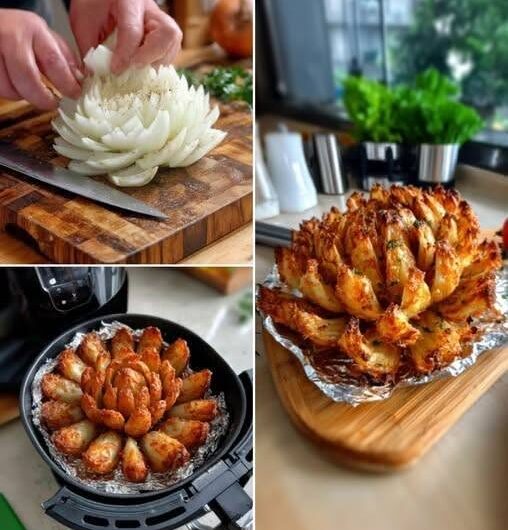
Peel the onion and trim just the very top, being careful to leave the root intact — the root is what holds the whole structure together once it’s cut. Place the onion root-side down, and starting about ½ inch from the root, slice downward into quarters. Then slice each quarter into thirds or fourths until you have 12 to 16 petals total. Gently spread the petals apart with your fingers, coaxing the onion into an open, flower-like shape.
Why Leaving the Root Intact Is Non-Negotiable
The root is doing structural work here — it’s the anchor point that keeps all the individual petals connected to a single base rather than falling apart into loose onion pieces. Cutting too close to the root, or accidentally cutting through it, would cause the onion to fall apart during the slicing or battering process, losing the dramatic “bloom” shape the dish is named for.
Workflow: How the Process Flows
- Prep the onion into petals as described above.
- Prepare the batter and soak. Whisk the flour, cornstarch, paprika, garlic powder, cayenne, salt, and pepper together in one bowl. Pour the buttermilk into a separate bowl.
- Coat the onion. Dip the whole onion into the flour mixture, working it into all the nooks and crannies between petals, then shake off excess. Dunk it into the buttermilk, then back into the flour mixture again for extra crunch.
- Fry. Heat oil in a deep pot or fryer to 350°F (175°C). Carefully lower the onion, root-side up, into the hot oil and fry 6 to 8 minutes, until golden brown and crisp.
- Drain. Remove with a slotted spoon and drain on paper towels.
- Make the sauce. Stir together the mayonnaise, ketchup, horseradish, paprika, cayenne, salt, and pepper until smooth. Chill until serving.
- Serve. Place the onion on a large plate with the dipping sauce in the center, and pull off petals to dip.
Why the Double-Coating Technique Matters
Dipping the onion into the flour mixture, then the buttermilk, then back into the flour again isn’t redundant — it’s what builds up a thicker, crunchier crust than a single coating would produce. The first flour layer gives the buttermilk something to cling to; the buttermilk soak adds moisture and a bit of tang while helping the second flour coating adhere; and that second flour layer is what creates the extra crunch the dish is known for. Skipping the second coating would leave a thinner, less substantial crust.
Why Getting Coating Into Every Crevice Matters
Because the onion is cut into many separate petals rather than left whole, there are a lot of nooks and crannies between the layers where batter needs to reach. Working the flour mixture into these gaps — rather than just coating the outer surface — ensures every petal gets properly battered and crisps evenly during frying, rather than leaving some inner sections pale and underbattered.
Why Frying Root-Side Up Matters
Lowering the onion into the oil root-side up (meaning the petals face downward and outward into the oil) allows the individual petals to fan out and fry more evenly, with hot oil reaching more of each petal’s surface than if the onion sat root-side down. This orientation is part of what helps the onion hold its bloomed shape while still cooking through evenly.
Why Oil Temperature Matters Here
Maintaining the oil at 350°F (175°C) is important for getting a properly crisp, golden crust without burning the batter before the onion inside has softened. Oil that’s too cool will leave the batter greasy and soggy rather than crisp, while oil that’s too hot risks browning the outside too quickly while the onion within stays undercooked.
Serving the Blooming Onion
Set the finished onion on a large plate with the dipping sauce placed in the center, right where guests can easily reach it. Part of the appeal of this dish is the shared, hands-on eating experience — pulling off individual crispy petals one at a time and dipping them generously, rather than plating individual portions.
Why This Dish Works as a Centerpiece
A Blooming Onion isn’t really meant to be an everyday side dish — it’s built for moments when you want something a little more theatrical on the table. The combination of its dramatic presentation, shared eating style, and rich, crispy flavor make it well suited for game days, celebratory dinners, or any gathering where a bit of indulgent spectacle fits the occasion.
Blooming Onion
Description: A large sweet onion sliced into petals, double-battered, and fried until golden and crisp, served whole with a tangy dipping sauce for a dramatic, shareable appetizer.
Ingredients:
For the Onion:
- 1 large sweet onion (such as Vidalia or Walla Walla)
- 1 cup all-purpose flour
- 2 tablespoons cornstarch
- 1 teaspoon smoked paprika
- 1 teaspoon garlic powder
- ½ teaspoon cayenne pepper (optional, for heat)
- 1 teaspoon salt
- ½ teaspoon black pepper
- 1 cup buttermilk (or whole milk with a splash of lemon juice)
- Oil, for frying (about 6–8 cups)
For the Dipping Sauce:
- ½ cup mayonnaise
- 2 tablespoons ketchup
- 1 tablespoon prepared horseradish
- ½ teaspoon smoked paprika
- ¼ teaspoon cayenne pepper
- Salt and pepper, to taste
Instructions:
- Peel the onion and trim just the top, leaving the root intact. With the onion root-side down, slice downward into quarters starting about ½ inch from the root, then slice each quarter into thirds or fourths for 12–16 petals. Gently spread the petals apart.
- Whisk the flour, cornstarch, paprika, garlic powder, cayenne, salt, and pepper in one bowl. Pour the buttermilk into a separate bowl.
- Dip the whole onion into the flour mixture, working it into all the nooks and crannies, then shake off excess. Dunk into the buttermilk, then back into the flour mixture again.
- Heat oil in a deep pot or fryer to 350°F (175°C). Carefully lower the onion, root-side up, into the hot oil. Fry 6–8 minutes, until golden brown and crisp.
- Remove with a slotted spoon and drain on paper towels.
- Stir together the mayonnaise, ketchup, horseradish, paprika, cayenne, salt, and pepper until smooth. Chill until serving.
- Place the onion on a large plate with the dipping sauce in the center. Pull off petals to dip and serve.
Notes:
- Leave the root intact when cutting — it holds the entire structure together.
- Double-coating (flour, buttermilk, flour) creates a thicker, crunchier crust.
- Maintain oil at 350°F (175°C) for a properly crisp result without burning.
- Best served immediately while hot and crisp.
Medical Disclaimer: This content is provided for general informational and educational purposes only and is not intended as, and should not be substituted for, professional medical, nutritional, or dietary advice. Deep frying involves hot oil; always exercise caution and follow proper safety practices to avoid burns or fire hazards. If you have specific dietary restrictions, food allergies, or health conditions, consult a qualified healthcare provider or registered dietitian before making changes to your diet. The author and publisher assume no responsibility for any adverse effects resulting from the preparation or consumption of this recipe.