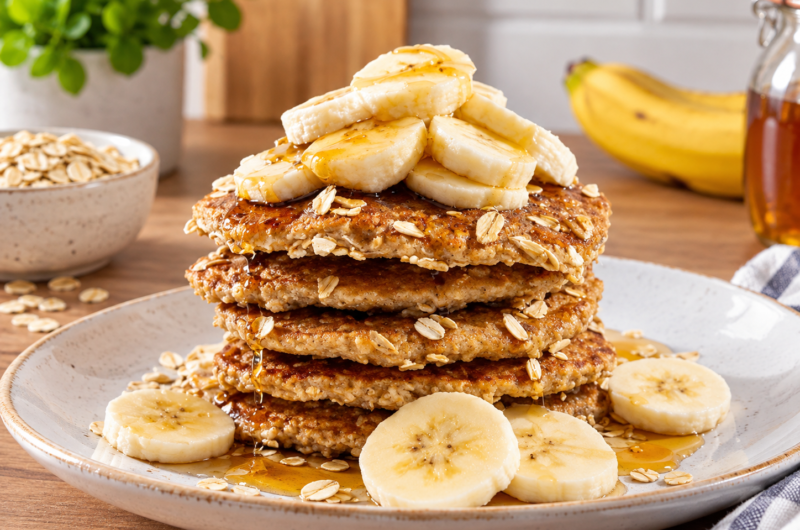
Banana oat pancakes are a delicious homemade breakfast made with oat flour, ripe bananas, eggs, maple syrup, and warm spices. These pancakes have golden edges, a soft center, and a naturally sweet banana flavor. They are easy to prepare and make a wonderful choice for weekend breakfasts, family brunches, or a quick morning meal. If you enjoy banana oatmeal and traditional pancakes, this recipe brings the best of both together.
This easy banana oat pancake recipe uses oat flour instead of regular wheat flour, giving the pancakes a pleasant oatmeal-like texture. Mashed bananas add moisture and sweetness, while cinnamon and nutmeg provide a comforting flavor. A little maple syrup adds extra sweetness, and lemon juice reacts with baking soda to help create a lighter texture. The result is a satisfying stack of pancakes made with simple ingredients.
These pancakes are naturally gluten-free when prepared with certified gluten-free oats or oat flour. They can also be made dairy-free by using coconut oil instead of butter. Whether you serve them with fresh fruit, nut butter, or a drizzle of maple syrup, banana oatmeal pancakes are a versatile breakfast that can easily fit into your morning routine.
This Banana Oat Pancake Recipe
Made With Oat Flour
Oat flour gives these pancakes their distinctive flavor and tender texture. Instead of all-purpose flour, this recipe uses finely ground oats as its flour base. Oat flour has a mild taste that pairs naturally with bananas and warm spices, making it a useful ingredient for homemade breakfast recipes.
You can purchase oat flour or prepare it at home using old-fashioned oats and a blender or food processor. Simply grind the oats until they resemble fine sand. Homemade oat flour is convenient when you already have oats in your pantry and want to make pancakes without buying another ingredient.
Naturally Sweetened With Bananas
Ripe bananas provide much of the sweetness in these pancakes. They also add moisture, helping create a soft interior without requiring additional liquid ingredients. Their fruity flavor works especially well with maple syrup, cinnamon, and nutmeg.
For the best results, choose ripe bananas that mash easily. Bananas with brown speckles are generally softer and sweeter than greenish bananas. Measure the mashed bananas carefully because adding too much can make the batter wetter and affect how the pancakes cook.
Soft and Fluffy Texture
Baking soda and lemon juice work together to produce small bubbles in the batter. This reaction helps the pancakes develop a lighter texture while balancing the flavor of the baking soda. Eggs also help bind the ingredients and provide structure, making the pancakes easier to flip.
The most important preparation tip is to avoid overmixing. Stir the wet and dry ingredients together only until the oat flour is moistened. Allowing the batter to rest afterward gives the oats time to absorb moisture and helps create a thicker consistency.
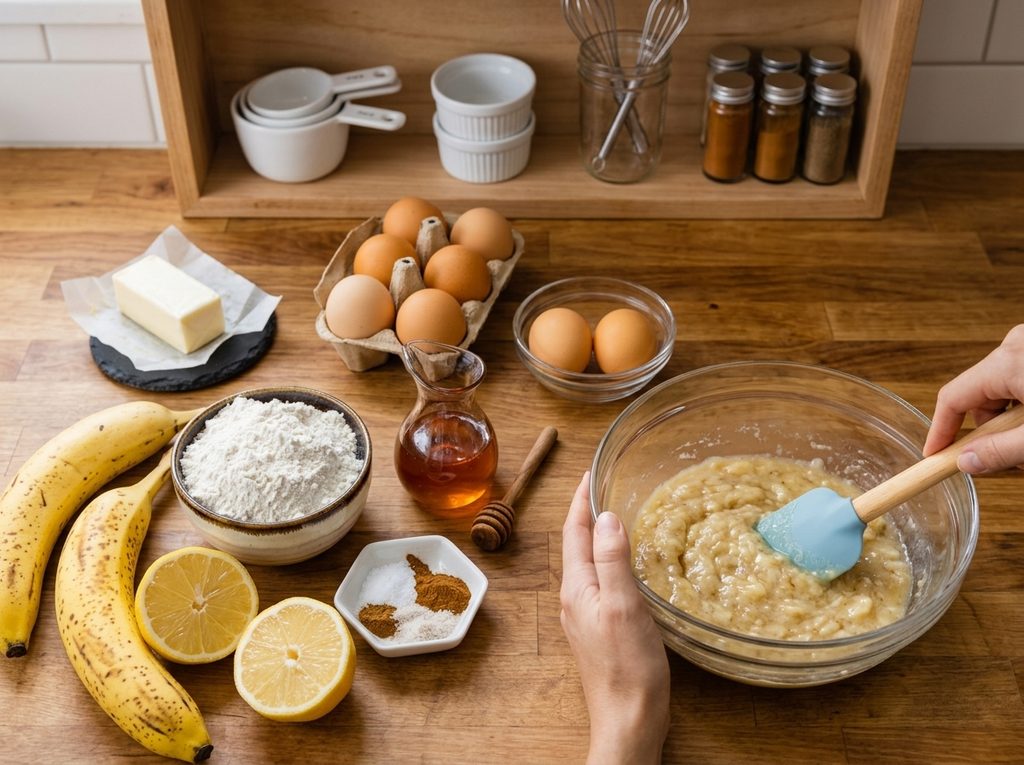
Ingredients for Banana Oat Pancakes
Oat Flour and Spices
Oat flour forms the base of the recipe, while baking soda helps the pancakes rise. Salt balances the sweetness, and cinnamon and nutmeg add gentle warmth. Whisking these dry ingredients together before adding the wet mixture helps distribute the seasonings evenly.
If you need a gluten-free breakfast, make sure your oat flour or oats are certified gluten-free. Regular oats may come into contact with gluten-containing grains during processing, so checking the packaging is important for anyone who needs to avoid gluten.
Bananas and Wet Ingredients
Mashed bananas, eggs, melted butter or coconut oil, maple syrup, and lemon juice make up the wet mixture. The bananas contribute sweetness and moisture, while the eggs help hold the pancakes together. Butter adds richness, and coconut oil provides a dairy-free alternative.
Maple syrup gives the batter a pleasant sweetness, while lemon juice reacts with the baking soda. If the melted butter begins to solidify when combined with cooler ingredients, gently warm the mixture in short intervals, stirring between each one.
How to Make Banana Oat Pancakes
Step 1: Mix the Dry Ingredients
Add the oat flour, baking soda, salt, cinnamon, and nutmeg to a medium bowl. Whisk everything together until evenly combined. Breaking up any small clumps at this stage helps the batter mix more smoothly later.
Step 2: Prepare the Wet Ingredients
Mash the bananas in a separate bowl until mostly smooth. Stir in the melted butter or coconut oil, maple syrup, and lemon juice. Add the eggs and whisk until the mixture is well blended. A few small banana pieces are fine, but avoid leaving large chunks.
Step 3: Combine the Batter
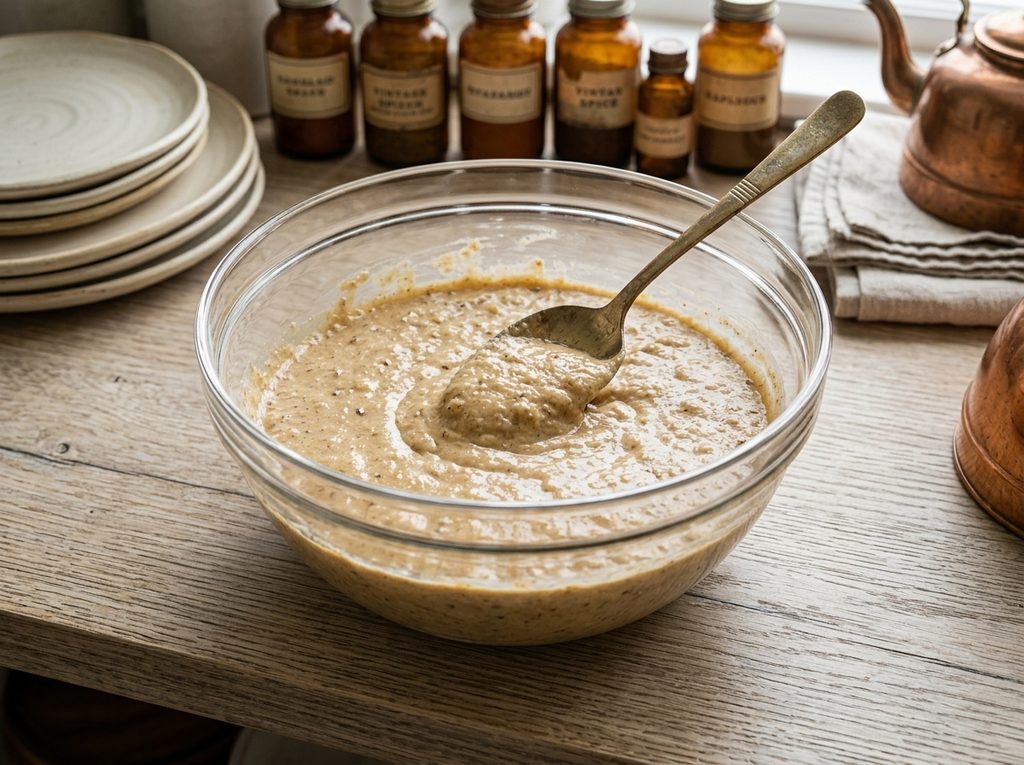
Make a well in the center of the dry ingredients and pour in the wet mixture. Stir gently with a large spoon until the oat flour is thoroughly moistened. The batter will be thicker than many traditional pancake batters, so avoid adding extra liquid unless it is difficult to spread.
Do not overmix the batter. A gentle mixing technique helps maintain a tender texture and prevents unnecessary handling.
Step 4: Rest the Batter
Allow the batter to rest for 10 minutes. This gives the oat flour time to absorb moisture and allows the mixture to thicken. If you are using an electric griddle, preheat it to 350°F during this time.
If the batter becomes too thick to spread easily, gently stir in a tablespoon or two of milk or water. Add the liquid gradually so the mixture does not become too thin.
Step 5: Heat the Skillet
Place a large nonstick or stainless-steel skillet over medium-low heat. Let it warm evenly before adding the batter. A small drop of water should sizzle when it touches the hot surface.
Lightly grease the skillet with butter or oil if needed. Wipe away any excess with a paper towel so the pancakes cook evenly without becoming greasy.
Step 6: Cook the Pancakes
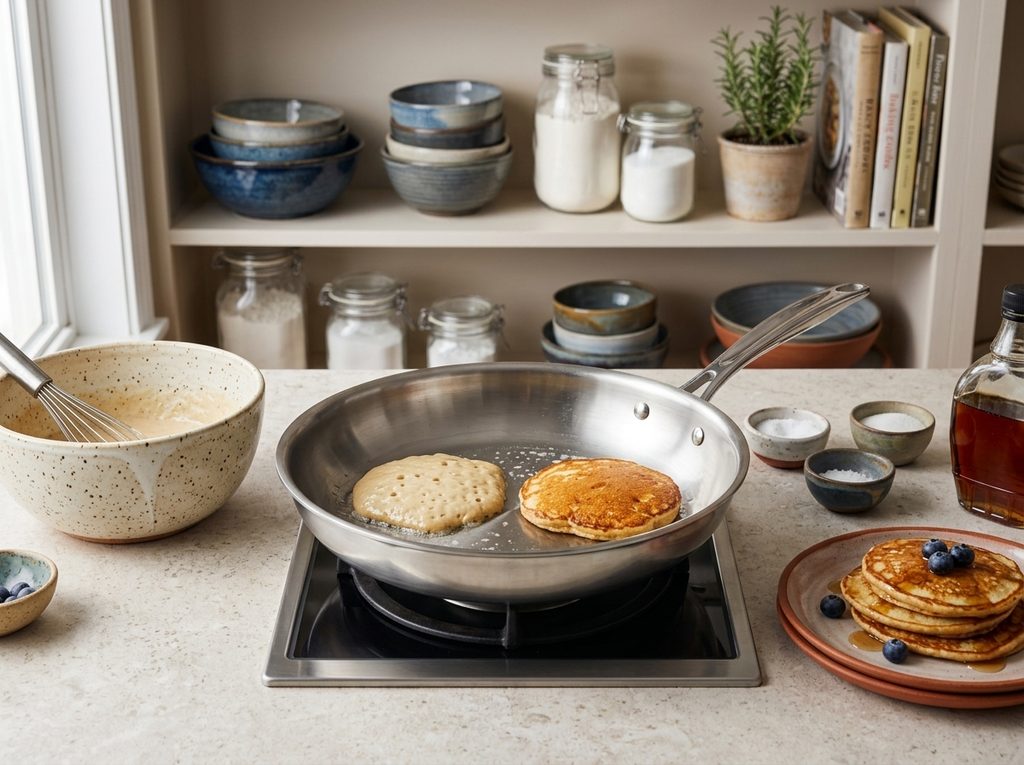
Scoop approximately ¼ cup of batter onto the skillet for each pancake. Leave a little space between portions to make flipping easier. Cook for about 2 to 3 minutes, until small bubbles appear on the surface and the underside becomes golden.
Because oat flour creates a thicker batter, the bubbles may not be as obvious as they are in traditional pancakes. Gently check the underside with a spatula to see whether it is ready.
Step 7: Flip and Finish Cooking
Carefully flip each pancake once the first side is golden and firm enough to lift. Cook the second side for another 1 to 2 minutes, or until lightly browned and cooked through.
Keep the heat at medium-low to prevent the outside from becoming too dark before the center is done. If the pancakes brown too quickly, reduce the heat before cooking the next batch.
Step 8: Serve Warm
Transfer the cooked pancakes to plates and serve immediately with your favorite toppings. Continue cooking the remaining batter, adding a little more butter or oil if necessary.
If you are preparing several batches, keep the finished pancakes warm in an oven set to 200°F. This helps maintain their serving temperature while you finish cooking.
Tips for Perfect Banana Oat Pancakes
Measure the Mashed Bananas
The recipe calls for a scant 1¼ cups of mashed bananas. Measuring after mashing helps keep the batter consistent. Adding substantially more banana can make the mixture too wet and cause the pancakes to take longer to cook.
Allow the Batter to Rest
The 10-minute resting period is important because oat flour absorbs liquid gradually. The batter will usually become thicker as it sits, helping the pancakes hold their shape when scooped onto the skillet.
Use Medium-Low Heat
Bananas contain natural sugars that can brown quickly during cooking. Medium-low heat gives the center enough time to cook while the outside develops a golden color. If the pancakes become dark too soon, lower the heat.
Check Before Flipping
Start checking the underside after about two minutes. If it is not golden, allow another minute before flipping. The exact cooking time depends on your skillet, burner, and pancake thickness.
Serving Suggestions
Banana and Maple Syrup
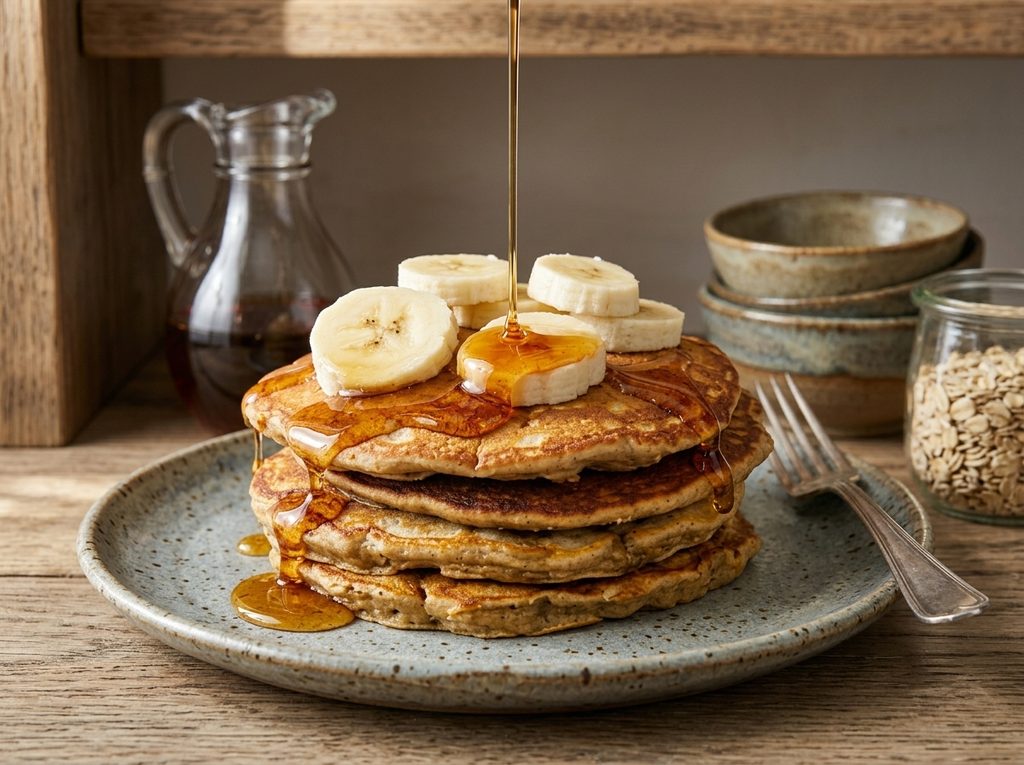
Sliced bananas and a drizzle of maple syrup make a classic topping for these pancakes. The fresh fruit complements the banana flavor in the batter, while the syrup adds extra sweetness. Serve the pancakes in a stack for a simple and inviting breakfast.
Peanut Butter or Nut Butter
Peanut butter, almond butter, or another preferred nut butter adds a creamy texture and rich flavor. Spread a small amount over warm pancakes and serve with fresh fruit for a satisfying combination.
Greek Yogurt or Scrambled Eggs
Plain Greek yogurt provides a cool, creamy contrast to the warm pancakes. Scrambled eggs are another option if you prefer a savory side. Either accompaniment can help make breakfast more filling.
Butter or Whipped Cream
A small pat of salted butter melts over the pancakes and adds richness. For a sweeter brunch presentation, serve them with a dollop of whipped cream and sliced fruit.
Gluten-Free and Dairy-Free Variations
Gluten-Free Banana Pancakes
These pancakes use oat flour rather than wheat flour. To ensure the recipe is suitable for a gluten-free diet, use certified gluten-free oat flour or certified gluten-free oats. Check the labels of any additional ingredients and toppings when strict gluten avoidance is necessary.
Dairy-Free Banana Oat Pancakes
Replace the unsalted butter with coconut oil to make the pancakes dairy-free. If you need to thin the batter, use water or a suitable dairy-free milk. Check your chosen toppings to make sure they also meet your dietary preferences.
Egg-Free Alternative
Flax eggs may work as an egg substitute, although this variation has not been tested in the original recipe. Since eggs help bind the batter and provide structure, replacing them may change the texture. Handle the pancakes gently if trying this alternative.
Storage and Reheating
Refrigerating Leftovers
Allow leftover pancakes to cool before transferring them to an airtight container. Store them in the refrigerator for up to four days. Keeping them covered helps prevent them from drying out and makes them convenient for quick breakfasts.
Freezing Pancakes
Banana oat pancakes can be frozen for up to three months. Let them cool completely before placing them in a freezer-safe container or bag. Separate individual pancakes with parchment paper if you want to remove portions easily.
Reheating
Stack the leftover pancakes and wrap them in a paper towel before gently reheating them in the microwave. Heat in short intervals until warmed through. This is a convenient way to enjoy prepared pancakes on busy mornings.
Frequently Asked Questions
Are Banana Oat Pancakes Gluten-Free?
Yes, when prepared with certified gluten-free oat flour or oats. Regular oats may be exposed to gluten-containing grains during processing, so check the packaging if you need to avoid gluten.
Can I Make Oat Flour at Home?
Yes. Blend old-fashioned oats in a food processor or blender until they resemble fine sand. Measure the amount needed for the recipe after grinding.
Why Is My Batter Thick?
Oat flour absorbs moisture, particularly during the resting period. If the batter is too thick to spread, gently stir in a tablespoon or two of milk or water.
How Do I Know When to Flip?
Check the underside after approximately two minutes. Flip when it is golden and the pancake is firm enough to lift without falling apart.
Can I Make the Batter Ahead?
For the best results, cook the batter after its 10-minute resting period. Since baking soda reacts with lemon juice, preparing and cooking the batter promptly helps preserve its leavening action.
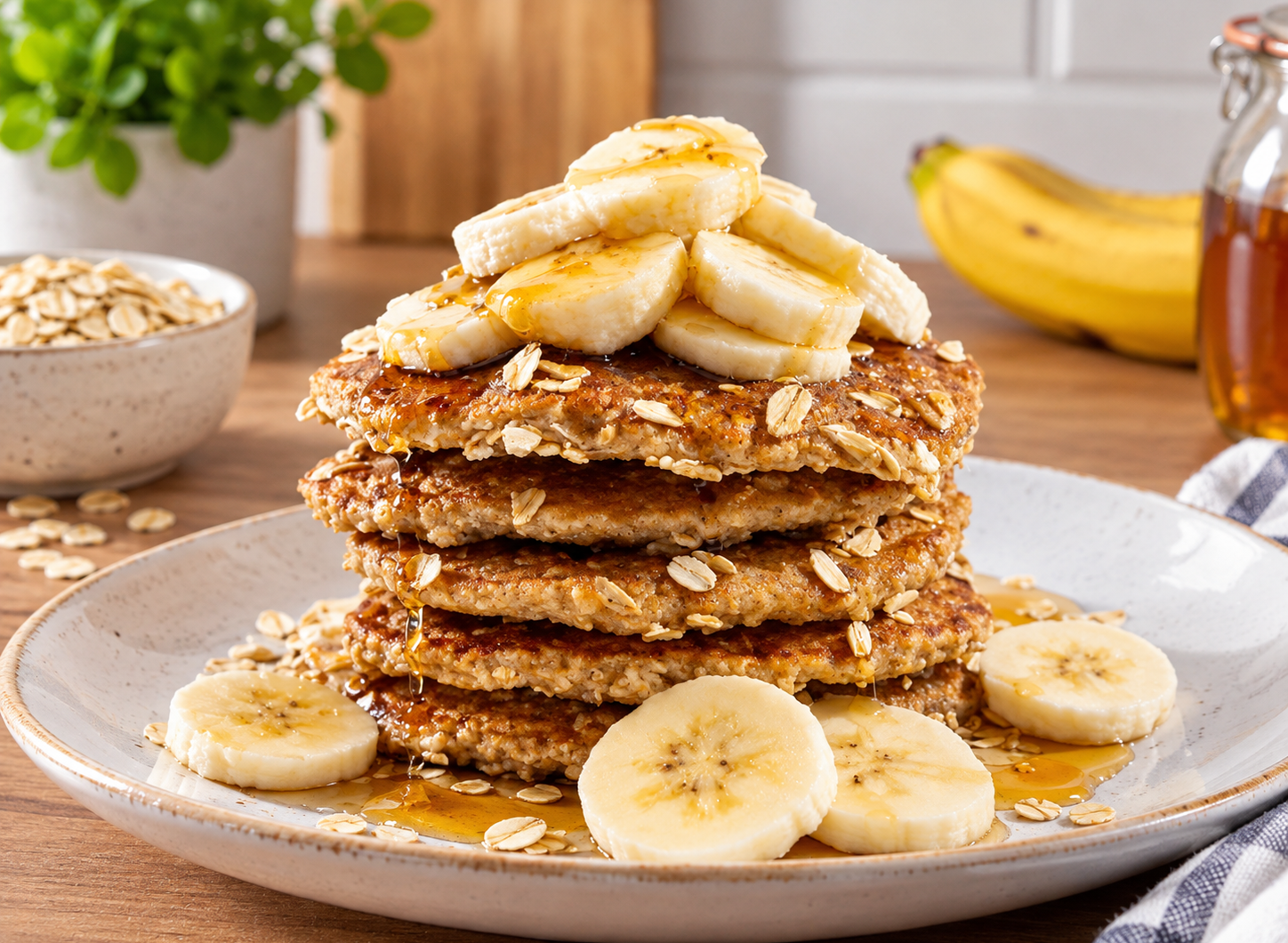
Banana Oat Pancakes
Fluffy, naturally sweetened pancakes made with oat flour, ripe bananas, and warm spices. A simple gluten-free breakfast for weekends or everyday mornings.
8
servings15
minutes10
minutes287
kcal25
minutesIngredients
1 cup oat flour
½ teaspoon baking soda
½ teaspoon salt
½ teaspoon ground cinnamon
¼ teaspoon ground nutmeg
Scant 1¼ cups mashed bananas (about 3 small bananas, mashed, or 9.5 ounces)
2 tablespoons melted unsalted butter or coconut oil, plus more for cooking
2 tablespoons maple syrup
1 tablespoon lemon juice
2 eggs
Instructions
- Whisk together the oat flour, baking soda, salt, cinnamon, and nutmeg in a medium bowl until evenly combined.
- Combine the mashed bananas, melted butter or coconut oil, maple syrup, and lemon juice. Add the eggs and whisk until blended.
- Make a well in the dry ingredients and pour in the wet mixture. Stir gently until the flour is moistened. Avoid overmixing.
- Leave the batter for 10 minutes to thicken. If using an electric griddle, preheat it to 350°F during this time.
- Warm a large skillet over medium-low heat. Lightly grease it with butter or oil if needed, removing excess before cooking.
- Pour ¼ cup of batter per pancake into the skillet. Cook for 2–3 minutes, until small bubbles appear and the underside is golden.
- Flip carefully and cook for another 1–2 minutes, until lightly golden and cooked through. Lower the heat if the pancakes brown too quickly.
- Serve immediately with your preferred toppings, or keep warm in a 200°F oven while cooking the remaining batter.
Notes
- Gluten-free: Use certified gluten-free oat flour or oats.
- Homemade oat flour: Blend old-fashioned oats until finely ground.
- Dairy-free: Use coconut oil instead of butter.
- Egg-free option: Flax eggs may work, but the texture has not been verified.
- Batter consistency: Add 1–2 tablespoons of milk or water if the batter is too thick.
- Storage: Refrigerate leftovers for up to 4 days or freeze for up to 3 months.
- Reheating: Wrap pancakes in a paper towel and gently microwave until warm.
Nutrition Facts
- Calories: 287kcal
- Fat: 10.8g
- Carbohydrates: 41.9g
- Sugar: 15.7g
- Protein: 7.9g