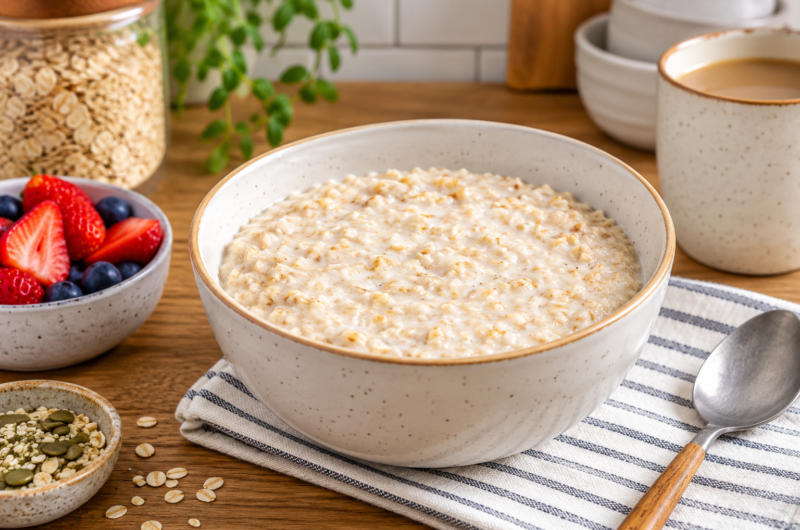
A good porridge recipe does not need complicated ingredients or special cooking skills. The basic combination of oats, milk, and water creates a creamy breakfast that is easy to prepare. The balance of liquid and oats can also be changed to suit your preferred texture. Some people like thick porridge, while others prefer a softer and smoother bowl.
Simple Ingredients for Homemade Porridge
This easy porridge recipe uses only three ingredients: porridge oats, semi skimmed milk, and water. The oats provide the main texture, while milk gives the finished dish a creamy taste. Water helps keep the porridge from becoming too heavy. Together, these ingredients make a simple breakfast that can be prepared on the hob or in the microwave.
Why Use Both Milk and Water?
Using a mixture of milk and water gives porridge a pleasant balance. Milk adds creaminess and a mild flavor, while water keeps the mixture lighter. Using only milk can make porridge richer, whereas using only water produces a simpler texture. This recipe uses equal amounts of milk and water as a starting point, giving you an easy base that can be adapted to your own preference.
Choosing the Right Oats
Porridge oats are the main ingredient in this recipe, so choosing the correct type is important. The oats soften during cooking and absorb the liquid, creating the thick and creamy texture associated with traditional porridge. As the oats cook, they release starch into the milk and water. This helps the mixture become thicker without needing any extra ingredients.
How to Make Porridge on the Hob
Making porridge on the hob is straightforward and allows you to watch the texture as it cooks. Add the oats, semi skimmed milk, and water to a large saucepan and stir them together. Place the pan over low to medium heat and allow the mixture to reach a gentle simmer. Keeping the heat moderate helps the oats soften gradually.
Stirring During Cooking
Stirring is an important part of making creamy porridge. Once the mixture begins to simmer, continue stirring frequently as the oats cook. This helps distribute the oats through the liquid and reduces the chance of the mixture sticking to the bottom of the pan. Stirring also helps the porridge develop an even consistency as the oats absorb the milk and water.
How Long to Cook Porridge
The hob method generally takes about 5 to 7 minutes after the mixture begins simmering. During this time, the oats soften and the liquid gradually thickens. The exact cooking time can vary depending on the oats and the heat of your stove. Check the texture as you cook and remove the saucepan from the heat when the porridge has reached the consistency you like.
How to Make Porridge in the Microwave
The microwave method is useful when you need breakfast quickly. Add the oats, milk, and water to a microwave-safe bowl and stir well. Microwave the mixture for 2 minutes, then carefully remove the bowl and stir. Return it to the microwave for another 1 minute and 30 seconds. Stir once more before serving and check the consistency.
Why Use a Large Microwave-Safe Bowl?
Porridge can rise while it cooks, especially as the oats absorb liquid and become thicker. Using a bowl with enough space helps prevent the mixture from bubbling over. Choose a microwave-safe bowl that is comfortably larger than the starting volume of the ingredients. This simple step makes microwave porridge easier to prepare and helps keep your microwave clean.
Making Porridge Creamier
The creamy texture comes naturally from cooking the oats with milk and water. Stirring frequently during hob cooking also helps the oats release their starch. If you prefer a thicker breakfast porridge, allow it to cook until more of the liquid has been absorbed. For a softer consistency, you can stop cooking slightly earlier. The recipe is designed as a starting point that can be adjusted to your taste.
Making Porridge Thicker
Some people prefer their oatmeal or porridge to have a thick, spoonable consistency. Cooking the oats for a little longer allows them to absorb more liquid. Keep the heat low to medium and stir often while the porridge thickens. Avoid rushing the process with very high heat because the mixture can stick to the pan before the oats have fully softened.
Making Porridge Softer
If you prefer a softer bowl of porridge, the cooking time can be adjusted. The oats should be cooked until they are tender and the mixture is smooth enough for your liking. The balance of milk and water in this recipe creates a moderate texture, but personal preference matters. Once you become familiar with the recipe, you can adjust the cooking time to achieve your ideal consistency.
Easy Porridge Topping Ideas
The plain porridge base works well with many different toppings. Fresh fruit, dried fruit, seeds, nuts, or other favorite additions can be added after cooking. Because the base recipe is mild, it can be changed according to your breakfast preferences. Add toppings just before serving so they remain fresh and provide different textures alongside the soft cooked oats.
Fruit Toppings for Porridge
Fresh fruit is an easy way to change the flavor of a bowl of porridge. Sliced or chopped fruit can be placed directly over the cooked oats. You can choose toppings based on what you already have available. Fruit also adds color and texture to an otherwise simple breakfast. Since the recipe itself contains only three ingredients, toppings give you plenty of room to vary each serving.
Nuts and Seeds as Toppings
Nuts and seeds can add a different texture to creamy porridge. Sprinkle them over the finished bowl rather than mixing them into the cooking liquid if you want them to remain noticeable. A small amount can provide a pleasant contrast to the soft oats. If you are serving several people, you can place different toppings on the table so everyone can customize their own bowl.
Porridge for a Quick Breakfast
This recipe is useful for busy mornings because the preparation is very short. The ingredients can be measured quickly and cooked either on the hob or in the microwave. The hob method gives you more control over the consistency, while the microwave method requires less attention. With a total preparation and cooking time of only a few minutes, it is practical for everyday breakfast.
Porridge for the Whole Family
The recipe makes four servings, making it suitable for a family breakfast or for preparing several portions. Cook the mixture together in a large saucepan when using the hob. If using the microwave, make sure the bowl is large enough for the mixture to cook safely. Serve the cooked porridge with individual toppings so each person can choose the flavors and textures they enjoy.
How to Prevent Porridge From Sticking
Porridge can stick when cooked over excessive heat or when it is left without stirring. A low to medium temperature is more suitable for this recipe. Stir frequently while the oats simmer and pay attention as the mixture becomes thicker. Once the oats are soft and the porridge has reached the desired consistency, remove it from the heat and serve promptly.
The Importance of Gentle Heat
Gentle cooking gives the oats enough time to soften while the milk and water gradually thicken the mixture. High heat is not necessary and can make the porridge cook unevenly. Keep the saucepan over low to medium heat and allow the mixture to reach a gentle simmer. This approach also gives you more time to control the final texture and prevent sticking.
Porridge Texture and Personal Preference
There is no single texture that everyone will prefer. Some people enjoy thick oatmeal that holds its shape on a spoon, while others prefer a smoother and looser consistency. The original ratio of oats, milk, and water provides a useful starting point. After making the recipe once, you can adjust the cooking time to create the texture that suits you best.
Why This Recipe Is Easy to Adapt
The basic porridge mixture is neutral enough to work with many toppings and serving styles. You can keep it simple or add your favorite ingredients after cooking. The recipe does not require a long list of pantry items, making it convenient when you want a straightforward breakfast. Because the core ingredients remain the same, you can experiment with toppings without changing the basic cooking method.
Microwave Porridge Cooking Tips
When preparing porridge in the microwave, use a microwave-safe bowl with plenty of room. Stir after the first 2-minute cooking period before continuing for another 1 minute and 30 seconds. Microwave ovens differ in strength, so check the porridge before serving. If the oats need more time, continue carefully in short intervals rather than cooking for a long period without checking.
Hob Porridge Cooking Tips
For the hob method, add all three ingredients before turning on the heat. Stir them together and then bring the mixture to a gentle simmer over low to medium heat. Continue stirring frequently while the oats soften. After approximately 5 to 7 minutes, check the consistency. When the porridge is creamy and the oats are tender, it is ready to serve with your preferred toppings.
Serving Porridge
Serve the porridge while it is warm and freshly cooked. Spoon it into four serving bowls and add toppings according to taste. Since the base is simple, you can make every bowl slightly different. Keep toppings separate if several people are eating, allowing everyone to add the ingredients they prefer. This makes the recipe suitable for family breakfasts as well as individual meals.
Storing and Reheating Porridge
Porridge is best enjoyed immediately after cooking because the oats continue absorbing liquid as they stand. If you prepare it ahead, the texture may become thicker than when freshly cooked. When reheating, you may need additional liquid to loosen it. Heat gently and stir well. For the best texture, however, making the porridge fresh takes only a few minutes.
Common Porridge Mistakes
One common mistake is cooking the oats over heat that is too high. This can cause sticking and may leave the mixture unevenly cooked. Another is failing to stir often enough during hob cooking. In the microwave, using a bowl that is too small can allow the porridge to rise and spill over. Paying attention to heat, bowl size, and stirring makes the recipe much easier.
Using the Recipe as a Starting Point
The measurements in this recipe provide a balanced starting point for creamy porridge. Once you have made it, you can decide whether you prefer more or less liquid or a different cooking time. The important thing is to understand how the oats change as they absorb liquid. This allows you to adjust the consistency without making the preparation complicated.
Notes for Better Results
For hob cooking, keep the heat low to medium and stir frequently as the oats simmer. For microwave cooking, use a large microwave-safe bowl and stir halfway through the process. Serve the porridge warm with your favorite toppings. If you prefer a different consistency, adjust the cooking time slightly. These simple changes can help you make a bowl of porridge that matches your taste.
Nutrition in This Porridge Recipe
The provided nutrition information lists one serving at 59 calories, with 1 gram of total fat, 10 grams of carbohydrates, 1 gram of fiber, 3 grams of sugar, and 3 grams of protein. It also lists 26 milligrams of sodium and 1 milligram of cholesterol per serving. Nutrition values can vary depending on the exact ingredients and serving sizes used.
Notes and Helpful Answers
If the porridge seems too thick, it can be adjusted by changing the cooking time during preparation. If it seems too thin, continue cooking gently until more liquid is absorbed. For the microwave method, always use a suitable bowl with enough room for the porridge to rise. For the hob method, frequent stirring and moderate heat are the easiest ways to achieve an even, creamy texture.
Porridge The Easy Nutritious
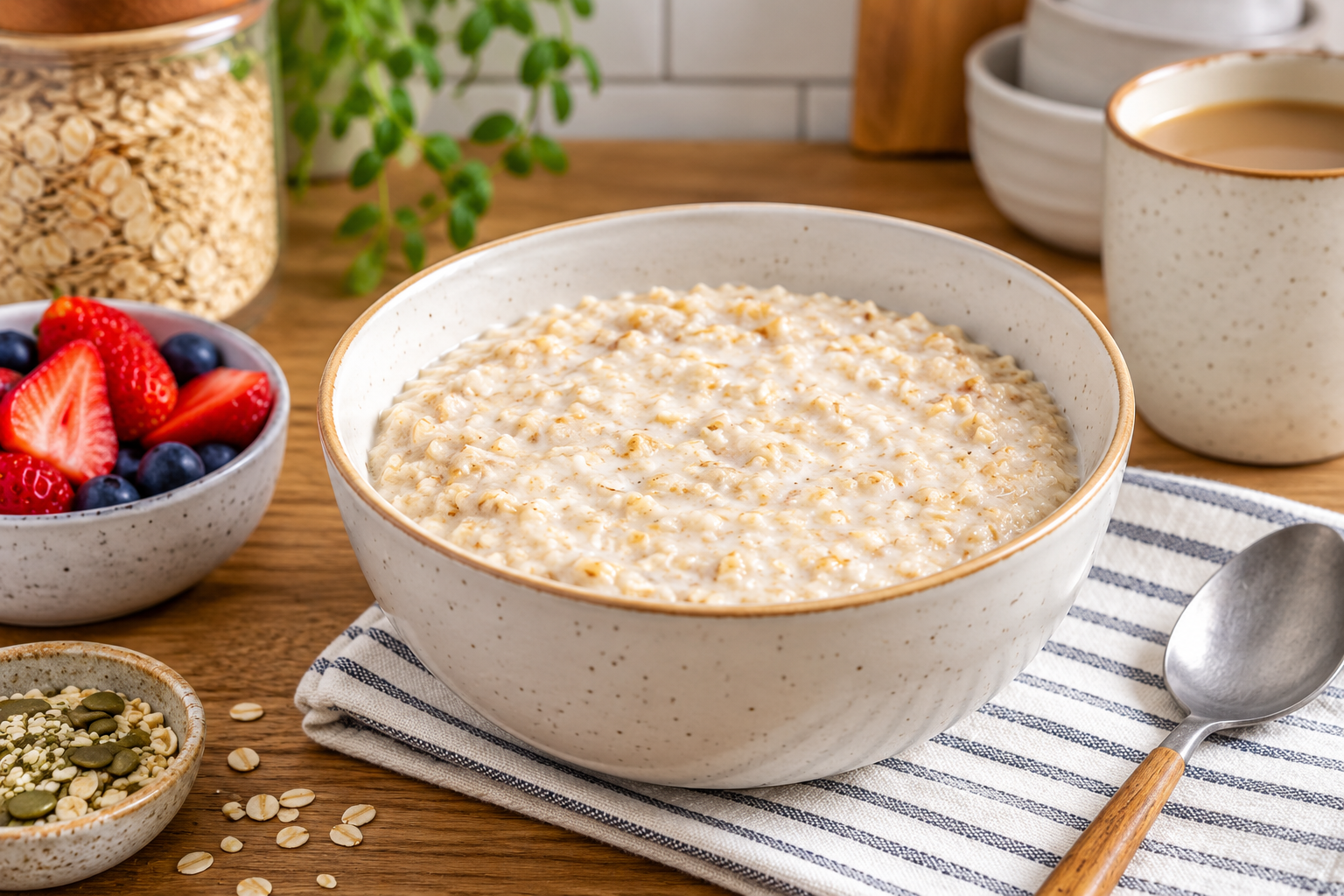
A simple homemade porridge made with oats, semi skimmed milk, and water. Cook it on the hob or in the microwave, then serve it warm with your favorite toppings.
2
minutes5
minutes59
kcal7
minutesIngredients
200g (2 1/2 cups) porridge oats
360ml (1 1/2 cups) semi skimmed milk
360ml (1 1/2 cups) water
Instructions
- Add the porridge oats, semi skimmed milk, and water to a large saucepan. Stir the ingredients together before placing the pan over low to medium heat.
- Bring the mixture to a gentle simmer. Continue cooking and stir frequently for about 5 to 7 minutes, or until the oats are soft and the porridge is creamy.
- For the microwave method, place all ingredients in a large microwave-safe bowl and stir well. Microwave for 2 minutes, then remove carefully and stir.
- Microwave again for another 1 minute and 30 seconds. Check the texture and stir before serving.
- Spoon the warm porridge into four portions and add your favorite toppings. Adjust the cooking time slightly next time if you prefer a thicker or softer consistency.
Notes
- Use a large microwave-safe bowl to give the porridge enough room to rise during cooking.
- Stir frequently when cooking on the hob to help prevent sticking and create an even texture
- Keep the hob heat low to medium rather than using high heat.
- Cooking time can be adjusted slightly depending on whether you prefer thick or soft porridge.
- Serve the finished porridge with your favorite toppings for extra flavor and texture.
Nutrition Facts
- Total number of serves: 1
- Calories: 59kcal
- Fat: 1g
- Carbohydrates: 10g
- Fiber: 1g
- Sugar: 3g
- Protein: 3g