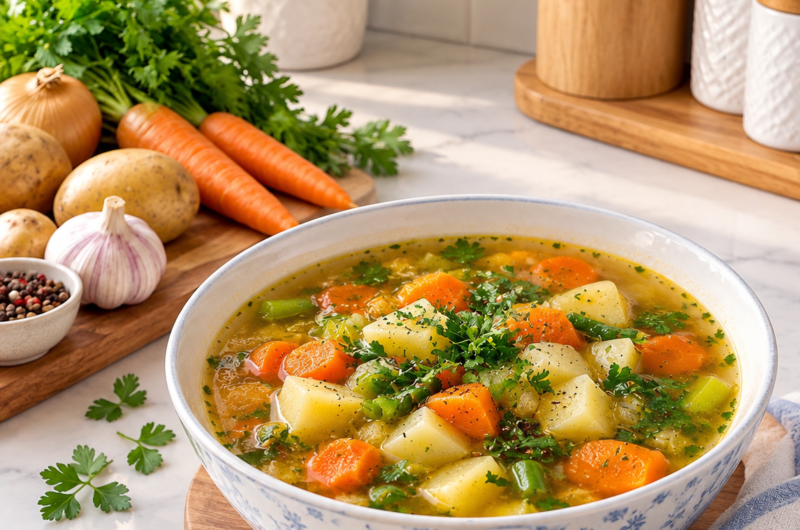
This Wholesome Anti-Inflammatory Vegetable Soup with Turmeric is a warm, colorful, and comforting vegetable soup made with simple ingredients. It combines olive oil, onion, celery, carrots, garlic, cauliflower, green cabbage, turmeric, cumin, paprika, vegetable broth, lemon, and fresh parsley.
The vegetables are first cooked in olive oil to build a flavorful base. Garlic and spices are then added to bring more aroma and warmth to the soup. Vegetable broth is added next, and everything is gently simmered until the vegetables become tender.
Fresh lemon juice and chopped parsley are added near the end. The lemon gives the soup a fresh, bright flavor, while parsley adds a fresh herbal touch.
This soup is a lovely choice for a cozy lunch or dinner. It is packed with different vegetables and has a golden color from the turmeric. It can also be served with crusty bread or a green salad, or made more filling with optional additions such as beans, rice, pasta, lentils, or chicken.
A warm bowl of vegetable soup can be a simple and satisfying meal, especially when the weather is cold. This recipe brings several vegetables together in one pot, along with herbs and spices that give the broth plenty of flavor.
The main vegetables are onion, celery, carrots, cauliflower, and green cabbage. Each vegetable adds something different to the finished soup.
The onion creates a flavorful base, while celery and carrots add their own fresh, slightly sweet flavors. Cauliflower gives the soup a hearty vegetable texture, and cabbage becomes tender as it cooks and adds a gentle sweetness.
Turmeric gives the broth its warm golden color. Cumin and paprika add depth, while chili flakes can be included when you want a little extra heat.
The final addition of lemon juice and parsley is important because it gives the soup a fresh finish. Instead of tasting heavy, the broth has a bright flavor that works well with all the cooked vegetables.
Why This Recipe Works
The Vegetables Build the Flavor
The recipe begins by cooking the onion, celery, and carrots in olive oil.
These vegetables are cooked first because they need a little more time to soften and develop flavor. Cooking them together creates a flavorful starting point for the soup.
The onions become soft and translucent, while the carrots and celery begin to soften.
Garlic and Spices Add Warmth
After the first vegetables have softened, garlic, cauliflower, cabbage, turmeric, cumin, paprika, and optional chili flakes are added.
Cooking the garlic and spices for a few minutes helps release their aroma before the broth goes into the pot.
The spices also give the soup its warm, golden appearance and rich flavor.
Cabbage Adds Natural Sweetness
Green cabbage is an important part of this soup.
As it cooks, the cabbage becomes tender and develops a gentle sweetness. It works especially well with the carrots, cauliflower, and warm spices.
If you do not usually add cabbage to soup, this is a simple way to try it.
Lemon and Parsley Freshen the Soup
Fresh lemon juice and parsley are added near the end of cooking.
The lemon adds a bright, fresh taste that balances the warm spices and vegetables. Chopped parsley adds a fresh herbal flavor.
Because these ingredients are added close to serving time, their flavors remain fresh rather than becoming lost during a long cooking process.
Ingredients
Olive Oil
You need 3 tablespoons of olive oil.
The oil is used to sauté the first group of vegetables. It helps soften the onion, celery, and carrots while creating the base flavor for the soup.
Onion
Use 1 medium onion, diced.
The onion is cooked with the celery and carrots until it becomes soft and translucent. Dicing it into small pieces helps it cook evenly.
Celery
Use 3 stalks of celery, thinly sliced.
Celery adds a fresh vegetable flavor to the soup. Slicing it thinly helps it soften during the first cooking stage.
Carrots
Use 4 carrots, peeled and thinly sliced.
Carrots add color, texture, and natural sweetness.
Peel the carrots and slice them thinly so they cook evenly with the onion and celery.
Garlic
Use 3 cloves of garlic, chopped.
Garlic adds a strong, savory aroma to the soup. It is added after the first vegetables have softened and is cooked briefly with the spices.
Cauliflower
Use 3 cups of cauliflower florets.
Cauliflower gives the soup a hearty vegetable texture. Cut the cauliflower into florets that are reasonably similar in size so they cook evenly.
Green Cabbage
Use 3 cups of chopped green cabbage.
Cabbage becomes tender during simmering and adds a mild sweetness to the soup.
Turmeric
Use 1 teaspoon of turmeric.
Turmeric gives the soup its characteristic golden color and warm spice flavor.
Cumin
Use 1 teaspoon of cumin.
Cumin adds a warm, earthy flavor that works well with the vegetables and turmeric.
Paprika
Use 1/2 teaspoon of paprika.
Paprika adds another layer of mild spice and helps build the overall flavor of the broth.
Chili Flakes
Use a pinch of chili flakes, optional.
The chili flakes add heat. If you prefer a milder soup, simply leave them out.
Vegetable Broth
Use 6 cups of vegetable broth.
The broth brings all the vegetables and spices together and forms the main liquid base of the soup.
Kosher Salt
Use 1 1/2 teaspoons of kosher salt, or to taste.
Salt helps bring out the flavors of the vegetables and spices.
Ground Black Pepper
Use 1/2 teaspoon of ground black pepper, or to taste.
Black pepper adds a gentle peppery flavor to the broth.
Fresh Parsley
Use 1/4 cup of chopped parsley.
Parsley is added toward the end of cooking to give the soup a fresh herbal flavor.
Lemon Juice
Use the juice of one lemon.
Fresh lemon juice brightens the flavor of the soup and gives the finished broth a fresh taste.
How to Make the Vegetable Soup
Step 1: Prepare the Vegetables
Before starting the soup, prepare all the vegetables.
Dice the onion, thinly slice the celery and carrots, chop the garlic, prepare the cauliflower florets, and chop the green cabbage.
Having everything prepared before you begin makes the cooking process easier because the vegetables can be added at the correct time.
You should also measure the spices, broth, salt, pepper, parsley, and lemon juice so everything is ready when needed.
Step 2: Heat the Olive Oil
Place a large soup pot on the stove over medium heat.
Add 3 tablespoons of olive oil and allow it to heat.
The oil should be warm before adding the vegetables, but it should not be smoking.
Step 3: Cook the Onion, Celery, and Carrots
Add the diced onion, sliced celery, and sliced carrots to the pot.
Stir the vegetables occasionally as they cook.
Continue cooking for about 6 to 7 minutes, or until the onion becomes soft and translucent.
This first step creates the base of the soup. Allowing the vegetables enough time to soften helps develop their flavor before the remaining ingredients are added.
Step 4: Add Garlic, Cauliflower, and Cabbage
Once the onion, celery, and carrots have softened, add the chopped garlic.
Then add the cauliflower florets and chopped green cabbage.
These vegetables will cook further in the broth, but giving them a few minutes in the oil first helps build their flavor.
Step 5: Add the Spices
Add the turmeric, cumin, paprika, and chili flakes if you are using them.
Stir everything together so the spices are spread throughout the vegetables.
Continue cooking for another 2 to 3 minutes.
During this time, the cabbage should begin to soften and the spices should become fragrant.
Be careful not to let the garlic or spices burn. Keep stirring as needed.
Step 6: Add the Vegetable Broth
Pour 6 cups of vegetable broth into the pot.
Stir everything together.
Bring the soup to a simmer.
Once it begins simmering, reduce the heat to low.
The vegetables will now cook gently in the broth.
Step 7: Simmer the Soup
Allow the soup to simmer over low heat for about 15 to 20 minutes.
The goal is for all the vegetables to become tender.
The broth should also reduce slightly as the soup cooks.
Check the vegetables toward the end of the cooking time. They should be soft enough to eat comfortably but should still have some structure.
Step 8: Season the Soup
Once the vegetables are tender, season the soup with kosher salt and ground black pepper.
The recipe uses about 1 1/2 teaspoons of salt and 1/2 teaspoon of black pepper, but the salt can be adjusted to taste.
Taste the broth and make any small seasoning adjustment you prefer.
Step 9: Add Lemon and Parsley
Add the fresh lemon juice and chopped parsley.
Stir them into the soup.
Allow the soup to simmer for a few more minutes.
Adding these ingredients near the end keeps the lemon and parsley flavors fresh and noticeable.
Step 10: Serve
Once the soup is finished, ladle it into bowls and serve while warm.
The finished soup should have tender vegetables in a flavorful golden broth.
It can be enjoyed by itself as a light meal or served with another dish.
How to Make the Soup Even More Filling
The original recipe also provides several ways to make the soup more substantial.
Add Beans
Canned beans can be added to the soup about 10 minutes before serving. They only need to warm through.
Beans make the vegetable soup more filling while fitting naturally with the broth and vegetables.
Add Rice
Cooked rice can be placed directly into the serving bowl before the hot soup is added.
This is an easy way to make a bowl of soup more substantial without changing the cooking process.
Add Pasta
Cooked pasta can also be added to the bowl before ladling in the soup.
This works especially well when you want the soup to feel more like a complete meal.
Add Quinoa
Cooked quinoa can be added to the bowl just before serving.
It provides another option when you want to add more texture to the soup.
Add Lentils
Cooked lentils can be added about 10 minutes before serving.
Allow them to warm through in the broth before serving.
Add Chicken
Chicken can also be added if you want more protein. However, adding chicken means the finished soup will no longer be vegetarian.
Other Vegetable Variations
The original recipe gives several options for changing the vegetables.
Potatoes
Waxy potatoes such as Yukon Gold or baby red potatoes can be added.
Cut them into suitable pieces and add them at the same time as the cauliflower and cabbage.
Sweet Potatoes
Diced sweet potatoes can also be added with the cauliflower and cabbage.
They can bring extra sweetness and a different texture to the soup.
Broccoli
Broccoli can be used together with cauliflower or instead of cauliflower.
Because broccoli cooks faster than cauliflower, add it about 6 to 7 minutes before removing the soup from the heat.
Kale
Thinly sliced kale can be added about 4 to 5 minutes before serving.
This gives it enough time to soften without cooking it for too long.
Baby Spinach
A few handfuls of baby spinach can be added with the parsley and lemon juice.
The spinach will wilt in the hot soup.
Serving Suggestions
This vegetable soup can be served on its own for a light lunch or dinner.
For a simple meal, place a warm bowl of soup on the table and serve it with a hearty green salad.
Crusty bread is another good choice.
The bread can be served alongside the soup so you have something to dip into the flavorful broth.
If you want a more filling meal, add beans, rice, pasta, lentils, quinoa, or another suggested ingredient.
Storage and Meal Planning
The supplied recipe does not provide specific refrigerator or freezer storage instructions, so no storage time is added here.
If preparing the soup ahead, keep the recipe’s final seasoning step in mind. The soup can be tasted after reheating and adjusted with salt, pepper, lemon, or parsley as needed.
Notes
- Prepare and chop all the vegetables before starting to cook.
- Cook the onion, celery, and carrots first because they need more time to soften.
- Add the garlic and spices after the first vegetables have softened.
- Chili flakes are optional and can be left out for a milder soup.
- Simmer the soup gently rather than boiling it hard.
- Cook until all the vegetables are tender.
- Add lemon juice and parsley near the end for a fresh finish.
- The original recipe gives several optional additions, including potatoes, sweet potatoes, broccoli, kale, spinach, beans, rice, pasta, quinoa, lentils, and chicken.
- Adding chicken changes the soup from vegetarian to non-vegetarian.
Tips & Tricks
Prepare everything first. Since several ingredients are added at different stages, chopping and measuring everything before cooking makes the process smoother.
Give the first vegetables enough time. Cook the onion, celery, and carrots for about 6 to 7 minutes so they become soft and translucent.
Do not rush the spice step. Allow the garlic and spices to cook with the vegetables for 2 to 3 minutes so their aromas develop.
Keep the heat gentle after adding the broth. A low simmer allows the vegetables to become tender without cooking the soup too aggressively.
Adjust the seasoning at the end. Salt and pepper can be added according to taste after the vegetables are tender.
Keep the chili optional. A small pinch adds heat, but leaving it out gives you a milder soup.
Add fresh ingredients near the end. Parsley and lemon juice are added shortly before serving so their fresh flavors remain noticeable.
Use cooked additions when appropriate. The original recipe suggests adding cooked rice, pasta, and quinoa directly to the bowl before adding the hot soup.
Wholesome Anti-Inflammatory Vegetable Soup with Turmeric
Description
This warm vegetable soup is made with onion, celery, carrots, cauliflower, green cabbage, garlic, turmeric, cumin, paprika, and vegetable broth. The vegetables are gently cooked until tender, then finished with fresh lemon juice and parsley.
It is a comforting vegetarian and dairy-free soup that works well for lunch or dinner. You can serve it on its own, with a green salad or crusty bread, or make it more filling with beans, rice, pasta, lentils, quinoa, or chicken.
Duration
Total Time: 40 minutes
Yield: 6 servings
Course: Soup
Diet: Vegetarian, Dairy-Free
Ingredients
- 3 tablespoons olive oil
- 1 medium onion, diced
- 3 stalks celery, thinly sliced
- 4 carrots, peeled and thinly sliced
- 3 cloves garlic, chopped
- 3 cups cauliflower florets
- 3 cups chopped green cabbage
- 1 teaspoon turmeric
- 1 teaspoon cumin
- 1/2 teaspoon paprika
- Pinch of chili flakes, optional
- 6 cups vegetable broth
- 1 1/2 teaspoons kosher salt, or to taste
- 1/2 teaspoon ground black pepper, or to taste
- 1/4 cup chopped parsley
- Juice of 1 lemon
Instructions
- Heat 3 tablespoons of olive oil in a large soup pot over medium heat.
- Add the diced onion, sliced celery, and sliced carrots.
- Cook for about 6 to 7 minutes, stirring from time to time, until the onion is soft and translucent.
- Add the chopped garlic, cauliflower florets, green cabbage, turmeric, cumin, paprika, and chili flakes if using.
- Stir and cook for another 2 to 3 minutes, until the cabbage begins to soften and the spices become fragrant.
- Pour in the vegetable broth and bring the soup to a simmer.
- Reduce the heat to low and simmer for about 15 to 20 minutes, or until all the vegetables are tender and the broth has reduced slightly.
- Add the kosher salt and black pepper. Taste and adjust the seasoning if needed.
- Add the fresh lemon juice and chopped parsley.
- Simmer for a few more minutes.
- Ladle the soup into bowls and serve warm.
Tips & Tricks
- Cook the onion, celery, and carrots first to build a flavorful base.
- Keep the chili flakes optional if you prefer a mild soup.
- Make sure the vegetables are tender before serving.
- Add lemon juice and parsley near the end for a fresh flavor.
- Serve the soup with crusty bread or a green salad.
- Add cooked beans, rice, pasta, or quinoa to make the soup more filling.
- Cooked lentils can be added about 10 minutes before serving.
- Broccoli can replace or accompany cauliflower, but add it later because it cooks faster.
- Thinly sliced kale can be added 4 to 5 minutes before serving.
- Baby spinach can be added with the parsley and lemon juice.
- Potatoes or sweet potatoes can be added with the cauliflower and cabbage.
- Chicken can be added for extra protein, but the soup will no longer be vegetarian.