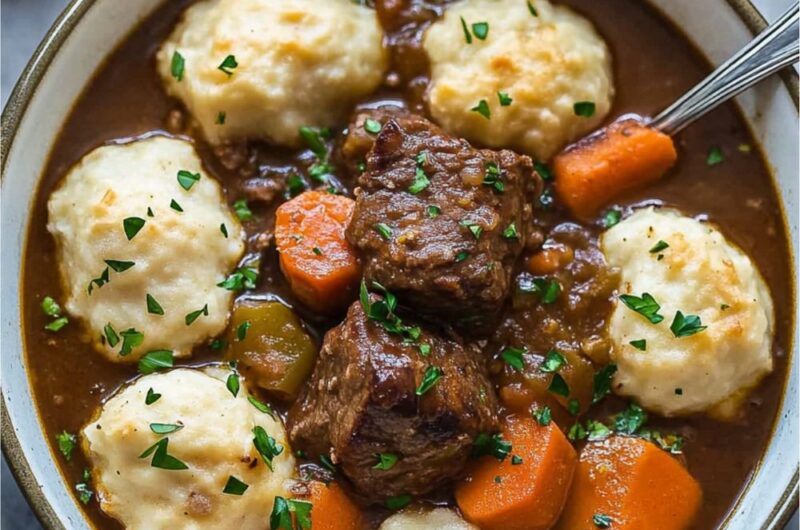
This beef stew builds deep, rich flavor by browning the beef and aromatics before they ever go into the slow cooker, then lets low, slow heat break down the beef’s connective tissue over several hours until it’s completely fork-tender. Vegetables cook alongside the beef, absorbing the savory broth and seasonings, while homemade dumplings are added only in the final stretch, steaming gently on top of the stew rather than submerged in the liquid, which is what keeps them light and fluffy rather than dense or soggy.
What makes this dish work so well as a slow cooker recipe is the separation of timing between components. The beef and most vegetables cook for hours to develop tenderness and flavor, while peas and dumplings are added only near the end, since they don’t need — and would be damaged by — that same extended cooking time. This staged approach is what allows every component of the finished dish to reach its ideal texture at the same moment.
Below is a full breakdown of the workflow, ingredient roles, and technique for building tender beef, flavorful vegetables, and properly steamed dumplings, along with the variations and storage guidance that round out this recipe.
Kitchen Workflow: How the Process Is Organized
This recipe breaks into four stages: browning and building the base, slow cooking the stew, adding peas and preparing the dumplings, and steaming the dumplings.
Stage 1 — Brown the Beef and Build the Base. The beef is patted dry with paper towels, then seasoned with salt and black pepper and tossed with flour until lightly coated. Olive oil is heated in a large skillet, and the beef is browned on all sides before being transferred to the slow cooker. In the same skillet, the onion is sautéed, followed by the garlic, cooked briefly, and this mixture is also added to the slow cooker with the beef. Browning the beef first — rather than skipping straight to the slow cooker — develops deeper flavor and color that slow cooking alone wouldn’t achieve, since the browning reaction only happens at higher, direct heat.
Stage 2 — Slow Cook the Stew. Carrots, celery, potatoes, and mushrooms are added to the slow cooker, followed by the beef broth. Tomato paste, Worcestershire sauce, thyme, rosemary, and a bay leaf are mixed in, and everything is stirred thoroughly to combine. The slow cooker is covered and cooked on Low for 7–8 hours or High for 4–5 hours, until the beef is fork-tender. This extended, low-temperature cooking period is what allows the tough connective tissue in the beef chuck to break down fully, transforming it from a chewy cut into something tender enough to fall apart with a fork.
Stage 3 — Add Peas and Prepare the Dumplings. Once the beef is tender, peas are stirred into the stew. Separately, the dumpling dough is prepared: flour, baking powder, and salt are combined in a bowl, cold butter is rubbed into the flour mixture until crumbly, milk is poured in and stirred until a soft dough forms, and chopped parsley is mixed in last. Preparing the dumpling dough only at this stage, rather than earlier, keeps it fresh and ready to cook immediately once the stew is ready for it.
Stage 4 — Steam the Dumplings. Spoonfuls of the dumpling dough are scooped directly onto the surface of the stew, and the lid is placed back on the slow cooker. The dumplings cook for 30–40 minutes without lifting the lid, until fluffy and cooked through. Keeping the lid closed during this stage is essential — lifting it releases the steam that’s responsible for cooking the dumplings, and interrupting that steam can leave them undercooked or dense.
Component Breakdown
It’s useful to think of this recipe in terms of four functional components.
1. The Protein — Beef Chuck Roast Beef chuck, cut into bite-sized cubes, is chosen specifically for its connective tissue, which breaks down during the long, slow cooking process into exceptional tenderness — a cut with less connective tissue wouldn’t achieve the same melt-in-your-mouth result over this cooking method.
2. The Aromatics and Flavor Base — Onion, Garlic, Tomato Paste, Worcestershire Sauce, and Herbs Sautéed onion and garlic form the aromatic backbone of the stew, while tomato paste adds depth and slight acidity, Worcestershire sauce contributes umami richness, and dried thyme, rosemary, and a bay leaf round out the herbal profile of the broth.
3. The Vegetables — Carrots, Celery, Potatoes, Mushrooms, and Peas Carrots, celery, potatoes, and mushrooms cook for the full slow-cooking period, absorbing the broth’s flavor while becoming tender themselves. Peas are added only near the end, since their delicate texture would break down and turn mushy if cooked for the full 7–8 hours alongside the other vegetables.
4. The Dumplings — Flour, Baking Powder, Butter, Milk, and Parsley This simple dough, leavened with baking powder and enriched with cold butter, steams on top of the stew rather than cooking submerged in the liquid, which is what allows the dumplings to stay light and fluffy rather than becoming waterlogged.
Approved Variations and Swaps
Based strictly on the details provided, the following variations can be made within this recipe:
- Herb Dumplings – add extra parsley, thyme, and rosemary to the dumpling dough.
- Garlic Dumplings – mix garlic powder into the dumpling dough.
- Root Vegetable Stew – include parsnips, turnips, and rutabaga alongside the other vegetables.
- Mushroom Beef Stew – double the mushrooms for a deeper mushroom flavor throughout.
- Rich Red Wine Stew – replace some of the broth with red wine.
- Smoky Beef Stew – add smoked paprika for a warm, smoky note.
- Country-Style Stew – use larger vegetable pieces along with rustic herbs for a heartier, more rustic presentation.
Optional add-ins mentioned for this recipe include diced parsnips, diced turnips, balsamic vinegar, smoked paprika, garlic powder, fresh parsley, fresh thyme, and pearl onions — any of these can be incorporated to adjust the flavor profile.
Step-by-Step Assembly Strategy
To build a well-developed, properly textured stew with light dumplings, follow this sequence:
- Trim excess fat from the beef and cut it into evenly sized cubes. Wash, peel, and chop all vegetables into uniform pieces to ensure even cooking, and measure out all seasonings and dumpling ingredients ahead of time.
- Pat the beef dry with paper towels, then sprinkle with salt and black pepper.
- Toss the beef with flour until lightly coated.
- Heat the olive oil in a large skillet and brown the beef on all sides.
- Transfer the browned beef to the slow cooker.
- In the same skillet, sauté the onion, then stir in the garlic and cook briefly.
- Add the onion and garlic mixture to the slow cooker with the beef.
- Add the carrots, celery, potatoes, and mushrooms to the slow cooker.
- Pour in the beef broth.
- Mix in the tomato paste, Worcestershire sauce, thyme, rosemary, and bay leaf, and stir thoroughly to ensure everything is evenly combined.
- Cover and cook on Low for 7–8 hours or High for 4–5 hours, until the beef is fork-tender.
- Stir the peas into the stew.
- Prepare the dumplings: combine flour, baking powder, and salt in a bowl, then rub in the cold butter until crumbly.
- Pour in the milk and stir until a soft dough forms. Mix in the chopped parsley.
- Scoop spoonfuls of the dumpling dough onto the surface of the stew.
- Place the lid back on the slow cooker and cook for 30–40 minutes without lifting the lid, until the dumplings are fluffy and cooked through.
- Remove and discard the bay leaf before serving.
- Taste and adjust seasoning as desired.
- Garnish with fresh herbs and serve hot, ladled into bowls.
Creating the Perfect Texture
The secret to this dish lies in balancing four elements: tender beef, flavorful vegetables, thick gravy, and fluffy dumplings. Browning the beef before slow cooking enhances both flavor and color beyond what slow cooking alone would produce. Cooking low and slow allows the connective tissue in the beef to break down fully, creating exceptional tenderness. Placing the dumplings on top of the stew, rather than submerging them, is what allows them to steam properly and stay light and fluffy.
Storage Instructions
Allow the stew to cool completely before storing it in airtight containers. Refrigerate for up to 4 days, reheating gently on the stovetop or in the microwave. The stew can also be frozen for up to 3 months — for best results, freeze it without the dumplings and prepare a fresh batch of dumplings when reheating, since dumplings don’t hold up as well to freezing and thawing. Stir thoroughly before serving.
Serving Ideas
This stew pairs well with crusty bread, buttered rolls, or a simple green salad, and also works nicely alongside roasted vegetables or steamed greens. For a complete comfort-food experience, serve in large bowls garnished with fresh parsley and cracked black pepper — the stew is hearty enough to be enjoyed as a full meal on its own.
Part 2: Recipe Card
Slow Cooker Beef Stew and Dumplings
Description: Melt-in-your-mouth beef, hearty vegetables, and rich savory gravy come together with fluffy homemade dumplings for the ultimate comfort food meal, all made in the slow cooker.
Duration:
- Prep Time: 25 minutes
- Vegetable Preparation Time: 15 minutes
- Slow Cooking Time: 7–8 hours on Low, or 4–5 hours on High
- Dumpling Cooking Time: 30–40 minutes
- Total Time: About 8–9 hours
- Servings: 6–8 people (approximately 10–12 cups of stew)
Ingredients:
Beef Stew
- 2 lbs beef chuck roast, cut into bite-sized cubes
- 2 tbsp all-purpose flour
- 1 tsp salt
- 1/2 tsp black pepper
- 2 tbsp olive oil
- 1 large onion, diced
- 3 cloves garlic, minced
- 4 cups beef broth
- 2 tbsp tomato paste
- 1 tbsp Worcestershire sauce
- 1 tsp dried thyme
- 1 tsp dried rosemary
- 1 bay leaf
Vegetables
- 3 carrots, sliced
- 3 celery stalks, sliced
- 2 large potatoes, diced
- 1 cup peas
- 1 cup mushrooms, sliced
Dumplings
- 1 1/2 cups all-purpose flour
- 2 tsp baking powder
- 1/2 tsp salt
- 3 tbsp cold butter
- 3/4 cup milk
- 1 tbsp chopped parsley
Instructions:
- Pat the beef dry with paper towels. Sprinkle with salt and black pepper, then toss with flour until lightly coated.
- Heat the olive oil in a large skillet. Brown the beef on all sides, then transfer to the slow cooker.
- Sauté the onion in the same skillet, then stir in the garlic and cook briefly. Transfer to the slow cooker with the beef.
- Add the carrots, celery, potatoes, and mushrooms to the slow cooker. Pour in the beef broth.
- Mix in the tomato paste, Worcestershire sauce, thyme, rosemary, and bay leaf. Stir thoroughly to combine.
- Cover and cook on Low for 7–8 hours or High for 4–5 hours, until the beef is fork-tender.
- Stir the peas into the stew.
- Combine the flour, baking powder, and salt in a bowl. Rub in the cold butter until crumbly. Pour in the milk and stir until a soft dough forms. Mix in the chopped parsley.
- Scoop spoonfuls of the dumpling dough onto the surface of the stew.
- Place the lid back on the slow cooker and cook for 30–40 minutes without lifting the lid, until the dumplings are fluffy and cooked through.
- Remove and discard the bay leaf. Taste and adjust seasoning as desired.
- Garnish with fresh herbs and serve hot.
Notes:
- Brown the beef before slow cooking to enhance flavor and color.
- Cut all vegetables into even pieces for consistent cooking.
- Avoid lifting the lid while the dumplings are steaming — this releases the steam needed to cook them properly.
- Store cooled stew in airtight containers in the fridge for up to 4 days, or freeze for up to 3 months (best without dumplings — prepare fresh dumplings when reheating).
Medical and Nutritional Disclaimer
The information provided in this recipe and guide is intended for general informational and educational purposes only and does not constitute medical, dietary, or nutritional advice. This recipe is not intended to diagnose, treat, cure, or prevent any disease or health condition. Individuals with food allergies, dietary restrictions, or specific medical conditions should consult with a qualified healthcare provider or registered dietitian before making dietary changes or preparing this recipe. Proper food safety practices should always be followed when handling and cooking raw beef. The author and publisher assume no responsibility for any adverse effects resulting from the use or application of the information contained herein.