
Cream of bacon soup is a rich and savory homemade soup made with crispy bacon, butter, flour, chicken broth, and whole milk. It comes together quickly on the stove and needs only a few basic ingredients. The result is a creamy soup with a pleasant bacon flavor that can be served on its own or used as a cooking ingredient.
Why Make Cream of Bacon Soup at Home
Homemade cream of bacon soup is useful when you need a creamy base for another meal. It works especially well in potato dishes, chicken recipes, rice dishes, and casseroles. Making it yourself also gives you control over the texture, seasoning, and amount you prepare, so you do not have to open a can whenever a recipe calls for cream soup.
A Quick Soup for Busy Days
This easy cream of bacon soup takes only 15 minutes from start to finish. The bacon cooks while the butter melts, and the flour helps create the thick base. Chicken broth and milk are then added gradually to form a smooth mixture. Since the cooking time is short, this recipe is convenient for a quick meal or last-minute dinner preparation.
What Cream of Bacon Soup Tastes Like
The flavor is creamy, salty, savory, and full of bacon. The chicken broth adds a light savory base, while the milk gives the soup its smooth consistency. Butter adds richness, and a small amount of pepper balances the stronger flavors. The finished soup is thick enough to use in other recipes but can be loosened with extra liquid if needed.
Bacon Gives the Soup Its Main Flavor
Bacon is the ingredient that gives this homemade soup its distinctive taste. Chopped bacon is cooked directly in the butter, allowing its flavor to blend into the base. Cooking it carefully is important because burned bacon can make the soup taste bitter. Keep the heat at medium and watch the pieces closely while they cook.
How the Creamy Base Comes Together
The flour is whisked into the butter and bacon mixture to create a thick paste. This step helps the flour blend evenly instead of forming lumps later. Chicken broth is added slowly while whisking, which creates a smoother consistency. Taking your time during this stage makes a noticeable difference in the finished texture.
Adding the Milk
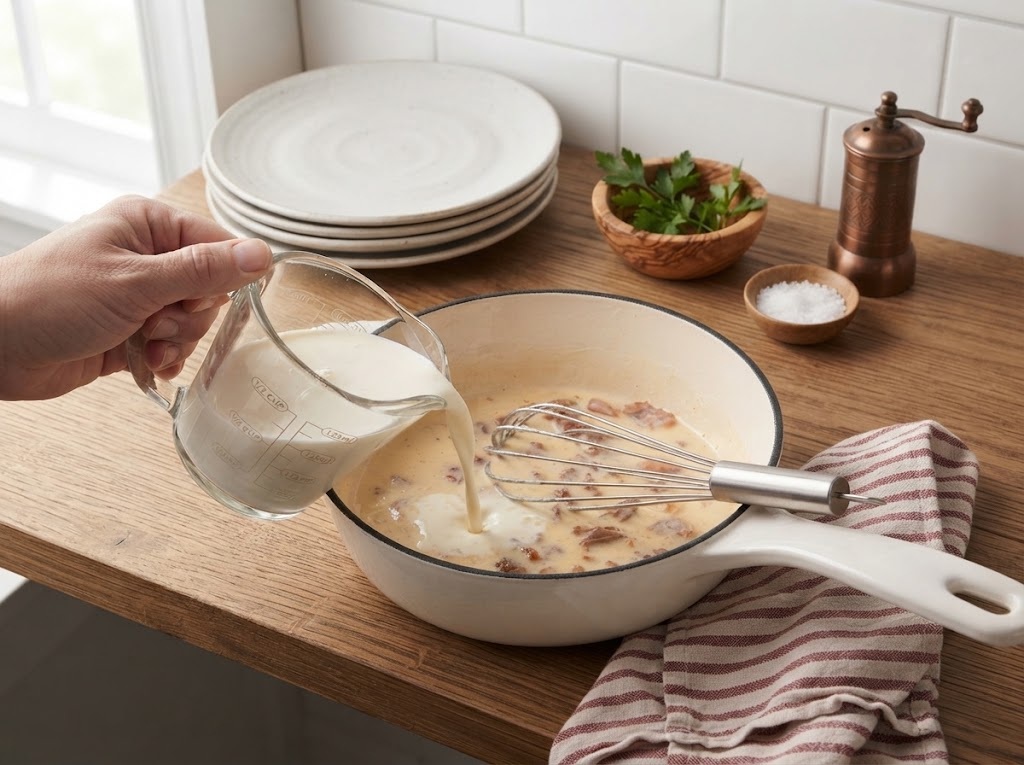
Once the broth has been incorporated, the milk is added along with the cooked bacon. The mixture should simmer gently over medium-low heat rather than reach a full boil. Gentle heating helps maintain the creamy texture. If the soup becomes thicker than you want, a little additional liquid can be mixed in until the desired consistency is reached.

Why the Soup Thickens as It Cools
Freshly cooked cream of bacon soup may seem slightly thinner than expected while it is hot. As it cools, the flour-based mixture continues to firm up. For this reason, avoid adding too much extra liquid too quickly. Give the soup a little time before deciding whether its consistency needs adjustment.
Choosing the Right Cooking Pot
A large pot works well for this recipe because it gives you enough room to whisk the ingredients without spilling. A heavy-bottomed pot can also help distribute heat evenly. You will need measuring utensils for the ingredients, a sharp knife and cutting board for the bacon, and a whisk for preparing the creamy base.
Preparing the Bacon
Start by chopping the bacon into small pieces so it cooks evenly. Smaller pieces are also easier to distribute throughout the soup. Melt the butter over medium heat, then add the chopped bacon. Cook until the bacon is fully cooked, taking care not to let it burn.
Building the Flour Mixture
After the bacon has cooked, whisk the flour into the butter mixture. Continue stirring while the flour combines with the fat. The mixture should become thick and paste-like. Constant whisking keeps the flour from sticking or browning too much and prepares it for the addition of chicken broth.
Adding Chicken Broth Slowly
Pour the chicken broth into the pot gradually while whisking. Adding it slowly allows the flour mixture to loosen evenly. Continue whisking until the liquid is smooth and there are no obvious lumps. This simple technique is useful for many creamy soup recipes and sauces that begin with flour and fat.
Keeping the Soup Smooth
A smooth cream soup depends on steady stirring during the thickening stage. If the heat is too high, the bottom can cook faster than the rest of the mixture. Medium to medium-low heat gives you more control. Keep the whisk moving whenever you add liquid or adjust the consistency.
Seasoning the Soup
The recipe uses a small amount of salt and a dash of pepper. Bacon and chicken broth can already provide plenty of salt, so the seasoning should be added toward the end. Taste the soup after it has warmed through, then make sure the seasoning is balanced before removing it from the heat.
Using Cream Instead of Milk
The original recipe includes whole milk and provides substitutions for heavy cream or half and half. If you use one of those options, the soup can become richer and thicker. Keep the same basic cooking method and continue heating gently. The important point is to avoid bringing the mixture to a strong boil.
Serving Cream of Bacon Soup
This soup can be served warm in a bowl as a simple savory dish. It can also be used as a creamy ingredient in other recipes. Spoon it over potatoes, mix it into rice dishes, or combine it with chicken for a comforting meal. Its thick consistency makes it particularly useful in baked dishes.
Cream of Bacon Soup for Potato Dishes
Potatoes pair naturally with the salty, creamy flavor of bacon. Homemade cream of bacon soup can be stirred into cooked potatoes or used as part of a baked potato casserole. The creamy mixture helps add moisture while the bacon provides a stronger savory element. You can adjust the amount of soup depending on the recipe.
Cream of Bacon Soup for Rice
Rice dishes can sometimes benefit from a creamy sauce, especially when served with chicken or vegetables. This soup can be mixed with cooked rice to create a richer texture. Because the soup is already seasoned, taste the complete dish before adding more salt. A little extra broth can be used if the mixture feels too thick.
Cream of Bacon Soup for Chicken
Creamy chicken dishes are another practical way to use this soup. The chicken broth in the base complements cooked chicken, while the bacon adds extra flavor. The soup can be combined with chicken before baking or used as part of a creamy skillet meal. Its thick texture helps coat the chicken evenly.
Using It in Green Bean Casserole
Cream of bacon soup can also be used as an alternative to cream of mushroom soup in green bean casserole. The bacon gives the casserole a different savory flavor while the creamy base helps bind the ingredients. If you are adapting another recipe, consider the salt level because both bacon and canned or prepared ingredients can contain sodium.
How to Prevent a Burned Base
The butter and bacon should be cooked over medium heat rather than high heat. Once the flour is added, keep stirring so the mixture does not sit against the bottom of the pot. Burned butter or flour can affect the entire soup, so lowering the heat is better than trying to cook the mixture quickly.
How to Fix Soup That Is Too Thick
If the soup becomes too thick, add more liquid gradually and whisk after each addition. Chicken broth or milk can be used depending on the flavor and texture you want. Avoid adding a large amount at once because it can make the soup thinner than intended. Remember that the soup will thicken further as it cools.
How to Fix Soup That Is Too Thin
If the soup seems too thin, allow it to simmer gently for another short period while stirring. Avoid boiling it hard. The flour already in the recipe will continue to provide thickening as the mixture heats. Also remember that the final consistency becomes thicker after the soup is removed from the heat and cools slightly.
Can You Make It Ahead
This recipe is quick enough to make when you need it, but it can also be prepared before the main dish. If making it ahead, let it cool slightly before storing it properly. The soup may become thicker after chilling, so gently warm it and add a small amount of liquid if necessary before using it.
Reheating the Soup
Reheat the soup gently rather than using very high heat. Stir regularly so the thickened mixture warms evenly. If it has become very thick in storage, add a small amount of broth or milk while reheating. Continue stirring until it reaches a smooth consistency suitable for serving or adding to another dish.
What to Serve With Cream of Bacon Soup
When served as soup, it can be paired with simple bread, crackers, roasted vegetables, or a light salad. If you are using it as a sauce or casserole ingredient, the side dish can be kept simple. Green vegetables, potatoes, rice, and cooked chicken all work well with the creamy bacon flavor.

The Importance of Gentle Heat
Gentle heat is one of the most important parts of this recipe. Once the milk has been added, the soup should simmer without coming to a boil. A strong boil can affect the creamy texture and may cause the milk mixture to behave differently. Medium-low heat gives you better control during the final stage.
Simple Ingredients, Useful Results
One of the practical features of this cream of bacon soup is that it uses familiar ingredients. Bacon, butter, flour, chicken broth, whole milk, salt, and pepper create the complete base. There is no need for a long ingredient list. The short preparation also makes it useful when you need a homemade cream soup quickly.
Storage and Texture Changes
Because this is a thickened soup, its texture can change after cooling. It may become noticeably thicker in the refrigerator than it was when freshly prepared. This is normal for a flour-based cream soup. When reheating, warm it slowly and stir in a little additional liquid if needed to bring it back to a smooth texture.
Common Questions
Can cream of bacon soup replace cream of mushroom soup?
Yes, the recipe can be used as a substitute in dishes such as green bean casserole. The final flavor will be different because bacon replaces the mushroom flavor.
Can I make it thinner?
Yes. Add a little more liquid while whisking until the soup reaches the consistency you prefer.
Can I make it thicker?
The soup naturally thickens as it cools. If it is still too thin while hot, continue simmering gently for a short time while stirring.
Ways to Use Leftover Soup
If you have extra cream of bacon soup, use it as a creamy base for another meal instead of letting it go unused. It can be added to cooked potatoes, rice, chicken, or casseroles. Before adding it to another recipe, check its consistency and loosen it with a little liquid if it has thickened during storage.

Homemade Creamy Bacon Soup Recipe
A creamy homemade bacon soup made with chopped bacon, butter, flour, chicken broth, and whole milk. This quick soup takes 15 minutes and can be served warm or used as a creamy base for potato, rice, chicken, and casserole recipes.
1.5
servings5
minutes10
minutes443
kcal15
minutesIngredients
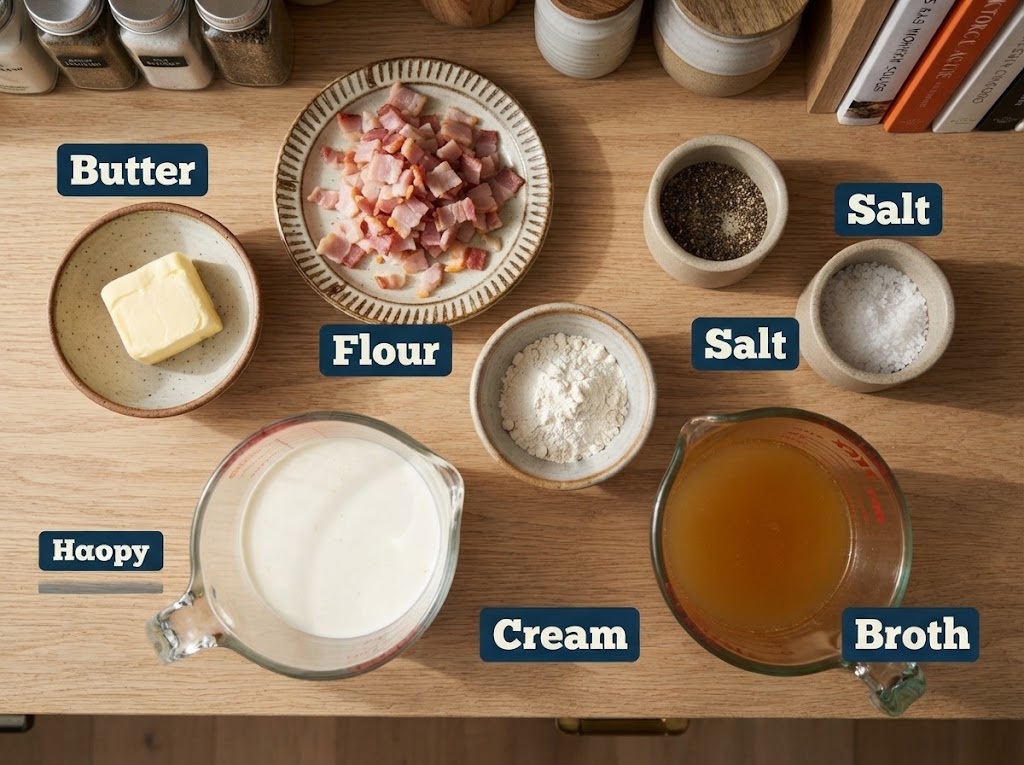
½ cup Bacon Chopped
3 Tablespoons Butter Substitute coconut or olive oil
3 Tablespoons Flour
½ cup Chicken Broth
½ cup Whole Milk Substitute heavy cream or half and half
¼ teaspoon Salt
Dash of Pepper
Instructions
- Melt the butter in a large pot over medium heat. Add the chopped bacon and cook until fully cooked, watching carefully so it does not burn. Whisk the flour into the butter and bacon mixture until it forms a thick paste. Keep stirring so the butter does not brown or burn.
- Slowly pour in the chicken broth while whisking continuously. Keep mixing until the broth and flour mixture become smooth.
- Add the cooked bacon and whole milk, then let the soup simmer over medium-low heat for a couple of minutes. Do not bring it to a boil. If it is too thick, add more liquid because it will thicken further as it cools.
- Reduce the heat and season with the salt and a dash of pepper. Stir gently to distribute the seasoning throughout the soup. Remove the pot from the heat and allow the soup to cool slightly before serving or using it in another recipe.
Nutrition Facts
- Calories: 443kcal
- Fat: 34g
- Cholesterol: 125mg
- Sodium: 2019mg
- Carbohydrates: 16g
- Protein: 21g